


Among North America’s wild canids, the gray fox (Urocyon cinereoargenteus) stands out with an extraordinary ability that separates it from its relatives – the capacity to climb trees with feline-like agility. While most members of the dog family remain firmly planted on the ground, gray foxes can ascend vertical trunks, navigate branches, and even rest or den in trees up to 60 feet above the forest floor. This remarkable adaptation, rare among canids worldwide, has earned them the nickname “tree foxes” in some regions.
This climbing prowess isn’t just an occasional party trick but a central adaptation that influences how gray foxes hunt, escape predators, and interact with their environment. Unlike red foxes, coyotes, or wolves that must remain earthbound, gray foxes have evolved specialized anatomy that allows them to exploit the vertical dimension of their forest habitats, creating a unique ecological niche. Their climbing skills rival those of many cats, despite belonging to an entirely different family of carnivores.
Evolutionary History of Gray Foxes

Gray foxes belong to one of the most ancient lineages of canids in North America. The genus Urocyon separated from other canid lines approximately 9-10 million years ago, making them distinct from more recently evolved species like red foxes and wolves. This early divergence allowed gray foxes to develop their unique adaptations, including tree-climbing abilities, while most other canids evolved as ground-dwelling predators. Fossil evidence suggests that the ancestors of today’s gray foxes were already present when various cat species were diversifying across North America.
Scientists believe the tree-climbing adaptation may have evolved as a competitive response to larger predators. When dire wolves, saber-toothed cats, and other formidable hunters dominated the landscape during the Pleistocene epoch, the ability to escape into trees would have provided a significant survival advantage for the smaller gray fox. This evolutionary pressure likely reinforced the anatomical features that make tree climbing possible, creating the uniquely adapted species we observe today.
Anatomical Adaptations for Climbing

The gray fox’s climbing ability isn’t accidental but the result of specific anatomical adaptations. Most notably, they possess semi-retractable claws that provide crucial grip when ascending tree trunks. While not fully retractable like a cat’s claws, they maintain a sharper point than the typical canid claw, allowing them to dig into bark. Their forearm rotation capability exceeds that of other foxes and wolves, enabling them to rotate their forelegs inward and grasp the trunk as they climb – a motion impossible for most canids.
Their relatively light body weight (typically 7-14 pounds) and compact build also facilitate climbing, allowing them to navigate branches that would break under heavier animals. Gray foxes have strong, flexible ankle joints that can rotate more than 180 degrees, permitting them to descend trees headfirst like a squirrel. This is in stark contrast to most cats, which must back down trees because their ankle joints don’t allow for such rotation. These adaptations collectively enable a climbing style that combines elements of both feline and squirrel techniques.
Climbing Technique Comparison: Foxes vs. Cats

While both gray foxes and cats can climb trees effectively, their techniques differ significantly due to their distinct evolutionary paths. Cats climb primarily using their powerful claws as hooks, pulling themselves upward with their strong forelimbs. Their fully retractable claws provide exceptional grip, and most feline species climb by alternating diagonal limbs (right front with left rear, and vice versa) in a smooth, fluid motion. Cats typically rely more on power than speed when climbing and generally descend backward due to ankle joint limitations.
Gray foxes, by contrast, employ a hybrid technique that wildlife biologists describe as a “hugging and scrambling” approach. They wrap their forelimbs around the trunk as far as possible, using their semi-retractable claws to grip the bark while pushing upward with their hind legs. Their climbing appears more deliberate and methodical than a cat’s ascent, though equally effective. The gray fox’s distinctive advantage comes during descent, where their flexible ankle joints allow them to rotate their hind feet and climb down headfirst, providing better visibility and control than a cat’s backward descent method.
Ecological Advantages of Tree Climbing
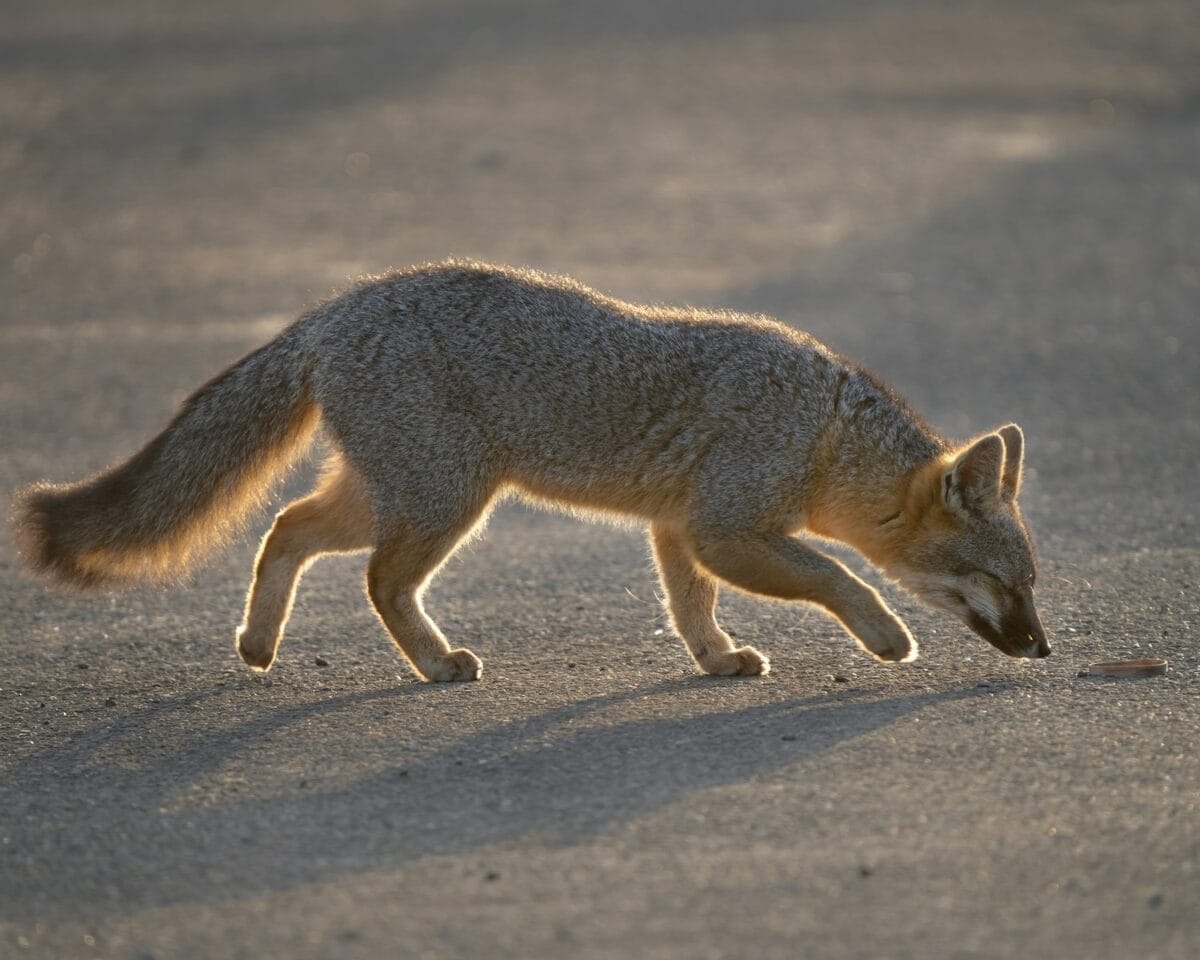
The gray fox’s tree-climbing ability provides numerous ecological advantages that have shaped its survival strategy. Perhaps most importantly, trees offer sanctuary from larger predators like coyotes and wolves that cannot follow them upward. In areas where these larger canids are abundant, the ability to escape vertically can mean the difference between life and death. This adaptation allows gray foxes to coexist in territories that might otherwise be dominated by their larger relatives.
Trees also expand the gray fox’s foraging opportunities. They can access bird nests, squirrel dreys, and fruit-bearing branches unavailable to ground-dwelling predators. During autumn, gray foxes have been observed climbing persimmon, mulberry, and other fruit trees to feed directly on the bounty above. This dietary flexibility becomes particularly valuable during seasonal food scarcity. Additionally, elevated positions provide vantage points for spotting both prey and potential threats, giving gray foxes a literal overview of their territory that ground-bound competitors lack.
Tree Dens and Raising Young
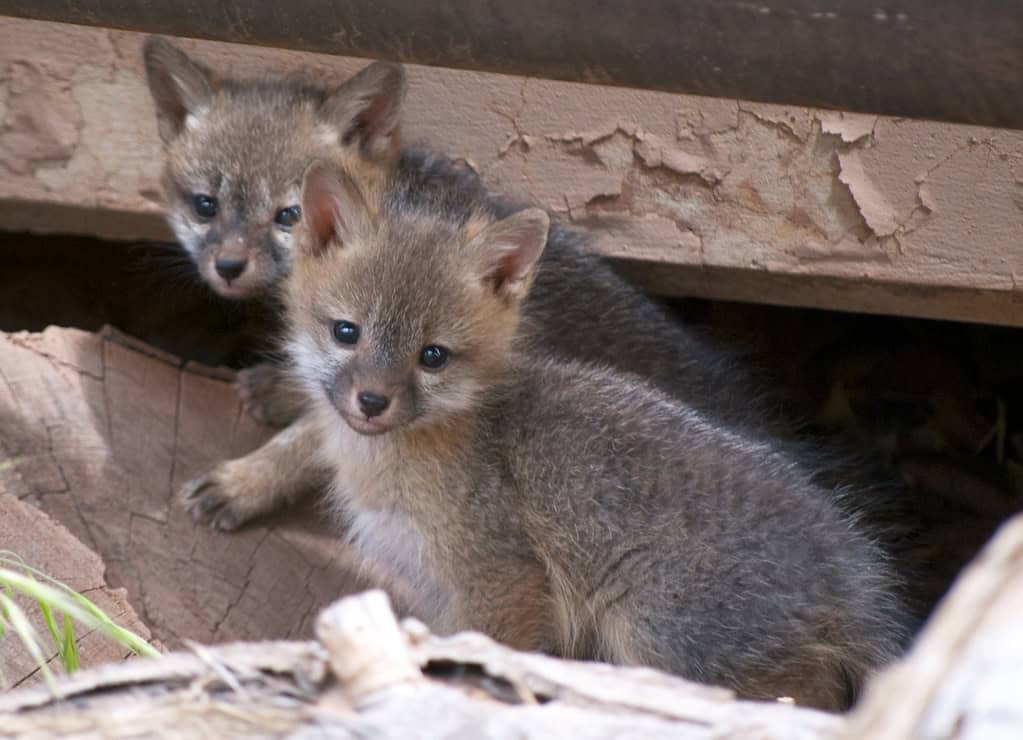
One of the most remarkable ways gray foxes utilize their climbing ability is by establishing dens in tree cavities, sometimes as high as 30 feet above ground. These arboreal dens offer exceptional protection from predators and harsh weather conditions. Female foxes often select tree hollows for birthing and raising their young, called kits. The elevated nurseries provide safety from coyotes, domestic dogs, and other ground-based threats that might prey on vulnerable fox kits.
Researchers have documented cases of gray fox families using the same tree den for multiple generations, with adults teaching young kits to climb when they’re approximately three months old. This learning period involves considerable patience from parent foxes, who guide their offspring’s early climbing attempts with gentle encouragement. By four months of age, most young gray foxes have mastered basic climbing skills, though they continue refining their technique throughout adolescence. This vertical dimension to parenting distinguishes gray foxes from all other North American canids and represents a cultural transmission of a crucial survival skill.
Geographic Distribution and Habitat Preferences
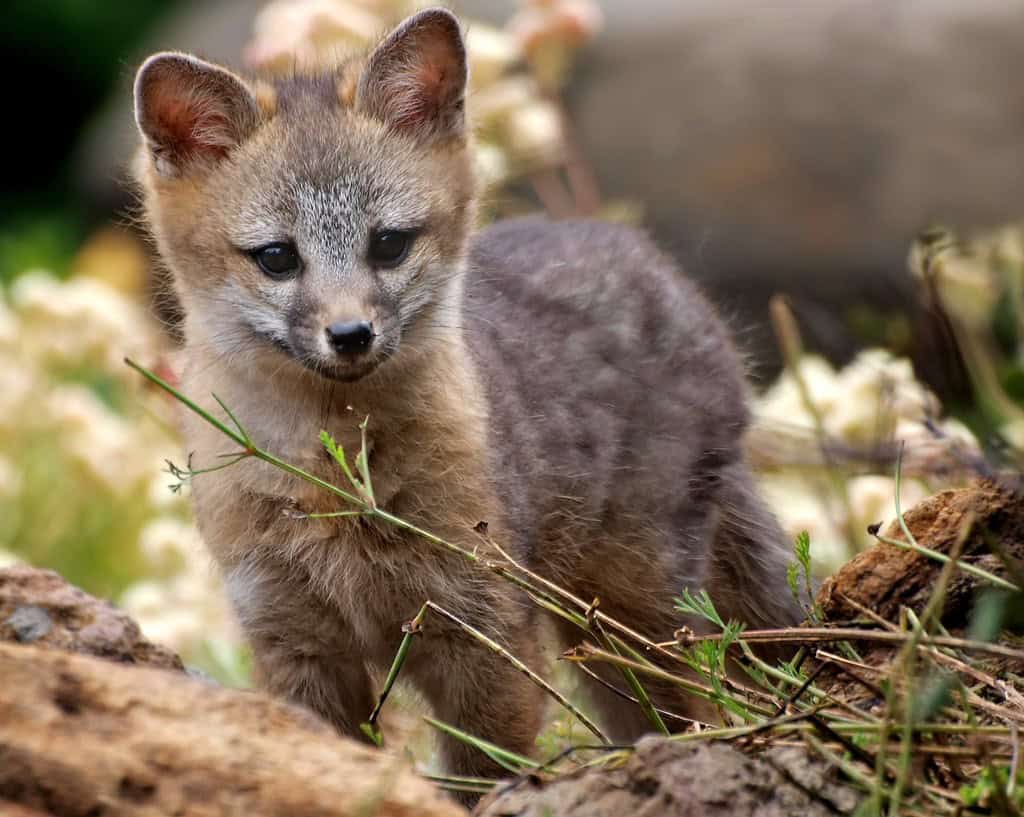
Gray foxes inhabit a vast range stretching from southern Canada through most of the United States and extending into Central America as far south as Venezuela and Colombia. Within this extensive distribution, they show a marked preference for habitats with abundant trees – particularly deciduous and mixed forests with moderate understory. Their tree-climbing ability correlates strongly with their habitat selection, as they are less common in open grasslands or plains where climbing opportunities are limited.
Interestingly, gray fox populations have remained stable or increased in many fragmented forest environments where other species have declined. Their adaptability to edge habitats – the transition zones between forests and fields or suburban developments – has helped them persist alongside human expansion. Research indicates that optimal gray fox habitat includes a mosaic of wooded areas with trees of varying ages (providing both climbing opportunities and potential den sites) interspersed with small clearings where hunting is more efficient. Unlike many specialists that decline with habitat fragmentation, the gray fox’s climbing ability provides a buffer against certain environmental changes.
Hunting Strategies From Above
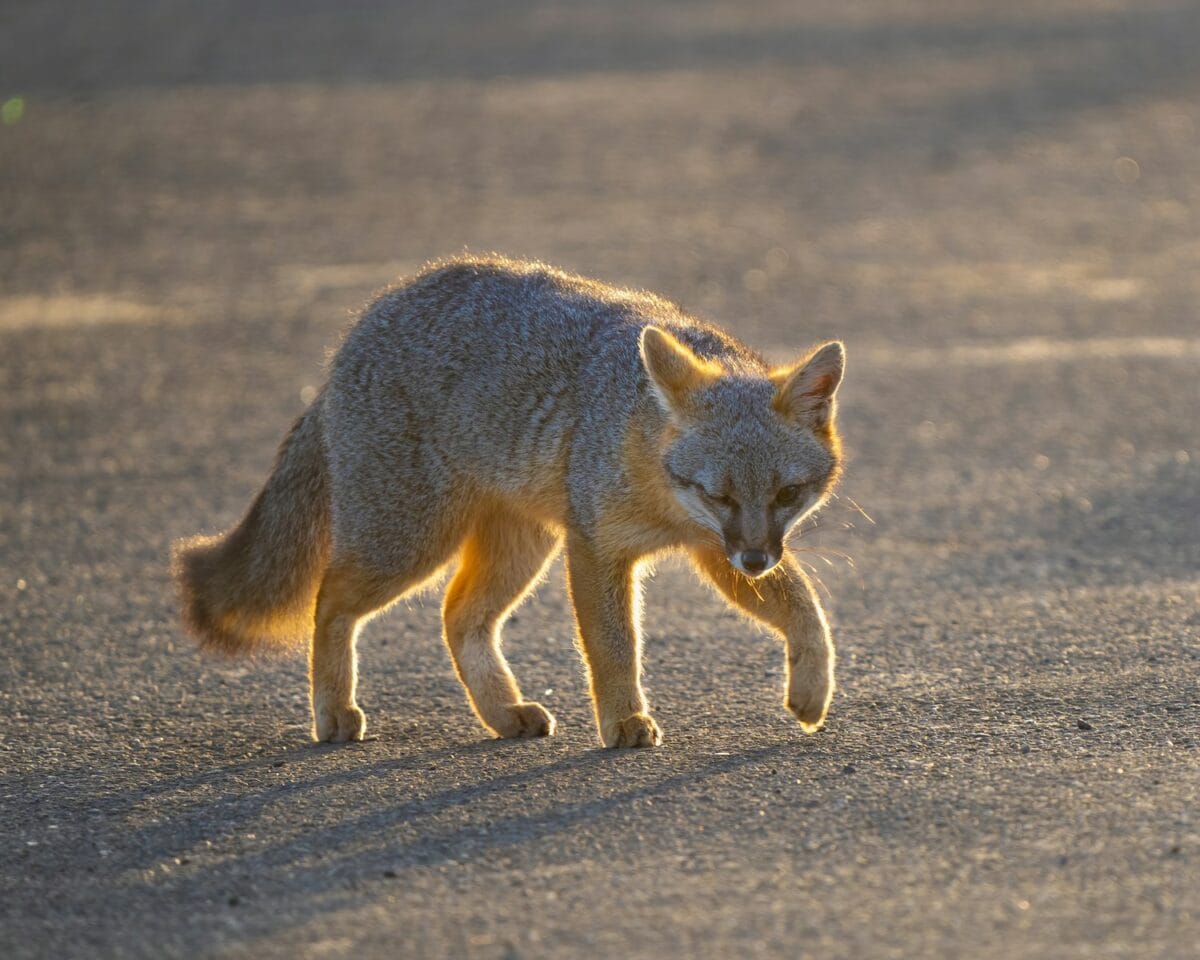
Gray foxes have developed hunting strategies that incorporate their tree-climbing abilities, creating a three-dimensional approach to finding food. They sometimes use elevated positions as ambush points, watching for small mammals or birds moving below before pouncing down with surprising accuracy. This technique, more commonly associated with wildcats, allows them to overcome the typical disadvantages faced by canid hunters, who generally rely on endurance and pursuit rather than ambush tactics.
Their arboreal skills also give gray foxes access to prey species that other canids can’t reach. They regularly raid bird nests for eggs and nestlings, and have been documented catching flying squirrels and bats in trees during night hunts. Ground-nesting birds that believe they’re safe from typical canid predators find themselves vulnerable to the gray fox’s unexpected approach from above. This diverse hunting repertoire contributes to the gray fox’s omnivorous diet, which includes mammals, birds, insects, fruits, and nuts, making them more adaptable to seasonal and environmental changes than many specialized predators.
Documented Climbing Feats and Observations
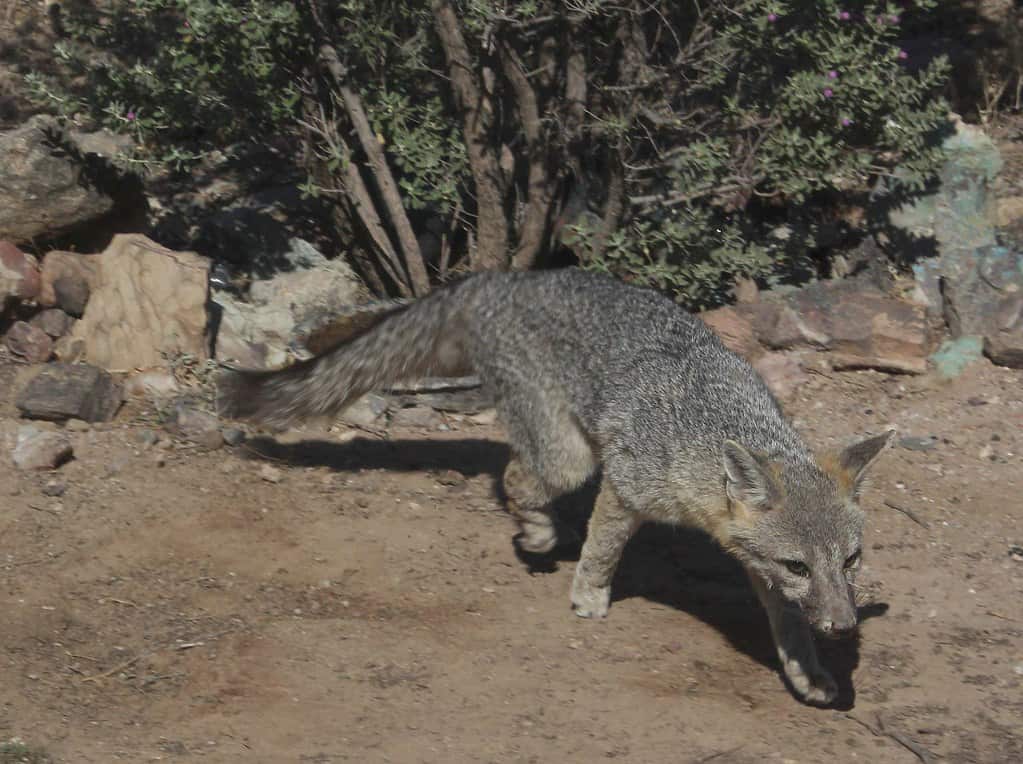
Wildlife biologists and naturalists have recorded some remarkable climbing achievements by gray foxes over the years. In a 2018 study in the Appalachian Mountains, researchers documented a gray fox regularly climbing to a resting spot 65 feet above ground in a mature oak tree. Trail cameras have captured footage of gray foxes climbing nearly vertical tree trunks with minimal apparent effort, moving with a confidence that belies their canid classification. Perhaps most impressive are observations of gray foxes leaping between branches of adjacent trees, similar to squirrels, though with less frequency and more caution.
Citizen science initiatives have expanded our understanding of gray fox climbing behavior, with hundreds of verified observations now recorded in national databases. These records indicate that gray foxes climb most frequently during dawn and dusk hours, though nocturnal climbing is also common. Seasonal patterns emerge as well, with increased climbing activity during spring nesting season when bird nests are abundant, and during autumn when tree fruits ripen. Some observations document gray foxes remaining in trees for extended periods – up to 12 hours in cases where they’re sleeping or avoiding persistent ground threats.
Comparison with Other Tree-Climbing Canids
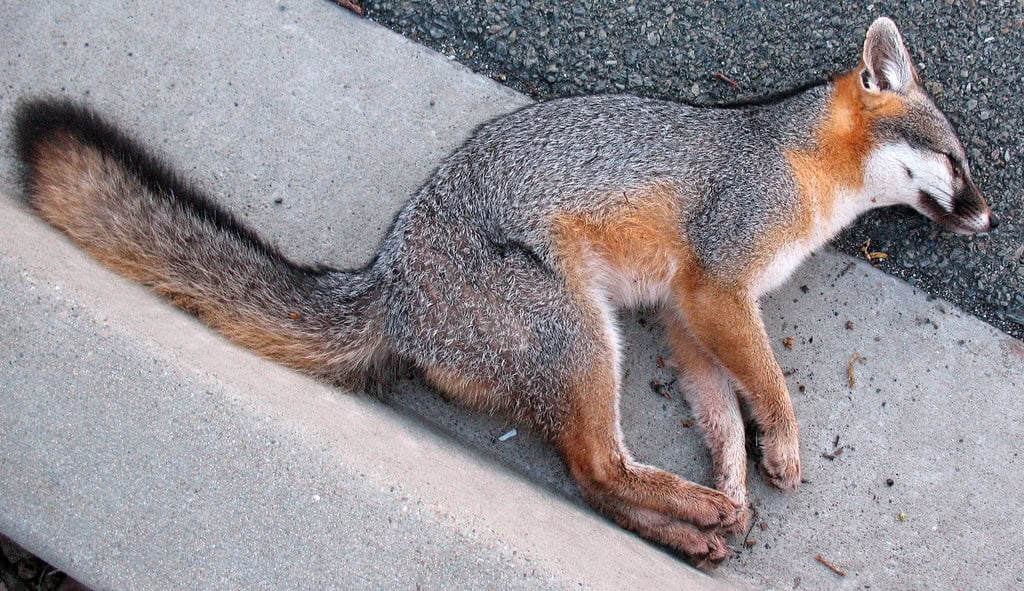
While the gray fox’s tree-climbing ability is exceptional among North American canids, it isn’t entirely unique worldwide. The raccoon dog (Nyctereutes procyonoides) of East Asia and the Asian palm civet (Paradoxurus hermaphroditus), though not true canids, show similar climbing abilities. However, the gray fox’s closest relative and only other member of genus Urocyon, the island fox (Urocyon littoralis) of California’s Channel Islands, shares this climbing adaptation but rarely uses it due to the limited tree cover in its island habitat.
Some other canid species demonstrate occasional, limited climbing behavior. Red foxes can scramble up leaning trees or those with low, large branches, but cannot climb vertical trunks like gray foxes. Certain bush dogs in South America have been observed making limited climbs, though without the gray fox’s proficiency. The gray fox remains distinct in its ability to routinely climb large, vertical trees and to incorporate this behavior as a fundamental aspect of its ecology rather than as an occasional behavior. This specialization places gray foxes in a unique ecological niche that combines typical canid adaptations with capabilities more commonly associated with mustelids and felids.
Conservation Implications
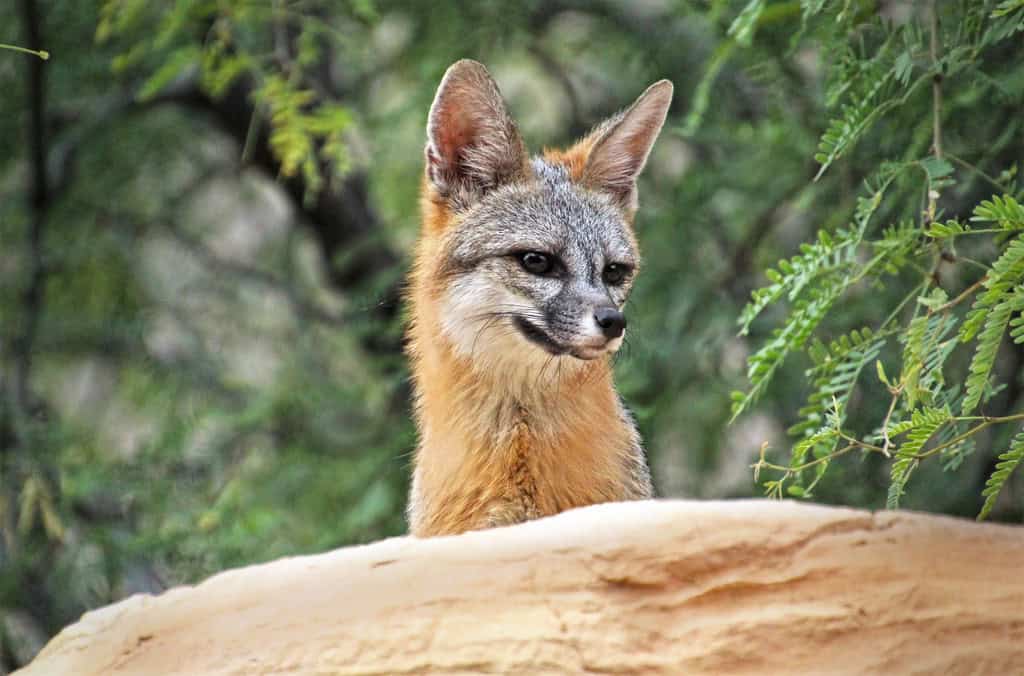
The gray fox’s tree-climbing ability has significant implications for its conservation status and management. Unlike many specialized species, gray foxes have maintained stable populations across much of their range despite habitat fragmentation and human encroachment. Their ability to utilize trees for escape, denning, and expanded foraging opportunities provides resilience against certain environmental changes. However, this doesn’t mean they face no threats – large-scale deforestation remains a significant concern in regions where mature forests are converted to agricultural land or developments without sufficient tree cover.
Conservation efforts specifically benefiting gray foxes focus on maintaining forest connectivity and protecting woodland habitats with diverse age structures that provide both climbing opportunities and potential den sites. In urban and suburban interfaces, education about gray foxes’ tree use helps reduce conflicts when humans observe them in unexpected places like backyard trees or park areas. Wildlife corridors that include wooded sections are particularly valuable for maintaining genetic connectivity between gray fox populations, as these arboreal pathways allow movement through otherwise developed areas. Their tree-climbing adaptation may ultimately prove crucial to the species’ long-term survival in an increasingly human-dominated landscape.
Conclusion: Nature’s Exception to the Rule
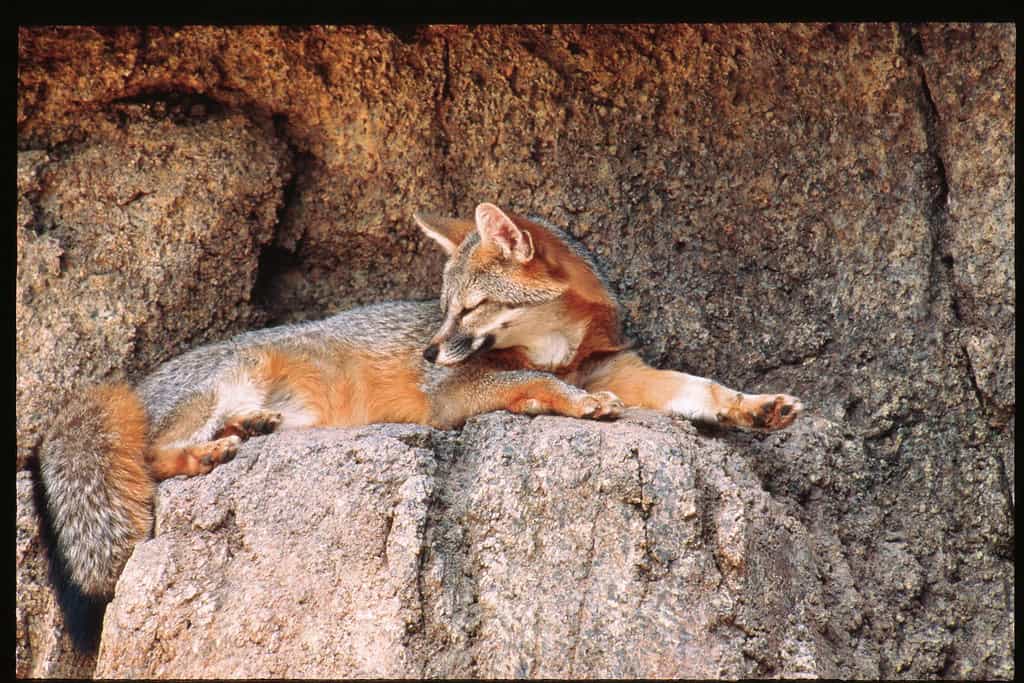
The gray fox stands as a fascinating evolutionary exception that challenges our typical classifications and expectations about canid behavior. Their remarkable tree-climbing ability, rivaling that of many feline species, represents a perfect example of convergent evolution – where unrelated animals develop similar traits in response to comparable ecological pressures. Through specific anatomical adaptations developed over millions of years, gray foxes have carved out a unique ecological niche that combines the social and hunting behaviors of canids with the vertical mobility more typical of cats and some mustelids.
This exceptional capability has profound implications for their survival strategy, from predator avoidance to expanded foraging opportunities, and from unique denning sites to specialized hunting techniques. The gray fox’s success across varied landscapes and through significant environmental changes speaks to the adaptive value of their climbing ability. As we continue to study these remarkable animals, they remind us that nature rarely conforms perfectly to our categorical expectations – and that exceptions like the tree-climbing gray fox often reveal evolutionary pathways just as fascinating as the rules they break.

From exploring the marine wonders in the Azores and witnessing the vast savannas of Kenya, to delving deep into the rich biodiversity of South Africa and traversing iconic landscapes in Australia and the US like Yellowstone, Chris's experiences are vast.
With a penchant for diving alongside sharks, the ocean holds a special place in his heart.
Through his academic insights, he champions wildlife conservation, striving with 'Animals Around The Globe' to cultivate a profound connection between humans and animals, enhancing our mutual appreciation.
Connect with him at Feedback@animalsaroundtheglobe.com.
- Beginner’s Guide to Spotting Dolphins in the Wild - August 3, 2026
- The Science Behind Animal Homing Instincts - August 3, 2026
- Could Rewilding Be the Key to Stopping Desertification? - August 3, 2026