

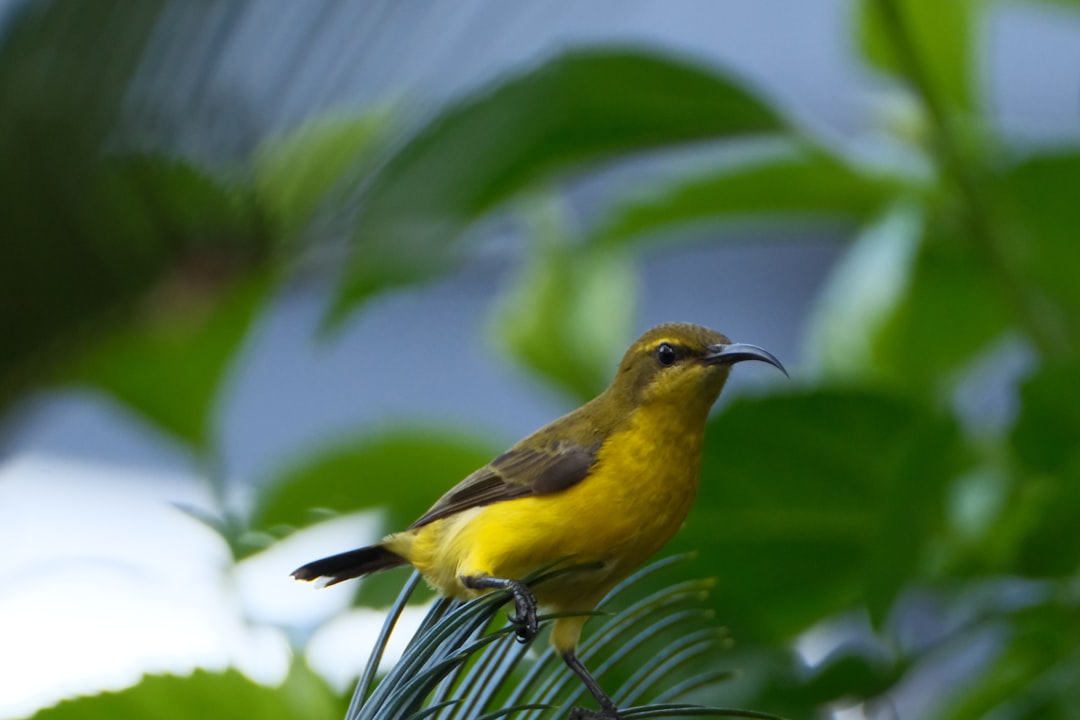
Hawai’i – Deep within the islands’ upland forests, native songbirds engage in a covert form of resource competition. Researchers documented birds pilfering twigs and moss from active and abandoned nests, a behavior called kleptoparasitism that had only been noted anecdotally before. This discovery highlights an overlooked risk for species facing habitat pressures, disease outbreaks, and shifting climates, as detailed in a recent study from the University of California, Riverside.
Researchers Capture Rare Canopy Behavior
A team led by entomologist Erin Wilson Rankin spent six months observing more than 200 nests of canopy-dwelling birds. They recorded instances of theft with precision, marking the first comprehensive quantification of this activity in the wild. Field workers had reported sightings for years, yet systematic tracking revealed its prevalence.
Wilson Rankin noted the significance of the findings. “People working in the field have seen this behavior for years, but it’s never been documented at this level,” she said. “Now we can say who’s doing it, who they’re stealing from, and what happens to the nests afterward.” The study appeared in The American Naturalist and provides baseline data for future monitoring.The American Naturalist study
Patterns Emerge Among Native Species
The crimson Apapane stood out as both the primary perpetrator and frequent target, reflecting its dominance in the forest canopy. Other species included the scarlet ʻIʻiwi and the yellow-green Hawaiʻi ʻAmakihi. Theft typically occurred between nests at comparable heights, aligning with the height overlap hypothesis where foraging birds encounter nearby structures.
Materials stolen consisted mainly of twigs and moss, essential for nest construction. While most raids targeted deserted nests, the behavior crossed species lines and even occurred within the same kind. Apapane stole from fellow Apapane in several cases, underscoring intra-species competition.
- Scarlet ʻIʻiwi: Vibrant red honeycreeper, observed as a thief.
- Crimson Apapane: Abundant species, top thief and victim.
- Hawaiʻi ʻAmakihi: Yellow-green bird, involved in thefts.
Nest Failures Trace Back to Raids
Approximately 10% of thefts struck active nests, either under construction or containing eggs and chicks. Some of these nests collapsed due to structural damage, while others saw parents abandon them after disturbances. Overall, about 5% of monitored nests failed following a raid.
Wilson Rankin highlighted the ripple effects. “We saw instances where nests failed, either because the nest structure was compromised or because the parents were disturbed and left,” she explained. Though the percentage seems modest, it signals vulnerability in populations already diminished.
Compounding Existing Environmental Threats
Native Hawaiian birds have retreated to higher elevations, once safe from mosquito-borne avian malaria introduced by humans. These refuges now host denser populations, heightening competition for limited resources. Habitat fragmentation and climate shifts further strain the ecosystem.
Stolen materials might introduce parasites, and while Hawaiian birds rarely defend nests aggressively, the energy saved on gathering could come at a cost. Conservationists view this as part of broader dynamics where scarcity amplifies subtle risks.
| Threat | Impact on Birds |
|---|---|
| Avian malaria | Forces relocation to higher forests |
| Habitat loss | Reduces nesting sites |
| Kleptoparasitism | Causes nest failures |
Pathways Forward for Protection
The research offers tools to predict theft-prone areas and conditions. Wilson Rankin emphasized proactive steps. “If we can predict when and where this behavior happens, we might not be able to stop it, but we can intervene in other ways to support at-risk species,” she said.
Collaborators like biologist David Rankin aided in locating nests during arthropod studies. Their work underscores how routine behaviors warrant scrutiny. “Sometimes threats to animal species don’t come from predators or people,” Wilson Rankin added. “They can come from similar animals.”
Key Takeaways
- Kleptoparasitism affects over 200 observed nests, with Apapane most involved.
- 5% nest failure rate post-theft raises alarms for stressed populations.
- Higher-elevation crowding may increase such behaviors as resources dwindle.
As Hawaiʻi’s forests evolve under human influence, nest kleptoparasitism serves as a reminder of interconnected pressures. Monitoring such interactions could refine strategies to bolster native birds before declines accelerate. What do you think about these hidden forest dynamics? Share your thoughts in the comments.

- Urban Coyotes Show Remarkable Adaptability, Learning to Thrive in City Environments - July 22, 2026
- Beavers Are Nature’s Engineers, Creating Vital Habitats for Other Wildlife Species - July 21, 2026
- The Recovery of the California Condor Offers Hope for Other Critically Endangered Birds - July 21, 2026