

In the dark nocturnal world where visibility is near zero, bats have evolved one of nature’s most sophisticated hunting systems. These remarkable flying mammals employ echolocation to navigate and locate prey with astonishing precision. But behind this seemingly straightforward process lies a complex phenomenon that scientists have only recently begun to understand: bats actually utilize principles that align with chaos theory to optimize their foraging strategies. This intersection of biology and mathematics reveals how these creatures have evolved to thrive in environments where finding food requires sophisticated problem-solving abilities. The relationship between bat hunting behaviors and chaos theory offers a fascinating glimpse into how natural selection has produced solutions that mirror advanced mathematical concepts.
The Basics of Bat Echolocation
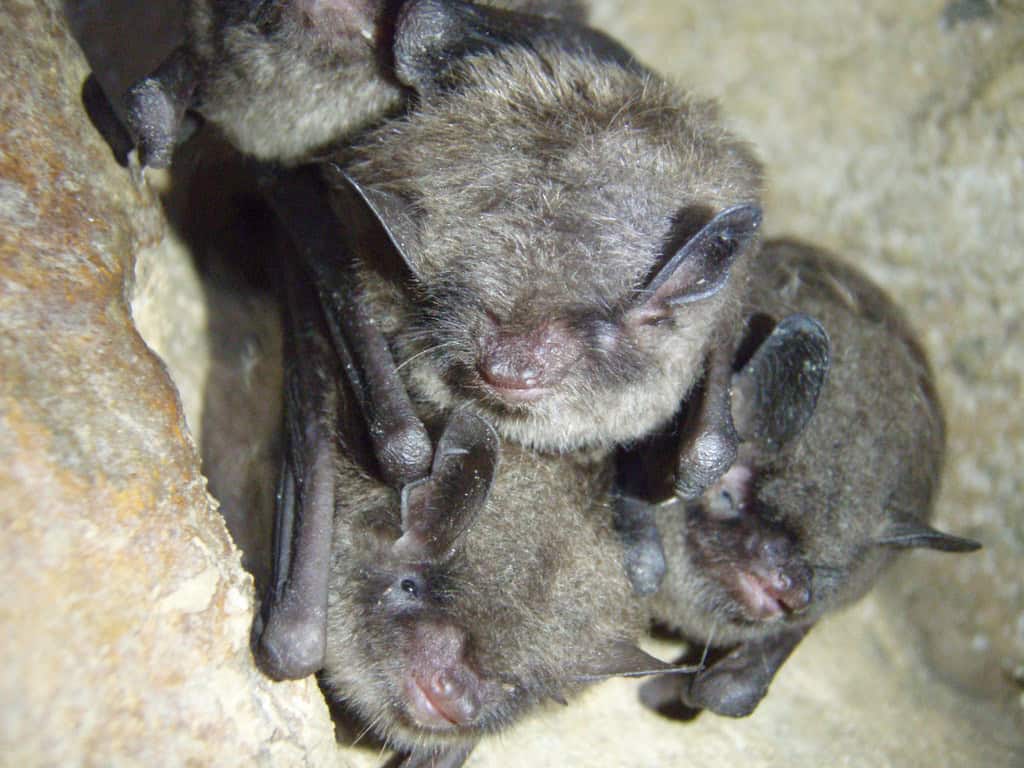
Echolocation is the primary sensory system bats use to navigate and hunt in darkness. By emitting high-frequency calls and listening to the returning echoes, bats create detailed acoustic maps of their surroundings. These vocalizations are typically ultrasonic, ranging from 20 to 200 kHz—well beyond human hearing capabilities. When these sound waves bounce off objects and return to the bat, they provide critical information about the size, shape, texture, and movement of potential prey. Different bat species have evolved specialized echolocation calls optimized for their particular hunting environments and prey types. For instance, bats that hunt in cluttered forests emit calls that differ significantly from those hunting in open spaces. This sophisticated biological sonar system allows bats to detect objects as thin as a human hair in complete darkness, making it one of nature’s most remarkable sensory adaptations.
Understanding Chaos Theory
Chaos theory, despite its name, isn’t about randomness but rather about finding underlying patterns in seemingly random systems. Developed in the 1960s by mathematician Edward Lorenz, chaos theory examines how small variations in initial conditions can lead to vastly different outcomes in dynamic systems—an effect famously described as the “butterfly effect.” A chaotic system appears random but follows deterministic laws, meaning its behavior is governed by specific equations. However, these systems are so sensitive to initial conditions that long-term prediction becomes practically impossible. Fractals, strange attractors, and non-linear dynamics are central concepts in chaos theory. These mathematical frameworks help explain natural phenomena from weather patterns to population dynamics—and as researchers have discovered, even bat foraging behavior. The theory has revolutionized how scientists understand complex systems across disciplines, including ecology and animal behavior.
The Challenge of Finding Food in a Complex Environment

Bats face extraordinary challenges when hunting for food. Most insectivorous bats must locate small, fast-moving prey in three-dimensional space while flying at speeds up to 60 mph. Their prey—moths, beetles, mosquitoes—employ evasive maneuvers and have evolved various countermeasures against bat predation. Some environments present additional difficulties: dense forest canopies create complex acoustic landscapes where echoes bounce off countless surfaces, potentially confusing the bat’s sonar system. Open areas present different challenges, as prey can be widely dispersed and unpredictable in their movements. Additionally, bats must optimize their energy expenditure, as flying consumes significant energy resources. The problem resembles what mathematicians call an “optimization problem with incomplete information”—precisely the type of scenario where chaos-inspired strategies prove beneficial. To succeed, bats must employ sophisticated search patterns that balance exploration of new areas with exploitation of known food sources.
Lévy Flight Patterns: The Mathematical Connection

At the heart of how bats utilize chaos theory is their implementation of Lévy flight patterns when searching for food. Unlike random walks where each movement is independent and identical, Lévy flights combine many short movements with occasional long journeys in random directions. Mathematically, these patterns follow a power-law distribution rather than a normal distribution. Studies tracking bat movements have revealed that when prey is scarce or unpredictably distributed, bats naturally adopt these Lévy flight patterns. This hunting strategy has been mathematically proven to be the optimal search pattern for locating randomly distributed resources in an environment with incomplete information. The same patterns appear in the stock market, particle physics, and even human foraging behavior. For bats, this mathematically optimized strategy significantly increases foraging efficiency compared to either purely random searches or systematic grid patterns, demonstrating how evolution has converged on mathematically optimal solutions.
The Role of Phase-Locking in Bat Sonar

Bats demonstrate remarkable precision by employing a phenomenon known as “phase-locking” when processing returning echoes. Phase-locking refers to how the bat’s neural firing synchronizes precisely with the phase of incoming sound waves. This synchronization allows bats to detect minute differences in echo return times—as small as 10 nanoseconds—which translates to spatial differences of just a few millimeters. Research has shown that this process involves chaotic oscillations in the bat’s neural networks. These oscillations help amplify important signals while suppressing background noise, similar to how chaos-based algorithms are used in signal processing. The seemingly chaotic neural activity actually enhances the bat’s ability to distinguish between echoes from prey and those from background objects. This neurological feature enables bats to hunt effectively even in acoustically complex environments where echoes arrive from multiple sources simultaneously. The bat brain essentially employs chaos to create order from disorder—a hallmark principle of chaos theory application.
Prey Distribution and Non-Linear Dynamics
The distribution of insects and other prey in the environment follows non-linear patterns that align perfectly with chaos theory principles. Insect swarms form complex, dynamic structures that emerge from simple interaction rules between individual insects. These swarms display properties of strange attractors—a key concept in chaos theory where a system’s behavior gravitates toward a pattern that is neither a point nor a regular cycle. Bats have evolved to exploit these non-linear patterns in prey distribution. When hunting swarming insects, bats don’t attack randomly but target specific regions of the swarm where prey density follows predictable non-linear dynamics. Research using computational models has shown that by understanding these chaotic patterns, bats can increase their capture rate by up to 40% compared to random targeting. This suggests that bats have evolved an intuitive understanding of the non-linear dynamics governing their prey’s behavior, allowing them to predict likely locations of insects even in rapidly changing swarm configurations.
Adaptive Frequency Modulation

One of the most fascinating aspects of bat echolocation is how they adaptively modify their call structures in real-time based on environmental feedback. This adaptive frequency modulation follows principles consistent with chaos theory’s feedback mechanisms. As bats approach prey, they increase their call rate from about 10 calls per second to up to 200 calls per second—a phenomenon called the “terminal buzz.” Simultaneously, they adjust the frequency and duration of each call to optimize information gathering. Research using sophisticated audio recording equipment has revealed that these adjustments aren’t simply linear changes but follow complex patterns with fractal-like properties. The bat’s nervous system implements a form of non-linear control theory, constantly rebalancing between exploration (gathering new information) and exploitation (focusing on known targets). This adaptive system allows bats to maintain optimal performance across vastly different environments and prey scenarios. Their ability to rapidly shift between different echolocation strategies exemplifies how biological systems can implement chaos-inspired algorithms for real-time problem-solving.
Collective Behavior and Emergence

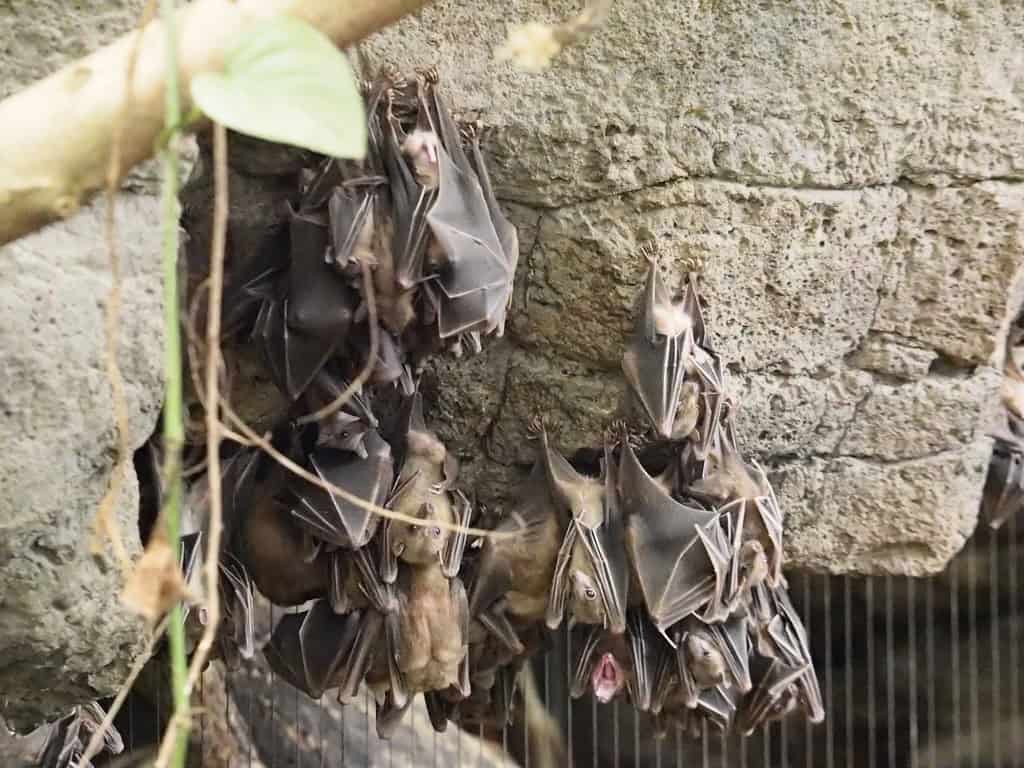
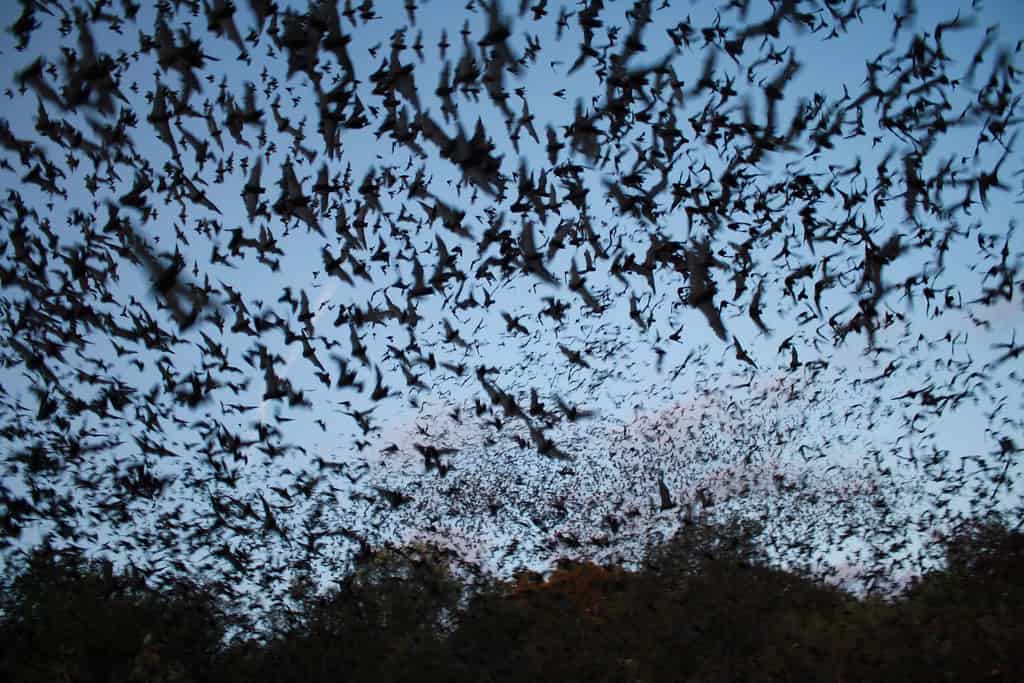
Many bat species hunt in groups, and their collective behavior exhibits emergent properties characteristic of complex systems studied in chaos theory. In colonies that can number millions of individuals, bats don’t follow centralized coordination but instead adhere to simple interaction rules that produce sophisticated group behaviors. When Mexican free-tailed bats emerge from Bracken Cave in Texas—home to over 15 million bats—they form spiraling columns that demonstrate mathematical properties of self-organized criticality. Within these groups, information about food sources spreads through the colony in patterns that follow power laws rather than normal distributions. Studies have shown that individual bats adjust their flight paths based on the success rates of nearby colony members, creating feedback loops that optimize the group’s overall foraging efficiency. This collective intelligence allows bat colonies to track shifting prey distributions across vast areas. The emergent patterns from these interactions create a collective hunting strategy far more effective than what individual bats could achieve alone—a perfect example of how order emerges from apparent chaos in biological systems.
Energy Conservation Through Chaotic Optimization
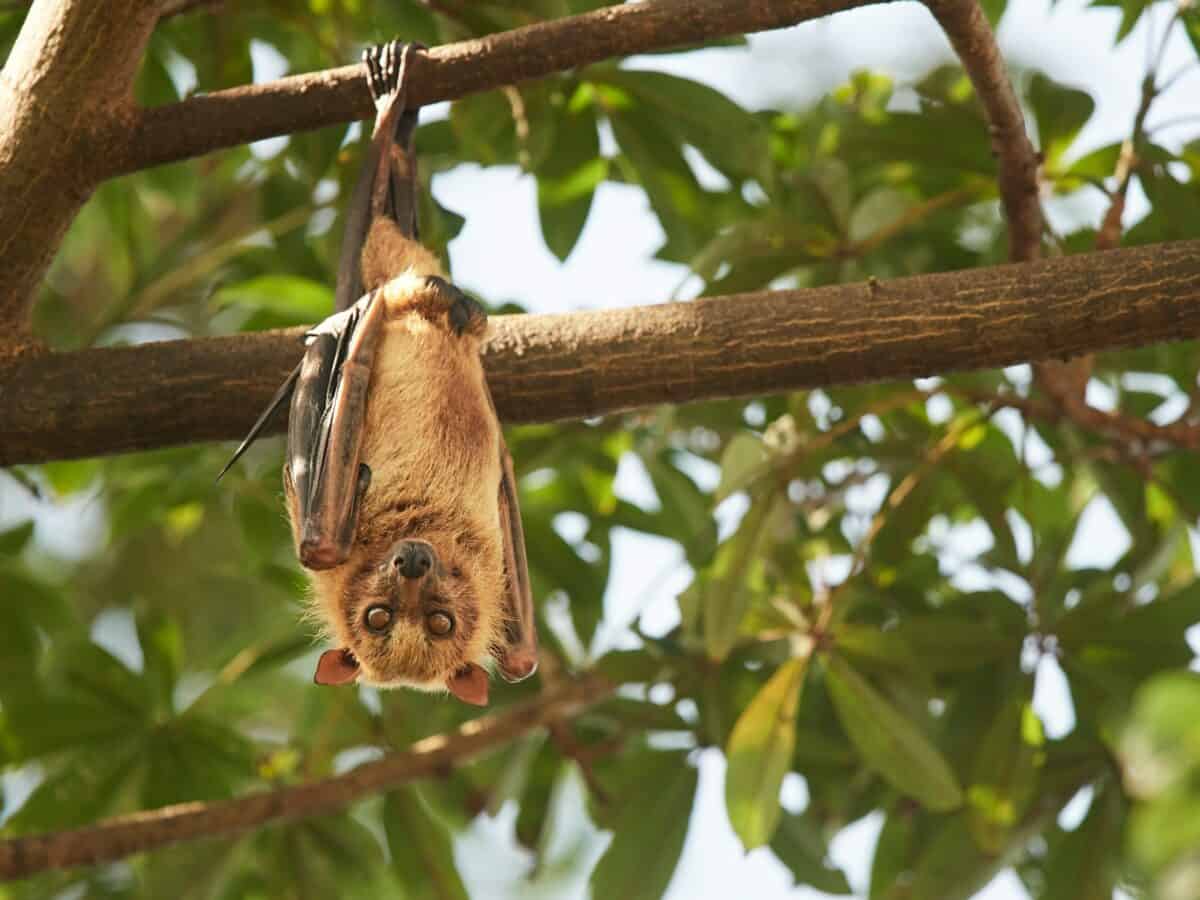
Bats face a critical energy management challenge: flying and echolocating consume substantial energy, yet they must remain efficient enough to obtain a net energy gain from their hunting. Studies measuring the metabolic rates of hunting bats have revealed that they employ what mathematicians would recognize as chaotic optimization algorithms to solve this energy equation. Rather than maintaining constant speed or altitude, bats vary their flight parameters in patterns that appear erratic but actually conserve energy. They exploit air currents, temperature gradients, and momentum in ways that minimize energy expenditure while maximizing hunting effectiveness. When researchers analyzed high-speed camera footage of hunting bats, they discovered flight patterns that align with mathematical models of chaotic attractors. These patterns allow bats to cover large areas while using 15-20% less energy than more straightforward flight paths would require. This energy optimization becomes particularly crucial during pregnancy or in environments where food is scarce. The bat’s ability to intuitively solve this complex optimization problem demonstrates how evolution has converged on solutions that mathematicians would later formalize in chaos theory.
Sensory Integration and Information Processing

The bat brain performs remarkable feats of sensory integration, combining echolocation data with other sensory inputs in ways that parallel chaos-based information processing. When hunting, bats don’t rely solely on echolocation but integrate information from their sense of smell, vision (in many species), thermal sensing, and memory. This multi-sensory approach creates a neural representation that researchers have found exhibits properties of high-dimensional chaotic systems. The bat brain uses what appears to be a form of reservoir computing—a machine learning approach inspired by chaotic dynamics—to extract meaningful patterns from this complex sensory stream. Neural recordings from bat brains show that initially chaotic neural firing patterns resolve into organized representations as the bat processes incoming information. This allows bats to distinguish between different types of insects based on their wing-beat patterns or even to recognize individual prey items they’ve encountered before. The chaotic dynamics in their neural processing actually enhance their ability to detect subtle patterns in noisy sensory data, similar to how chaos-based algorithms are used in artificial intelligence for pattern recognition.
Evolutionary Development of Chaotic Strategies

The alignment between bat hunting strategies and chaos theory raises fascinating questions about evolutionary development. Fossil evidence indicates that echolocating bats evolved approximately 50 million years ago, with their sophisticated hunting techniques developing gradually through natural selection. Computer simulations modeling the evolution of foraging strategies have demonstrated that in environments with unpredictable resource distribution, chaotic search patterns naturally emerge as the optimal solution. This suggests that bats didn’t need to “understand” chaos theory—rather, natural selection favored individuals whose innate behaviors happened to align with these mathematically optimal strategies. Genetic studies comparing different bat species show that genes associated with neural processing and spatial navigation have undergone accelerated evolution, particularly in regions that would affect the implementation of these chaos-aligned behaviors. Different bat families have independently evolved similar chaotic hunting strategies, representing a case of convergent evolution toward mathematically optimal solutions. This evolutionary development illustrates how natural selection can produce sophisticated mathematical strategies without conscious design—the principles of chaos theory were embedded in bat behavior millions of years before humans formalized them mathematically.
Human Applications Inspired by Bat Chaos

The discovery of chaos-based strategies in bat foraging has inspired numerous applications in human technology and problem-solving. Engineers have developed search algorithms based on bat foraging patterns that outperform traditional methods for locating resources in complex environments. These “bat algorithms” are now used in fields ranging from telecommunications network optimization to resource allocation in cloud computing. Military search-and-rescue operations have adopted search patterns inspired by bat Lévy flights, improving the efficiency of locating survivors in disaster scenarios. Autonomous drone swarms have been programmed with collective behavior rules derived from bat colonies, enabling them to adapt to changing conditions without centralized control. In robotics, echolocation systems modeled after bat sonar have been implemented in navigation systems for low-visibility environments. Even financial analysts have applied insights from bat foraging strategies to develop more effective portfolio diversification techniques in unpredictable markets. These human applications demonstrate how understanding the mathematical principles behind bat behavior can translate into practical solutions across diverse fields. The continued study of how bats implement chaos-based strategies promises to yield even more innovations as we further decode the sophisticated mathematics embedded in their natural behaviors.
Conclusion
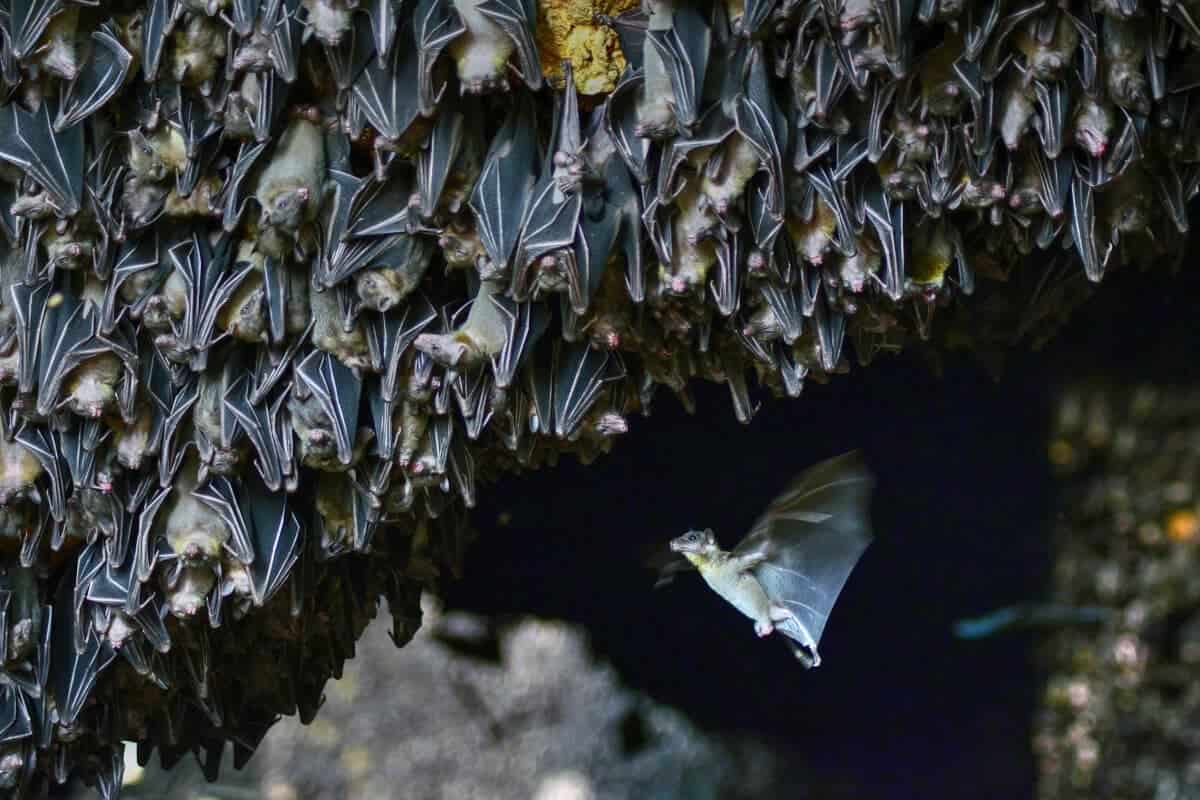
The relationship between bat foraging strategies and chaos theory represents one of nature’s most elegant examples of mathematical principles embedded in biological systems. Through millions of years of evolution, bats have developed hunting techniques that implement sophisticated mathematical concepts that humans only formalized in the 20th century. From their Lévy flight patterns and adaptive frequency modulation to their collective intelligence and neural processing, bats demonstrate how chaotic dynamics can be harnessed to create order and efficiency in complex environments. This convergence between biology and mathematics reminds us that the natural world often contains solutions to complex problems that we are still working to understand fully. As research continues to unveil the intricate workings of bat sensory systems, we gain not only a deeper appreciation for these remarkable creatures but also inspiration for new technological applications across multiple fields.

- The Secret Language of Dolphins Decoded by Researchers - July 20, 2026
- 7 Animals That Can Survive Extreme Environments You Couldn’t - July 20, 2026
- The Longest Snake Ever Found in the U.S. - July 20, 2026