

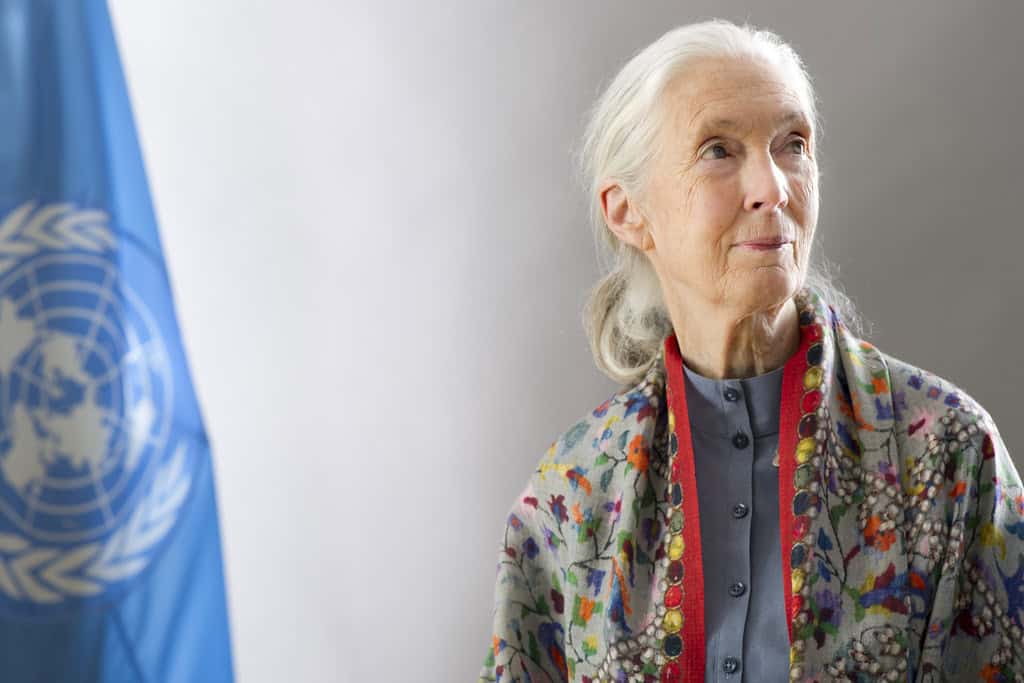
In the summer of 1960, a 26-year-old woman with no formal scientific training stepped onto the shores of Lake Tanganyika in what is now Tanzania. Armed with nothing but a notebook, binoculars, and an insatiable curiosity, Jane Goodall embarked on a journey that would revolutionize our understanding of our closest living relatives—chimpanzees. Her groundbreaking observations and unorthodox approach to studying these remarkable primates in their natural habitat didn’t just add new data to science; they fundamentally transformed how humans perceive chimpanzees and, by extension, how we understand ourselves. Through her pioneering work spanning over six decades, Goodall dismantled the rigid boundaries between humans and animals, revealed the complex social lives and emotional depth of chimpanzees, and created a legacy of conservation that continues to inspire generations. This is the story of how one extraordinary woman’s passion and perseverance forever changed our relationship with the natural world.
The Untrained Observer Who Rewrote Science

When Louis Leakey sent Jane Goodall to Gombe Stream National Park in 1960, the scientific community had significant reservations. Goodall had no university degree, no formal training in ethology or primatology, and was entering a field dominated by men with prestigious academic credentials. What she lacked in conventional qualifications, however, she made up for with patience, keen observational skills, and an approach unconstrained by existing scientific dogma.
This unconventional background proved to be her greatest asset. Free from the rigid methodological constraints of traditional science, Goodall approached her subjects differently. She gave the chimpanzees names instead of numbers—David Greybeard, Flo, Fifi—humanizing them in a way that was considered taboo in objective scientific research. This simple act represented a paradigm shift. By acknowledging chimpanzees as individuals with distinct personalities, Goodall introduced a revolutionary perspective that would eventually transform not just primatology, but our entire understanding of animal cognition and behavior.
Tool Use: The Discovery That Changed Everything

On November 4, 1960, Goodall made an observation that would shatter one of the fundamental distinctions between humans and animals. While watching a chimpanzee she had named David Greybeard, she witnessed him carefully select a grass stem, strip off the leaves, and insert it into a termite mound. After a moment, he withdrew the stem, now covered with termites, which he promptly ate. David Greybeard was making and using a tool. Until this moment, humans had been defined as “man the toolmaker,” with tool use considered a uniquely human trait that separated us from all other animals.
When Goodall reported this observation to her mentor Louis Leakey, he famously responded: “Now we must redefine tool, redefine Man, or accept chimpanzees as humans.” The discovery forced a complete reconsideration of human uniqueness and opened the floodgates to a new understanding of animal intelligence. Subsequent research has revealed tool use in many species, but Goodall’s observation was the first to definitively bridge what had been considered an unbridgeable gap between humans and other animals, forever altering our place in the natural world.
Challenging the Peaceful Ape Narrative
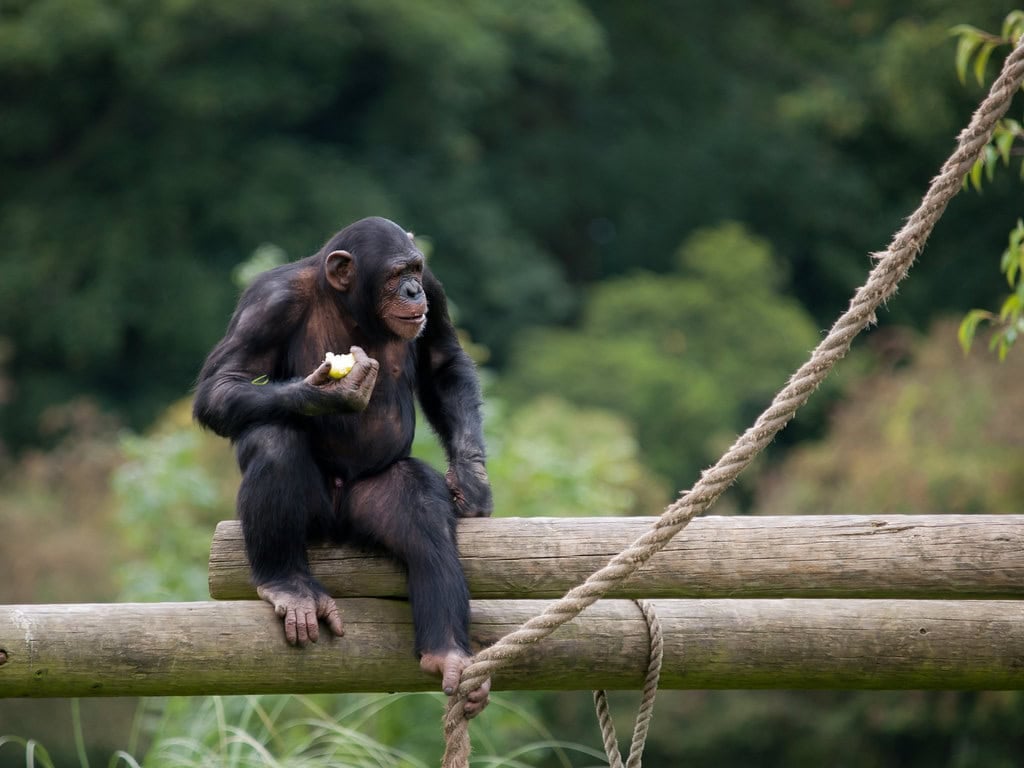
Prior to Goodall’s research, chimpanzees were largely portrayed as gentle, peaceful creatures—a view that aligned with certain idealistic notions about nature. However, as her long-term observations continued, Goodall documented behaviors that profoundly challenged this narrative. She witnessed the systematic killing of infant chimpanzees by adults, territorial warfare between neighboring communities, and even coordinated hunting parties that captured and consumed colobus monkeys with disturbing efficiency.
These observations of violence and aggression forced a painful reassessment of both chimpanzee and human nature. The discovery that our closest relatives engaged in behaviors resembling warfare and infanticide suggested that such tendencies might have deep evolutionary roots rather than being uniquely human cultural developments. While disturbing, these findings provided critical insights into the complex evolutionary history of violence and aggression in primates, including humans. Goodall’s unflinching documentation of these behaviors, despite their challenge to comforting narratives, exemplified her commitment to scientific truth over ideological preference.
The Emotional Lives of Chimpanzees

Perhaps Goodall’s most transformative contribution was revealing the rich emotional lives of chimpanzees. Through her meticulous observations, she documented behaviors that demonstrated love, joy, grief, and compassion. She observed chimpanzee mothers tenderly caring for their young, adolescents engaged in playful roughhousing, and adults consoling those who had lost conflicts. Particularly moving were her observations of how chimpanzees responded to death—showing behaviors that could only be described as grief, with mothers carrying the corpses of their deceased infants sometimes for weeks.
These findings directly challenged the prevailing scientific dogma that attributed emotions exclusively to humans and dismissed similar animal behaviors as mere instinct or anthropomorphism. By documenting these emotional responses with scientific rigor, Goodall helped establish that many emotions considered uniquely human are in fact shared across species boundaries. This recognition of emotional continuity between humans and chimpanzees didn’t just add to our knowledge—it fundamentally altered how science approaches the study of animal minds and has had profound implications for animal welfare and rights movements worldwide.
The Revolutionary Immersion Method

Goodall pioneered a research methodology that was considered radical at the time but has since become standard practice in ethological studies. Rather than maintaining traditional scientific distance from her subjects, she immersed herself in their world. She spent thousands of hours sitting quietly in the forest, allowing the chimpanzees to gradually accept her presence. This patience eventually granted her unprecedented access to their natural behaviors, unaltered by human interference. Her approach of habituation without interference allowed her to observe chimpanzees behaving naturally, revealing aspects of their lives that had remained hidden from previous researchers.
This immersive approach represented a significant departure from conventional scientific methodology of the time, which emphasized detachment and objectivity. Critics initially dismissed her work as unscientific precisely because of this personal involvement. However, the richness and depth of her observations eventually vindicated her methods. Today, the “habitation method” Goodall pioneered is recognized as essential for studying wild primates and many other animals in their natural environments, allowing researchers to gather data that would be impossible to obtain through more traditional, detached approaches.
From Scientist to Global Activist

In 1986, a pivotal moment transformed Jane Goodall from primarily a researcher to a global conservation activist. While attending a conference in Chicago, she participated in a session on conservation that opened her eyes to the rapid decline of chimpanzee habitats across Africa and the devastating impacts of the bushmeat trade and animal experimentation. She later recalled leaving the conference “as a scientist but coming out as an activist.” Recognizing that she could no longer focus solely on research while chimpanzees were disappearing, Goodall made the difficult decision to leave her beloved Gombe and dedicate herself to conservation advocacy.
Since that decision, Goodall has become one of the world’s most recognized and effective conservation advocates. She founded the Jane Goodall Institute in 1977, which now operates in more than 30 countries, implementing innovative community-centered conservation programs. Her Roots & Shoots program, started in 1991, has engaged hundreds of thousands of young people in environmental and humanitarian initiatives across more than 100 countries. At well over 80 years old, she still travels approximately 300 days a year, giving lectures and meeting with world leaders to advocate for environmental protection and animal welfare. This transformation from field researcher to global activist has arguably amplified her impact far beyond what might have been possible had she remained exclusively in academic science.
Dismantling the Human-Animal Divide

Perhaps Goodall’s most profound legacy lies in how she has fundamentally altered the perceived boundary between humans and animals. Before her work, Western science and philosophy maintained a sharp distinction between human and non-human animals. Humans were considered unique in their capacity for complex thought, emotions, culture, and moral consideration. Goodall’s discoveries systematically dismantled these supposed boundaries, revealing that chimpanzees possess many traits previously thought to be exclusively human: they make and use tools, have distinct cultural traditions that vary between communities, wage territorial wars, express a range of emotions, and maintain complex social and political relationships.
By revealing these continuities, Goodall hasn’t just added to our knowledge of chimpanzees—she has transformed our understanding of what it means to be human. Her work suggests that rather than existing in a category separate from other animals, humans occupy a position on a continuum of cognitive and emotional complexity. This perspective has profound implications not just for science but for ethics, forcing us to reconsider the moral status of non-human animals and our responsibilities toward them. In blurring the human-animal boundary, Goodall has challenged us to expand our circle of moral concern beyond our own species.
The Personal Connection Approach to Conservation

Goodall revolutionized not just how we study animals but how we approach conservation. Rather than advocating for traditional protected areas that exclude local communities, she pioneered an integrated approach that recognizes the interconnection between human welfare and wildlife conservation. Through the Jane Goodall Institute’s TACARE program (Take Care), launched in 1994, she implemented community-centered conservation efforts around Gombe that address poverty, education, healthcare, and sustainable livelihoods alongside environmental protection. This approach recognizes that wildlife cannot be protected without addressing the needs of people who share their habitat.
Furthermore, Goodall understood the power of individual stories to motivate conservation action. By sharing detailed accounts of individual chimpanzees like Flo and her family, she helped people around the world form emotional connections with animals they had never seen. This storytelling approach transformed abstract environmental concerns into personal moral imperatives. Rather than relying solely on scientific data to make the case for conservation, Goodall showed that personal connections to individual animals could motivate stronger conservation commitments than statistics alone ever could. This strategy has been adopted by countless conservation organizations that now highlight “ambassador animals” to generate public support.
A Female Pioneer in a Male-Dominated Field

Goodall’s impact extends beyond her scientific discoveries to include her role as a trailblazer for women in science. When she began her work in 1960, primatology and ethology were overwhelmingly male-dominated fields. Women scientists were rare, and those who did pursue research often faced significant barriers and discrimination. Goodall’s success, achieved without traditional academic credentials, helped pave the way for other women to enter the field. Interestingly, primatology has since become a field with significant female representation—a transformation due in no small part to the influence of Goodall and the other women Louis Leakey recruited, including Dian Fossey and Biruté Galdikas.
Goodall’s approach to science itself challenged traditionally “masculine” scientific values that emphasized detachment and objectivity. Her willingness to form emotional connections with her subjects and to acknowledge those connections in her scientific writing represented a different way of doing science—one that valued empathy and connection alongside analytical rigor. This integration of traditionally “feminine” values into scientific practice has influenced generations of researchers, both male and female, and contributed to broader methodological diversity in the biological sciences. As a public figure, Goodall has also served as a powerful role model, showing young women that they can succeed in scientific careers and make world-changing contributions.
Digital Age Impact and Popular Culture Influence

Goodall’s influence extends far beyond academic circles into popular culture and the digital landscape. Her image and story have been featured in countless documentaries, books, and educational materials. National Geographic’s 1963 feature on her work introduced millions to the remarkable young woman living among wild chimpanzees. The famous photograph of young Jane reaching out to touch the finger of a baby chimpanzee—reminiscent of Michelangelo’s Creation of Adam—became an iconic image that captured the public imagination and symbolized a new relationship between humans and animals.
In the digital age, Goodall has embraced new technologies to expand her reach. The Jane Goodall Institute utilizes satellite imagery and digital mapping tools to monitor forest cover and plan conservation efforts. During the COVID-19 pandemic, Goodall adapted to virtual platforms, continuing her advocacy through online lectures and interviews that reached millions worldwide. Her presence on social media platforms has allowed her to connect directly with younger generations passionate about environmental issues. This adaptation to changing media landscapes has ensured that her message continues to resonate with new audiences across generations, maintaining her position as one of the world’s most recognized and respected scientists and conservationists.
The Next Generation: Goodall’s Ongoing Legacy

The Gombe research project that Goodall initiated in 1960 has evolved into one of the longest-running wildlife studies in the world. Researchers continue to make discoveries about chimpanzee behavior, ecology, and cognition based on over 60 years of accumulated data. This unprecedented longitudinal study has allowed scientists to observe multiple generations of chimpanzees, providing unique insights into population dynamics, aging, cultural transmission, and social development that would be impossible in shorter-term studies. The research center she established has trained hundreds of African scientists, creating a generation of local experts committed to continuing her work.
Beyond Gombe, Goodall’s influence shapes how young scientists approach their work across multiple disciplines. Her emphasis on patience, empathy, and long-term thinking has influenced fields ranging from conservation biology to animal cognition studies. Through the Roots & Shoots program, she has directly mentored thousands of young people who are now working in conservation, animal welfare, and environmental protection around the world. As climate change and habitat loss create ever more urgent conservation challenges, Goodall’s approach of combining scientific rigor with compassionate activism and community engagement provides a template for effective action that inspires new generations of conservation leaders.
A Legacy That Transcends Species Boundaries

Jane Goodall’s journey from an untrained young woman observing chimpanzees in Gombe to one of the world’s most influential scientists and conservationists represents a remarkable testament to the power of passion, perseverance, and unconventional thinking. Her discoveries about chimpanzee tool use, complex social relationships, and emotional lives fundamentally altered our understanding of what it means to be human and our place in the natural world. By revealing the remarkable similarities between humans and our closest living relatives, she has forced us to reconsider the arbitrary boundaries we have drawn between ourselves and other animals.
Her legacy extends far beyond her scientific contributions to encompass her pioneering approach to community-centered conservation, her role as an inspiring figure for women in science, and her tireless advocacy for environmental protection and animal welfare. Even in her ninth decade, Goodall continues to travel the world, sharing her message of hope and individual responsibility with audiences of all ages. Perhaps most importantly, she has shown that scientific understanding, far from diminishing our wonder at the natural world, can deepen our appreciation for its complexity and reinforce our obligation to protect it.
As human activities continue to threaten the survival of chimpanzees and countless other species, Goodall’s work reminds us of what we stand to lose—not just biodiversity, but insights into our own origins, behavior, and potential. Her vision of humans living in harmony with nature continues to inspire conservation efforts worldwide. In changing how we see chimpanzees, Jane Goodall has ultimately changed how we see ourselves and our responsibilities to the living world we share.
In the words she often shares from her mother that guided her remarkable journey: “If you really want something, and you work hard, and you take advantage of opportunities, and you never give up, you will find a way.” Through living these principles, Jane Goodall found a way not just to study chimpanzees, but to transform our relationship with the natural world forever.

From exploring the marine wonders in the Azores and witnessing the vast savannas of Kenya, to delving deep into the rich biodiversity of South Africa and traversing iconic landscapes in Australia and the US like Yellowstone, Chris's experiences are vast.
With a penchant for diving alongside sharks, the ocean holds a special place in his heart.
Through his academic insights, he champions wildlife conservation, striving with 'Animals Around The Globe' to cultivate a profound connection between humans and animals, enhancing our mutual appreciation.
Connect with him at Feedback@animalsaroundtheglobe.com.
- Spirit Animals: What Yours Means and How to Find It - July 31, 2026
- Why the World’s Loudest Animals Are Going Quiet - July 31, 2026
- This Animal Produces the Loudest Mating Call on Earth - July 31, 2026
Leave a comment
You must be logged in to post a comment.