

In the intricate world of arachnids, spiders have evolved remarkable sensory capabilities that make them one of nature’s most successful predators. While many creatures rely primarily on vision or scent to detect prey, spiders have developed an extraordinary ability to interpret vibrations that travel through their webs. This sophisticated system allows them to not only detect when something has been caught but also to determine what type of creature is struggling in their silken trap. From identifying potential mates to distinguishing between prey and predators, a spider’s web serves as an extension of its sensory system—a complex communication network that transmits crucial information through subtle tremors and movements. This article explores the fascinating world of how spiders use web vibrations as a sophisticated detection system, revealing the remarkable evolutionary adaptations that have made these eight-legged architects such successful hunters.
The Web as an Extension of Spider Senses

A spider’s web is far more than just a trap for catching prey—it functions as a highly sophisticated extension of the spider’s sensory system. Unlike humans who primarily rely on vision and hearing, spiders have specialized organs called slit sensilla and trichobothria (fine sensory hairs) located on their legs that can detect even the most minute vibrations traveling through the silk strands of their web. These vibration-sensitive organs are so finely tuned that they can detect movements smaller than the width of an atom.
This remarkable sensitivity transforms the entire web structure into what scientists call an “extended phenotype”—essentially an external part of the spider’s body that serves as both a hunting tool and a sensory organ. When any creature makes contact with the web, it creates vibrations that travel through the silk threads to the spider’s legs, providing detailed information about what has been caught. This sensory extension allows spiders to effectively monitor a much larger area than would be possible with their body alone, turning their entire web into a three-dimensional sensory field that continuously feeds them information about their environment.
Decoding Different Types of Vibrations

Spiders possess the remarkable ability to differentiate between various types of vibrations that travel through their webs. Research has shown that they can distinguish between the vibrations caused by prey animals, potential mates, predators, or even non-living disturbances like wind or falling debris. Each of these sources creates distinctive vibration patterns with unique frequencies, amplitudes, and durations that the spider interprets much like we interpret different sounds or visual patterns.
For example, the struggling movements of a trapped insect create rapid, erratic vibrations that signal “food” to the spider. In contrast, the deliberate movements of another spider of the same species might create rhythmic, patterned vibrations that indicate a potential mate. Meanwhile, the heavy vibrations from larger animals might signal danger. This sophisticated discrimination ability allows spiders to respond appropriately to different situations without wasting energy investigating every disturbance or putting themselves at risk by approaching a potential threat. Studies have even found that some spiders can identify specific insect species based solely on the unique vibration “signature” they produce when caught in the web.
Specialized Web Architectures for Better Sensing

Different spider species have evolved specialized web designs that enhance their ability to detect and interpret vibrations. The classic orb web, with its radiating spokes and spiral catching threads, is particularly effective at transmitting vibrations from any point on the web to the center where the spider often waits. The radial threads act as information highways, efficiently conducting vibrations from the outer edges of the web to the hub. Some orb-weaving spiders even maintain tension in these radial threads by pulling them tight with their legs while waiting, which improves vibration transmission.
Other web designs serve different sensory purposes. Sheet webs, built by species like the common house spider, include a dense horizontal sheet with irregular threads extending above and below. When prey hits these vertical threads, they fall onto the sheet, creating distinctive vibrations that travel to the spider’s hiding place. Cobweb spiders build three-dimensional tangles that transmit vibrations from multiple directions. Some specialized hunters, like the ogre-faced spider, build minimal “net” webs that they hold with their front legs, using the web as both a sensing device and a throwing net to actively capture prey when vibrations indicate something has passed nearby. These diverse web architectures demonstrate how evolution has shaped web design to optimize vibration detection based on each species’ hunting strategy.
The Physics Behind Web Vibration Transmission

The transmission of vibrations through spider silk involves fascinating physics that spiders have evolved to exploit. Spider silk itself is an extraordinary material with unique properties that make it ideal for vibration detection. The silk combines remarkable elasticity with high tensile strength, creating a medium that efficiently conducts vibrations while remaining strong enough to withstand the struggling of captured prey. Different types of silk within the same web have varying tension levels, which affects how vibrations travel through them—similar to how tighter guitar strings produce higher-frequency sounds.
The geometry of the web also plays a crucial role in vibration transmission. Research has shown that vibrations travel along silk strands at speeds between 10-30 meters per second, depending on the tension and type of silk. As these vibrations reach junctions where multiple strands connect, they can be either amplified or dampened. Some spiders strategically position themselves at nodes in the web where vibrations from multiple directions converge, maximizing their ability to detect disturbances from anywhere in the web. The spider’s ability to interpret these complex vibrational inputs requires sophisticated neural processing that scientists are still working to fully understand.
How Spiders Pinpoint Prey Location
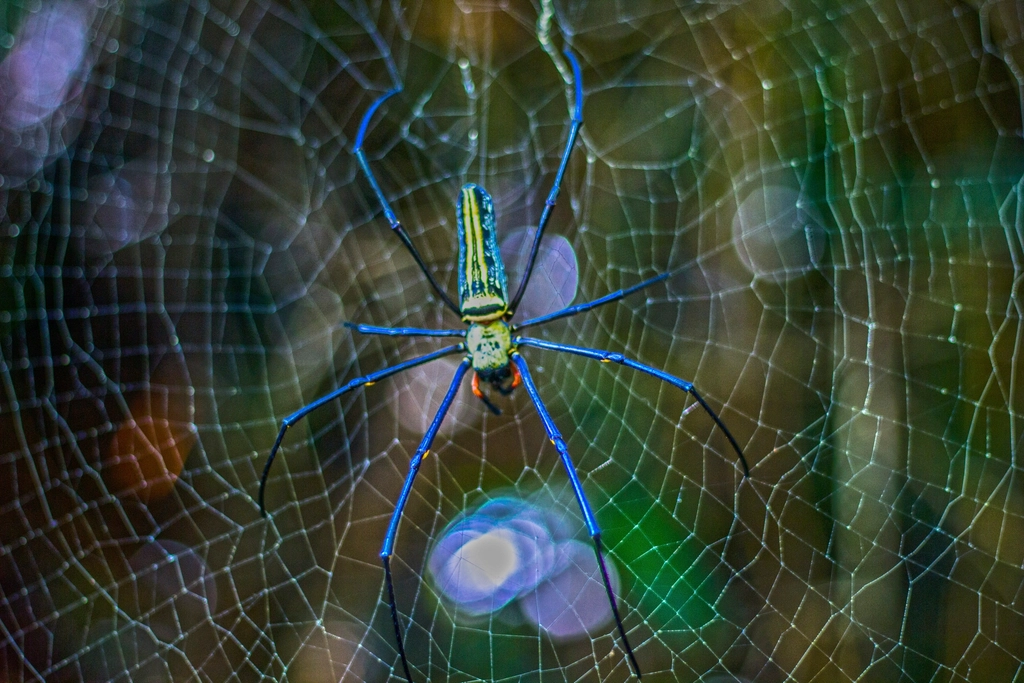
One of the most remarkable aspects of a spider’s vibration-sensing ability is how precisely they can locate the source of vibrations within their web. This process, known as triangulation, allows spiders to determine not just that something has been caught, but exactly where it is located. When prey becomes entangled in a web, the vibrations travel through multiple silk strands at different speeds, reaching the spider’s eight legs at slightly different times. The spider’s nervous system processes these minute time differences to calculate the distance and direction to the source of the vibrations.
Studies using high-speed cameras have revealed that spiders can pinpoint prey with astonishing accuracy, often moving directly to the exact location of a struggling insect even in complete darkness. Experiments where researchers artificially created vibrations at specific points in webs showed that spiders could locate the source within just a few millimeters. This precision is essential for hunting efficiency, as it allows spiders to approach prey from the optimal angle and reduces the time and energy spent searching the web. Some species have been observed “plucking” their web strands after detecting initial vibrations, creating their own test signals that help refine their determination of prey location before moving in for the capture.
Distinguishing Between Prey and Non-Prey

A critical survival skill for spiders is their ability to distinguish between valuable prey and other objects that might trigger web vibrations. This discrimination prevents spiders from wasting energy investigating non-food items or potentially exposing themselves to danger by approaching threats. Research has shown that spiders analyze multiple characteristics of vibrations, including frequency patterns, amplitude (strength), duration, and rhythm to make these distinctions. The vibrational signature of a struggling fly differs markedly from that of a leaf blown into the web or a raindrop striking the silk.
Some spider species have developed remarkably specific prey recognition abilities. For instance, the tropical orb-weaving spider Nephila clavipes can distinguish between the vibrations of different insect orders, responding more quickly to the vibrations of flies (their preferred prey) than to those of bees or wasps (which might sting them). Other spiders ignore the regular, rhythmic vibrations caused by wind or rain while remaining highly sensitive to the erratic vibrations typical of struggling insects. This selective attention conserves energy and reduces unnecessary wear on the web from frequent movements to investigate non-prey items. Experiments have shown that spiders can even learn to ignore artificial vibrations after repeated exposure if those vibrations never result in a food reward.
Vibrations in Courtship and Reproduction

Web vibrations play a crucial role beyond prey detection, serving as a sophisticated communication system for courtship and reproduction. Male spiders face a significant challenge when approaching a female’s web—they must avoid being mistaken for prey and eaten. To overcome this danger, males of many species have evolved specific vibrational patterns they create by plucking and strumming the female’s web in distinctive rhythms. These vibration “songs” serve as species-specific identification signals that inform the female a potential mate, not a meal, has arrived.
Research using laser vibrometers to record these courtship vibrations has revealed remarkable complexity in these signals. Male black widow spiders, for example, produce vibrations with specific frequencies that inhibit the female’s predatory response. In some orb-weaving species, males perform elaborate multi-stage vibrational sequences that can last for hours, with the quality of these performances possibly influencing female mate choice. The vibrational dialogues between male and female spiders can involve sophisticated back-and-forth exchanges, with females responding with their own vibration patterns that either encourage or discourage the approaching male. This complex communication system demonstrates how web vibrations have evolved to serve multiple functions in spider biology beyond simple prey detection.
Detecting and Avoiding Predators

Just as spiders use web vibrations to detect prey, they also rely on these signals to identify potential predators and threats. Larger animals that disturb the web, such as birds or wasps that hunt spiders, create distinctively heavy or powerful vibrations that trigger defensive responses. When a spider detects these threatening vibration patterns, it may employ various evasion strategies depending on the species—some quickly drop from the web on a safety line of silk, others rush to the edge of the web to hide, while some remain motionless to avoid detection.
Some remarkable adaptations have evolved around this predator detection system. Certain orb-weaving spiders build “decoy” spider shapes in their webs using bundles of silk and debris, then position themselves away from this decoy. When a predator creates vibrations by attacking the decoy, the spider can escape while the predator is distracted. Other species manipulate web tension to reduce vibration transmission when predators are detected nearby, essentially “muting” their sensory system temporarily to avoid giving away their position. Research has even shown that some spiders can distinguish between the vibrations caused by parasitoid wasps (which specifically hunt spiders) and other similarly sized insects, allowing for highly specific threat responses. These sophisticated detection and evasion systems demonstrate how central vibration sensing is to spider survival beyond simply locating prey.
Web Vibrations and Environmental Monitoring
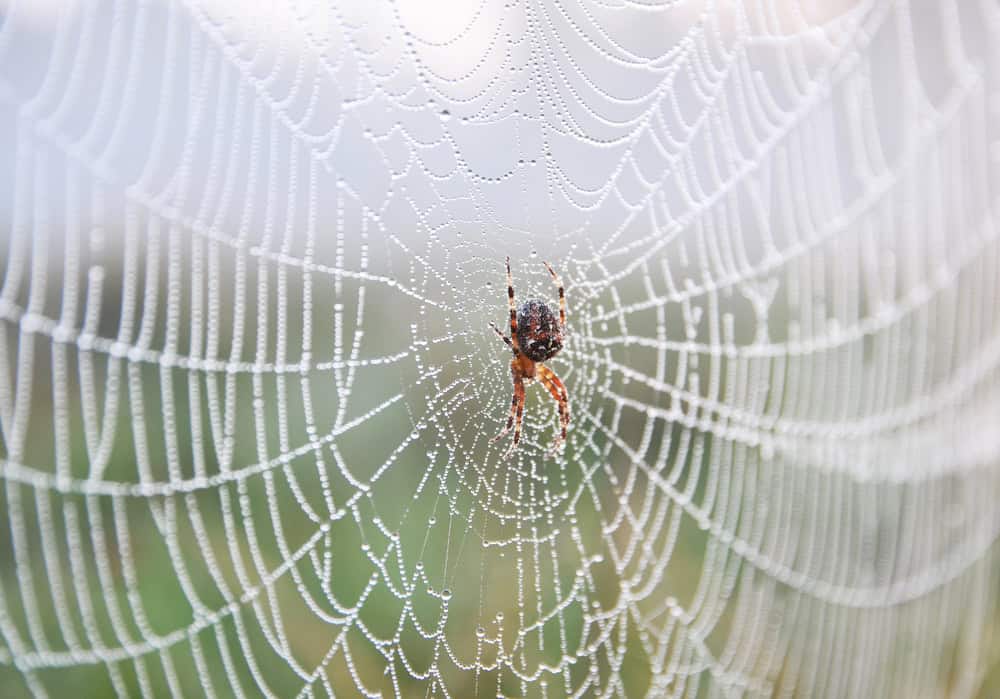
Beyond detecting prey and predators, spiders use web vibrations as a comprehensive environmental monitoring system. Their webs function as sophisticated weather stations, allowing them to detect changing environmental conditions that might affect their survival or hunting success. Heavy raindrops striking the web create distinctive vibration patterns that may prompt the spider to seek shelter or reinforce the web structure. Similarly, increasing wind strength produces characteristic vibrations that warn the spider of potential web damage, giving them time to either strengthen critical anchor points or temporarily dismantle portions of the web to prevent complete destruction.
This environmental awareness extends to more subtle conditions as well. Research suggests that some spiders can detect humidity changes through alterations in how vibrations travel through differently tensioned silk as it absorbs moisture. Temperature changes likewise affect silk tension and vibration transmission characteristics, potentially providing spiders with thermal information. Some species have even been observed adjusting their web-building behavior based on these environmental vibration cues, building more robust structures when stormy conditions are detected or constructing more open designs during calm periods. This sophisticated use of vibrational information for environmental monitoring demonstrates how deeply integrated vibration sensing is in spider ecology beyond simple prey detection.
Learning and Memory in Vibration Interpretation

Emerging research has revealed that spiders don’t simply rely on innate, hardwired responses to web vibrations—many species demonstrate remarkable learning abilities and memory in how they interpret these signals. Studies have shown that spiders can form associations between specific vibration patterns and outcomes, adjusting their responses based on past experiences. For example, after repeatedly encountering non-prey items that create particular vibration patterns, spiders learn to ignore these false alarms, demonstrating a form of habituation that conserves energy and reduces unnecessary wear on their webs.
More impressively, some spider species display complex learning in their vibration responses. Researchers found that certain orb-weavers can learn to associate artificially created vibration patterns with food rewards, responding more quickly to these patterns over time. When the reward was changed or removed, the spiders gradually extinguished this learned response. Studies of jumping spiders, which use both vision and vibration sensing, show they can remember specific vibration patterns associated with different prey types for several days. This cognitive flexibility in vibration interpretation suggests that spider brains, despite their small size, contain sophisticated neural circuitry for processing and remembering complex sensory information—a capability that allows them to continuously refine their hunting strategies based on experience.
Technological Applications Inspired by Spider Sensing

The remarkable vibration-sensing abilities of spiders have inspired scientists and engineers to develop new technologies that mimic these natural systems. Researchers have created artificial vibration sensors based on the structure and function of spider slit sensilla that can detect minute movements and vibrations with extraordinary sensitivity. These bio-inspired sensors have applications in structural health monitoring, where they can detect early signs of damage in buildings, bridges, and other infrastructure before problems become visible to the human eye.
The principles of how spiders process vibrational information have also influenced developments in signal processing algorithms and sensor network design. Engineers have developed distributed sensor systems that, like a spider’s web, can triangulate the source of vibrations across large areas. These systems have applications in security monitoring, earthquake early warning systems, and even wildlife tracking. Military applications include ground sensors that can detect and classify approaching vehicles or personnel based on their vibration signatures. Some researchers are even developing medical devices inspired by spider vibration sensing that can detect subtle changes in a patient’s movements or heartbeats. These technological adaptations of spider sensory systems demonstrate how understanding biological mechanisms can lead to innovative solutions to human engineering challenges.
The Evolutionary Marvel of Spider Vibration Sensing

The sophisticated vibration-sensing abilities of spiders represent one of nature’s most remarkable evolutionary achievements. This sensory system has evolved over hundreds of millions of years, with evidence of web-building spiders dating back to the Early Devonian period, approximately 385 million years ago. The precision and sensitivity of spider vibration detection have been refined through countless generations of natural selection, resulting in a sensory capability that allows these small creatures to thrive as predators despite their limited vision in many species.
What makes this evolutionary adaptation particularly fascinating is how it represents an alternative pathway to sensory sophistication compared to the vision-dominated sensory systems that evolved in vertebrates. While mammals, birds, and reptiles evolved increasingly complex eyes and visual processing centers, spiders developed an entirely different sensory modality based on mechanical vibrations. This divergent evolutionary path demonstrates nature’s remarkable ability to find multiple solutions to the challenges of survival. The spider’s web-based vibration sensing system serves as a powerful reminder that intelligence and sensory sophistication in nature take many forms, and that remarkable sensory capabilities can evolve in even relatively small nervous systems when driven by the pressures of natural selection. Understanding these alternative pathways to sensory excellence not only deepens our appreciation of spider biology but also expands our conception of what sensory systems might be possible both in nature and in our technological designs.

- The Secret Language of Dolphins Decoded by Researchers - July 20, 2026
- 7 Animals That Can Survive Extreme Environments You Couldn’t - July 20, 2026
- The Longest Snake Ever Found in the U.S. - July 20, 2026