


In the remote Galápagos Islands, where Charles Darwin once observed the famous finches that helped him develop his theory of evolution, lurks a remarkable oddity in the bird world: the vampire finch. These small, seemingly innocent birds have evolved one of the most unusual feeding behaviors in the avian kingdom – they drink the blood of other birds. Unlike their seed-eating relatives, these finches have developed a taste for blood that helps them survive in their harsh island environment. This article explores the fascinating world of vampire finches, their unique adaptations, and the ecological factors that have driven them to evolve this extraordinary survival strategy.
The Peculiar Identity of Vampire Finches
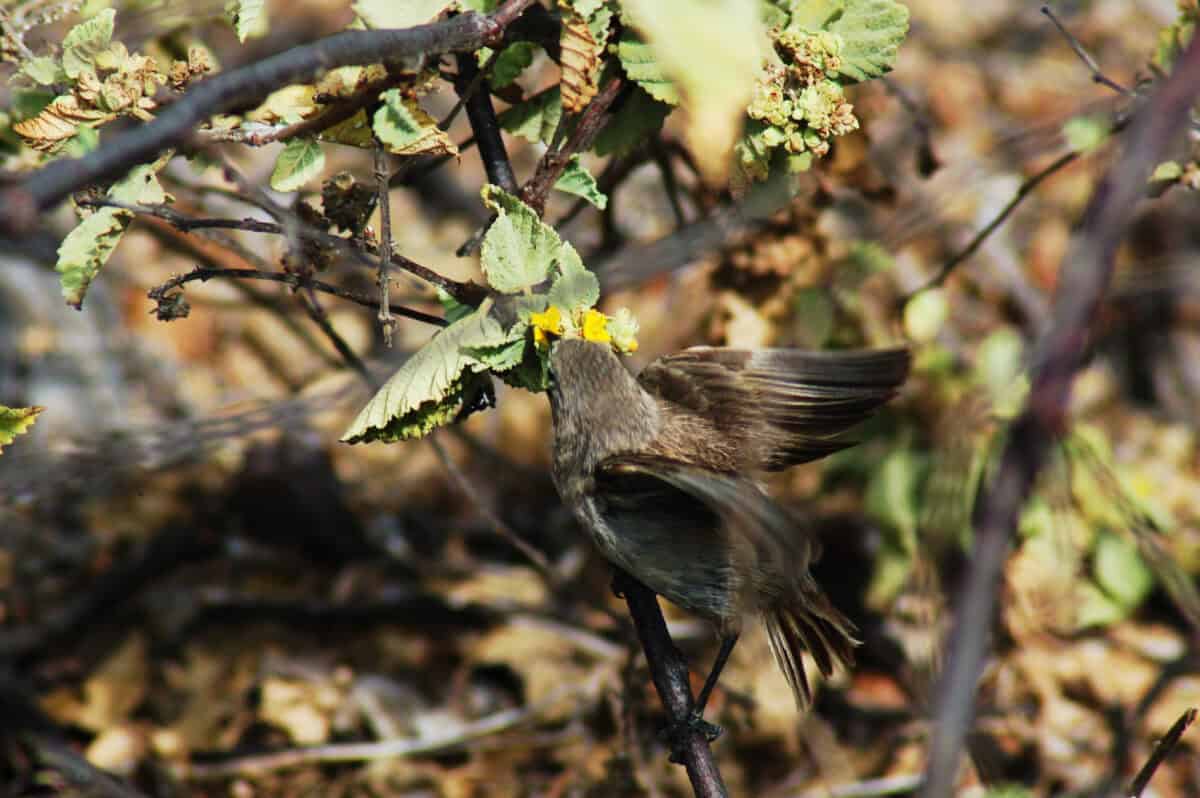
Vampire finches (Geospiza difficilis septentrionalis) are a subspecies of the sharp-beaked ground finch native to the Galápagos Islands, particularly Wolf and Darwin Islands. Despite their bloodthirsty reputation, these birds are actually small, measuring about 12.5-14 cm (5-5.5 inches) in length with predominantly black feathers among males and brownish-gray plumage on females. While they might look ordinary at first glance, their sharp, pointed beaks give a hint to their specialized feeding behavior. These beaks have evolved not just for cracking seeds like their relatives, but for a more sinister purpose – piercing the skin of larger birds to access their blood.
Evolution of Blood-Drinking Behavior

The vampire finch’s blood-drinking behavior is believed to be an evolutionary adaptation that developed from their normal feeding behavior. Originally, these finches likely picked parasites from the feathers of larger birds like boobies, providing a beneficial cleaning service. Over time, this behavior evolved into pecking at the skin, first at the base of feathers where the skin is thin, and eventually to deliberately piercing the skin to drink blood. This evolutionary progression represents a remarkable example of how species can adapt to exploit new food sources when resources are scarce. Unlike obligate hematophages (animals that exclusively feed on blood) like vampire bats, vampire finches incorporate blood as just one component of their varied diet.
The Mechanics of Blood Feeding

The blood-feeding technique of vampire finches is both methodical and opportunistic. These finches typically target seabirds, particularly Nazca and blue-footed boobies. The finch begins by hopping onto the back of a booby and using its sharp beak to peck at the base of the bird’s feathers, creating a small wound. Once blood begins to flow, the finch drinks it directly from the wound. Remarkably, the victim birds rarely react aggressively to this behavior, often appearing to tolerate it with minimal resistance. Scientists believe this may be because the finches also provide a grooming service by removing parasites, creating a complex relationship that isn’t purely parasitic. The finches may consume up to a teaspoon of blood during a single feeding session, providing vital proteins and nutrients.
Ecological Factors Driving Blood Consumption

The harsh environment of Wolf and Darwin Islands plays a crucial role in shaping the vampire finch’s unusual dietary habits. These isolated islands experience frequent drought conditions, leading to scarcity of traditional food sources like seeds, fruits, and insects. The limited freshwater supply also poses a significant challenge for survival. Blood-feeding provides a solution to both problems, offering not only protein and nutrients but also much-needed hydration, as blood is approximately 90% water. This adaptation allows vampire finches to survive when other food sources become scarce, demonstrating nature’s remarkable ability to find solutions to environmental challenges. The blood-drinking behavior is observed more frequently during dry seasons, supporting the theory that it serves primarily as a survival mechanism during times of scarcity.
Vampire Finches’ Normal Diet

Despite their dramatic nickname, vampire finches don’t subsist solely on blood. Their regular diet is quite varied and consists primarily of seeds, insects, and nectar – similar to other Darwin’s finches. They also regularly consume eggs, breaking booby eggs by rolling them against rocks until they crack open, then feeding on the nutritious contents. Additionally, they engage in the more typical behavior of picking parasites from the feathers of larger birds.
The blood-drinking behavior, while notable, is actually just one feeding strategy in their diverse dietary repertoire. During seasons when vegetation is plentiful and seeds and insects are abundant, the finches rely less on blood and more on these conventional food sources. This dietary flexibility is key to their survival in an environment where food availability can fluctuate dramatically.
Relationship with Host Birds

One of the most fascinating aspects of vampire finches’ behavior is their complex relationship with the birds they feed on, particularly the Nazca and blue-footed boobies. Unlike typical parasitic relationships, the interaction between vampire finches and boobies seems to be more nuanced. The boobies show remarkable tolerance for the blood-feeding behavior, rarely attempting to chase away the finches. This tolerance may stem from the fact that finches provide a valuable service by removing parasites from the boobies’ feathers.
Additionally, the amount of blood consumed by finches is minimal compared to the booby’s total blood volume, causing little harm to the host. Some researchers have described this relationship as falling somewhere between commensalism (where one organism benefits while the other is unaffected) and parasitism (where one organism benefits at another’s expense). The boobies’ tolerance may also be influenced by the isolated nature of the islands, where few predators exist, reducing the boobies’ natural defensiveness.
Scientific Studies and Observations

Scientific interest in vampire finches has grown steadily since their unusual behavior was first documented in the mid-20th century. Researchers like Bowman and Billeb conducted early observations in the 1960s, documenting the blood-feeding behavior and theorizing about its origins. More recent studies have employed modern techniques to better understand the genetic, behavioral, and ecological factors at play.
Field researchers often spend months on the remote islands, meticulously recording feeding patterns, social interactions, and environmental conditions. DNA analysis has helped scientists trace the evolutionary relationships between vampire finches and other Darwin’s finches, shedding light on when and how this unique adaptation emerged. Despite these efforts, studying vampire finches remains challenging due to their remote habitat, and many questions about their behavior and evolution remain unanswered, making them an ongoing subject of scientific fascination.
Vampire Finches in the Context of Darwin’s Theory

Vampire finches represent a compelling example of the adaptive radiation that made Darwin’s finches famous in evolutionary biology. When Charles Darwin visited the Galápagos in 1835, he noted how finches on different islands had beaks adapted to their specific food sources. This observation later contributed significantly to his theory of evolution by natural selection. The vampire finch, with its specialized feeding behavior, demonstrates how natural selection can drive species to exploit unusual ecological niches when faced with environmental pressures.
The progression from seed-eating to occasional blood-drinking illustrates how small behavioral adaptations can evolve into more dramatic specialized behaviors over time. If Darwin had observed the vampire finches directly, they likely would have provided him with an even more striking example of how species can adapt to survive in challenging environments. Today, evolutionary biologists continue to study these finches as living examples of ongoing evolution and adaptation.
Conservation Status and Threats

While vampire finches are not currently listed as endangered, they face numerous challenges common to many Galápagos species. Their restricted range—primarily Wolf and Darwin Islands—makes them vulnerable to environmental changes. Climate change poses a particular threat, as increasing temperatures and changing rainfall patterns could disrupt the delicate ecological balance of the islands. Introduced species also represent a significant danger, as non-native predators or competitors could devastate the finch population.
Moreover, disease outbreaks, such as the avian pox that has affected other Galápagos birds, could potentially impact vampire finch populations. Conservation efforts for Galápagos wildlife broadly benefit these specialized finches, but their unique dietary adaptation raises questions about their resilience in the face of environmental change. If their host species (primarily boobies) were to decline, vampire finches might lose a crucial food source, highlighting the interconnected nature of island ecosystems.
Cultural Impact and Human Perception

The vampire finch has captured human imagination due to its unusual and somewhat macabre feeding habit. While not as famous as other Galápagos species like giant tortoises or marine iguanas, these blood-drinking birds have featured in numerous nature documentaries, scientific publications, and popular science articles. Their nickname, referencing the blood-drinking vampires of folklore, has helped cement their place in popular culture.
For many, the vampire finch challenges preconceptions about birds, which are typically seen as seed-eaters or insectivores rather than blood-drinkers. This fascinating example of nature’s adaptability serves as a reminder of the incredible diversity of survival strategies that have evolved on our planet. For ecotourists visiting the Galápagos, catching a glimpse of these finches engaged in their unique feeding behavior represents a rare wildlife spectacle, though the remote location of Wolf and Darwin Islands means that relatively few visitors witness it firsthand.
Other Blood-Feeding Birds
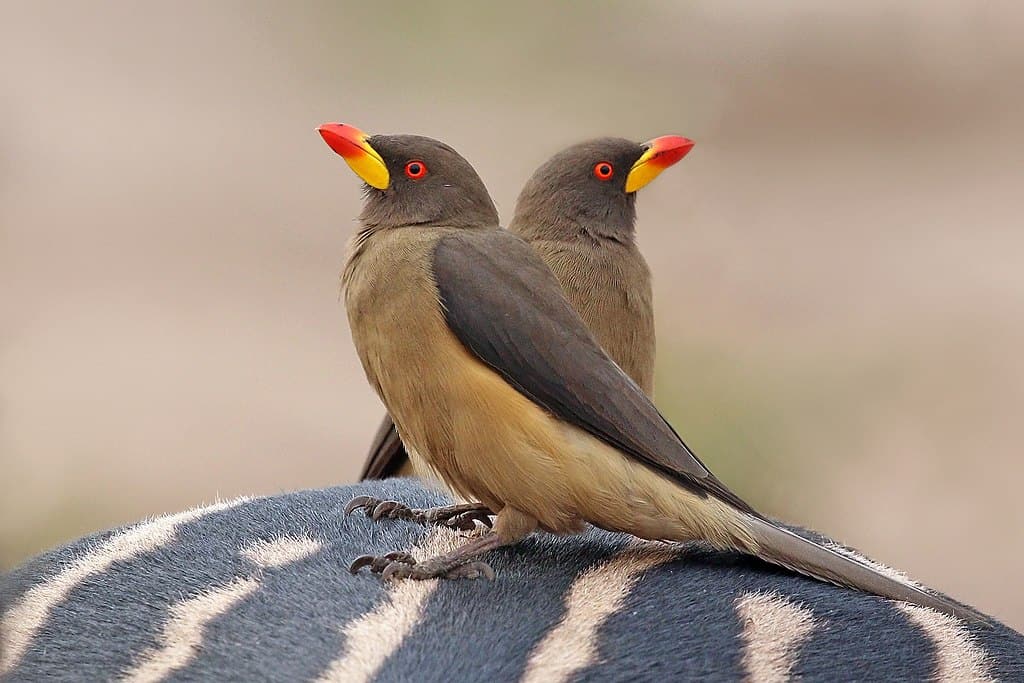
While the vampire finch stands out for its unusual behavior, it’s not entirely alone in the avian world when it comes to blood consumption. The oxpecker birds (Buphagus) of sub-Saharan Africa also occasionally consume blood, though they primarily feed on ticks and other parasites found on large mammals. Unlike vampire finches, oxpeckers sometimes exacerbate wounds on their host animals to encourage bleeding rather than creating new wounds. Another example is the hood mockingbird of the Galápagos, which has been observed drinking blood from wounds on seabirds, though less frequently than vampire finches.
These examples of convergent evolution—where similar traits evolve independently in different species—highlight how blood-feeding can emerge as a viable survival strategy under certain ecological conditions. However, true hematophagy (blood-feeding) remains rare among birds compared to other animal groups like insects (mosquitoes, bedbugs) and mammals (vampire bats), making the vampire finch all the more remarkable as an evolutionary oddity.
Conclusion: Nature’s Remarkable Adaptation

The vampire finch stands as a testament to the extraordinary adaptability of life in the face of environmental challenges. Through a remarkable evolutionary journey, these small birds have developed a feeding strategy unlike almost any other in the avian world, allowing them to survive in their harsh island environment. Their blood-drinking behavior, while seemingly gruesome, represents a sophisticated adaptation that helps them overcome the scarcity of food and water on their remote island homes.
The complex relationship between vampire finches and their host birds reminds us that nature’s interactions rarely fit into simple categories, often blurring the lines between parasitism, commensalism, and mutualism. As we continue to study these fascinating creatures, they offer valuable insights into evolutionary processes, ecological relationships, and the incredible diversity of survival strategies that have evolved on our planet.

From exploring the marine wonders in the Azores and witnessing the vast savannas of Kenya, to delving deep into the rich biodiversity of South Africa and traversing iconic landscapes in Australia and the US like Yellowstone, Chris's experiences are vast.
With a penchant for diving alongside sharks, the ocean holds a special place in his heart.
Through his academic insights, he champions wildlife conservation, striving with 'Animals Around The Globe' to cultivate a profound connection between humans and animals, enhancing our mutual appreciation.
Connect with him at Feedback@animalsaroundtheglobe.com.
- 11 Creatures That Ambush Their Prey - July 19, 2026
- Meet the Scientists Rewilding Lions in Southern Africa - July 19, 2026
- This Turtle Can Breathe Through Its Butt - July 19, 2026