
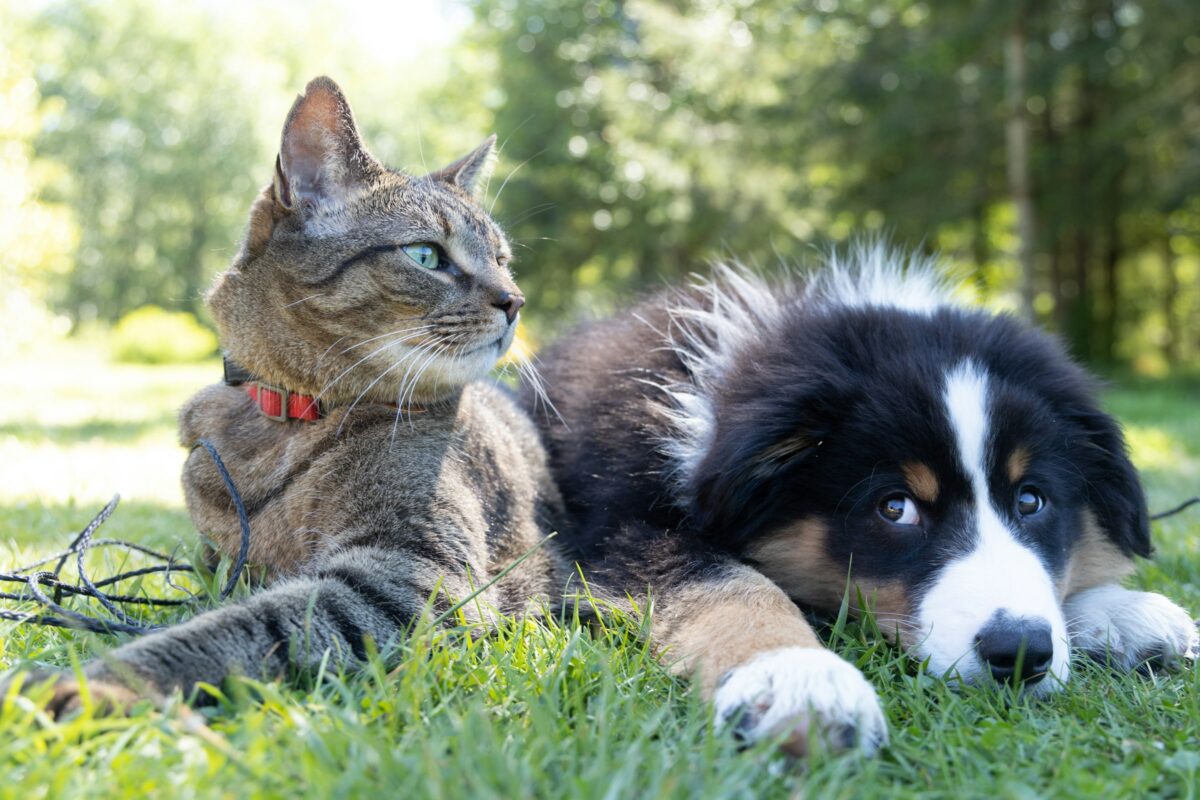
You already know how to read a dog. A wagging tail means happy, a whine means “let me out,” and enough belly rubs will make almost any dog your best friend for life. So when people bring that same rulebook into a cat’s house, they assume it’s just a slightly smaller, quieter version of the same animal.
It isn’t. Cats aren’t running the dog playbook with a few tweaks, they’re running on a completely different set of instincts, and most lifelong dog owners don’t find out how different until something goes sideways: a bitten hand mid-cuddle, a 3 a.m. sprint down the hallway, a litter box war nobody saw coming. Here are 17 realities that catch dog people off guard every single time.
#1 – Your Approval Matters Way Less Than You Think
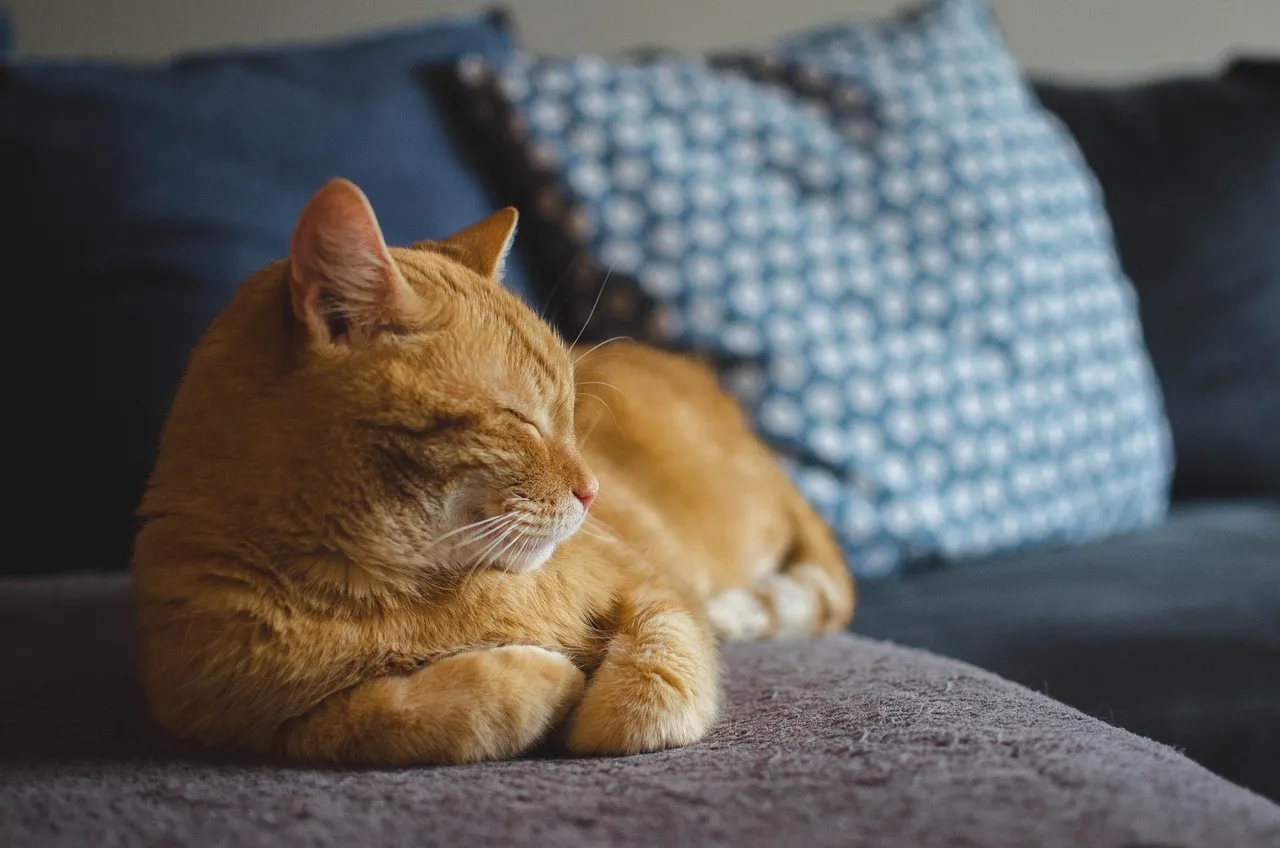
Dog owners are used to a pet that lives for praise. Say “good boy” to a dog and watch its whole body light up like you just handed it the sun. Say it to a cat and it might just blink at you once, then walk away mid-sentence.
Cats aren’t wired to chase your approval the way dogs are. That doesn’t mean they don’t bond deeply, it means the bond isn’t built on “please like me” energy. Instead of obeying instantly, a cat runs its own quiet calculation: is this worth it, is it safe, is it interesting? Respect that boundary instead of fighting it, and the loyalty comes anyway, just on their schedule instead of yours.
#2 – Affection Has Rules Dog People Constantly Misread

Dog people know the signals: wagging tail, sloppy face licks, obvious full-body cuddles. Cats speak an entirely different dialect, and most dog owners never learn to translate it.
A slow blink is basically a cat saying “I love you,” but plenty of dog owners miss it completely. Head-butting your hand or cheek, known as “bunting,” is scent-marking mixed with genuine affection. Here’s the twist: things that feel loving to a dog – looming over them, big bear hugs, direct eye contact, fast hands near the face – can register as a threat to a cat. Slow down, let them approach first, and you’ll start noticing affection that was there all along.
#3 – The Litter Box Isn’t a Convenience, It’s Sacred Ground

If you’re used to backyard potty breaks, a litter box sounds simple: put it down, add litter, done. Cats treat it with far more seriousness, and getting it wrong is the fastest way to trigger accidents outside the box.
Many dog owners assume that’s spite. Vets will tell you it’s usually stress, pain, or bad setup instead. Cats are predator and prey at once, so using the bathroom is a genuinely vulnerable moment for them – a covered box can feel like a trap, and one shoved next to a loud washing machine can feel like a threat. There’s also a rule most dog people have never heard of: one litter box per cat, plus one extra, spread across different parts of the house. Skip that, and you’re not dealing with a “dirty” cat, you’re breaking the one place they’re actually trying to keep clean.
Fast Facts
- Golden rule: one litter box per cat, plus one spare
- Box length should be at least 1.5 times the cat’s body length
- Place boxes in quiet, low-traffic spots away from food and water
- Scoop daily; a full litter swap weekly keeps most cats happy
- Some cats avoid covered boxes entirely – open often wins
#4 – Scratching Isn’t Bad Behavior, It’s Non-Negotiable Biology
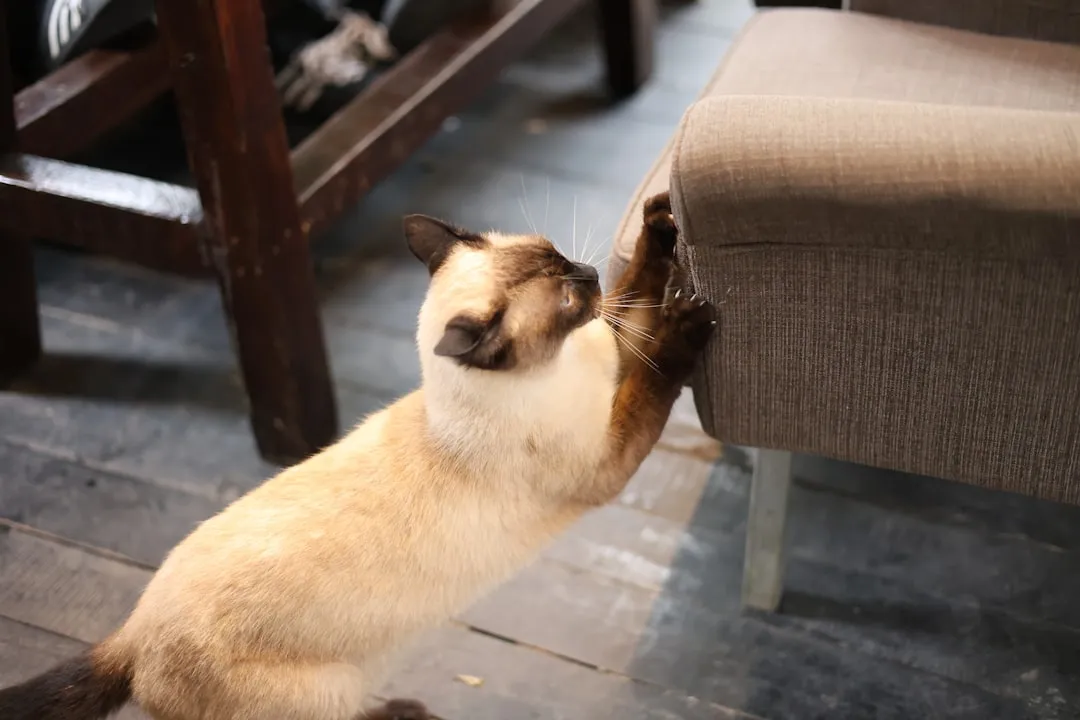
Dog owners treat scratching like chewed-up shoes: a bad habit to be trained away. With cats, that fight is unwinnable, because scratching keeps their claws healthy, stretches their muscles, and marks territory through scent glands in their paws.
The real job isn’t elimination, it’s redirection. Cats need both vertical and horizontal scratching options, in different textures like sisal, cardboard, and carpet, with posts sturdy enough for a full-body stretch. A lot of dog owners buy one flimsy little post, call it done, then blame the cat when the couch gets shredded. Give them several well-placed, sturdy options and reward them for using it, and the “destruction” mostly disappears on its own.
#5 – Playtime Is a Hunting Simulation, Not a Round of Fetch

With dogs, play usually means fetch, tug, or wrestling in the yard. With cats, you’re basically running a miniature hunting simulation, and most dog owners have no idea they’re doing it wrong.
Cats are built for short, explosive bursts of prey-chasing, not 45 minutes of retrieving a ball. Throw a toy once, get ignored, and a lot of dog people conclude their cat “just doesn’t like to play.” Wrong – they want to stalk, pounce, chase, and “kill” something that moves like real prey: a wand that slithers like a snake, a toy that flutters like a bird. Run the full sequence – stalk, chase, pounce, “kill,” then feed them right after – and you’ll actually cut down on random late-night chaos, because you just completed the biological script their brain was craving.
#6 – Nighttime Zoomies Are Biology, Not Bad Training

Dog owners take pride in “wearing the dog out” during the day so it sleeps at night. Cats flip that entire strategy on its head, and it catches almost every new cat owner off guard.
Most cats are crepuscular, meaning dawn and dusk are their natural prime time, and plenty of dog people are stunned when the living room turns into a racetrack at 3 a.m. It’s not misbehavior, it’s an internal clock that thinks those hours are for hunting. Free-feeding dry food all day without any focused evening play just makes it worse. A real 10 to 15 minute play session right before bed, followed by a proper meal, mimics “hunt, eat, sleep” and gradually nudges their schedule closer to yours. Yelling “go to bed” changes nothing. Meeting their biology actually does.
#7 – You Can Train a Cat, But the Currency Completely Changes
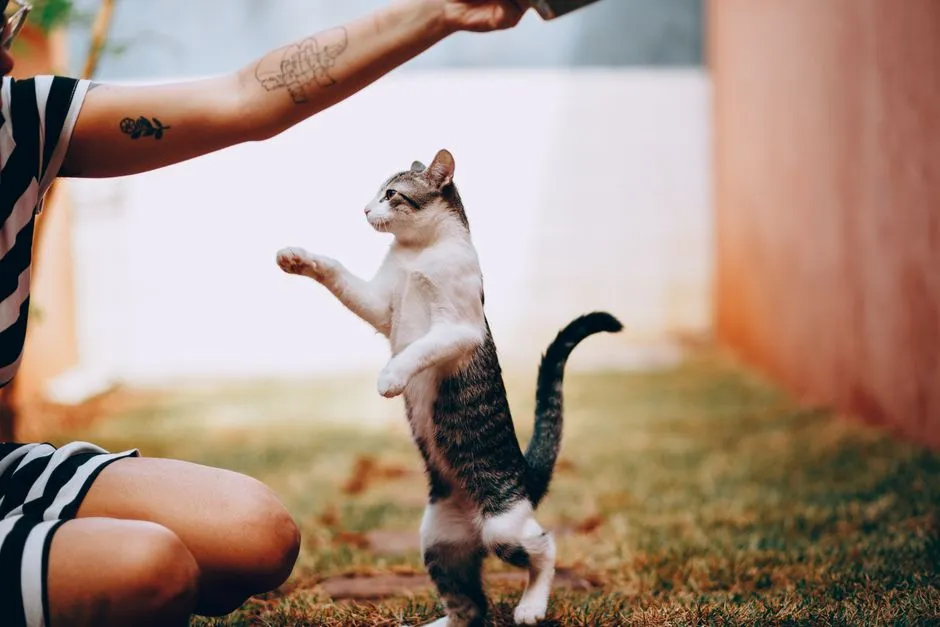
“You can’t train cats” is one of the most confidently wrong things dog people say. Cats can absolutely learn sit, high-five, recall, even walking on a harness – they just won’t do any of it to stroke your ego.
The motivation has to be obvious, immediate, and consistent: high-value treats, short sessions, zero yelling. This is where dog owners often stumble, because they’re used to repeating a command louder until it “sinks in.” With a cat, that just teaches them you’re unpredictable and best avoided. Clicker training works especially well because it’s clear and purely reward-based. Some trainers now argue cats can actually be easier to shape than a stubborn dog, as long as you’re patient enough to move at their pace instead of yours.
#8 – “Independent” Doesn’t Mean Low-Maintenance
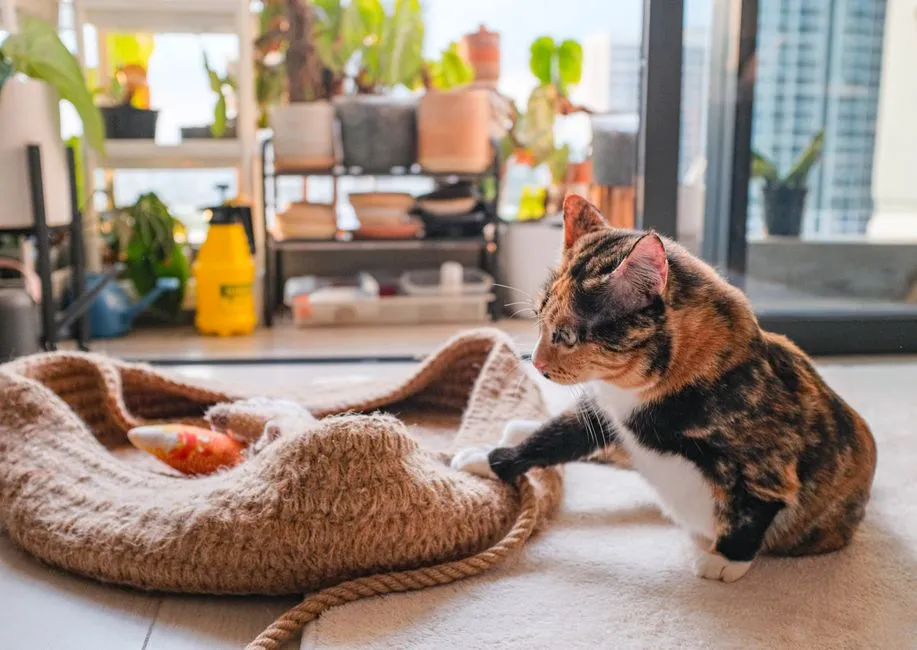
One of the biggest myths dog owners carry into cat ownership: cats are “set and forget” pets. Toss down food and a litter box, and they’ll basically raise themselves. In reality, plenty of cats develop real behavioral problems from boredom and loneliness, especially if they’re indoor-only.
Scratching at doors, nonstop meowing, ambushing your ankles – a lot of that is a neglected social life, not a “bad cat.” Cats do tolerate alone time better than most dogs, but that doesn’t erase their need for daily play that mimics hunting, or mental stimulation like climbing spaces, puzzle feeders, and window perches. A cat sleeping 18 hours a day might be perfectly content, or it might be quietly understimulated with nothing else to do. Plenty of dog owners find this out the hard way, right around the time their “independent” cat starts shredding the blinds out of sheer frustration.
#9 – Vertical Space Matters More Than Floor Space Ever Will
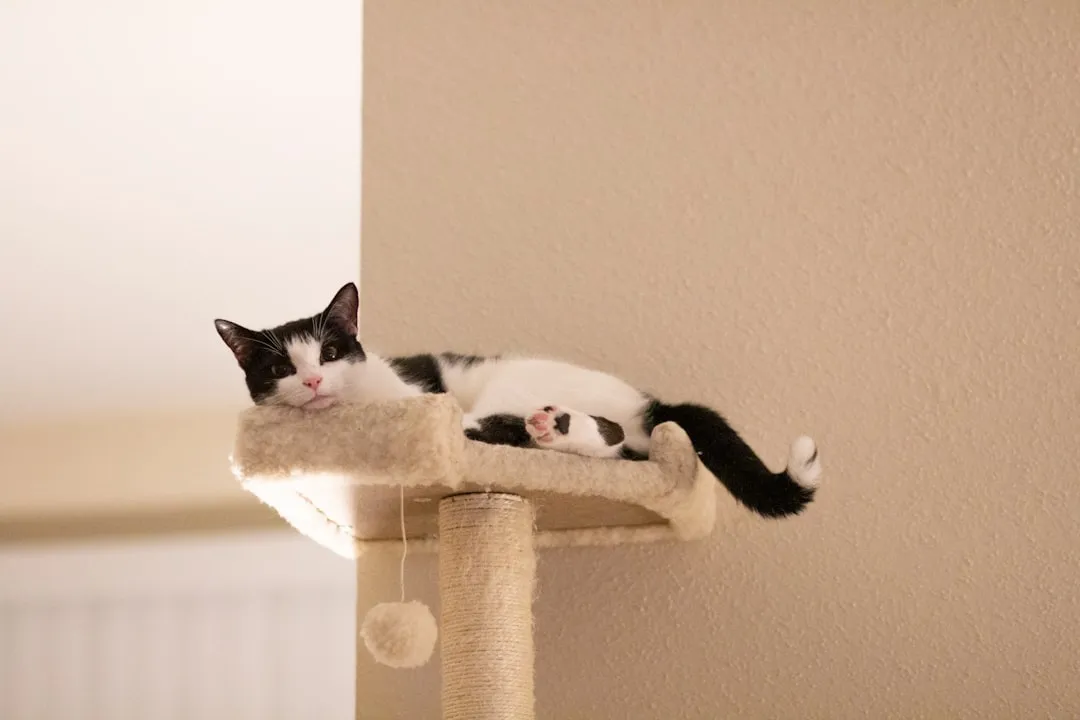
Dog owners measure “enough room” in square footage. Cats measure it in cubic footage, and that single difference changes everything about how you should set up a home.
Cats are arboreal hunters at heart, so height means safety, a vantage point, and territory all at once. A small apartment with shelves, a cat tree, and window perches can feel far richer to a cat than a big, empty house with nothing to climb. Adding a high, safe escape route can drastically cut down on conflict with kids, dogs, or other cats, and it gives your cat a way to observe the room without being touched – something dog people chronically underestimate. If you’re coming from the dog world, a cat tree might look like optional decor. For a lot of indoor cats, it’s closer to mental healthcare.
Why It Stands Out
- Height functions as a built-in safe zone, not just furniture
- Elevated perches let cats supervise the room without direct contact
- Vertical setups can ease tension in homes with kids or other pets
- A tall cat tree often does more for wellbeing than extra floor space
#10 – Body Language Runs Almost Backwards From a Dog’s
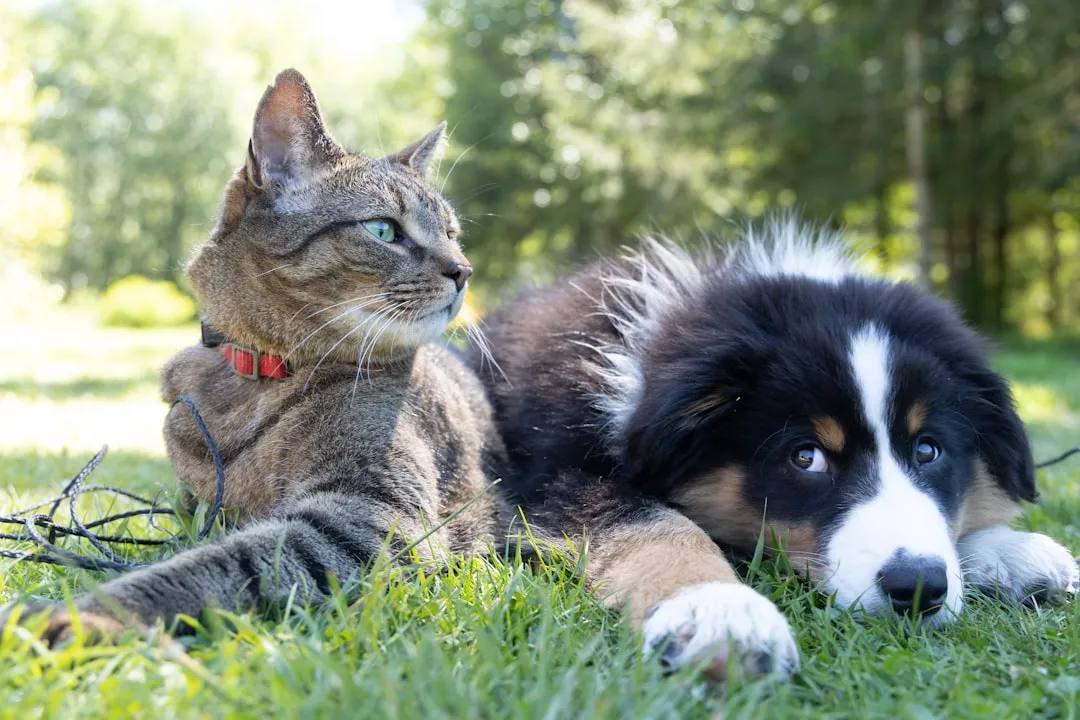
Some signals flip entirely between the two species, and it’s the kind of mix-up that actually leads to bites. A wagging dog tail usually means happiness. A rapidly flicking or thrashing cat tail usually means irritation, overstimulation, or brewing aggression – and plenty of dog people keep petting right up until the “sudden” bite.
A dog rolling onto its belly is begging for a rub. A cat rolling onto its belly is often just saying “I trust you enough to expose this,” not “grab it.” A direct stare from a dog can mean a challenge or intense focus, while a cat’s stare might be affection, if it’s a slow blink, or a serious warning, if it’s hard, unblinking, and paired with a tense body. Cats aren’t actually unpredictable, they’re broadcasting warnings loud and clear. Dog people just never learned the language.
#11 – “Random” Bites Mid-Cuddle Are Rarely Random
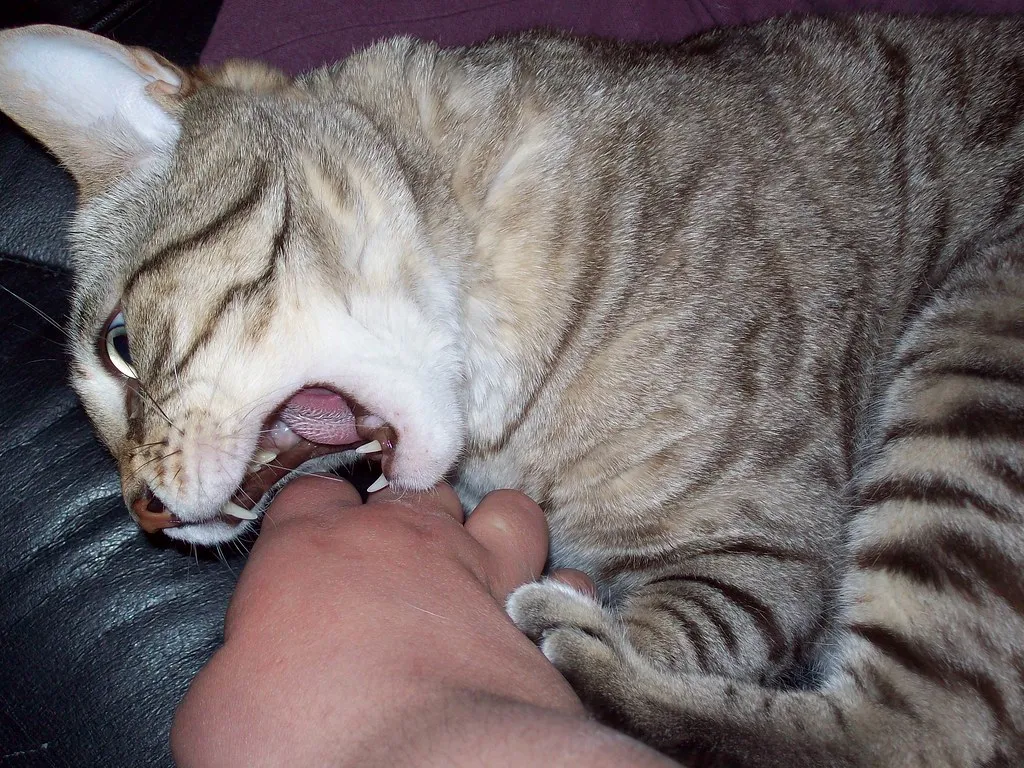
A dog will happily accept an hour of nonstop petting and ask for more. Plenty of cats have a hard limit, and blowing past it is how “petting aggression” happens – a relaxed cat suddenly biting or swatting mid-cuddle.
Their nervous system genuinely hits a breaking point, and the only way left to say “enough” is with teeth or claws. Dog owners tend to take this personally: “I was loving him and he attacked me.” In cat terms, you ignored several soft “no’s” first – a twitching tail, rippling skin along the back, ears rotating slightly back, a body going tense. Stop at those early signs and your relationship, and your skin, stay intact. Keep going, and you teach the cat that cuddles come with danger attached.
#12 – Food Obsession Can Be a Warning Sign, Not Just Greed
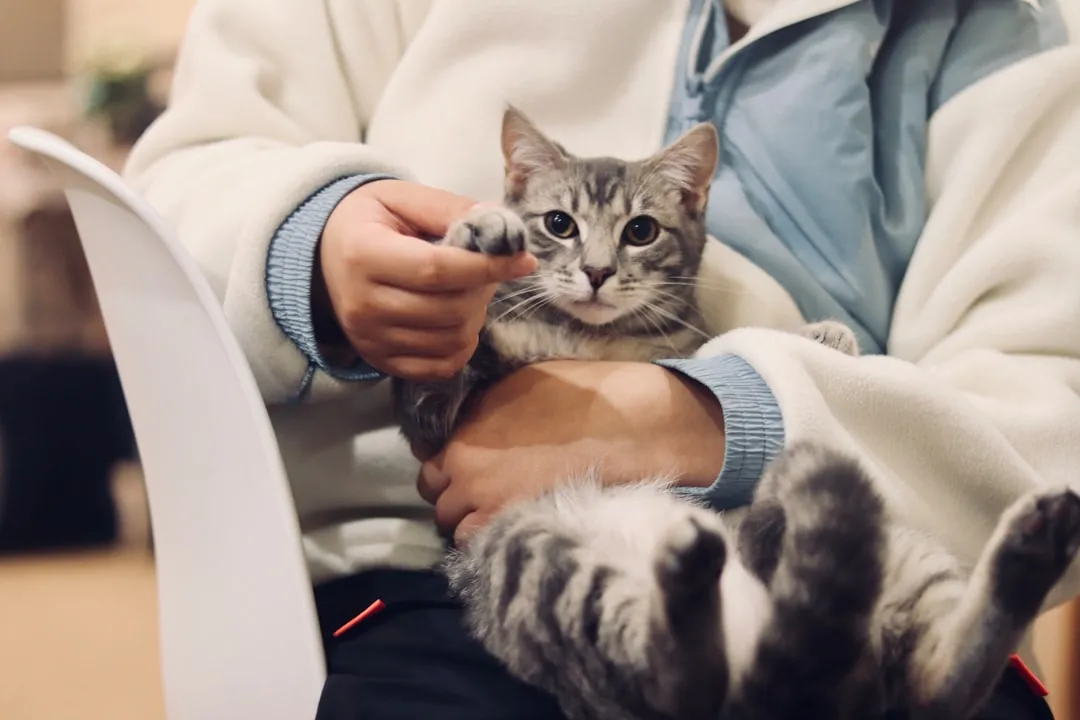
Dog people are used to food-motivated pets, but cats come with their own twist worth paying attention to. Sudden increases in appetite, water intake, or weight loss despite eating well can be early red flags for serious conditions like hyperthyroidism or diabetes, and a lot of lifelong dog owners write it off as “she’s just a piglet” for way too long.
Cats are also more sensitive to diet quality than most people expect. All-day free-feeding of cheap, carb-heavy kibble has been quietly linked to obesity and urinary issues in a lot of cats, which is why vets increasingly push moisture-rich wet food, portion control, and scheduled meals – a real shock to anyone used to a bottomless dog bowl. Here’s the part that surprises people most: some cats will straight-up starve themselves if they dislike a food change, which can spiral into a medical emergency called hepatic lipidosis. Ignoring eating behavior is a much bigger gamble with a cat than most dog owners realize.
Worth Knowing
- Increased thirst plus weight loss despite eating well is a classic red flag
- Hyperthyroidism and diabetes are among the most common feline metabolic diseases
- Cats are experts at hiding pain, so subtle changes deserve attention
- Annual bloodwork can catch problems long before obvious symptoms appear
#13 – Vet Visits Turn Into a Full-Blown Horror Movie
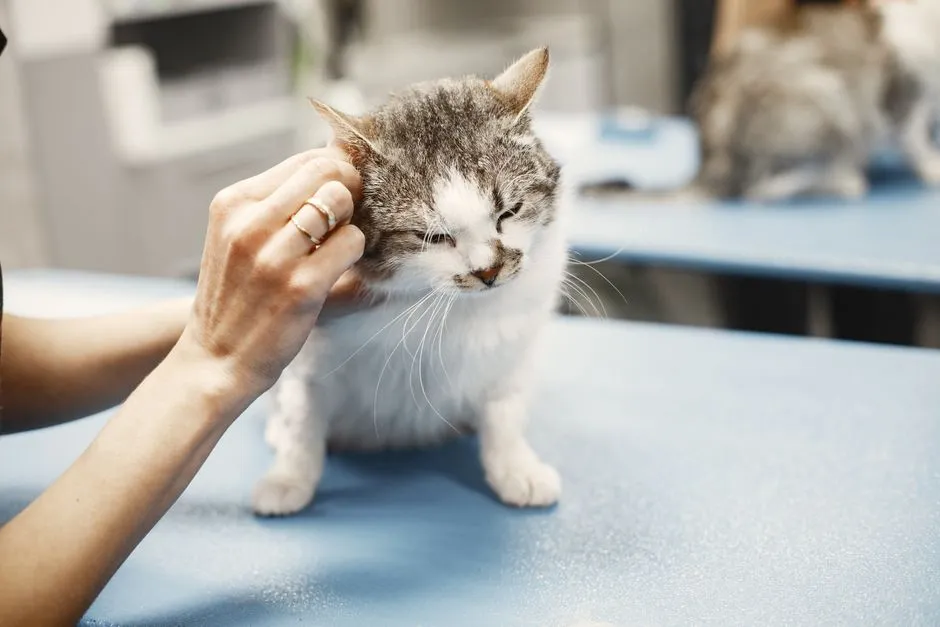
Plenty of dogs get nervous at the vet. Plenty of cats turn into Olympic-level escape artists the moment they spot the carrier, and dog owners are consistently stunned at how hard it is just to get a cat through the front door of a clinic.
Cats hide pain and illness so well that by the time you notice something’s wrong, the problem is already serious – and then the carrier and car ride turn the whole thing into pure terror for everyone involved. You can’t just wrestle a cat in and “tough it out,” because that only makes the next visit worse and teaches the cat to associate the carrier with fear. Smart owners leave the carrier out full-time as a neutral, boring piece of furniture, use calming sprays or treats before travel, and practice short, positive “fake” trips that go nowhere. Skipping annual checkups because “she hates the vet” is an under-the-radar epidemic among dog-turned-cat owners, and it quietly costs cats years of early warning signs.
#14 – Most “Aloof” Cats Are Actually Just Cautious

The stereotype says dogs are loving and cats are cold. The reality is that a lot of cats are deeply attached, just slower to trust and far more private about showing it. Dog people expect instant enthusiasm, and when they don’t get it, they slap the label “unfriendly” on an animal that’s simply still deciding if you’re safe.
A cat curling up near you, choosing your lap over the whole house, or sleeping at your feet can be just as intense a declaration as a dog’s full-body wag. Some of the most devoted cats show love by following you room to room like a silent shadow, bringing you “gifts,” or grooming your hair. Ironically, the people who ignore a cat at first often end up its favorite human, simply because they never smothered it. Tolerate the slower, quieter courtship, and the payoff rivals any dog bond you’ve ever had.
A home without a cat, and a well-fed, well-petted, and properly revered cat, may be a very good home, but how can it prove title?
Mark Twain
#15 – Territorial Politics Are Quiet, Subtle, and Genuinely Savage
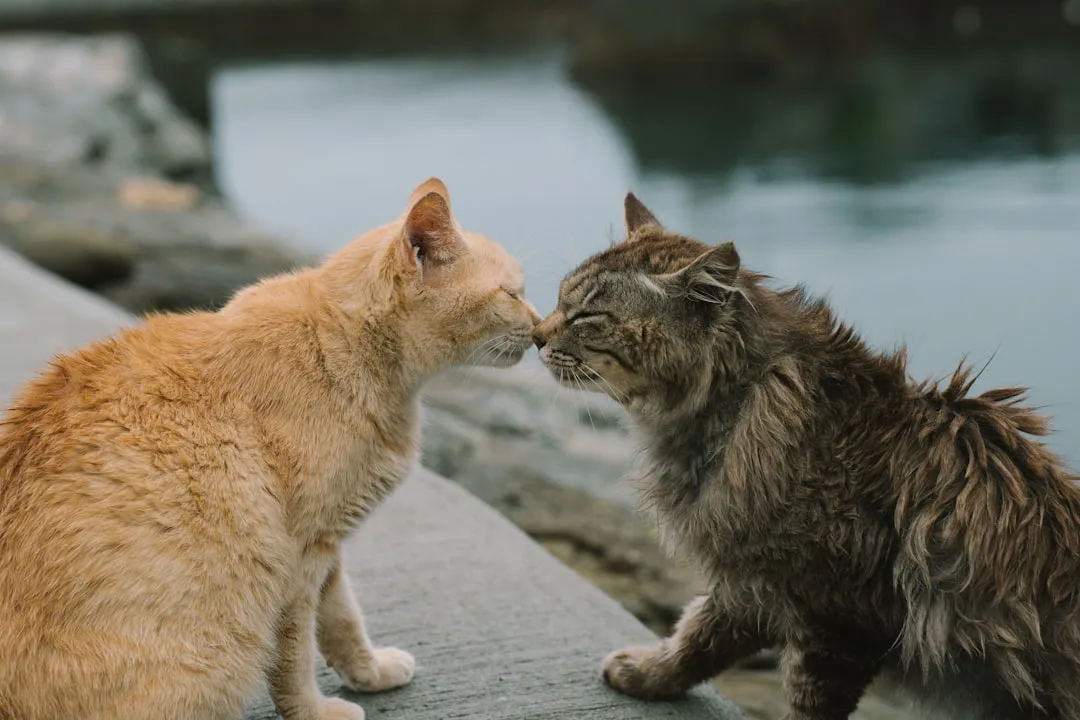
Dog scuffles are loud and obvious. Cats wage psychological warfare instead, and a cat can effectively “own” a doorway, a litter box, or an entire room using nothing more than posture, staring, and strategic blocking.
Most dog owners miss this completely, then wonder why one cat suddenly starts peeing outside the box or hiding all day. You might never see an actual fight, just one cat always approaching low and sideways, one cat always claiming the higher ground and staring silently, or “accidental” ambushes whenever the timid cat walks past a key hallway. That’s still bullying, just quieter. In multi-cat homes, vertical space and multiple food, water, and litter setups aren’t optional niceties, they’re the difference between peace and slow psychological torture for the cat losing that turf war.
#16 – Letting Kittens Bite “Cute” Now Creates an Ankle-Attacker Later
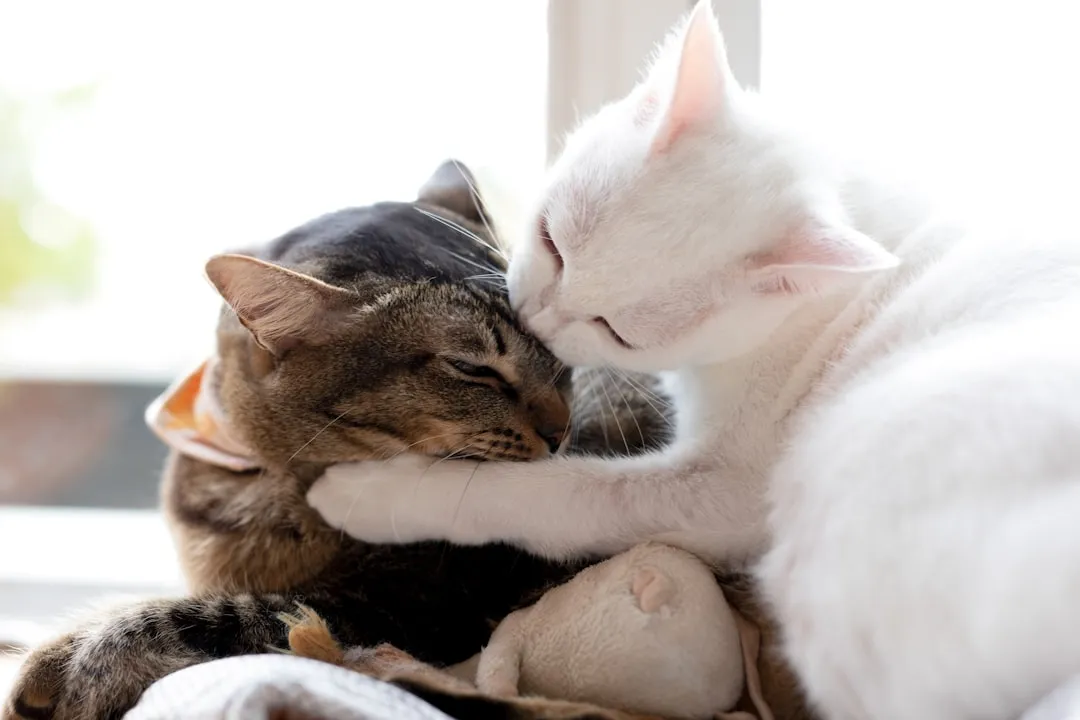
Roughhousing with hands is normal in the dog world. With cats, letting them routinely bite and claw human skin, even gently as kittens, quietly backfires later – the cat that grows up thinking hands are prey often becomes the adult that “randomly” attacks ankles and calves.
Dog owners sometimes encourage it because it looks cute or feisty in a tiny kitten. Cats need clear rules from day one: hands are for gentle touch and treats only, toys are for claws and teeth, and biting ends the interaction immediately, every time. Declawing, which some dog people still view as a minor procedure like a nail trim, is actually amputating part of each toe, and modern vets and behaviorists widely condemn it for the lifelong pain and behavior problems it can cause. Teaching boundaries early is more work, but it respects the actual animal you brought home instead of the one you imagined.
Fast Facts
- Declawing removes the last bone of each toe, not just the claw
- Banned or restricted in numerous cities and several countries
- Regular nail trims and soft nail caps are common pain-free alternatives
- Behaviorists link declawing to increased biting and litter box avoidance
#17 – Once You “Get” Cats, You’ll Never See Your Dog the Same Way
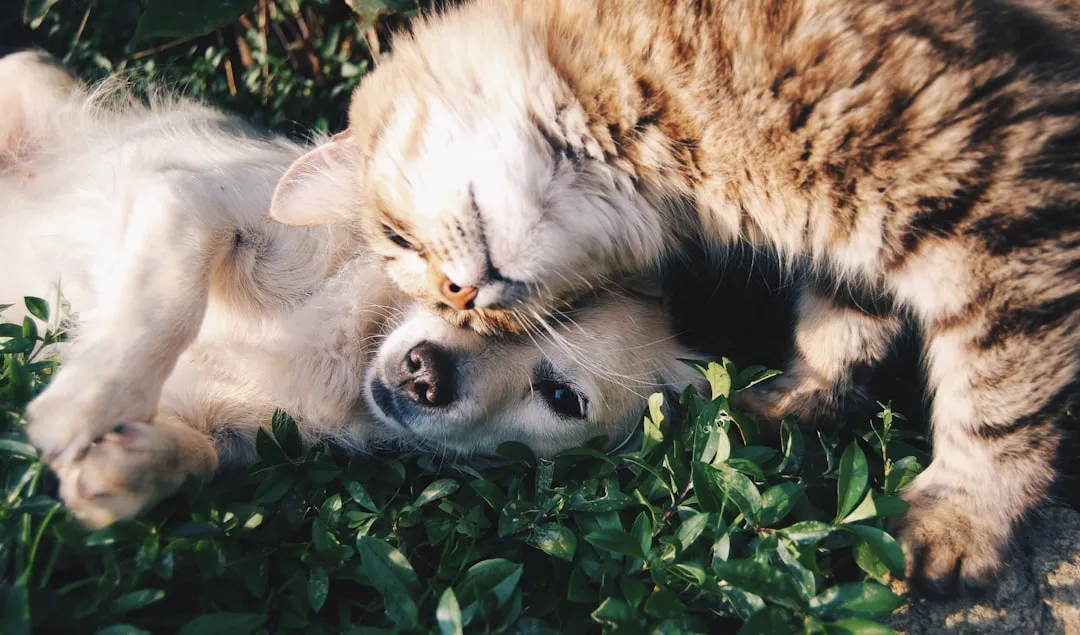
Here’s the part almost no dog-only person expects: learning to speak “cat” rewires how you read every animal in your house, including your dog. You start noticing micro-signals, respecting consent, and valuing quiet loyalty just as much as loud enthusiasm.
The dog that once seemed simply “clingy” might suddenly read as anxious. The cat that seemed “distant” now looks intensely, almost uncomfortably present. Cat-style thinking has a way of creeping into your dog relationships too – giving them more choice about touch, more decompression space, more respect for their version of “no.” Plenty of people who swore they were “dog people only” end up admitting that living with a cat feels less like owning a pet and more like negotiating a long-term treaty with a small, opinionated roommate. Once that clicks, a world where animals are expected to act like happy robots starts to feel a little off.
The Bottom Line

If you’ve only ever owned dogs, cats can feel like glitchy, ungrateful versions of the pet you already understand. The real story is more interesting than that: they’re not malfunctioning, they’re playing an entirely different game, with its own rules about trust, territory, and consent.
From litter-box politics to hunting-based play to affection you have to earn slowly, cats expose just how dog-centric most of our “pet rules” really are. People who call cats mean usually just never bothered to learn the language. Stop expecting dog behavior from a completely different species, and something shifts – the cat doesn’t become more obedient, you become more observant. That shift, from control to collaboration, is exactly what makes cat people a little insufferable about how special their bond really is.
So, be honest: are cats secretly more upfront about their boundaries than dogs ever were, or will you take classic dog-style devotion any day of the week? Sound off in the comments.

- If You Have Only Ever Owned Dogs These 17 Cat Realities Will Genuinely Surprise You - August 12, 2026
- 16 Things Old Cats Want More Of and 16 They Quietly Stop Caring About Entirely - August 12, 2026
- 19 Strange Things Researchers Say Hummingbirds Do When They Believe Nobody Is Watching Them - August 12, 2026