
The Beach Myth That Undersells the Real Story
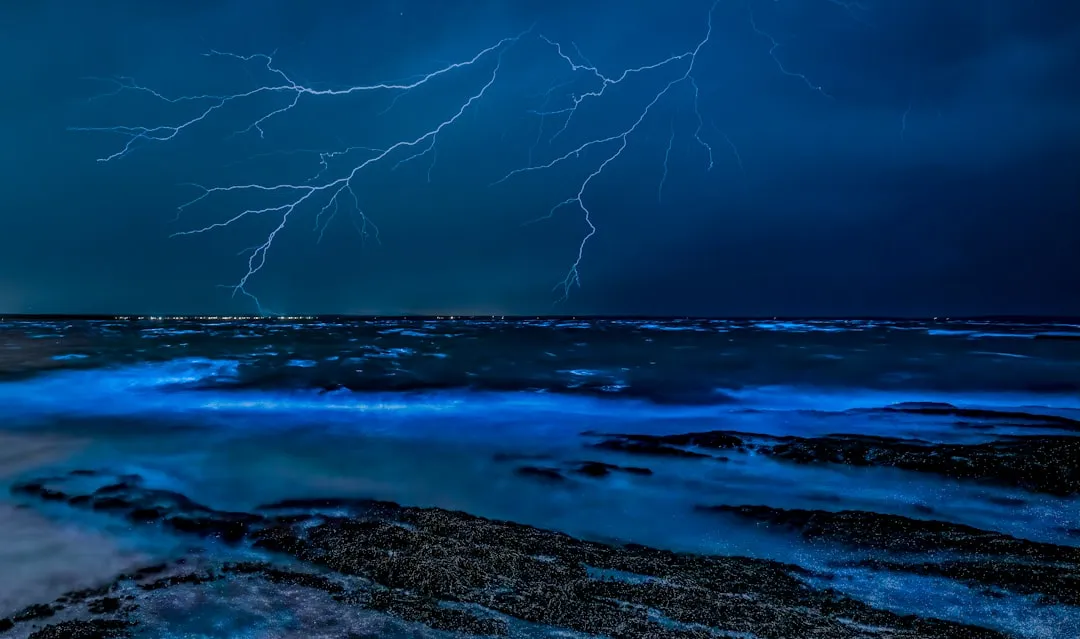
Calling the glow “plankton” isn’t wrong exactly, but it’s a bit like calling a smoke detector “a piece of plastic.” Technically true, functionally useless as an explanation. The organisms responsible are indeed plankton, but that word tells you nothing about why they’re producing light in the first place.
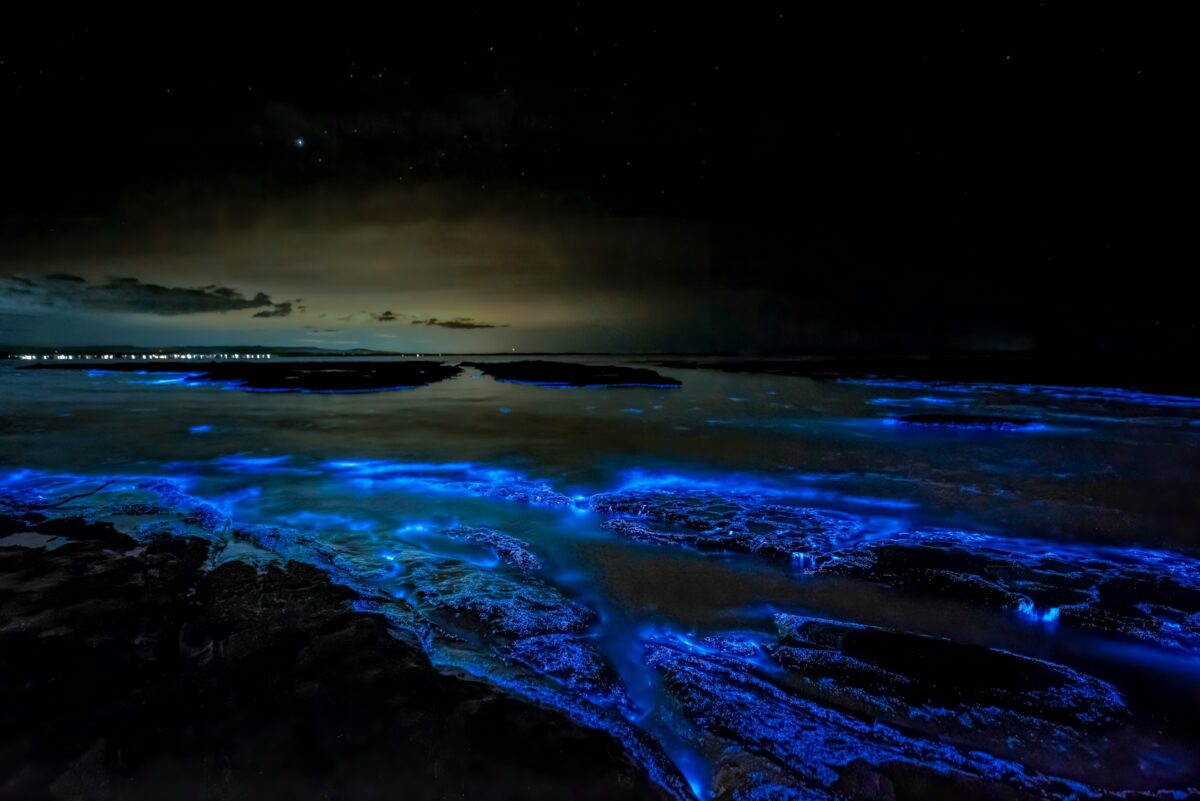
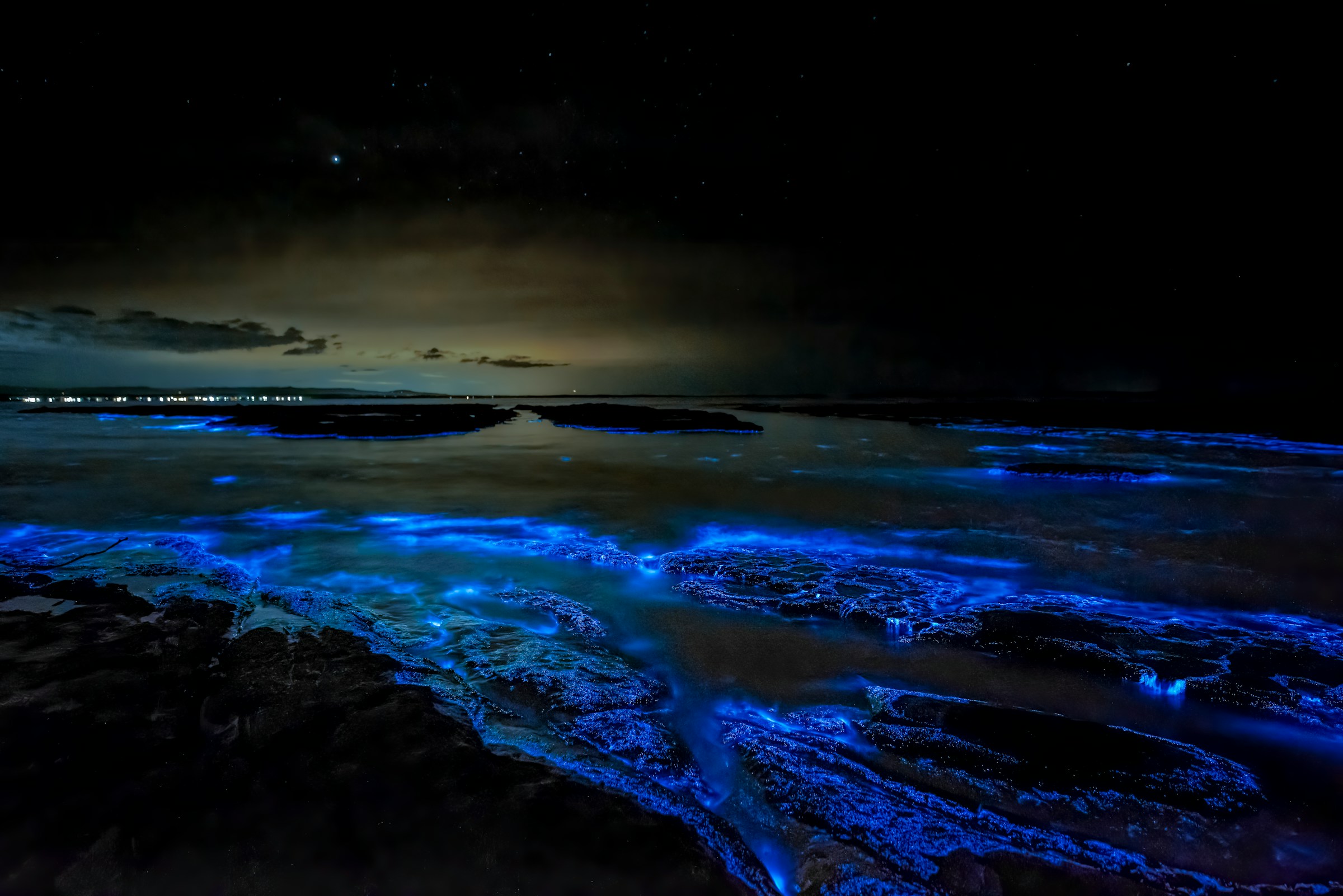
What most beachgoers miss is that this isn’t some passive glow, like a firefly’s mating signal or a jellyfish’s ambient shimmer. The most frequently encountered bioluminescent organisms may be the dinoflagellates in the surface layers of the sea, which are responsible for the sparkling luminescence sometimes seen at night in disturbed water. The key phrase there is disturbed water. This light only appears when something touches, pushes, or agitates these organisms, and that timing is the whole point.
The Tiny Organisms Behind the Glow
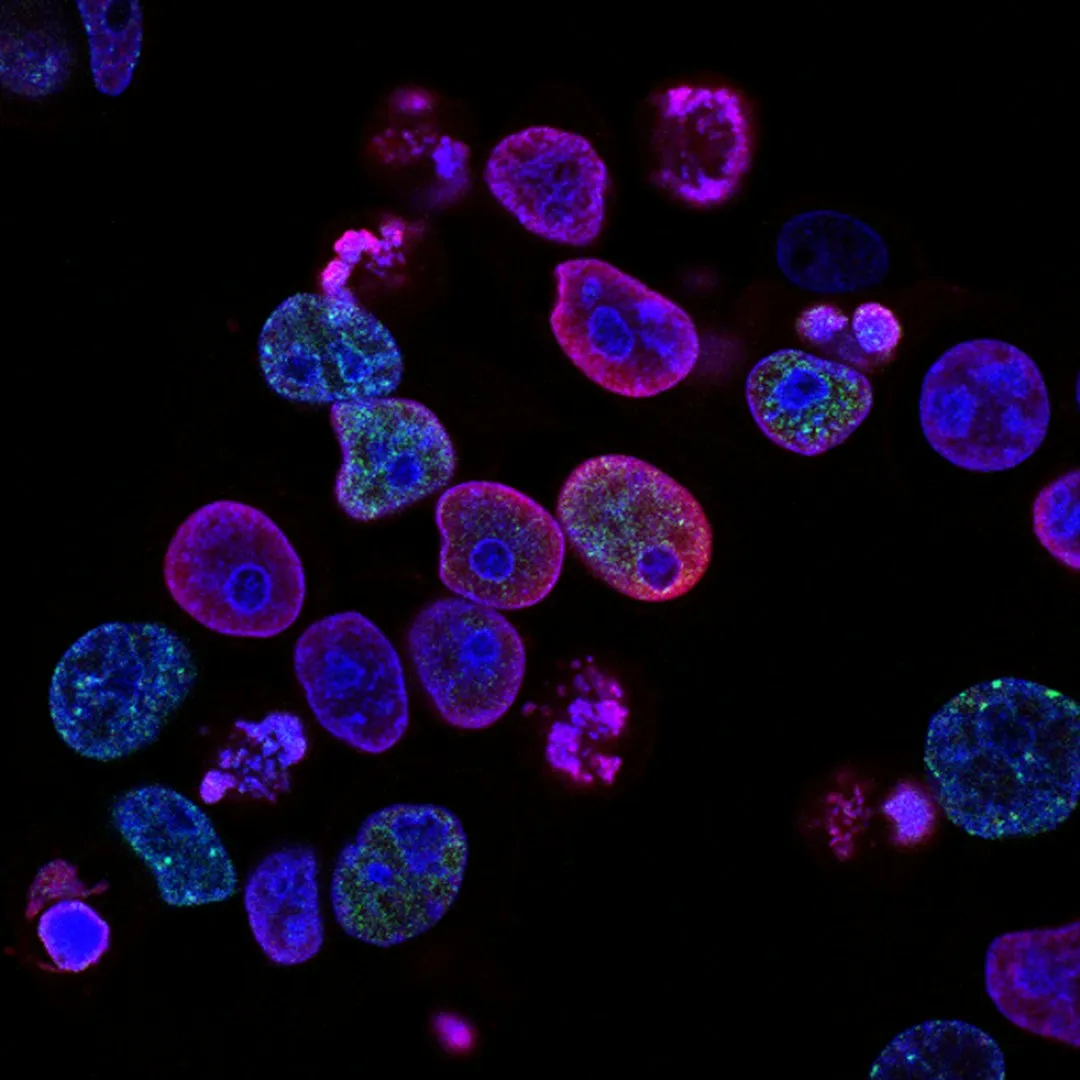
The creatures doing the actual light producing are called dinoflagellates, a group of single celled algae so small you’d need a microscope to see just one. The glow is caused by millions of tiny organisms called dinoflagellates that live in the water and sometimes make it glow. Dinoflagellates are a type of single-celled algae, and each of these tiny creatures emits a small amount of light. Individually, their light output is almost nothing. Collectively, when millions of them cluster together, they can turn an entire shoreline into something that looks lit from beneath.
More than 18 genera of dinoflagellates are bioluminescent, with most emitting a blue-green light. They tend to thrive in specific conditions. Luminescent dinoflagellate ecosystems are present in warm water lagoons and bays with narrow openings to the ocean. That narrow opening detail matters more than it sounds. It traps the organisms in calm, nutrient rich water where their populations can build up to the kind of density needed for a visible show.
Inside the Cell: How the Flash Actually Happens
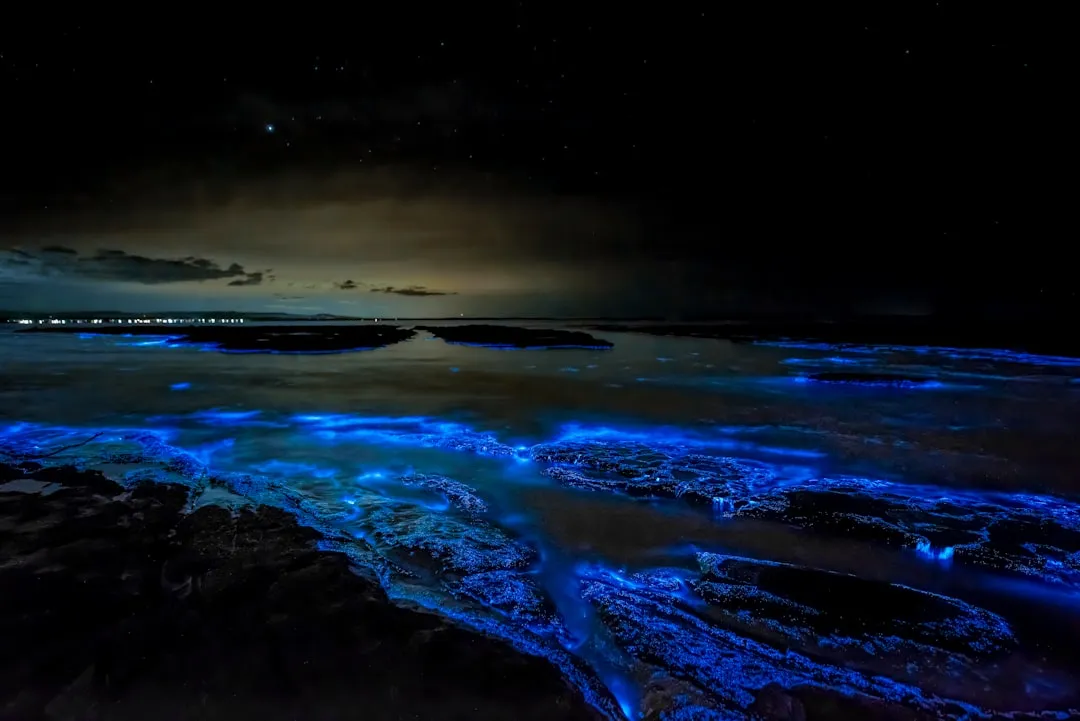
The mechanism inside each cell is genuinely elegant, almost engineered in how precise it is. The blue flash of light from dinoflagellates is the result of a specific biochemical reaction occurring within specialized compartments called scintillons. This reaction involves two key molecules: luciferin, the light-emitting molecule, and luciferase, an enzyme that catalyzes the reaction. Under normal, undisturbed conditions, these two molecules sit apart from each other, inert and waiting.
The moment something physically disturbs the cell, a chain reaction fires off almost instantly. When disturbed, such as by a wave or a swimming fish, a mechanical stimulus triggers a drop in pH within the cell. This change in pH causes the luciferase enzyme to change shape, allowing it to bind with luciferin. The luciferase then catalyzes the oxidation of luciferin. This oxidation reaction releases energy, which is emitted as a brief blue-green light flash, lasting approximately 0.1 seconds. A tenth of a second doesn’t sound like much, but multiply that by millions of cells firing in sequence across a breaking wave, and you get the shimmering blue lines that draw tourists to certain coastlines after dark.
The Burglar Alarm Hypothesis: Turning Prey Into a Warning Beacon
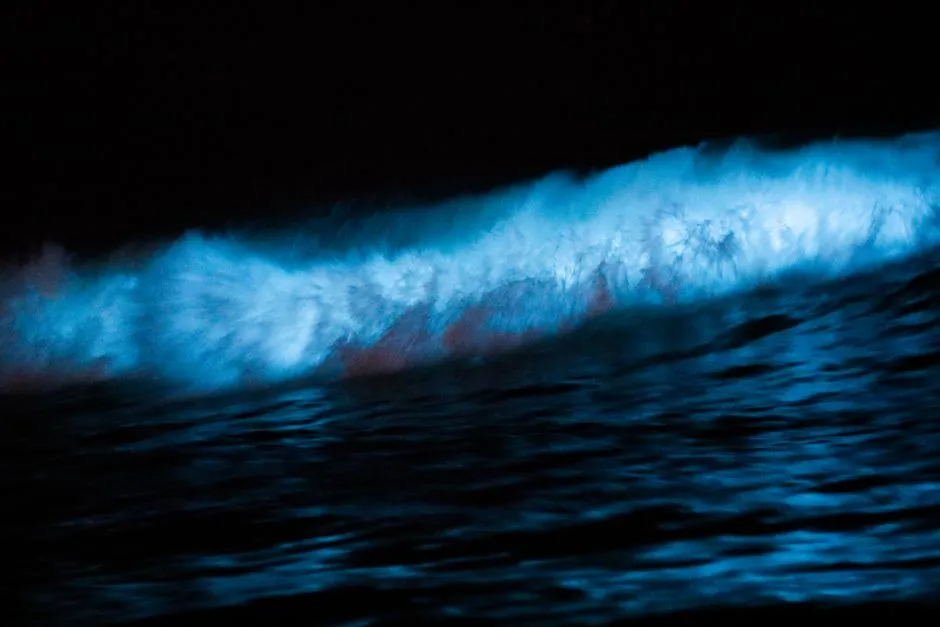
Here’s where the real story starts to diverge from the postcard version. Scientists have spent decades trying to figure out exactly why these organisms bother lighting up at all, and the leading explanation has a name that sounds almost too literal for biology. Dinoflagellates can use bioluminescence as a defense mechanism, startling their predators by their flashing light, using it as an aposematic signal to warn of toxicity, or warding off potential predators by an indirect effect such as the “burglar alarm.” In the “burglar alarm” hypothesis, bioluminescence attracts attention to the dinoflagellate and its attacker, making the predator more vulnerable to predation from higher trophic levels. In plain terms, the glow doesn’t scare off the immediate threat so much as it rats that threat out to something bigger.
Think of it as an involuntary spotlight. A tiny grazing copepod bites into a glowing dinoflagellate, and suddenly that copepod is lit up like a target for any fish cruising nearby. Primary consumers feeding on dinoflagellates induce light production. The light could potentially attract higher-level predators. Researchers have even tested this directly. Fleisher and Case found evidence to support the burglar alarm theory in a series of experiments in which feeding rates of high-level predators on lower-level grazers correlated with the presence or absence of bioluminescent dinoflagellates, using the trail of bioluminescence to track prey they would otherwise be unable to detect.
Startle Tactics and Toxicity Warnings: Other Theories in Play
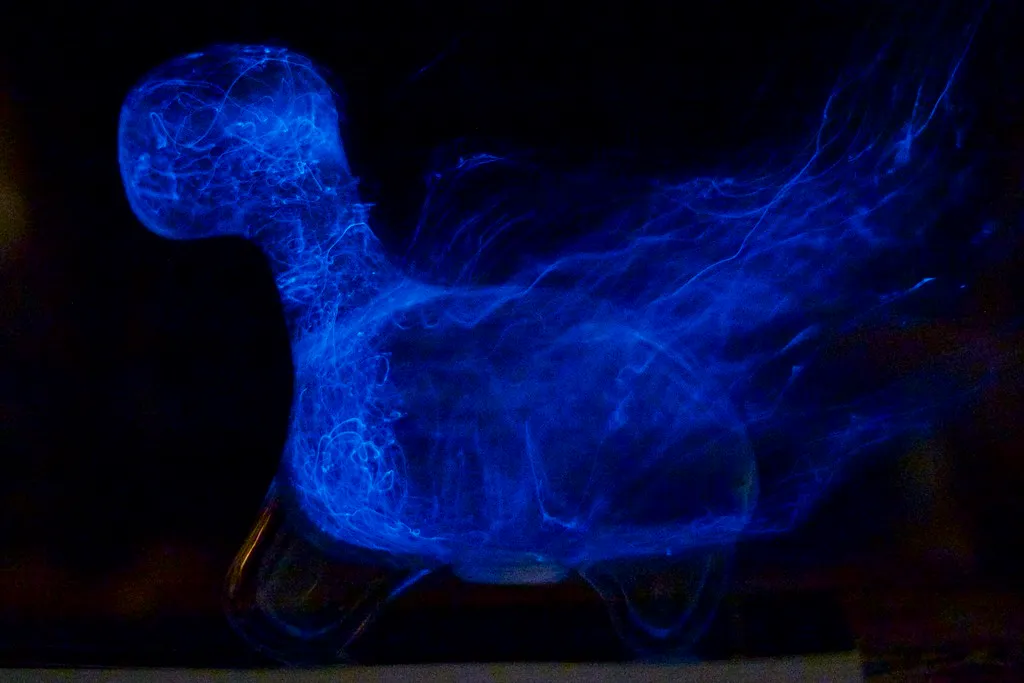
The burglar alarm idea gets most of the attention, but it isn’t the only explanation on the table, and honestly, the science here is still being argued over. Scientists aren’t sure how exactly bioluminescence works as a defense mechanism. There are three basic theories. Some researchers suggest the bright flash tricks predators into thinking the plankton are toxic or harmful. Others theorize that the bioluminescence works like a flash-bang, startling the predator, either triggering an escape response by the copepod or startling the crustacean long enough to allow the dinoflagellate to escape. Each of these theories has its own body of lab evidence behind it, and none of them fully cancels out the others.
What’s interesting is that the effectiveness of these different tactics doesn’t seem to be fixed. It shifts depending on how many dinoflagellates are actually present in the water at any given moment. Three major hypotheses have been proposed to explain why dinoflagellate bioluminescence deters copepod grazing: startle response, aposematic warning, and burglar alarm. While the burglar alarm is the most commonly accepted hypothesis, it requires a high concentration of bioluminescent dinoflagellates to be effective, meaning the bioluminescence selective advantage at lower, more commonly observed, dinoflagellate concentrations may result from another function. So in a sparse patch of water, the startle response might be doing all the work, while in a dense bloom, the burglar alarm effect takes over. Nature, it turns out, doesn’t rely on just one trick.
A Real-Time Predator Alert System in the Food Chain
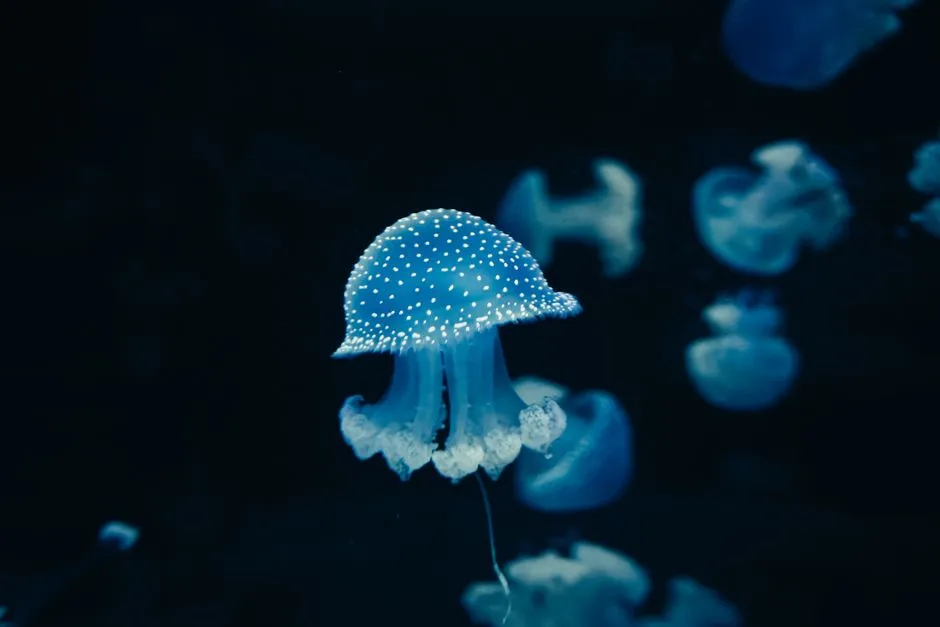
What makes this whole system fascinating is how it functions almost like an early warning network stretched across multiple layers of the ocean’s food chain. It isn’t a passive event that just happens to occur near predators. It’s actively triggered by contact, and it actively changes the outcome of that encounter. Copepods, the most abundant zooplankton in the oceans, imprint seawater with unique polar lipids, copepodamides, which trigger toxin production and bioluminescence in harmful dinoflagellates. That means the dinoflagellates aren’t just reacting to physical touch. They’re chemically sensing the presence of grazers before contact even happens.
Recent research has gone even further, tracing exactly how this cascades through the food web in real time. Researchers confirmed reduced copepod grazing on bioluminescent dinoflagellates and demonstrated a behavioural cascade in an artificial plankton food chain: the response of the prey to the grazer elicits a behavioural response of the grazer that, in turn, exposes the grazer itself to elevated predation risk. In other words, one flash of light can set off a chain of consequences moving up the food chain within seconds, from algae, to copepod, to fish. It’s one of the more elegant examples in nature of a single organism’s defense mechanism rippling outward to reshape the behavior of everything around it.
Where This Glowing Defense Mechanism Still Lights Up Beaches Today

If you want to witness this defense system firsthand, timing and location matter enormously. Bioluminescent dinoflagellates are most commonly seen in coastal waters, especially in shallow bays and lagoons where they can accumulate in high concentrations. The phenomenon is best viewed on dark nights, as moonlight can diminish the visibility of the glow. Any disturbance to the water, such as swimming, kayaking, or the movement of boats or waves, can trigger the light emission. Places like certain bays in Puerto Rico have become known specifically for this, where dense, stable populations of dinoflagellates create displays reliable enough to draw regular nighttime tours.
Along the U.S. West Coast, sightings have become something of a recurring seasonal event in recent years, with clusters of dinoflagellates showing up on and off. The glowing blue waves are caused by a species of plankton called dinoflagellates, which swim in clusters causing a red tide, but when disturbed, they emit the glittering flashes of light. There’s a genuine environmental concern tied to this too. Light pollution presents a significant threat, as it can inhibit the bioluminescence of dinoflagellates, and this inhibition could compromise the essential predator-prey balance among organisms at the base of the marine food chain. So even the glow itself, quiet and background as it seems, is vulnerable to the same coastal development and artificial lighting that affects everything else living along our shorelines.
Conclusion: A Warning Signal We Mistook for Magic

It’s a little humbling to realize that something we’ve spent years photographing for its beauty is, at its core, a desperate biological alarm bell. Every glowing wave is really a record of thousands of tiny collisions, tiny threats, and tiny survival attempts happening in the space of a blink. Calling it “just plankton” flattens all of that into a single lazy word, and honestly, that feels like a disservice to one of the more genuinely clever defense systems evolution has produced.
My own take, for what it’s worth, is that we shouldn’t need a scientific paper to appreciate this glow, but understanding the burglar alarm behind it makes the experience richer, not less magical. Knowing that the light is a plea for help, a snitch mechanism, a survival tool, doesn’t strip the wonder away. If anything, it adds a layer of tension to something that used to feel purely decorative. Next time you see that blue shimmer roll in with the tide, you’re not just watching an ocean light show. You’re watching a life or death signal play out in real time, one flash at a time.

- 7 Apex Predators That Are Actually Afraid of One Specific Animal Smaller Than Themselves and the Encounters That Confirmed It - July 18, 2026
- 10 Animals That Researchers Confirmed Can Recognize Themselves in a Mirror – and the One Near the Bottom of the List That Rewrote the Criteria Entirely. - July 18, 2026
- 6 Most Shark-Dense Coastlines Outside the United States That Tourism Boards Have Been Very Quiet About - July 18, 2026