


There’s something quietly humbling about the ocean. We’ve sent rovers to Mars, mapped the human genome, and built computers that can beat grandmasters at chess. Yet somehow, the way a jellyfish pulses through water has been stumping physicists and biologists for decades. It turns out, the secrets to animal locomotion have been hiding in plain sight, drifting just beneath the surface.
New research into marine creatures is forcing scientists to completely rethink the fundamental physics behind how animals move. The findings are surprising, occasionally counterintuitive, and honestly kind of thrilling. Let’s dive in.
The Ocean as a Living Physics Lab
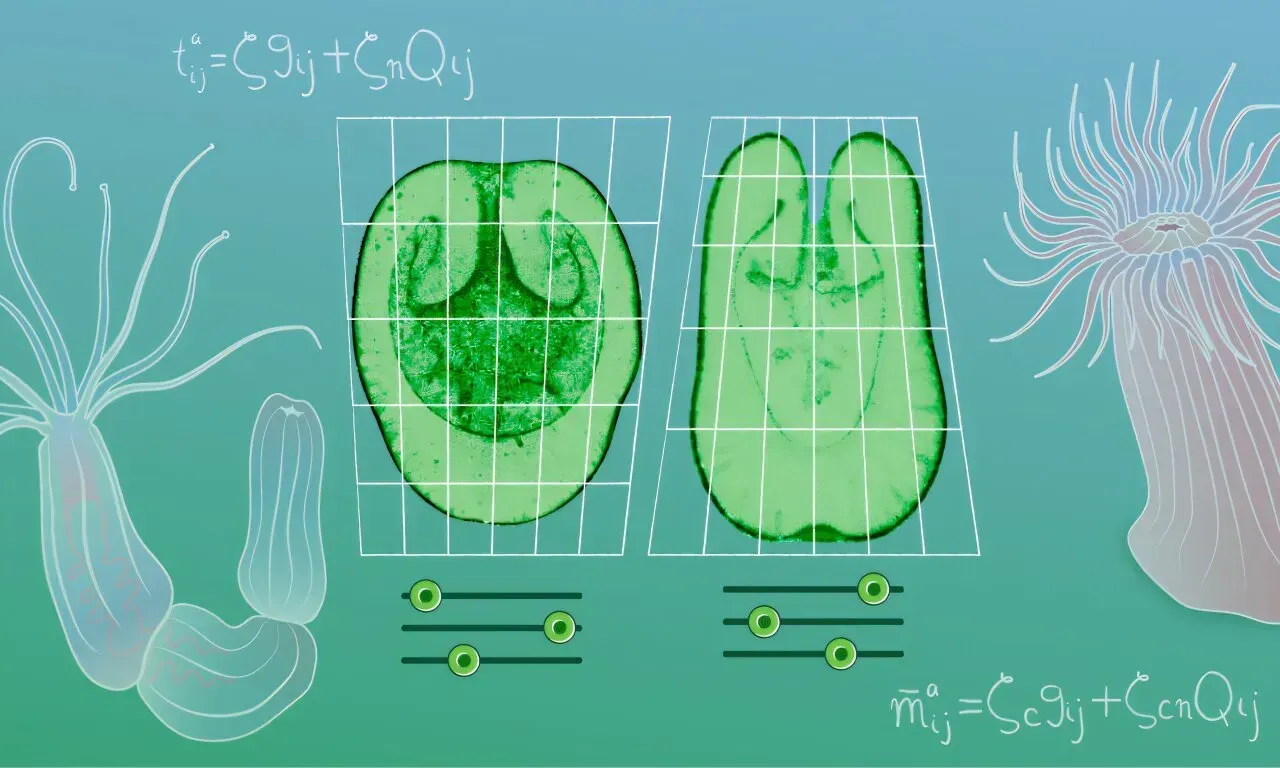
Here’s the thing most people don’t realize: the ocean isn’t just a habitat. It’s one of the most complex fluid dynamics environments on Earth, and the animals living in it have evolved over hundreds of millions of years to exploit its physics in ways we’re only beginning to understand.
Researchers studying sea creatures have found that many marine animals don’t simply “fight against” the water around them. Instead, they manipulate it in incredibly sophisticated ways, essentially using the fluid environment as a tool rather than an obstacle.
This distinction sounds subtle, but it changes everything. It’s a bit like the difference between someone pushing through a crowded room by sheer force versus someone who reads the flow of people and glides through the gaps effortlessly.
Jellyfish and the Art of Effortless Propulsion
Jellyfish might look like they’re doing nothing particularly impressive, but scientists have discovered they are among the most energy-efficient swimmers on the planet. Their pulsing bell creates two distinct vortex rings, one that pushes them forward and a second that essentially “catches” them, reducing energy loss dramatically.
What makes this so fascinating is that the jellyfish isn’t just generating thrust. It’s recycling energy from the water itself, something engineers have been trying to replicate in underwater drones and robotics for years with only limited success.
The physics here involve what researchers describe as “added mass” effects, where the creature essentially borrows momentum from the surrounding fluid. Think of it like a surfer catching a wave rather than paddling against the ocean. The wave does much of the work.
Schooling Fish and Invisible Energy Highways
Fish schooling behavior is another area where the physics turn out to be far more sophisticated than they appear. When fish swim in formation, they aren’t just protecting each other from predators. They’re actively creating and exploiting pressure waves and vortex trails left by neighboring fish.
Individual fish in a school can reduce their own energy expenditure significantly by positioning themselves at precise points in the wake of fish ahead. It’s almost like drafting in cycling, but in three dimensions, with constantly shifting geometry.
Honestly, watching this in high-resolution simulation is mesmerizing. The “invisible highways” of energy flowing through a fish school are now being mapped with unprecedented detail, and what researchers have found is that the animals are intuitively solving complex fluid dynamics equations in real time.
Snapping Shrimp and Cavitation Bubbles
If you haven’t heard of snapping shrimp before, prepare to be amazed. These small crustaceans can snap their claws so rapidly that they generate a cavitation bubble, a tiny void in the water that collapses with such force it briefly reaches temperatures comparable to the surface of the sun.
That’s not a typo. A shrimp claw snap producing temperatures approaching those of a star is one of the most mind-bending facts in marine biology, and it illustrates just how extreme the physics of animal movement can get in aquatic environments.
Beyond the spectacle, scientists are studying cavitation mechanics in shrimp to understand energy focusing and implosion dynamics. Applications range from targeted drug delivery to materials testing, and it all started with watching a small crustacean snap its claw.
What Manta Rays Teach Us About Wing Design
Manta rays move through water with an almost supernatural elegance. Their broad, wing-like pectoral fins don’t just flap up and down. They generate complex traveling waves that propagate along the fin surface, producing thrust in ways that rigid propellers simply cannot replicate.
Researchers have found that the flexibility and undulation of a manta ray’s fins allow it to generate thrust across a remarkably wide range of speeds, from nearly still to rapid bursts, without significant changes in energy cost. That kind of efficiency across multiple speed regimes is something aeronautical engineers dream about.
It’s hard to say for sure just how quickly these findings will translate into engineering breakthroughs, but the concept of bio-inspired flexible wing design is already being explored for underwater vehicles, soft robotics, and even next-generation drone technology.
Microscopic Swimmers and the Laws of Physics at Tiny Scales
Scale matters enormously in fluid dynamics. At the microscopic level, tiny marine organisms like ciliates and flagellated bacteria exist in a world where the physics are completely different from what larger animals experience. At this scale, something called the “low Reynolds number” regime takes over, where inertia becomes almost irrelevant and viscosity dominates everything.
Swimming at this scale is like trying to move through honey, except the honey disappears the moment you stop moving. Microorganisms have evolved remarkably clever solutions to this problem, using helical rotations, asymmetric strokes, and coordinated cilia beating to generate net movement in a world that would otherwise trap them completely.
These microscopic locomotion strategies have already inspired the design of medical microrobots, devices that could one day navigate through the human bloodstream to deliver drugs or perform targeted procedures. The ocean, in a sense, gave us the blueprint.
Where the Science Is Headed Next
The convergence of high-speed imaging, computational fluid dynamics, and advanced machine learning is rapidly accelerating what we can learn from marine locomotion. Scientists are now able to model the full three-dimensional flow fields around moving animals in ways that were computationally impossible just a decade ago.
What’s particularly exciting is that researchers aren’t just observing anymore. They’re building physical and digital replicas of marine creatures to test hypotheses in controlled environments, creating a feedback loop between biology and engineering that is producing genuinely novel insights.
The broader implication is striking. Millions of years of evolution have essentially been running the world’s longest optimization process, and we’re finally developing the tools to read its results. Every fin, every claw snap, every pulsing jellyfish bell is a solution to a physics problem. The ocean, it turns out, has been doing engineering all along.
A Final Thought Worth Sitting With
I think what strikes me most about this research isn’t just the clever physics or the engineering potential. It’s the humility it demands. We’ve been sharing this planet with these creatures for all of human history, watching them swim, pulse, and snap around us, and it’s only now that we’re beginning to grasp the sophistication of what they’re doing.
The next great leap in transportation, medicine, or robotics might not come from a silicon chip or a laboratory synthesis. It might come from a jellyfish drifting in warm water, doing what it has always done, completely unbothered.
If something as simple as a jellyfish can inspire entirely new fields of engineering, it makes you wonder what other solutions nature is already holding, just waiting for us to ask the right questions. What do you think we’ve been overlooking? Drop your thoughts in the comments.

- Urban Coyotes Show Remarkable Adaptability, Learning to Thrive in City Environments - July 22, 2026
- Beavers Are Nature’s Engineers, Creating Vital Habitats for Other Wildlife Species - July 21, 2026
- The Recovery of the California Condor Offers Hope for Other Critically Endangered Birds - July 21, 2026