

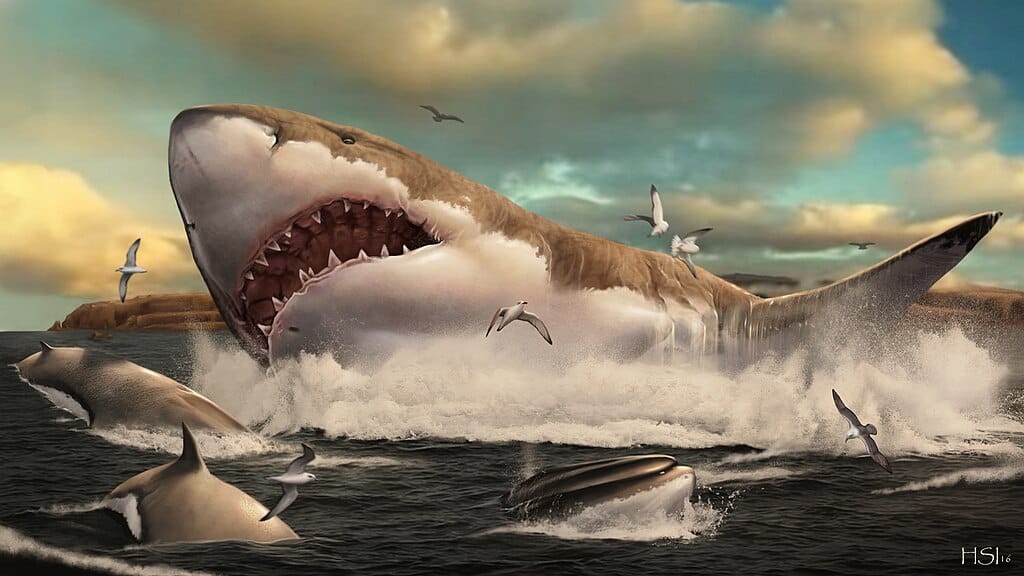
Deep in our collective imagination and the mysterious depths of our oceans lurks the shadow of what might be the most terrifying predator to have ever existed—Megalodon. With a name that literally means “big tooth,” Otodus megalodon dominated the ancient seas between 23 and 3.6 million years ago. This prehistoric shark has captured the fascination of scientists, marine enthusiasts, and conspiracy theorists alike. Standing at potentially 60 feet in length—three times the size of the largest recorded great white shark—with teeth measuring up to 7 inches, Megalodon represents the apex of marine predatory evolution.
While mainstream science firmly places Megalodon in the fossil record as extinct, a persistent subset of believers maintains that this massive shark could still patrol the deepest, unexplored regions of our oceans. This article explores the scientific evidence surrounding Megalodon’s existence, extinction, and the compelling—if controversial—arguments suggesting why some believe this massive predator might still exist in the deep, cold waters beyond human exploration. Let’s dive into the evidence, separating scientific fact from speculative fiction.
Megalodon’s Evolutionary History

Megalodon belonged to the family Otodontidae, a group of prehistoric mackerel sharks that emerged during the Paleocene epoch approximately 60 million years ago. Unlike modern great white sharks (Carcharodon carcharias), with which they’re often compared, Megalodons evolved from a different lineage. Paleontological evidence suggests that Megalodon evolved from Otodus obliquus, progressing through several intermediate forms before reaching its enormous final size during the Miocene and Pliocene epochs.
The evolution of Megalodon represents one of nature’s most successful experiments in gigantism. As these sharks grew larger over millions of years, they developed specialized adaptations for hunting large marine mammals. Their serrated teeth—designed for slicing through flesh and bone—evolved to withstand tremendous bite forces estimated at between 108,514 and 182,201 newtons (24,395 to 40,960 pounds-force). By comparison, a modern great white shark generates about 18,216 newtons (4,095 pounds-force). This evolutionary trajectory created what scientists consider the most powerful bite force of any known animal in Earth’s history.
Physical Characteristics of the Ocean’s Ultimate Predator

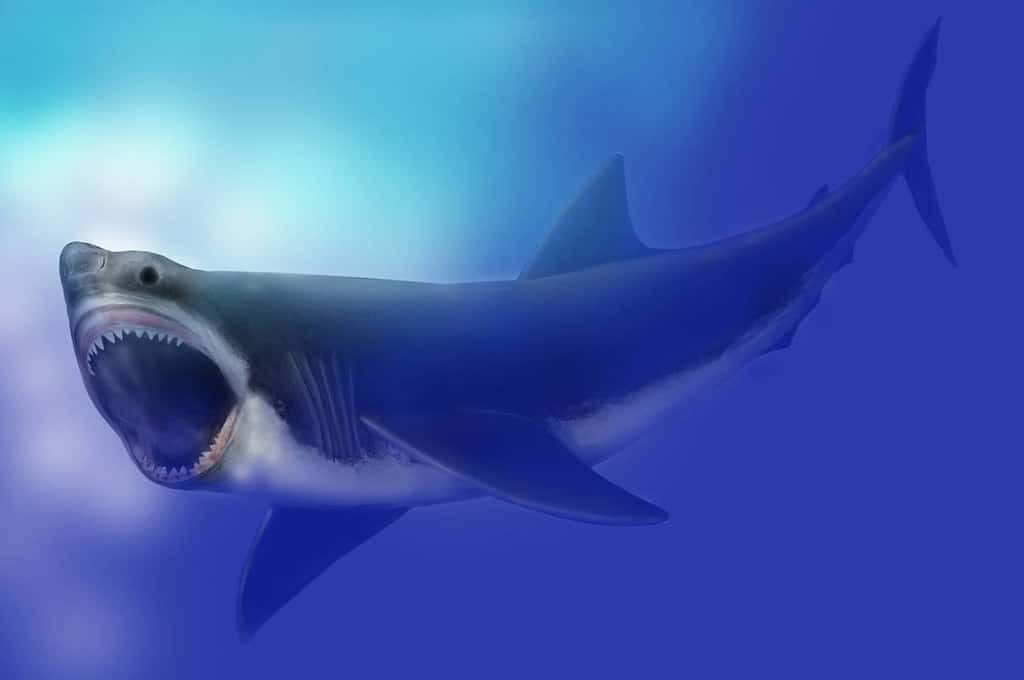
Reconstructing Megalodon’s appearance presents challenges since sharks’ cartilaginous skeletons rarely fossilize. However, thousands of fossilized teeth and some vertebrae provide crucial insights. Using these remains and scaling relationships from modern sharks, scientists estimate adult Megalodons reached lengths between 50 and 60 feet, with some speculative estimates suggesting even larger specimens. Their massive jaws could open approximately 7 feet wide, easily engulfing smaller marine mammals whole.
Unlike the torpedo-shaped great white shark, evidence suggests Megalodon had a more robust, stockier body with proportionally larger fins for stabilizing its enormous mass. Its teeth—the primary fossilized evidence—were broader and more triangular than those of great whites, with coarse serrations perfect for processing tough prey. The shark’s bite mechanics indicate it likely hunted by crushing the rib cages and puncturing the hearts and lungs of whale prey, causing catastrophic blood loss and organ damage. These adaptations made Megalodon perhaps the most efficient large-prey hunter in ocean history.
The Prehistoric Hunting Grounds

During its reign, Megalodon populated warm, coastal waters worldwide. Fossil evidence places these massive sharks in shallow, continental shelf environments where large marine mammals—their preferred prey—were abundant. Tooth fossils have been discovered across every continent except Antarctica, demonstrating their global distribution and adaptability to various marine ecosystems. Particularly rich fossil beds in North and South America, Europe, Africa, and Australia indicate these regions hosted significant Megalodon populations.
Paleoenvironmental studies suggest Megalodon preferred water temperatures above 12°C (54°F), limiting their distribution to tropical, subtropical, and warm temperate waters. This temperature dependency would become critically important in understanding their eventual extinction. These sharks established crucial breeding grounds in shallow, protected coastal waters where juveniles could develop safely before venturing into deeper hunting territories. Many of these ancient nurseries have been identified through discoveries of smaller Megalodon teeth, providing valuable insights into their reproductive strategies and population dynamics.
The Extinction Consensus

The scientific consensus firmly places Megalodon’s extinction approximately 3.6 million years ago during the Pliocene epoch. Multiple lines of evidence support this conclusion. The youngest verified Megalodon fossils date to this period, with no reliable specimens found in younger sedimentary layers. This extinction coincided with global cooling events that dramatically changed ocean temperatures and circulation patterns, reducing the warm-water habitats that Megalodon required.
Additionally, Megalodon’s primary food sources—large baleen whales—began migrating to colder polar waters where Megalodon could not follow due to its temperature constraints. The emergence of competing predators, particularly the ancestors of modern killer whales and great white sharks, further pressured Megalodon populations. These combined factors—climate change, prey redistribution, and competition—created a perfect extinction storm for a specialized apex predator that couldn’t adapt quickly enough to changing conditions. The fossil record’s silence after 3.6 million years ago speaks volumes about Megalodon’s fate in mainstream scientific understanding.
Arguments for Continued Existence

Despite scientific consensus supporting extinction, several arguments fuel speculation about Megalodon’s possible survival. Proponents point to the vastness of unexplored ocean depths, noting that humans have mapped less than 20% of the seafloor in detail. The deep ocean beyond the continental shelf—reaching depths of over 36,000 feet in trenches—remains one of Earth’s last true frontiers. These immense, dark realms could theoretically harbor large, unknown species, including relict populations of prehistoric creatures.
Some Megalodon survival theorists cite the discovery of living fossils like the coelacanth, a prehistoric fish presumed extinct for 65 million years until discovered alive in 1938. They argue that if a relatively small creature could escape scientific detection for millions of years, perhaps a giant predator could as well—especially if it adapted to deep-ocean environments rarely visited by humans. While these arguments lack direct evidence, they highlight genuine gaps in our understanding of deep-sea ecosystems and the limitations of the fossil record for marine species.
The Deep Ocean Hypothesis

The most persistent theory regarding Megalodon’s potential survival involves adaptation to deep-ocean habitats. Proponents suggest that facing extinction pressures in shallow waters, some Megalodons may have gradually adapted to colder, deeper environments beyond the continental shelf. In these lightless depths, they could theoretically hunt giant squid, deep-sea whales, and other large prey while remaining hidden from human observation. The hypothesis suggests evolutionary adaptations like reduced metabolic rates, specialized circulatory systems, and modified hunting strategies to accommodate deep-water pressure and cold.
Scientists counter this hypothesis with significant biological obstacles. Megalodon evolved as a warm-water, shallow-ocean predator with physiology ill-suited for deep-ocean conditions. The extreme pressure, cold temperatures, and limited food resources at depth would require dramatic evolutionary adaptations unlikely to occur within the timeframe of Megalodon’s disappearance from the fossil record. Furthermore, large predators require substantial prey populations to sustain themselves—a requirement difficult to meet in the nutrient-poor deep ocean. The energy economics of maintaining a 50-ton predator in deep-sea environments presents perhaps the most compelling scientific argument against this hypothesis.
Modern Sightings and Claims

Reports of potential Megalodon sightings emerge periodically from fishermen, naval personnel, and ocean-going vessels. These accounts typically describe massive shark-like creatures far larger than known extant species. Notable reports include a 1918 Australian incident where lobster fishermen claimed a huge shark destroyed their traps, and several mid-20th century accounts from military vessels describing enormous shark-like creatures. More recently, viral videos purporting to show Megalodon have circulated on social media, though these have invariably been debunked as misidentifications, digital manipulations, or publicity stunts.
Cryptozoologists—those who study animals whose existence lacks scientific confirmation—maintain files of such reports, seeking patterns that might indicate a living population of giant sharks. However, the lack of physical evidence remains problematic. In an age of ubiquitous smartphone cameras, satellite technology, and extensive ocean monitoring, the absence of verifiable photographic evidence or physical specimens strongly suggests these sightings result from misidentification of known species, optical illusions, or embellished storytelling rather than actual Megalodon encounters.
Megalodon in Popular Culture
Megalodon has experienced a remarkable cultural resurrection in recent decades through documentaries, films, novels, and video games. The 2018 blockbuster “The Meg” epitomizes this trend, depicting Megalodons surviving in an isolated deep-sea trench. Perhaps most controversially, pseudo-documentaries like the Discovery Channel’s “Megalodon: The Monster Shark Lives” presented fictional accounts as factual, blurring the line between entertainment and education. These presentations, while entertaining, have significantly muddied public understanding of Megalodon’s scientific status.
This cultural phenomenon reflects humanity’s enduring fascination with apex predators and the mysterious unknown. Megalodon represents the ultimate embodiment of the prehistoric monster—a real creature so enormous and terrifying it stretches credibility. The persistent belief in its survival speaks to psychological factors beyond scientific evidence: our desire for undiscovered wonders, the thrill of potential danger lurking beyond our view, and perhaps a subconscious recognition that nature’s greatest creations need not be entirely consigned to the past. In this sense, Megalodon survives powerfully in our collective imagination regardless of its biological status.
Scientific Methods for Detecting Megalodon

If Megalodon did persist, modern scientific methods would likely detect evidence of its existence. Environmental DNA (eDNA) sampling, which analyzes trace genetic material in seawater, can identify species present in an ecosystem without direct observation. These techniques have successfully detected rare and elusive marine species, yet no Megalodon DNA has been identified. Similarly, deep-sea exploration using remotely operated vehicles (ROVs), autonomous underwater vehicles (AUVs), and specialized deep-sea cameras continuously expands our understanding of deep-ocean ecosystems without encountering evidence of massive sharks.
Large predators also leave ecological footprints through their feeding habits. Bite marks on whale carcasses, predation patterns on other marine species, and population dynamics of potential prey would indicate the presence of an apex predator of Megalodon’s size. Marine biologists monitoring whale populations have documented injuries and predation by known predators like killer whales and great white sharks, but none show evidence of attacks by significantly larger predators. The absence of such ecological indicators provides further evidence against Megalodon’s continued existence in our oceans.
Evolutionary Implications of Survival

If a Megalodon population had somehow survived to the present day, it would represent one of evolutionary biology’s most remarkable cases of stasis—maintaining its form over millions of years despite dramatic environmental changes. This scenario would challenge current understanding of shark evolution and adaptation. Scientists would expect a surviving population to show significant evolutionary changes reflecting adaptation to new ecological niches, particularly if they transitioned from warm, shallow waters to cold, deep-ocean environments.
Such evolutionary changes would likely include modifications to body size, tooth morphology, metabolism, and reproductive strategies. A modern Megalodon might be smaller than its ancestors, with physiological adaptations for deep-water pressure and darkness. It might have developed enhanced sensory capabilities for hunting in low-light conditions and metabolic adjustments for surviving in colder environments with less abundant prey. The absence of any fossils showing this transitional evolution further challenges survival theories, as gradual adaptation would likely leave evidence in the geological record during the presumed 3.6-million-year gap.
What We Can Learn from Megalodon

Whether extinct or hypothetically extant, Megalodon offers valuable scientific insights. Studying its fossils provides crucial information about prehistoric ocean ecosystems, climate change impacts on marine life, and evolutionary processes. Megalodon’s extinction—likely driven by environmental change and competition—parallels modern conservation concerns about large marine predators facing similar pressures from human activity and climate change. Great white sharks, whale sharks, and other large marine predators face threats that echo those that likely drove Megalodon to extinction.
The persistent belief in Megalodon’s survival, despite scientific evidence to the contrary, provides fascinating insights into human psychology, scientific communication, and the public understanding of extinction concepts. It demonstrates how compelling narratives can sometimes override scientific consensus in public discourse. By examining why Megalodon survival myths persist, scientists and educators can develop better approaches to communicating about extinction, evolution, and ocean conservation. In this way, Megalodon continues to teach us—not as a living creature, but as a powerful symbol of both natural history and human imagination.
Conclusion: Between Science and Legend

The question of whether Megalodon still lurks in the deep represents a fascinating intersection of paleontology, marine biology, and human psychology. While the overwhelming scientific evidence indicates Megalodon went extinct approximately 3.6 million years ago, the persistent belief in its survival speaks to the powerful hold this prehistoric predator maintains on our imagination. The vastness and mystery of our oceans provide just enough uncertainty to keep the possibility—however remote—alive in popular culture and cryptozoological circles.
Perhaps the most valuable aspect of the Megalodon survival debate is how it highlights the importance of scientific literacy and critical thinking. It encourages us to distinguish between compelling narratives and evidence-based conclusions, while still appreciating the wonder of what might exist beyond our current knowledge. The case of Megalodon demonstrates that scientific consensus isn’t about absolute certainty but about following evidence to its most reasonable conclusion.
Whether extinct or hypothetically surviving, Megalodon reminds us of nature’s capacity for creating extraordinary creatures. It stands as a testament to evolution’s power to produce apex predators of almost unimaginable proportions. As we continue exploring Earth’s final frontier—our deep oceans—we do so with both scientific rigor and a sense of wonder at what remains to be discovered. While science strongly suggests we won’t find living Megalodons, the search itself expands our understanding of marine ecosystems past and present.
In the end, Megalodon survives definitively in one realm: as an icon of natural history that continues to inspire scientific inquiry, conservation awareness, and our enduring fascination with the magnificent creatures that have shared our planet throughout its long evolutionary history. This legacy, rather than physical survival, may be Megalodon’s most important contribution to our understanding of life on Earth.

From exploring the marine wonders in the Azores and witnessing the vast savannas of Kenya, to delving deep into the rich biodiversity of South Africa and traversing iconic landscapes in Australia and the US like Yellowstone, Chris's experiences are vast.
With a penchant for diving alongside sharks, the ocean holds a special place in his heart.
Through his academic insights, he champions wildlife conservation, striving with 'Animals Around The Globe' to cultivate a profound connection between humans and animals, enhancing our mutual appreciation.
Connect with him at Feedback@animalsaroundtheglobe.com.
- The Largest Jellyfish Ever Found - July 16, 2026
- Scientists Discover the Largest Wolf Pack Roaming America - July 16, 2026
- Why Some Lobsters Are Blue, Yellow, or Even Split-Toned - July 16, 2026