

Worried about unexpected vet bills?
Pet insurance can cover thousands in unexpected vet costs. Get a free quote from Lemonade in under 2 minutes.
Get My Free Quote →Sponsored · Opens Lemonade.com
Picture something smaller than the palm of your hand, weighing less than a single gram, somehow crossing an entire continent to arrive at a forest it has never seen before. It sounds impossible, but roughly 100 million monarch butterflies manage this extraordinary feat annually. They navigate thousands of miles without a GPS, guided by ancient instincts encoded in their delicate bodies.
What makes this journey even more remarkable is that no single butterfly completes the entire round trip. The ones flying south in autumn won’t be the same individuals heading back north come spring. It’s a generational relay race spanning a year, with different butterflies taking turns to complete the cycle. Let’s be real, the science behind how they pull this off is still blowing researchers’ minds.
The Epic Journey From North To South

Each fall, eastern monarch butterflies embark on a migration that can span up to 3,000 miles, stretching from southern Canada and the eastern United States all the way to the Transvolcanic mountains of central Mexico. Think about that for a moment. These tiny creatures, with wings thinner than tissue paper, fly distances that would take us several days of driving.
The journey can take up to two months to complete, with butterflies traveling between 50 to 100 miles per day. Under ideal conditions, they can cover even more ground. The farthest ranging monarch butterfly on record traveled 265 miles in just one day.
They don’t just fly in a straight line either. Their flight pattern is shaped like a cone as millions of butterflies come together and pass over Texas, sweeping up into the mountain ranges of central Mexico in massive butterfly clouds. The sheer scale of this movement makes you wonder how such fragile insects survive wind, rain, and predators along the way.
Nature’s Built-In Compass System

Here’s where things get truly fascinating. Monarch butterflies navigate using what scientists call a time-compensated sun compass. Essentially, they combine two pieces of critical information to maintain their southward bearing.
First, they use their eyes to track the solar azimuth, or horizontal position of the sun in the sky, determining which direction is east or west at any given moment. Second, their circadian clock is actually located in their antennae, allowing them to adjust for the sun’s movement throughout the day.
Monarchs also use a magnetic compass to guide their southern migration. Honestly, it’s hard to say for sure exactly how all these mechanisms work together, but researchers believe it’s a combination of directional aids including the magnetic pull of the earth and the position of the sun. The fact that butterflies with their antennae removed showed no ability to orient themselves proves just how essential these tiny sensors are.
They’ve Never Been There Before

Let’s pause on something truly mind-boggling. None of the monarchs on the fall migration path have ever been to their destination before, yet they know exactly where to go. It is truly amazing that these monarchs know the way to overwintering sites even though this migrating generation has never before been to Mexico.
Unlike summer generations that live only two to six weeks as adults, adults in the migratory generation can live for up to nine months, entering reproductive diapause after mid-August. This super generation, as scientists call it, holds off on mating and focuses entirely on the journey south.
When they finally arrive in November, they cluster in very specific locations. They roost in oyamel fir forests at an elevation of nearly two miles above sea level, where temperatures and humidity create the perfect microclimate for survival. Tens of thousands of monarchs can cluster on a single tree, forming living orange and black blankets across the branches.
A Multigenerational Marathon North
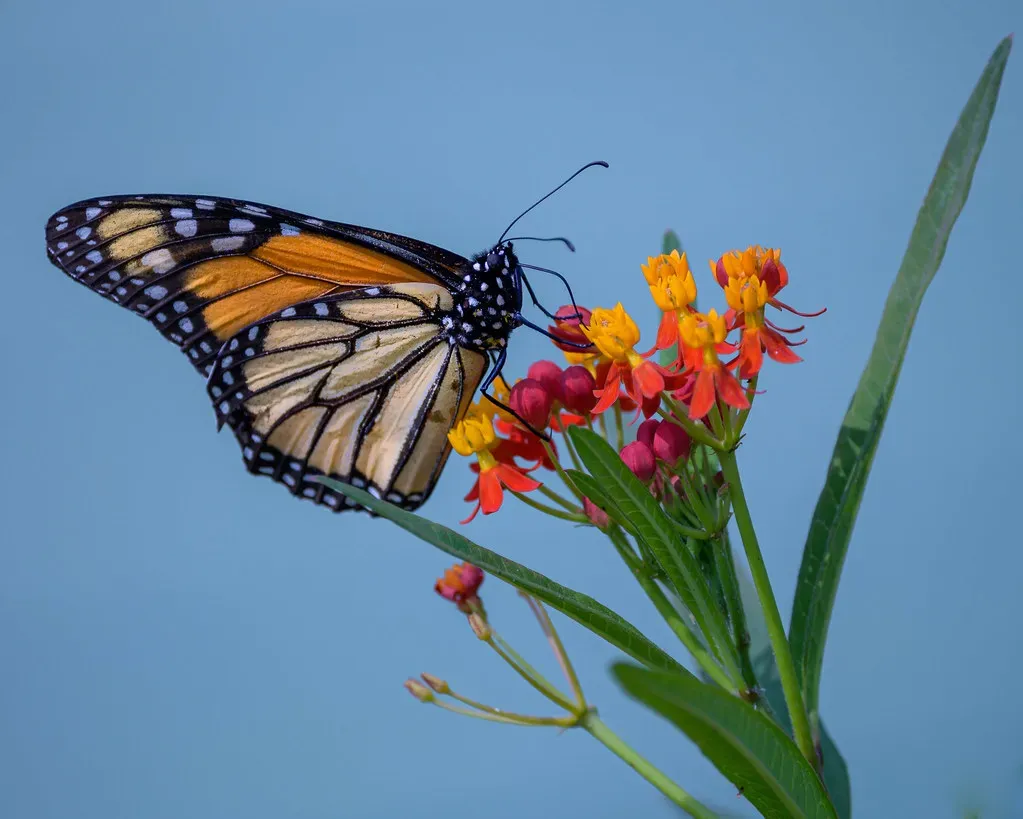
When spring arrives, the story takes another turn. The migratory generation finishes its development, becomes reproductive, breeds, and starts the northern journey back to North America – but unlike the single-generation journey south, successive generations make the journey north.
Each subsequent generation lives only three to five weeks, continuing northward until the butterflies reach breeding sites in the northern United States and southern Canada. It typically takes around three or four generations to complete the return trip, with each new wave picking up where their parents left off.
I know it sounds crazy, but these butterflies essentially pass a geographic baton across generations. The ones that overwinter in Mexico will fly north partway, lay eggs on milkweed plants, and die. Their offspring continue the journey, repeating the cycle until monarchs once again populate the northern breeding grounds by summer.
The Troubling Decline And Conservation Efforts

Unfortunately, this spectacular natural phenomenon faces serious threats. The US Fish and Wildlife Service estimated that the probability of extinction in the next 60 years is between 56 and 74 percent for the eastern monarch population. While populations rise and fall year to year, the eastern monarch population has been in a steady average decline over the last two decades, with nearly 45 acres of forest covered in 1995-1996 but far less in subsequent years.
Urban planning and agricultural expansion in the United States and Canada have destroyed millions of acres of milkweed, and GMO Roundup Ready crops have eliminated 99% of the milkweed that once grew in corn and soybean fields. Milkweed is essential because monarch caterpillars feed exclusively on it.
In 2025, over 20 research and conservation organizations across four countries deployed over 400 ultralight transmitters on migrating monarchs, using revolutionary tracking technology to better understand their routes and survival rates. The good news? Eastern monarch populations nearly doubled from 2024 to 2025, with the population occupying 4.42 acres in Mexico’s forests, up from 2.22 acres the previous winter.
Conclusion

The monarch butterfly migration stands as one of nature’s most awe-inspiring achievements. These impossibly delicate creatures navigate thousands of miles using biological tools we’re only beginning to understand, accomplishing what seems impossible given their size and lifespan. Their journey connects three countries, involves multiple generations, and depends on precise environmental conditions at every stage.
Yet their future hangs in the balance. Habitat loss, pesticides, and climate change threaten to silence one of the natural world’s most magnificent spectacles. Protecting milkweed, creating pollinator corridors, and supporting conservation efforts could mean the difference between watching these orange and black travelers fill our skies or only reading about them in history books. What will you do to help these remarkable migrants? Perhaps planting native milkweed in your own backyard is a small but meaningful place to start.
Worried about unexpected vet bills?
Pet insurance can cover thousands in unexpected vet costs. Get a free quote from Lemonade in under 2 minutes.
Get My Free Quote →Sponsored · Opens Lemonade.com

- 14 Quiet Signs Your Dog Is Getting Ready to Say Goodbye – Most Owners Miss Them Completely - June 9, 2026
- 15 Dog Breeds Known for Their Exceptional Loyalty and Devotion - June 9, 2026
- 14 Garden Mistakes That Drive Hummingbirds Away for Good – Most Gardeners Don’t Realize Until It’s Too Late - June 9, 2026