

A high‑altitude surprise: a marsupial above the clouds

Here’s the jaw‑dropper: the holotype of Marmosa chachapoya was found at roughly 2,664 meters (8,740 feet) in Peru’s Río Abiseo region—far higher than most folks expect for a tiny mouse opossum, and it turned out to be new to science.
The YouTube video “New Mouse Opossum Species Discovered: Meet Marmosa chachapoya with a Tail Longer than its Body!” (published September 15, 2025) walks viewers through this head‑turning find and why it matters for Andean biodiversity.
Field biologists originally trekking the cloud forests near archaeological sites stumbled upon a single small marsupial that didn’t fit known descriptions, setting off years of detective work in the lab and in museum drawers.
The species now bears the name Marmosa chachapoya, honoring the Chachapoya—often called the “people of the cloud forest”—whose history is deeply tied to this landscape.
The formal description was published in the peer‑reviewed journal American Museum Novitates, giving the discovery a firm scientific footing and a clear diagnosis.
What makes this announcement even more compelling is its setting: Río Abiseo National Park, a remote, rugged stronghold for wildlife and cultural heritage that scientists are only beginning to fully document.
As the video emphasizes, a find like this is not a lucky fluke but the result of patient work at elevation, meticulous comparisons, and the kind of curiosity that keeps biologists combing the canopy after dark.
Habitat: life in the misty canopies of Río Abiseo
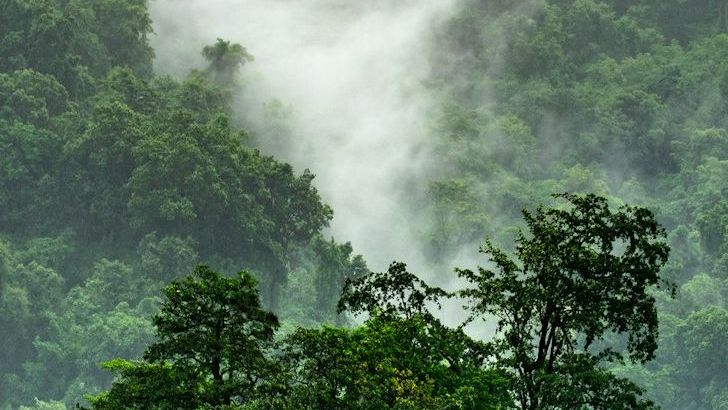
Cloud forests feel almost otherworldly—cool air, perpetual mist, moss‑slicked branches—and those are precisely the conditions where Marmosa chachapoya turned up. These montane forests sit in the moisture‑rich band of the eastern Andes, where swirling fog nurtures orchids, bromeliads, and epiphytes that drape over every limb.
At elevations roughly between 1,500 and 3,000 meters, the canopy is layered and dense, with narrow branches and vine tangles that reward animals built for balance and stealth. That complexity creates micro‑habitats for insects, fruit, and nectar, which in turn support small omnivores like mouse opossums.
Río Abiseo National Park is a biodiversity hotspot precisely because its isolation has preserved intact gradients—from river valleys up to cold, damp ridges—that many species traverse over short distances. Protected status has helped keep long tracts of habitat continuous, giving canopy specialists room to persist.
The video situates viewers in this setting with map views and field footage, underscoring how altitude and humidity shape everything from the forest’s mossy bark to the animals’ nightly routines.
Several expeditions here have hinted at a deeper reservoir of species than previously recognized, with scientists logging unusual small mammals alongside this new opossum, further elevating the park’s scientific value.
It’s the kind of place where a flashlight beam at midnight can reveal eyeshine you’ve never seen before—exactly the moment that leads to discoveries like Marmosa chachapoya.
A tail longer than its body: physical traits that set it apart
The headline feature is literal: the tail outstretches the body, an acrobat’s lifeline for gripping and balancing among slender branches. In the holotype, the head‑body length measures about 10.7 centimeters while the tail reaches roughly 16 centimeters, a proportion that instantly signals an arboreal specialist.
Coat color skews reddish‑brown above with a paler, creamy underside, and a dark facial mask frames the eyes without extending to the base of the ears—small, telling contrasts that taxonomists prize when separating look‑alikes.
The snout appears notably narrow and delicate, and the hands and feet show light yellowish hairs on top, details that help differentiate this species from similar relatives once you have it in hand. (https://en.wikipedia.org/wiki/Marmosa_chachapoya)
Beyond the obvious tail length, the tail itself is prehensile—essentially a fifth limb—letting the animal anchor while reaching for fruit or leaping between twigs in the foggy canopy.
Skull and dental characters also set it apart when examined against museum series of closely related species, reinforcing the case that this wasn’t simply a range‑edge variant but a bona fide species.
In the video, slow pans over photos and specimen shots highlight these contrasts, making the unusual proportions and facial patterning pop even for non‑specialists.
It’s the combination—tail‑to‑body ratio, mask boundaries, pelage tones, and cranial subtleties—that clinches identity in a genus full of small, swift, and superficially similar marsupials.
What it eats and how it moves: behavior inferred from relatives
Mouse opossums are nimble generalists, and Marmosa chachapoya likely follows suit—active mostly at night, threading the canopy in search of insects, soft fruits, nectar, and the occasional small vertebrate. Nocturnality helps avoid many day‑time predators and keeps the animal’s foraging window aligned with moths, beetles, and night‑blooming plants.
The long, grasping tail works like a safety harness, freeing the forelimbs to probe bark crevices or pluck berries without losing balance. That tail also helps the animal bridge gaps among cloud‑forest branches that are slick with moss and perpetually damp from mist.
With seasons in the Andes bringing shifts in flowering, fruiting, and insect pulses, a flexible diet is an advantage, letting the opossum pivot among foods as micro‑habitats change across ridges and ravines.
The video underscores this “jack‑of‑many‑foods” strategy by comparing Marmosa chachapoya’s likely habits with better‑studied mouse opossums, giving viewers a grounded sense of how it probably lives even before behavioral studies are complete.
As with many small marsupials, nest sites may be in vine tangles or cavities, places that stay drier in the mist and offer quick escape routes above the forest floor.
Until more individuals are documented, these inferences—anchored in close relatives and in the animal’s body plan—offer the clearest early window into its daily rhythms in the canopy.
How scientists proved it was new
The journey from “odd specimen” to “new species” began with a single animal—holotype MUSM 48770—collected on August 16, 2018, at La Playa in the upper Río Montecristo basin inside Parque Nacional del Río Abiseo.
Researchers compared its skull, teeth, pelage, and external traits with museum collections across continents, looking for consistent differences rather than one‑off quirks. They also sequenced DNA, including mitochondrial cytochrome b and several nuclear markers, to test how strongly it diverged from close relatives.
Those genes told the same story as the skull: Marmosa chachapoya sits as a highly distinctive lineage within the subgenus Stegomarmosa, with about 8% uncorrected divergence at cytochrome b from its Amazonian sister species, M. lepida.
Only one specimen is known so far, which is not unusual in remote cloud‑forest work where nights are short, weather is fickle, and access is hard; nevertheless, the combined genetic and morphological evidence met the bar for naming.
The formal description—authored by Silvia E. Pavan, Edson F. Abreu, Pamela Y. Sánchez‑Vendizú, and Robert S. Voss—was published in American Museum Novitates, anchoring the name and diagnosis for future studies and conservation listing.
As the video explains, this is how taxonomy works at its best: field discovery, careful measurement, rigorous lab analysis, and peer review before a new species enters the scientific record.
“We know very little about this species, including its natural history and distribution.”
Why the find matters and what comes next
Discoveries like Marmosa chachapoya sharpen our map of Andean biodiversity and help pinpoint where protection delivers the biggest payoff, especially in high‑elevation cloud forests that trap moisture and store carbon. Río Abiseo is also recognized for its cultural heritage, underscoring how biological and archaeological treasures often co‑occur in the same rugged places.
The expedition that yielded this opossum also flagged other likely newcomers to science, including a semiaquatic rodent, hinting that more surprises are waiting in the mist.
Early communication from the team stresses that more sampling is needed to map the species’ range, estimate population size, and assess threats—basic steps before any conservation status can be proposed.
The video encourages viewers to see the long tail not as a curiosity but as a key adaptation for canopy living, a trait that helps the species exploit food resources and evade predators in a three‑dimensional maze.
For reference, here are verified identifiers that scientists and conservationists will reuse as work continues:
- Holotype: MUSM 48770 (skin, skull, ethanol‑preserved carcass and tissues). ([bioone.org]
- Type locality: La Playa, upper Río Montecristo basin, Parque Nacional del Río Abiseo, San Martín, Peru (2,664 m).
- Subgenus: Stegomarmosa; close relatives include M. lepida and M. andersoni. ([bioone.org]
- Key measurements (holotype): head‑body ~10.7 cm; tail ~16 cm (tail longer than body).
- Etymology: named for the Chachapoya people of the cloud forest region.
In sum, Marmosa chachapoya is a newly described mouse opossum from Peru’s Río Abiseo cloud forests, diagnosed by a distinctive suite of traits and supported by genetic data, with a tail that overtops its body and an origin at high elevation where researchers are only starting to uncover the region’s true diversity.
Source: Original YouTube Video

From exploring the marine wonders in the Azores and witnessing the vast savannas of Kenya, to delving deep into the rich biodiversity of South Africa and traversing iconic landscapes in Australia and the US like Yellowstone, Chris's experiences are vast.
With a penchant for diving alongside sharks, the ocean holds a special place in his heart.
Through his academic insights, he champions wildlife conservation, striving with 'Animals Around The Globe' to cultivate a profound connection between humans and animals, enhancing our mutual appreciation.
Connect with him at Feedback@animalsaroundtheglobe.com.