

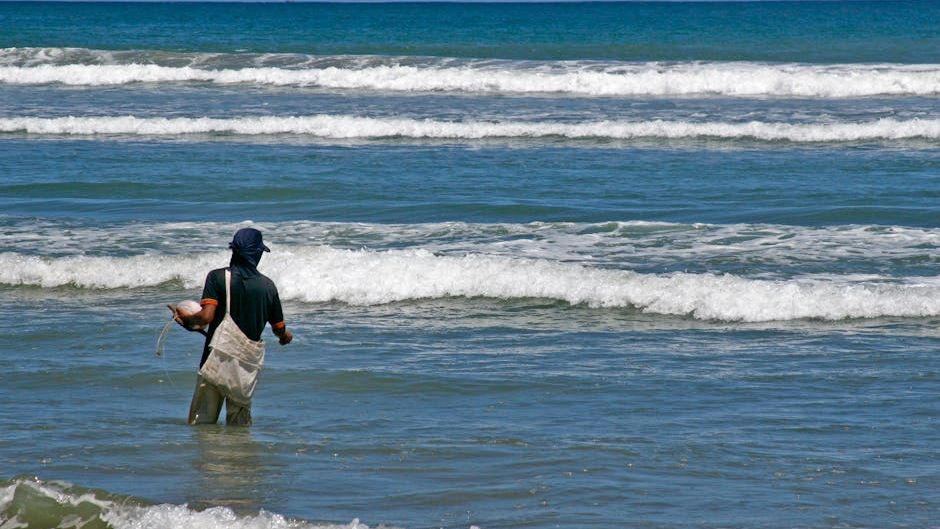
‘One of the most rapid transitions that I’ve seen’: NOAA forecaster on how this year’s El Niño could shatter records – Image for illustrative purposes only (Image credits: Pexels)
The equatorial Pacific Ocean has shifted from La Niña conditions earlier this year to neutral status, with rapid warming in the eastern region signaling an imminent El Niño. Forecasters at the National Oceanic and Atmospheric Administration now see a 90% chance of El Niño emerging by this fall, a level of certainty that stands out amid typical springtime forecasting hurdles.[1][2] This transition has caught the attention of experts, who describe it as one of the fastest on record.
Rapid Warming Defies Historical Norms
Nathaniel Johnson, a research meteorologist on NOAA’s ENSO seasonal forecast team, highlighted the speed of the change during a recent interview. The eastern Pacific warmed quickly after the La Niña that dominated last winter, moving through neutral conditions without major disruptions.[1] Johnson noted, “It might be one of the most rapid transitions that I’ve seen in the record – maybe the most rapid.”[1]
Such flips from La Niña to El Niño within a single year remain uncommon. While strong El Niños often yield quick drops to La Niña, the reverse path proves rarer. Recent subsurface ocean heat buildup and westerly wind patterns have aligned to support this momentum, with above-average temperatures now spanning much of the equatorial Pacific.[2][3]
Overcoming the Spring Forecasting Challenge
Forecasts for El Niño carry extra uncertainty in spring due to weaker ocean-atmosphere coupling and greater influence from unpredictable weather. Yet, the current outlook bucks this trend. NOAA’s models project El Niño conditions with 61% odds as early as May through July, rising in subsequent months and holding through year-end.[2]
This confidence stems from consistent signals across sea surface temperatures, subsurface heat, and atmospheric patterns. The Niño 3.4 index, a key El Niño measure, registered at -0.2°C recently, but positive shifts continue. Johnson emphasized that no major disruptions have appeared to derail the progression.[1]
Strength Projections and Classification Thresholds
El Niño officially begins when eastern-central Pacific sea surface temperatures exceed 0.5°C above the tropical average, per the Niño index. Events break into categories: weak (0.5-1.0°C), moderate (1.0-1.5°C), strong (1.5-2.0°C), and very strong (above 2.0°C). Very strong episodes occur roughly once every 10 to 20 years.[1]
Forecasts point to at least a 50% chance of a strong event and 25% for very strong by November. Climate models vary, with about one in four suggesting extreme intensity during winter. Such power could amplify global effects atop ongoing warming trends.[2][3]
El Niño occurs about every three to four years, but many are weak. A very strong event… happens maybe once every 10 to 20 years.
– Nathaniel Johnson, NOAA Climate Prediction Center
Widespread Weather and Ecological Ripples
A potent El Niño could spike global temperatures, building on the 2024 record partly fueled by the prior event. Warmer Pacific waters might disrupt fisheries, with reduced upwelling harming anchovy stocks off Peru and shifting fish migrations. Droughts could strike Indonesia, Australia, and northern South America, while wildfires rise in Australia, Indonesia, northern Brazil, and parts of North America.[1]
Coral reefs face bleaching risks from elevated tropical heat. Climate change may contribute to faster ENSO swings, though full analysis awaits. As patterns solidify, communities from farms to fisheries prepare for shifts that echo past extremes.
With models locked on persistence through 2026, this El Niño promises notable influence on weather worldwide.

As a little kid, I fell in love with nature, wildlife, and animals. Living in the USA, South Africa, Italy, China and Germany gave me the opportunity to discover the world's Wildlife. My favorite animals are Mountain Gorillas, Siberian Tigers, and Great White Sharks.
I'm a certified PADI Open Water Diver, went to Everest Base Camp and Trekked Gorillas in Uganda. I hold a Master of Science in Economics and Finance.
Please send any feedback to feedback@animalsaroundtheglobe.com
- The Fearsome Komodo Dragon Earth’s Largest Lizard - August 18, 2026
- How Bears Are Adapting to Urban Life in the U.S. - August 18, 2026
- Animals and Wildlife in North America - August 18, 2026