

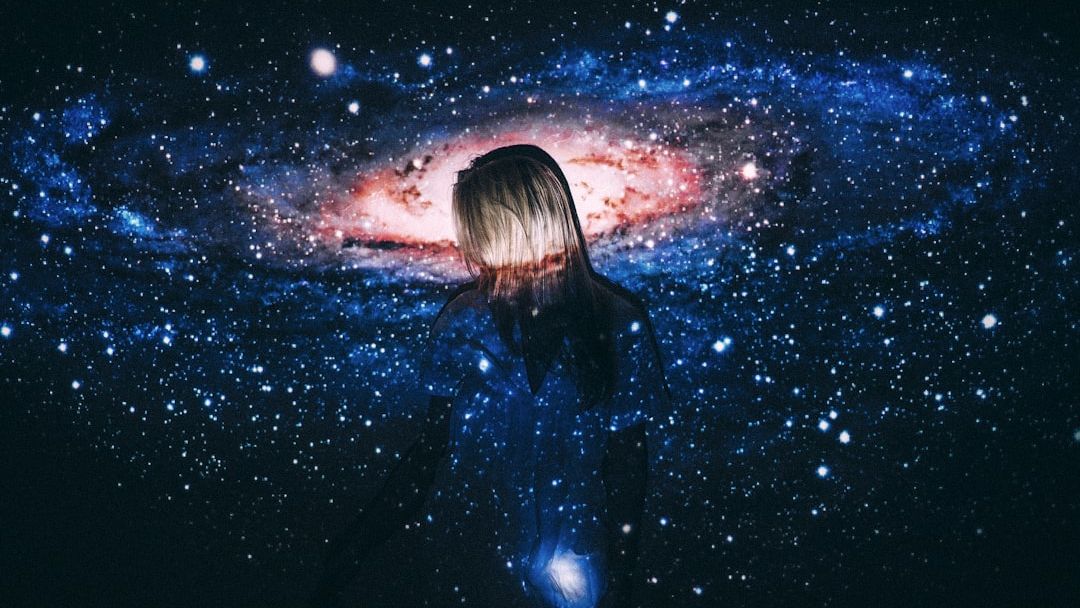
There is a quiet and rather staggering fact sitting underneath everything you think of as “you.” The skin, the bone, the blood, the breath – none of it is original. The atoms that currently make up your body have been on a journey so old and so strange that calling it “your” body feels almost like a technicality. You are, in the most literal physical sense, a temporary arrangement of ancient matter.
Physics and chemistry don’t frame this as poetry. They frame it as mechanism. The same laws that govern nuclear furnaces in dying stars also govern the calcium hardening in your teeth right now. Understanding where your atoms came from, and where they are going, changes something fundamental about how a person can see themselves in the world – not smaller, but considerably more connected.
You Are Made of 7 Octillion Atoms, None of Them New
The average adult human is made up of 7,000,000,000,000,000,000,000,000,000 – that’s 7 octillion – atoms, and most of them are hydrogen, the most common element in the universe, produced by the Big Bang 13.8 billion years ago. That number is almost impossible to hold in the mind, but the important thing isn’t the quantity. It’s the age.
While most of the cells in your body regenerate every seven to fifteen years, many of the particles that make up those cells have actually existed for millions of millennia. Your body is constantly renewing itself on a cellular level, yet the subatomic raw material doing the rebuilding is ancient beyond any practical measure. You are, structurally, a very recent use of very old parts.
We are made up of much older “subatomic stuff,” with electrons orbiting atomic nuclei filled with fields and forces governed by quantum mechanics. Our physiology consists of fundamental particles, “cosmic relics” of elements forged within the nuclear furnaces of stars that live, burn, and ultimately die. The word “relic” is appropriate. These are not fresh ingredients. They have history.
Born in Stars, Scattered by Supernovae
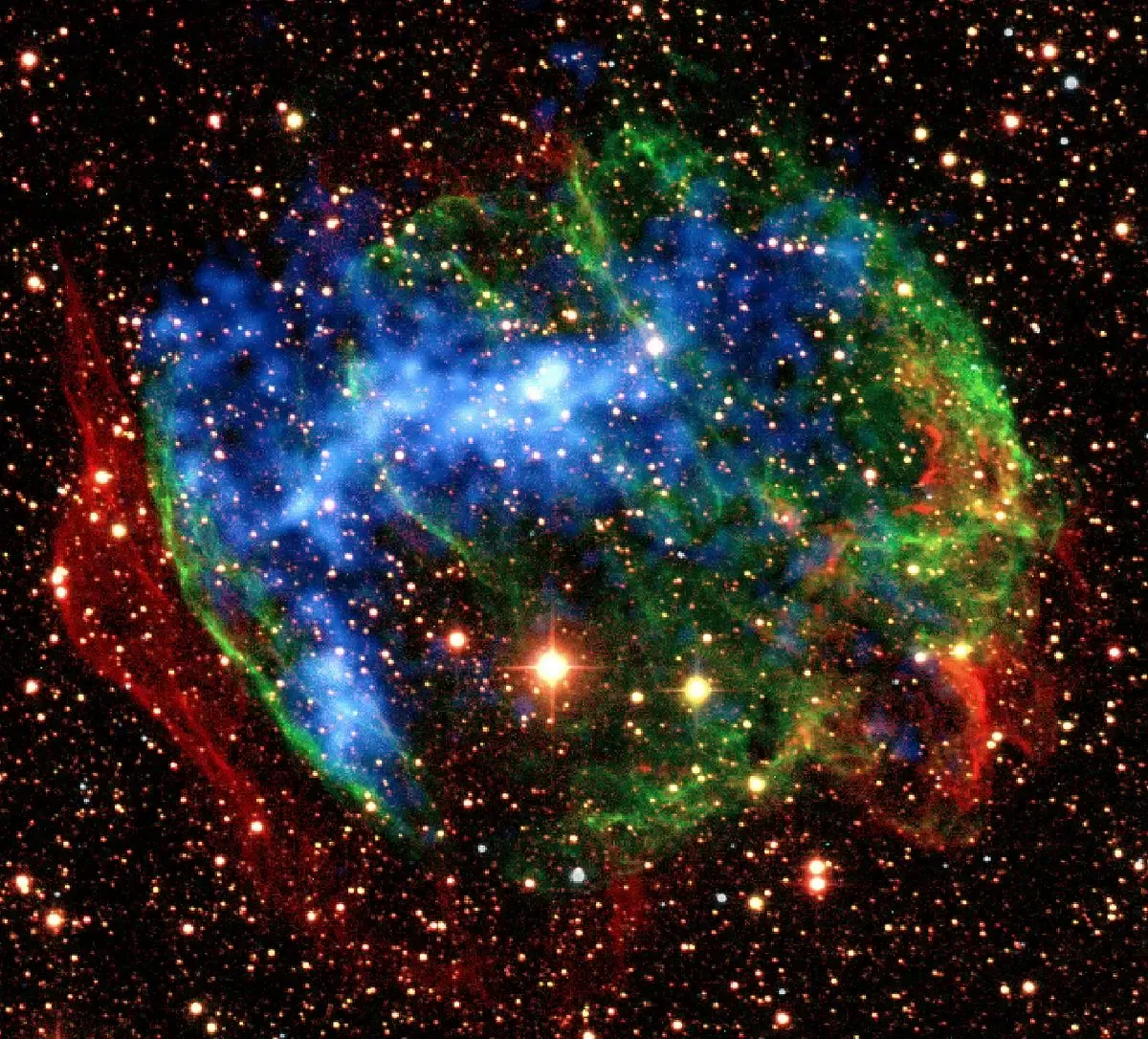
The hydrogen atoms in you were produced in the Big Bang, and the carbon, nitrogen, and oxygen atoms were made in burning stars. The very heavy elements in you were made in exploding stars. This isn’t a metaphor or a motivational poster. It is the verified, testable output of nuclear astrophysics, confirmed through spectroscopy, stellar modeling, and decades of observation.
Every molecule in our bodies contains matter that once was subjected to the tremendous temperatures and pressures at the centre of a star. This is where the iron in our blood cells originated, the oxygen we breathe, the carbon and nitrogen in our tissues, and the calcium in our bones. All were formed predominantly in fusion reactions of smaller atoms in the interior of stars. Iron in your blood was literally forged in a stellar core. That’s not dramatic language – it’s nuclear chemistry.
Carbon in your DNA and proteins was forged by helium fusion in the cores of previous-generation stars and redistributed by stellar winds and explosions. Oxygen in water and tissues was mainly produced in massive stars and spread by supernovae. Iron in blood was produced by late-stage stellar fusion and explosive nucleosynthesis. Three of the most critical elements keeping you alive were each created by a different stellar process in a different era of cosmic history.
Dissolved in Ancient Oceans Long Before Life Recognized Itself
Since a dinosaur died and decomposed millions of years ago, its carbon atoms have seen many forms before ending up as part of a human being. Carbon may have been part of several plants and trees, free-floating in the air as carbon dioxide, locked away in the shell of a sea creature and then buried at the ocean bottom, or even part of a volcanic eruption. One atom, countless biographies.
The ocean plays a critical role in carbon storage, as it holds about fifty times more carbon than the atmosphere. Two-way carbon exchange can occur quickly between the ocean’s surface waters and the atmosphere, but carbon may be stored for centuries at the deepest ocean depths. Atoms that are now sitting in your liver may have spent centuries in the cold dark of the deep ocean before the ocean floor shifted and pushed them back toward the surface and eventually into the food chain that feeds you.
Locked in Stone for Millions of Years
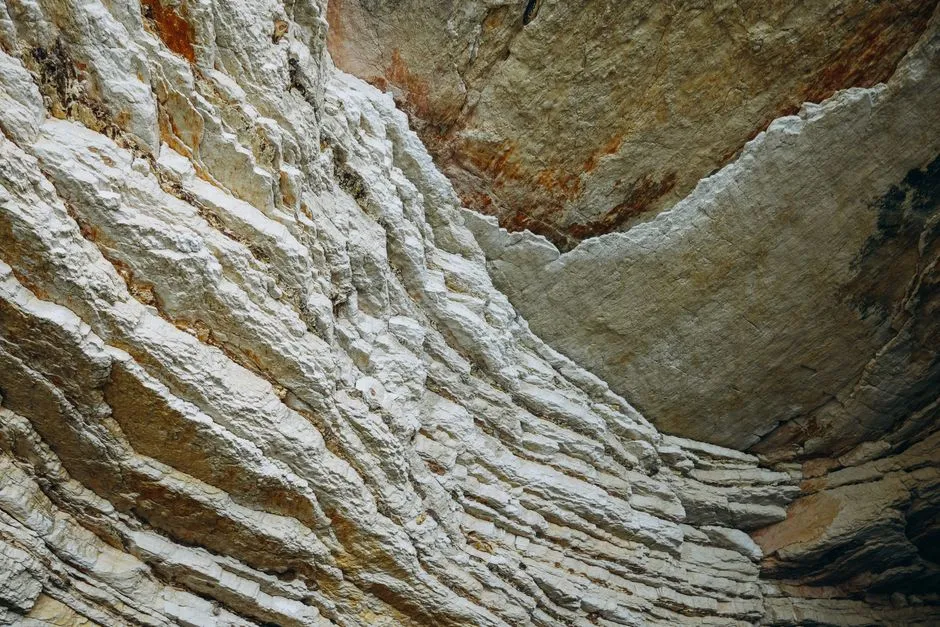
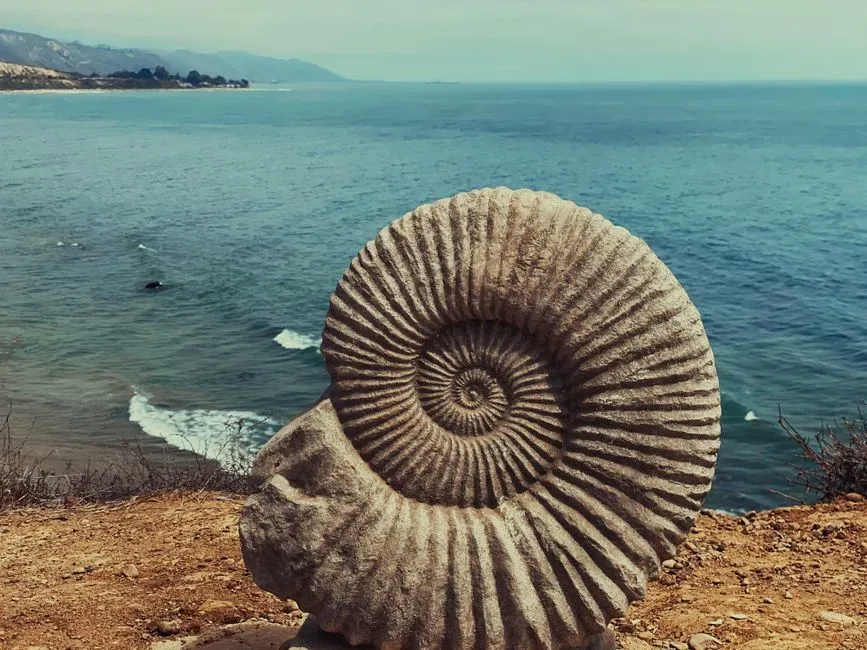
In the modern ocean, most of the calcium carbonate is made by shell-building organisms such as corals and plankton. After the organisms die, they sink to the seafloor. Over time, layers of shells and sediment are cemented together and turn to rock, storing the carbon in stone – limestone and its derivatives. This is one of the longest pauses in the atomic journey: material that once moved freely through living things, then held motionless inside stone for geological epochs.
Rocks like limestone and fossil fuels like coal and oil are storage reservoirs that contain carbon from plants and animals that lived millions of years ago. When these organisms died, slow geologic processes trapped their carbon and transformed it into these natural resources. The calcium now in your bones almost certainly spent time locked inside rock before weathering and erosion liberated it back into soil and water. Existing limestone can also undergo metamorphism under heat and pressure, transforming into marble – meaning some of your atoms may have passed through sculpture-grade stone before finding their way into you.
Exhaled by Creatures That No Longer Exist
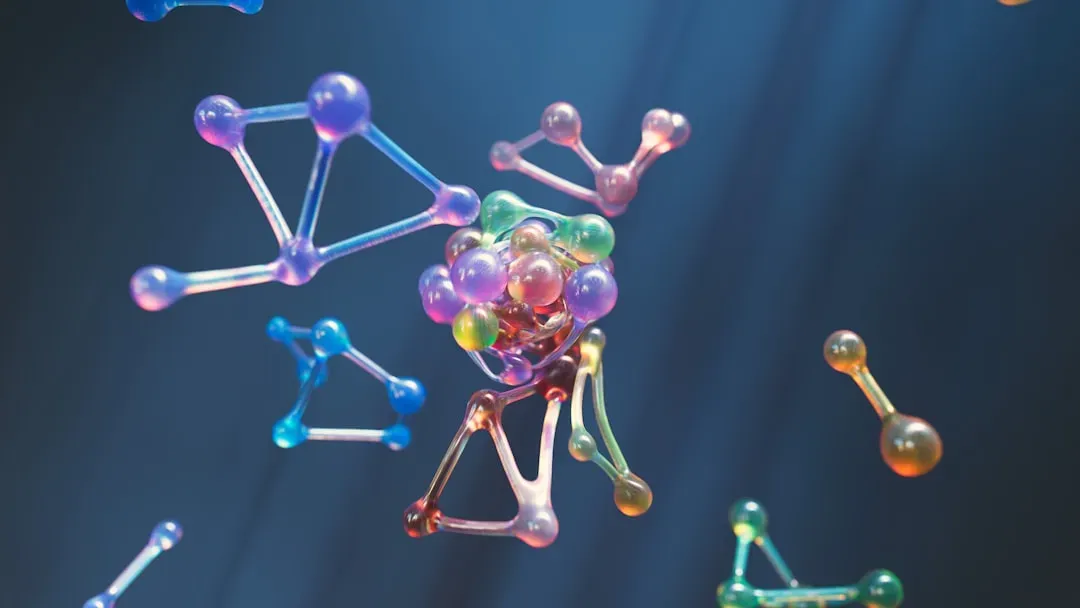
Your oxygen atoms got into your body from the air you breathe. Gases in the atmosphere are churned in a chaotic way by the weather, but it’s safe to assume that any given oxygen atom could have been anywhere in the world as recently as a few years ago. Look a little further back though, and the picture gets far stranger. The oxygen you just inhaled may have been breathed out by species that no longer exist. That’s not a guess – it’s what the mixing of atmospheric gases over geological time implies.
Some of the carbon atoms in your body today may long ago have resided in a dinosaur’s body, or perhaps were once buried deep in the Earth’s crust as carbonate rock minerals. The nitrogen in your muscles cycled through organisms, soils, and atmospheres long before any complex vertebrate life walked the planet. You are, in a very real sense, breathing shared air with the deep past – and exhaling atoms that will eventually be breathed by whatever comes long after us.
A Cosmic Conveyor Belt Beyond the Galaxy Itself
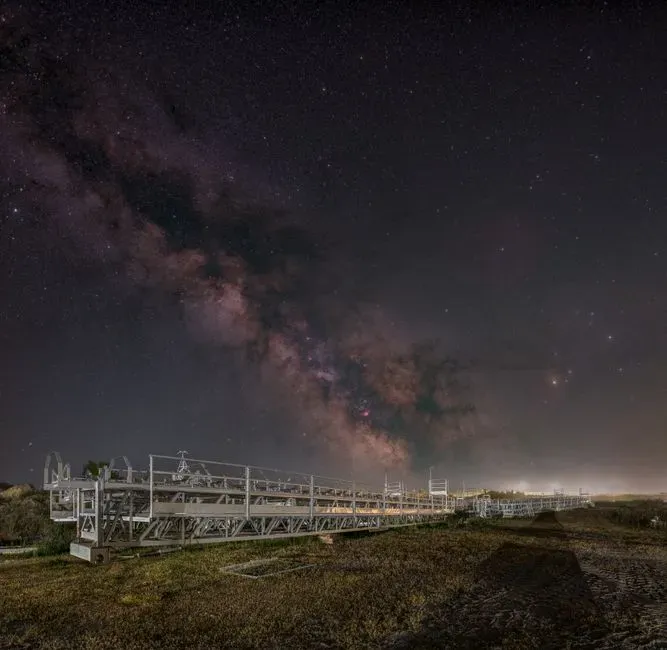
New research suggests that most of the atoms within the human body likely spent part of their lives drifting beyond the Milky Way on a cosmic “conveyor belt,” before eventually returning to our galaxy. This finding extended what scientists already knew about the interstellar origins of body atoms and pushed it out to an intergalactic scale. The journey of your matter is not just local or even galactic. It is cosmological.
Many of the atoms in the Milky Way, including the carbon in your body, have taken a round-trip journey through intergalactic space. Carbon is also one of the most abundant elements within these extragalactic structures. The idea that the carbon forming your cells once drifted in the space between galaxies before being swept back by gravitational currents is not science fiction. It is the emerging consensus of astrophysical research. Your body is a local address for matter that has traveled on a truly universal scale.
After You Are Gone, the Atoms Carry On
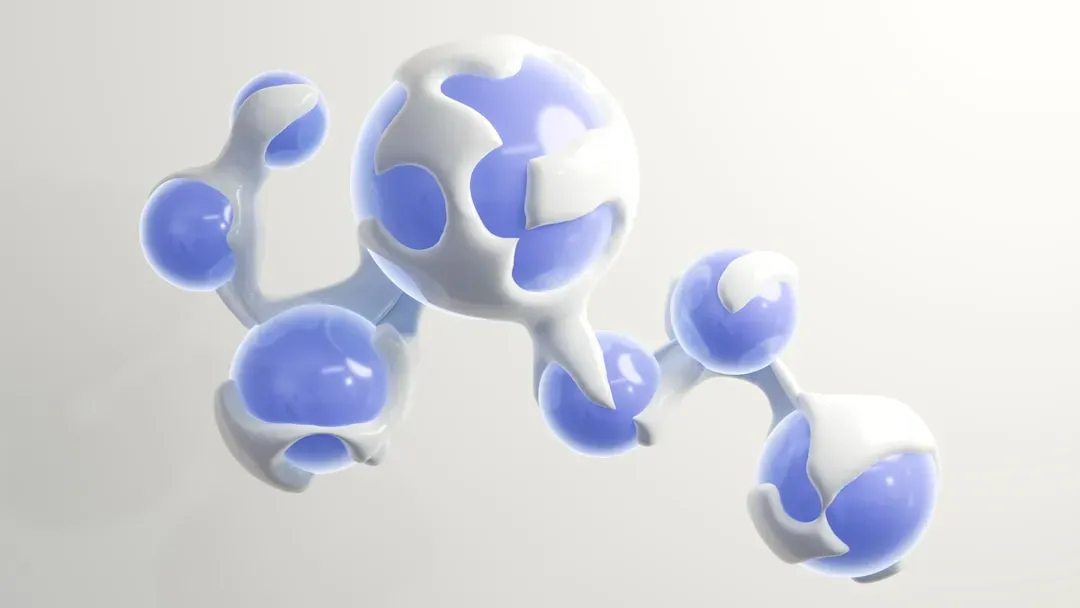
In the carbon cycle, decomposers break down dead material from plants and other organisms and release carbon dioxide into the atmosphere, where it’s available to plants for photosynthesis. The body’s matter does not disappear at death. It disperses. After death, decomposition releases carbon into the air, soil and water. Living things capture this liberated carbon to build new life. What was you becomes grass, becomes insect, becomes bird, becomes something else entirely across timescales no individual life can witness.
Even in death, our particles will be repurposed, less orderly but never lost, consistent with the law of conservation of energy. Physics is very clear on this point: matter is not destroyed. The carbon cycle occurs because Earth is a closed system, meaning that the total amount of carbon never changes. The atoms temporarily organized as “you” will go on to be organized as something else. Many times over. Across spans of time that make a human lifetime feel, if we’re honest, like a single exhaled breath in a very long conversation.
Conclusion: You Are a Temporary Agreement Between Ancient Matter
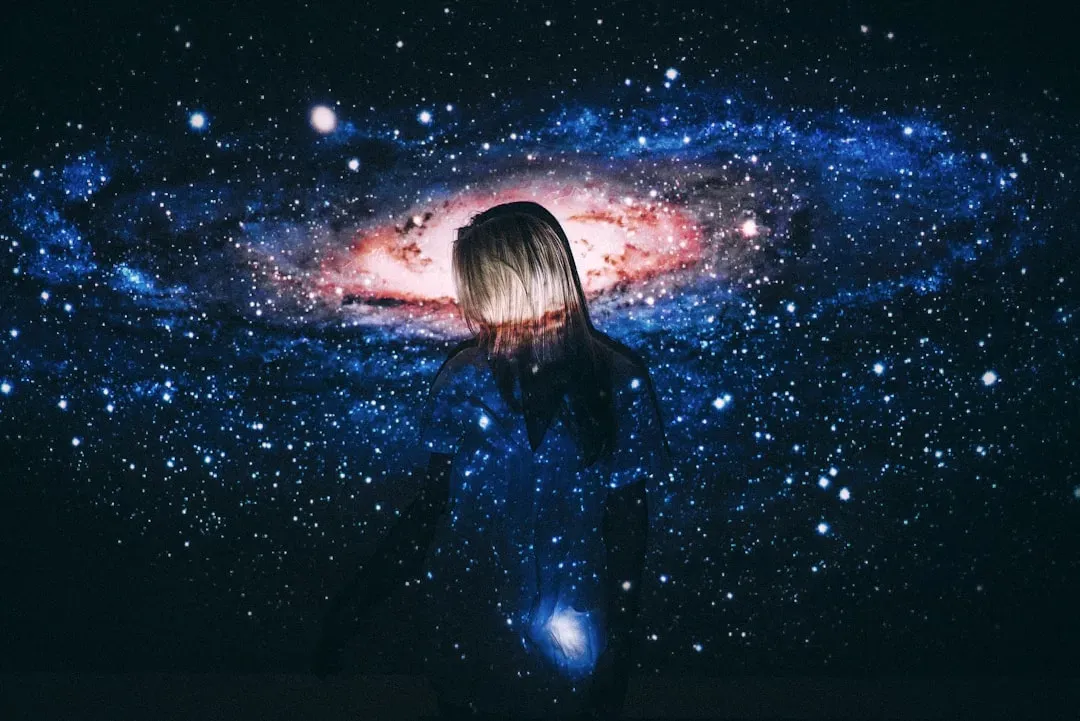
There is an honest kind of humility that comes from taking this seriously. Not the false humility that diminishes individual life, but the grounded kind – the recognition that what you call your body is really matter on loan, organized briefly and remarkably into something that can read, think, and feel astonished by its own origins.
The atoms in you were forged in stellar cores, scattered by supernovae, dissolved in prehistoric seas, locked in limestone, exhaled by animals whose names we’ll never know, and swept through intergalactic space before landing here, in you, now. After you, they will do it all again. The story is not about you specifically. It’s about how matter perpetually becomes, and that you get to be one chapter of it is, by any reasonable measure, extraordinary.
Physics doesn’t offer comfort or meaning on its own. It just describes what happens. What you do with the knowledge that you’re a temporary arrangement of the universe’s most ancient material – that part is still entirely up to you.

As a little kid, I fell in love with nature, wildlife, and animals. Living in the USA, South Africa, Italy, China and Germany gave me the opportunity to discover the world's Wildlife. My favorite animals are Mountain Gorillas, Siberian Tigers, and Great White Sharks.
I'm a certified PADI Open Water Diver, went to Everest Base Camp and Trekked Gorillas in Uganda. I hold a Master of Science in Economics and Finance.
Please send any feedback to feedback@animalsaroundtheglobe.com
- How to Stop Rabbits from Eating Your Plants - August 13, 2026
- 13 Underwater Predators That Rule U.S. Oceans - August 13, 2026
- 10 Shark Species Found Off the U.S. Coast - August 13, 2026