

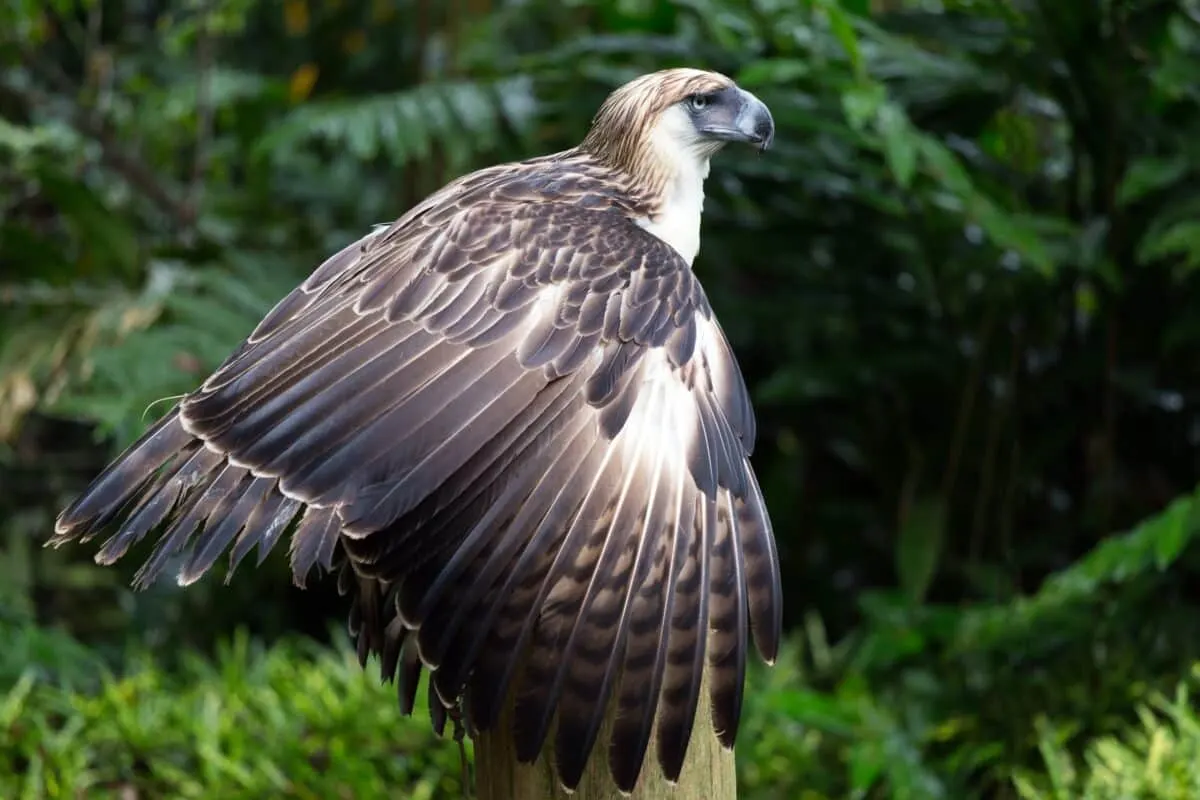
The Philippine Eagle, often referred to as the “King of the Rainforest,” is one of the world’s most powerful and rarest birds of prey. Endemic to the Philippines, this majestic bird is known for its striking appearance, including a crown of feathery plumes and an incredible wingspan of up to seven feet. Despite its grandeur, the Philippine Eagle faces a precarious future, with habitat destruction and poaching significantly threatening its survival.
Anatomy and Behavior
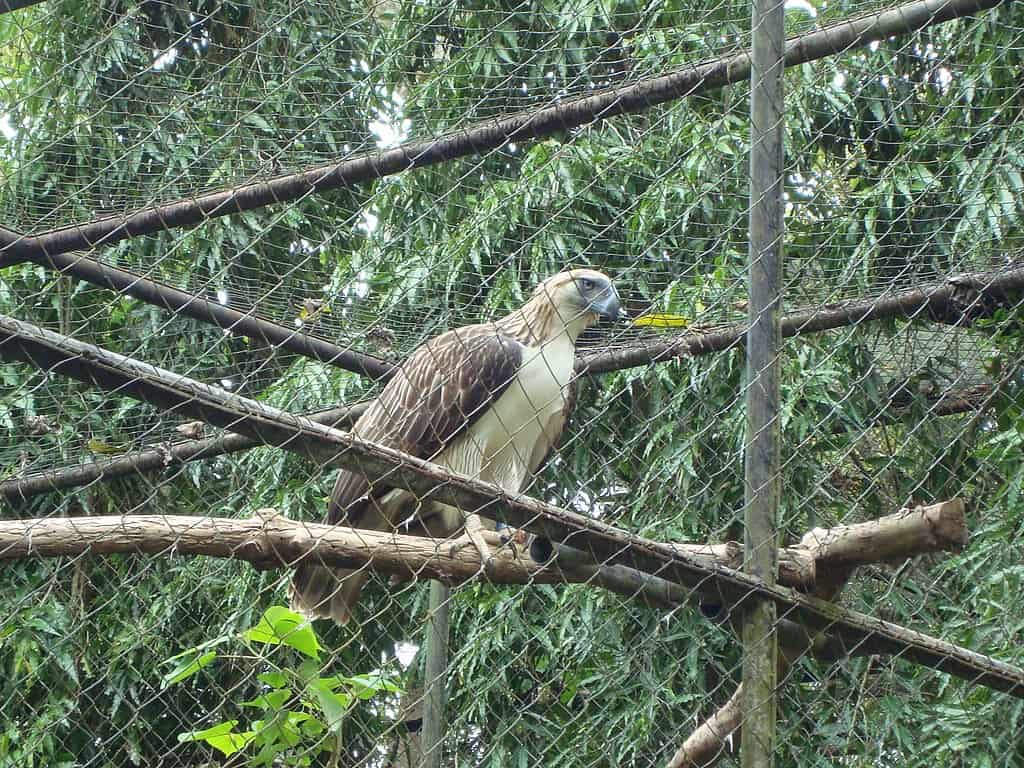
The Philippine Eagle (Pithecophaga jefferyi) is the largest in terms of length, distinguished by its lofty crest and piercing blue eyes. Weighing up to 18 pounds, it has a robust beak designed to tear through the flesh of its prey. Known for its strength and agility, the eagle preys on mammals, birds, and reptiles, showcasing its role as an apex predator in its natural habitat.
These eagles are monogamous creatures that pair for life, often inhabiting the same territory for decades. Their breeding cycle is notable for its length, with females laying only one egg every two years, making each offspring critical to the species’ survival. The male shares in the parenting duties, providing food for the female and the chick.
Habitat and Distribution

Primarily inhabiting the lush tropical rainforests of Luzon, Leyte, Samar, and Mindanao islands, the Philippine Eagle thrives in dense forests where large trees provide nesting sites. Unfortunately, deforestation and land conversion for agriculture have severely diminished these habitats. Only about 400 pairs are believed to remain in the wild, spread across the archipelago in isolated territories.
Conservation Challenges
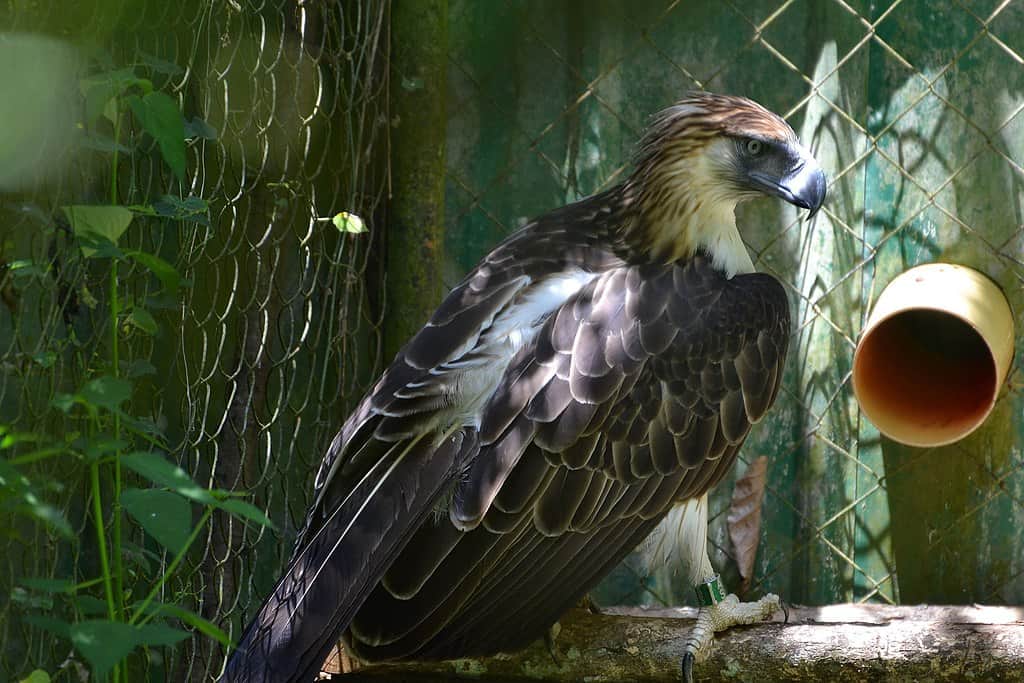
Despite its status as the national bird of the Philippines and its critically endangered designation, the Philippine Eagle faces numerous threats. The most significant danger is deforestation, which occurs due to illegal logging and agricultural expansion and destroys the eagle’s habitat. Moreover, hunting, whether for traditional beliefs or mere sport, has further reduced the eagle’s numbers.
Another challenge is the bird’s slow reproductive cycle, which hinders population recovery. The eagle’s dependence on vast territories for hunting and breeding underscores the complexity of its conservation needs, making habitat protection and restoration critically important.
Conservation Efforts

Numerous efforts are underway to preserve the Philippine Eagle. The Philippine Eagle Foundation, a leading conservation organization, has been instrumental in research, captive breeding, and rehabilitation initiatives. Their efforts focus on habitat protection, breeding programs, and community education to foster local stewardship.
The foundation runs a Philippine Eagle Center in Davao City, which serves as a sanctuary for injured and captive-bred eagles. Government policies like the Wildlife Resources Conservation and Protection Act help provide a legal framework for protecting these birds.
The Role of Local Communities

Engagement with local communities is essential for eagle conservation. Many environmental programs aim to involve indigenous groups and residents who live within or near eagle habitats. By providing education and alternative livelihoods, these programs incentivize locals to protect rather than exploit their natural resources.
Eco-tourism also offers a promising avenue by promoting sustainable practices and increasing economic benefits for the community, thus fostering a cooperative approach to conservation.
Conclusion

Preserving the Philippine Eagle is not just about saving a species; it represents a broader effort to protect biodiversity and maintain the balance of crucial ecosystems. As we champion the eagle’s cause, we also advocate for the preservation of rainforests, the protection of native wildlife, and the strengthening of local communities. By addressing the underlying issues of habitat destruction and raising awareness, there is hope that future generations will witness the majesty of the Philippine Eagle soaring through the skies of its rightful rainforest kingdom.

As a little kid, I fell in love with nature, wildlife, and animals. Living in the USA, South Africa, Italy, China and Germany gave me the opportunity to discover the world's Wildlife. My favorite animals are Mountain Gorillas, Siberian Tigers, and Great White Sharks.
I'm a certified PADI Open Water Diver, went to Everest Base Camp and Trekked Gorillas in Uganda. I hold a Master of Science in Economics and Finance.
Please send any feedback to feedback@animalsaroundtheglobe.com
- 13 Aquatic Mammals That Don not Look It - July 10, 2026
- 15 Unlikely Hunters With Killer Instincts - July 10, 2026
- 10 Low-Maintenance Pets for Busy Owners - July 10, 2026