

Researchers revealed a series of animal behaviors that challenged long-held assumptions about wildlife adaptability and survival strategies.
Massive Fish Aggregation Scales Brazilian Waterfalls
Scientists witnessed an extraordinary event in Brazil where thousands of fish formed a dense aggregation to climb steep waterfalls, a feat previously undocumented on such a scale. This behavior allowed the school to navigate obstacles during migration, highlighting the resilience of aquatic species in dynamic river systems. Experts noted that environmental pressures, such as fluctuating water levels, likely drove this coordinated effort.
The observation underscored the importance of protecting riverine habitats, as such adaptations could prove vital amid climate change. Conservationists emphasized that preserving these waterways supports not only fish populations but also the broader ecosystem dependent on them. This discovery prompted calls for enhanced monitoring in similar regions across South America.
Wolves Master Tool Use Along Canadian Coasts
In British Columbia, a young female wolf demonstrated innovative tool use by employing her mouth to drag fishing nets ashore and access trapped salmon, marking the first recorded instance of such behavior in wild wolves. Camera traps captured the wolf methodically pulling the nets and extracting fish, suggesting an emerging adaptation to human-altered environments. Biologists interpreted this as evidence of rapid behavioral evolution in response to abundant marine resources.
This finding raised questions about how wolves might expand their foraging techniques in coastal areas, potentially affecting local fisheries. Wildlife managers viewed it as a reminder to integrate predator behaviors into conservation planning. The event highlighted the need for non-lethal deterrents to minimize conflicts between wolves and human activities.
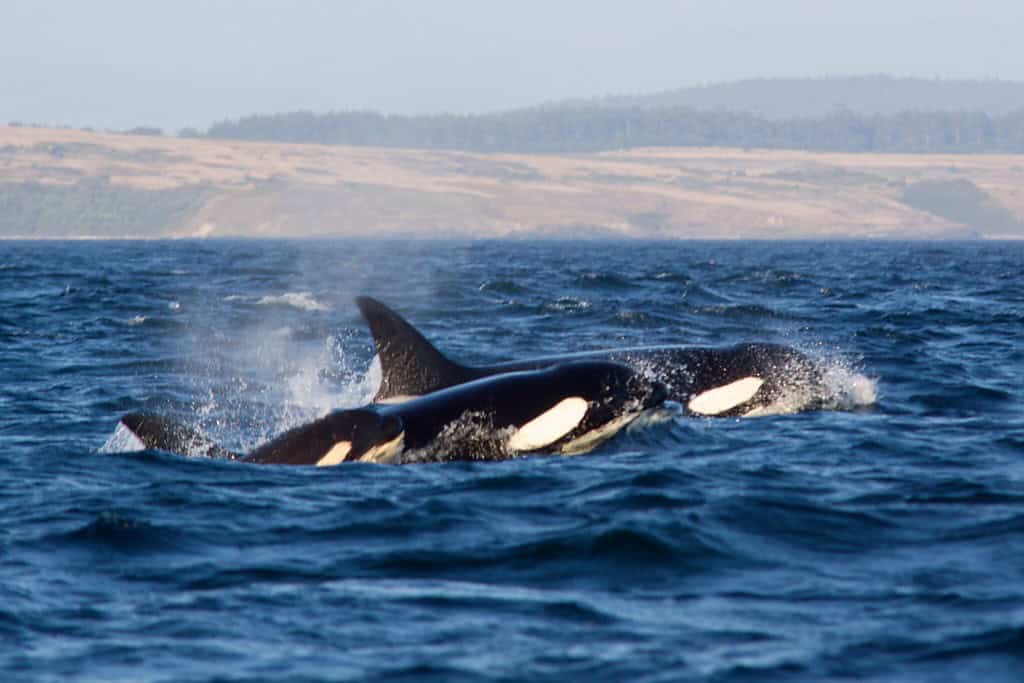
Orcas Develop Novel Tool-Making Skills
Off the Pacific Northwest, orcas exhibited tool-making by fashioning sponges and debris into implements to dislodge prey from seafloor crevices, a behavior that expanded known cognitive abilities in these marine mammals. Observations from research vessels showed pods collaborating on this technique, which improved hunting efficiency in challenging terrains. Marine biologists linked the innovation to depleted food sources, indicating orcas’ capacity for cultural transmission of new skills.
Such adaptability offered hope for cetacean populations facing ocean degradation, yet it also signaled underlying ecological stress. Conservation efforts gained momentum to safeguard critical habitats where these behaviors evolved. Experts stressed that protecting marine biodiversity ensures orcas continue to thrive as apex predators.
Coyotes and Badgers Form Unlikely Hunting Partnerships
Across North American prairies, coyotes and badgers engaged in cooperative hunting, with badgers digging into burrows while coyotes chased prey to the surface, a symbiotic relationship more prevalent than previously thought. Field studies documented numerous instances of this teamwork, revealing how the duo maximized success rates against rodents. Researchers attributed the behavior to overlapping territories and complementary strengths.
This interspecies alliance illustrated the complexity of wildlife interactions, informing strategies to restore grassland ecosystems. Conservationists noted that habitat fragmentation could disrupt such partnerships, endangering both species. The discovery encouraged initiatives to reconnect fragmented landscapes for sustained biodiversity.
Salamanders Exhibit Hurricane Evacuation Tactics
During intense hurricanes in the southeastern U.S., salamanders displayed mass migration patterns, seeking higher ground in organized groups to evade flooding, a survival strategy captured by tracking devices for the first time. Biologists observed how these amphibians anticipated storm surges, moving en masse before waters rose. This proactive behavior demonstrated an innate weather-sensing ability in amphibians.
The revelation bolstered amphibian conservation by identifying key refuge areas during extreme weather. As climate-driven storms intensify, protecting these migration routes became a priority. Scientists advocated for wetland preservation to support such vital adaptations.
These 2025 discoveries not only expanded our understanding of animal intelligence and resilience but also reinforced the urgency of proactive wildlife conservation. As habitats evolve under human influence, recognizing these behaviors guides efforts to foster sustainable coexistence.
Key Takeaways
- Unexpected behaviors like tool use in wolves and orcas highlight rapid adaptation to environmental changes.
- Cooperative hunting among coyotes and badgers shows the value of interspecies relationships in ecosystems.
- Migration tactics in fish and salamanders emphasize the need to protect migration corridors amid climate threats.
What unexpected animal behavior have you encountered? Share your thoughts in the comments.

- Urban Coyotes Show Remarkable Adaptability, Learning to Thrive in City Environments - July 22, 2026
- Beavers Are Nature’s Engineers, Creating Vital Habitats for Other Wildlife Species - July 21, 2026
- The Recovery of the California Condor Offers Hope for Other Critically Endangered Birds - July 21, 2026