

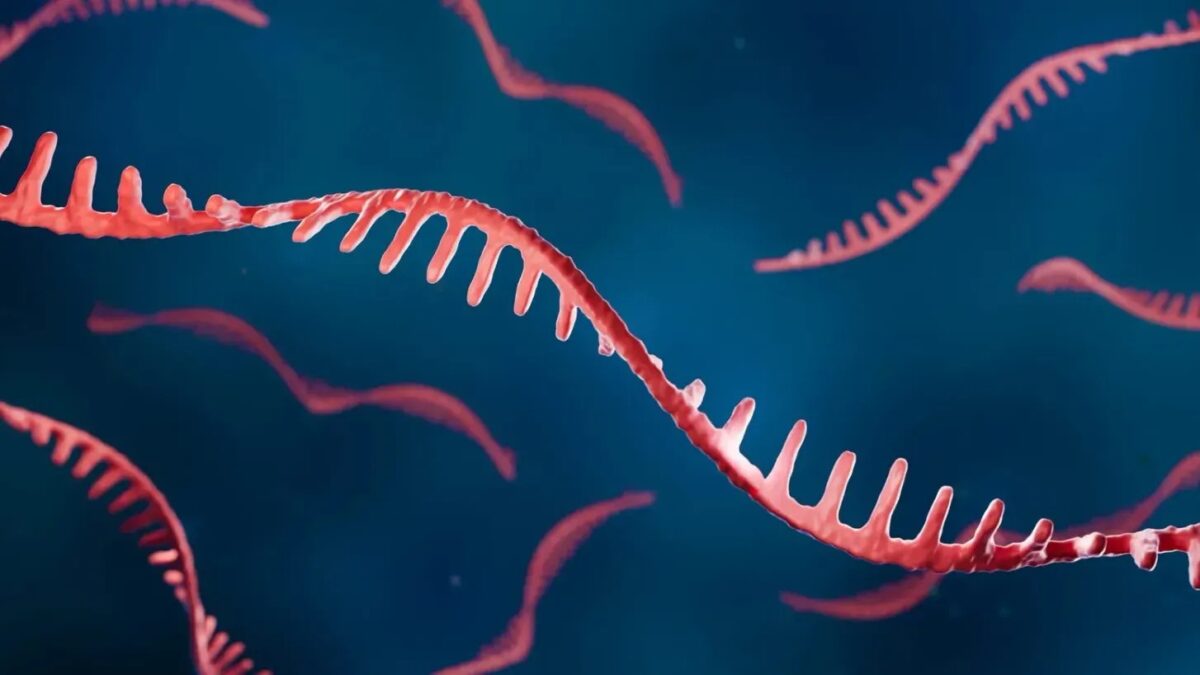
Researchers have stumbled upon something remarkable that could reshape our understanding of how life began on Earth. A team of scientists has identified a tiny RNA molecule that appears to have played a crucial role in the earliest stages of life, potentially solving one of biology’s most persistent mysteries. This discovery brings us closer to answering the age-old question: how did non-living matter transform into the complex living systems we see today?
The findings are particularly exciting because they address a fundamental chicken-and-egg problem in evolutionary biology. For decades, scientists have debated whether RNA or proteins came first in the development of life. This newly identified molecule suggests that RNA may have been capable of performing essential functions all on its own, without requiring the complex protein machinery that modern cells depend on. It’s a breakthrough that makes the origin of life seem less like an impossible miracle and more like a series of achievable chemical steps.
The RNA World Hypothesis Gets New Support
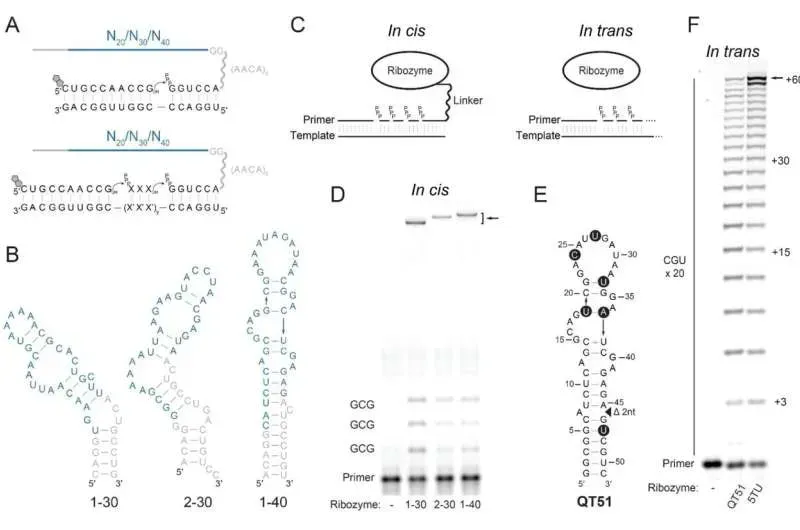
The concept of an “RNA world” has been around for decades, but direct evidence has always been frustratingly scarce. This hypothesis suggests that early life relied primarily on RNA molecules to store genetic information and catalyze chemical reactions, roles that are now split between DNA and proteins in modern organisms. The newly discovered molecule provides tangible support for this long-standing theory, showing that simple RNA structures could indeed perform the complex tasks necessary for primitive life.
What makes this finding particularly compelling is the molecule’s size and simplicity. It’s incredibly small, yet it can fold into a three-dimensional structure capable of catalyzing specific chemical reactions. This efficiency is exactly what you’d expect from early life forms that needed to accomplish a lot with very limited resources. The molecule essentially acts as both an information carrier and a functional tool, embodying the dual nature that would have been essential for life’s first steps.
How the Discovery Was Made
The research team employed a combination of computational modeling and laboratory experiments to identify this ancient RNA structure. They started by analyzing patterns in modern RNA molecules, searching for sequences that appear conserved across vastly different species. These conserved sequences often indicate something fundamental, something so important that evolution has preserved it across billions of years.
Once they identified promising candidates, the scientists synthesized these RNA molecules in the laboratory and tested their functional capabilities. The winning molecule demonstrated an ability to facilitate chemical reactions that are essential for metabolism, specifically reactions involving the transfer of chemical groups between molecules. It’s hard to overstate how significant this is. We’re talking about a molecular fossil that has survived in our cells since the dawn of life itself.
Implications for Understanding Life’s Chemical Origins
This discovery provides a plausible pathway for how the first self-replicating systems could have emerged from simple chemistry. Before this, scientists struggled to explain how random chemical reactions in a primordial soup could spontaneously organize into something resembling life. The gap between chemistry and biology seemed impossibly wide.
Now we can envision a scenario where small RNA molecules like this one formed through natural chemical processes and then began performing basic metabolic functions. Once these molecules could catalyze reactions that produced more of themselves, you’d have the beginnings of a self-sustaining system. It’s not life as we know it, but it’s a crucial stepping stone. The researchers suggest that networks of such molecules might have cooperated, each performing different tasks, gradually building the complexity necessary for true cellular life.
The Timeline of Early Life on Earth
Understanding when this RNA-dominated phase of life existed remains a challenge, but the evidence points to an incredibly early period in Earth’s history. We’re potentially talking about events that occurred more than three and a half billion years ago, when our planet was a dramatically different place. The atmosphere lacked oxygen, the oceans were likely a murky chemical broth, and volcanic activity was far more intense than today.
The fact that traces of this ancient molecular machinery still exist in modern cells is almost miraculous. Every living thing on Earth, from bacteria to blue whales, carries echoes of this primordial RNA world in their cellular machinery. It’s a reminder of our shared ancestry and the deep continuity that connects all life on this planet, despite the incredible diversity we see today.
Questions This Research Raises
While this discovery answers some questions, it naturally raises many more. For one thing, where did this RNA molecule come from in the first place? Scientists still need to explain how the building blocks of RNA could have formed and assembled under prebiotic conditions. Some researchers think these components arrived on meteorites, while others believe they formed right here on Earth through atmospheric chemistry and lightning strikes.
Another intriguing question involves the transition from an RNA world to the DNA-protein world we inhabit today. If RNA could do so much on its own, why did life evolve to use DNA for information storage and proteins for most catalytic functions? The answer probably relates to efficiency and specialization. DNA is more stable for long-term storage, and proteins offer greater chemical diversity for building complex molecular machines. Still, the exact evolutionary pressures and mechanisms remain hotly debated.
Looking Forward: Next Steps in Origins Research
This breakthrough opens numerous avenues for future investigation. Researchers are now searching for other ancient RNA molecules that might have performed different essential functions in early life. They’re also working to recreate increasingly complex RNA-based systems in the laboratory, attempting to build minimal “proto-cells” that can metabolize nutrients and reproduce.
The practical implications extend beyond satisfying our curiosity about the past. Understanding how life emerges from chemistry could inform our search for life on other planets and moons in our solar system. If life can arise through these relatively simple RNA-based pathways, then the universe might be far more biologically rich than we previously imagined. It also has potential applications in synthetic biology, where researchers are designing new biological systems from scratch for medical and industrial purposes.
The research represents a significant step forward in one of science’s grandest quests. We may never know every detail about how life began, but each discovery like this one brings the picture into sharper focus. What once seemed like an unsolvable mystery now looks increasingly like a puzzle we can actually piece together, one molecule at a time. What do you think this means for our understanding of life in the universe? Share your thoughts in the comments.

- Urban Coyotes Show Remarkable Adaptability, Learning to Thrive in City Environments - July 22, 2026
- Beavers Are Nature’s Engineers, Creating Vital Habitats for Other Wildlife Species - July 21, 2026
- The Recovery of the California Condor Offers Hope for Other Critically Endangered Birds - July 21, 2026