

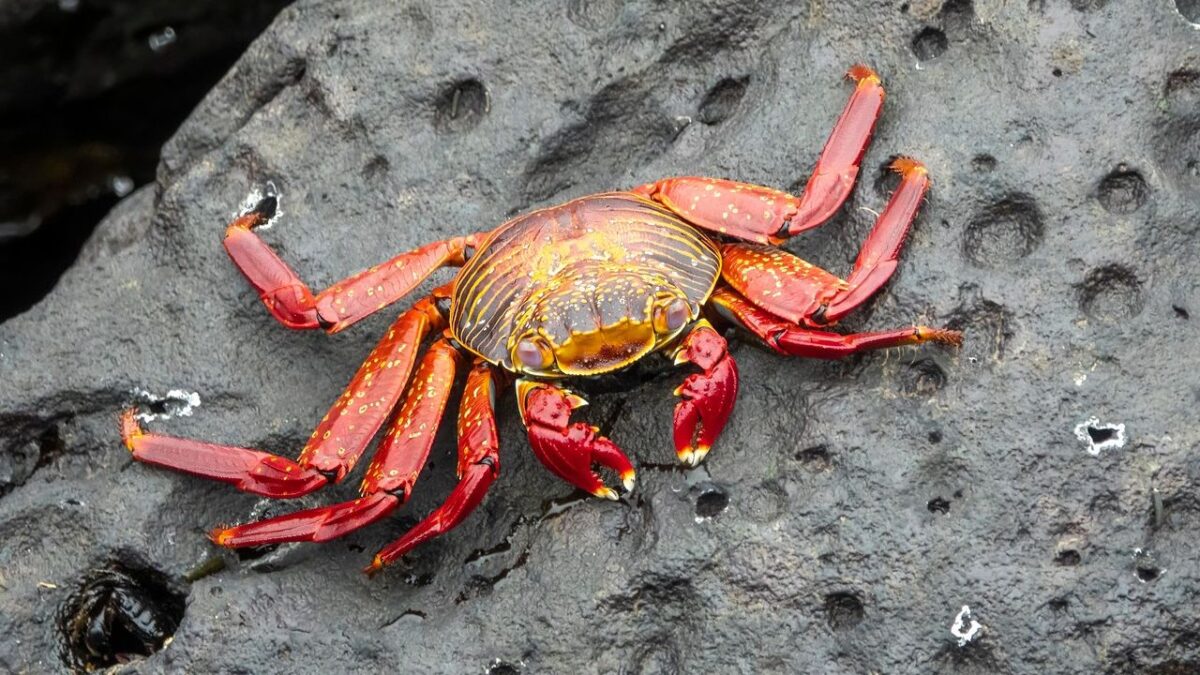
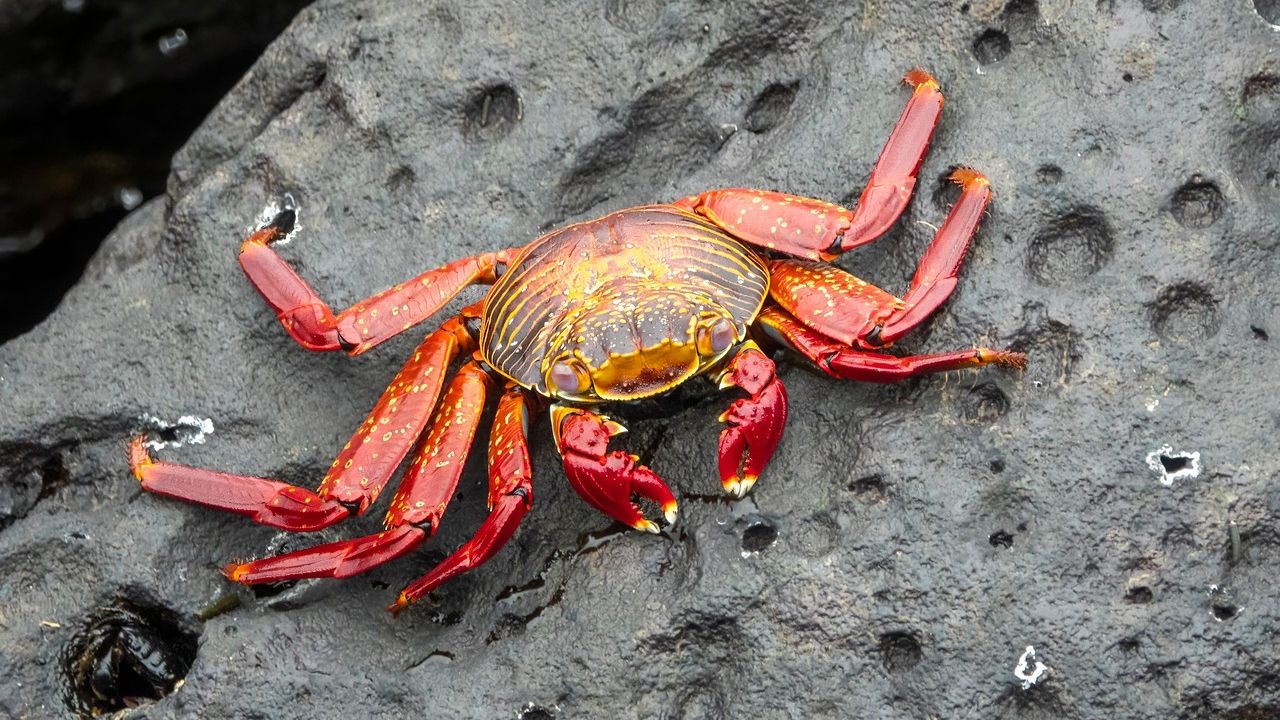
Why do crabs walk sideways? Scientists trace it back 200 million years – Image for illustrative purposes only (Image credits: Pixabay)
Anyone who has watched crabs dart across a beach or rocky shore knows their signature sideways movement stands out in the animal world. Scientists recently uncovered that this quirky gait likely emerged from a single evolutionary event around 200 million years ago, shaping the lives of countless crab species ever since. The finding highlights how one adaptive behavior can persist across vast timescales, offering clues to survival strategies that still play out in modern ecosystems.
A Singular Evolutionary Origin
Researchers determined that the sideways walk shared by most contemporary crabs stems from one common ancestor. This trait did not evolve independently multiple times but arose once and then spread widely through inheritance. Fossil evidence and genetic analysis pointed to this pivotal moment in the Mesozoic era, when early crabs faced intense pressures from predators.
The study revealed that nearly all modern crab families carry this behavioral legacy. Unlike many traits that appear and disappear across lineages, the sideways stride proved remarkably stable. This rarity underscores how certain adaptations can lock in dominance for millions of years.
The Survival Edge of Lateral Movement
The sideways walk provided a clear advantage: rapid, erratic escapes from threats. By moving perpendicular to their body’s long axis, crabs could execute sharp turns and bursts of speed that forward or backward locomotion could not match. Predators struggled to predict these zigzagging paths, giving crabs a vital window to reach safety.
In prehistoric oceans teeming with fast-swimming hunters, this innovation likely meant the difference between life and extinction. The behavior allowed crabs to exploit intertidal zones and shallow waters, niches where quick evasion proved essential. Today, the same principle helps species evade birds, fish, and mammals along coastlines worldwide.
Why This Trait Endured Across Eras
Once established, the sideways walk became deeply embedded in crab biology. Morphological changes, such as flattened bodies and powerful side legs, reinforced the behavior over generations. Natural selection favored individuals that honed this motion, creating a feedback loop that solidified its prevalence.
Comparisons with crab relatives, like lobsters that walk forward, highlight the divergence. Crabs’ compressed carapaces and joint arrangements optimized lateral efficiency, making reversion unlikely. This evolutionary path explains why thousands of crab species, from tiny pea crabs to hefty king crabs, still sidestep today.
Insights into Broader Evolutionary Patterns
The discovery challenges assumptions about behavioral evolution, showing that key traits can originate once and radiate widely. It parallels rare cases in other groups, such as the flightlessness in certain birds or venom use in some snakes. For crabs, comprising over 7,000 species, this single innovation underpins much of their global success.
Scientists note uncertainties remain, including exact triggers for the initial shift and variations in ancient environments. Future work may involve more fossil scans and genomic mapping to refine the timeline.
- Key finding: Sideways walk from one 200-million-year-old ancestor.
- Primary benefit: Unpredictable dodges against predators.
- Scope: Affects most of today’s 7,000-plus crab species.
- Open questions: Environmental factors and fossil gaps.
As coastal habitats face pressures from climate change and human activity, understanding these ancient adaptations reminds us of nature’s resilience – and vulnerabilities. Crabs’ enduring sidestep, born of necessity long ago, continues to sustain their place in the web of life, prompting reflection on how such traits might fare in a rapidly altering world.

As a little kid, I fell in love with nature, wildlife, and animals. Living in the USA, South Africa, Italy, China and Germany gave me the opportunity to discover the world's Wildlife. My favorite animals are Mountain Gorillas, Siberian Tigers, and Great White Sharks.
I'm a certified PADI Open Water Diver, went to Everest Base Camp and Trekked Gorillas in Uganda. I hold a Master of Science in Economics and Finance.
Please send any feedback to feedback@animalsaroundtheglobe.com
- The Best Ways to Introduce New Fish to an Existing Aquarium - July 30, 2026
- 10 Creatures With the Strongest Jaws on Earth - July 30, 2026
- 14 Animals Endangered in the U.S. And Whats Being Done - July 30, 2026