

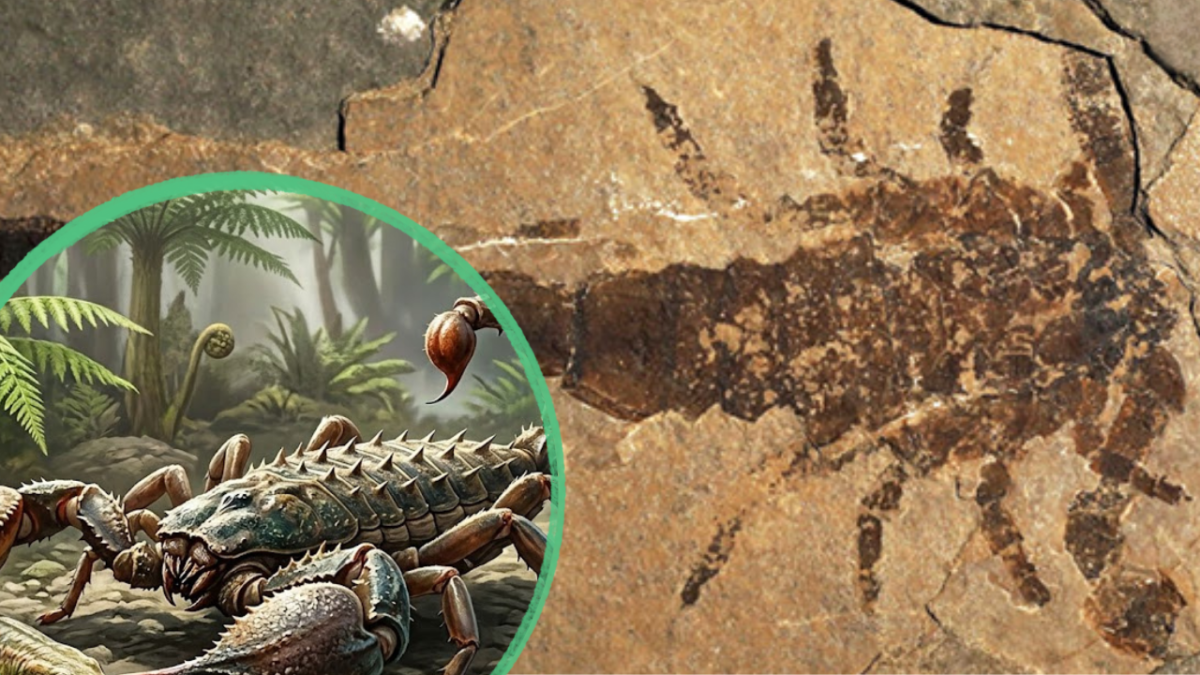
For more than a century, a mysterious fossil known as Praearcturus gigas puzzled paleontologists. Originally described as a giant prehistoric crustacean, the ancient creature has now been reexamined by scientists, who have reached a surprising conclusion: it was not a crustacean at all, but one of the largest scorpions ever identified.
The discovery rewrites the history of an animal that lived approximately 415 million years ago during the Early Devonian Period. It also highlights how modern scientific techniques continue to reshape our understanding of fossils that have sat in museum collections for generations.
A Case Of Mistaken Identity
The fossils of Praearcturus gigas were first discovered in rocks belonging to the St Maughans Formation, part of the Old Red Sandstone deposits found across the Welsh Borders and western England. When scientists first examined the remains in the nineteenth century, the incomplete nature of the fossils led researchers to classify the animal as a large marine crustacean.
For decades, that interpretation remained largely unchallenged. However, advances in paleontology and improved analysis of fossil anatomy allowed researchers to revisit the specimens with fresh eyes. The new investigation revealed that several key features previously attributed to a crustacean were actually characteristic of ancient scorpions.
One Of The Largest Scorpions Ever Known
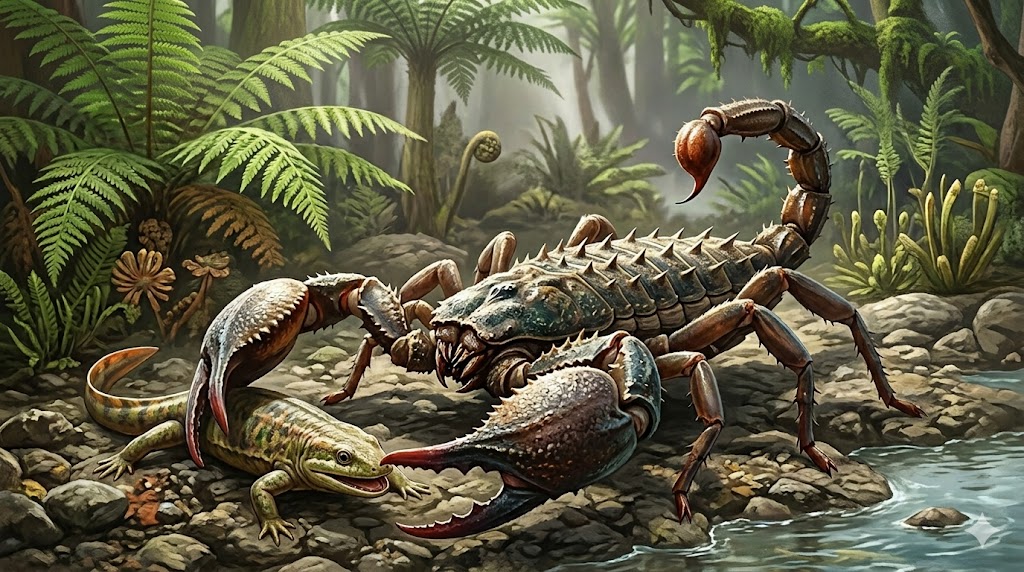
The revised classification suggests that Praearcturus gigas may represent the largest scorpion currently known from the fossil record. Scientists estimate the animal measured roughly one meter (3.3 feet) in length, making it significantly larger than most living scorpions.
While modern scorpions are generally modest in size, prehistoric relatives often reached much larger dimensions. During the Paleozoic Era, environmental conditions allowed many arthropods to evolve into giants compared with their modern descendants.
The enormous size of Praearcturus gigas would likely have made it one of the dominant predators in its ecosystem.
Life During The Devonian Period
The creature lived about 415 million years ago, long before dinosaurs appeared on Earth. At the time, much of the planet looked dramatically different from today. Early forests were beginning to emerge, fish were diversifying in rivers and coastal waters, and arthropods were among the most successful animals on land and in freshwater environments.
Scientists believe Praearcturus gigas inhabited environments associated with river systems and floodplains. Its powerful pincers and large body suggest it was a formidable hunter capable of capturing smaller animals that shared its habitat.
The discovery adds another piece to the puzzle of how early terrestrial ecosystems evolved during one of the most important periods in Earth’s history.
Why The Discovery Matters
The reclassification of Praearcturus gigas demonstrates how scientific understanding changes as new evidence emerges. Fossils collected more than 100 years ago can still produce groundbreaking discoveries when examined with modern methods.
Researchers say the finding provides valuable insights into the early evolution of scorpions and their relatives. It also suggests that giant scorpions may have been more diverse and widespread during the Devonian than previously recognized.
For paleontologists, the discovery serves as a reminder that museum collections remain treasure troves of untapped scientific information.
A New Chapter In Prehistoric History
The story of Praearcturus gigas is a remarkable example of science correcting itself. What was once considered a giant crustacean is now recognized as a giant scorpion, changing how researchers view one of the most unusual arthropods of the Devonian Period.
More than 415 million years after it lived, this ancient predator is still teaching scientists new lessons about the evolution of life on Earth. As researchers continue to reexamine historic fossils, discoveries like this show that some of the biggest surprises in paleontology may already be sitting in museum drawers, waiting to be recognized for what they truly are.

- 10 Things Every Dog Owner Should Know about Rabies in Dogs - June 20, 2026
- 23 Dog Breeds Trainers Say First-Time Owners Regret - June 20, 2026
- Here’s What US Weather Can Expect in an Upcoming LA Nina Winter 2024 - June 20, 2026