

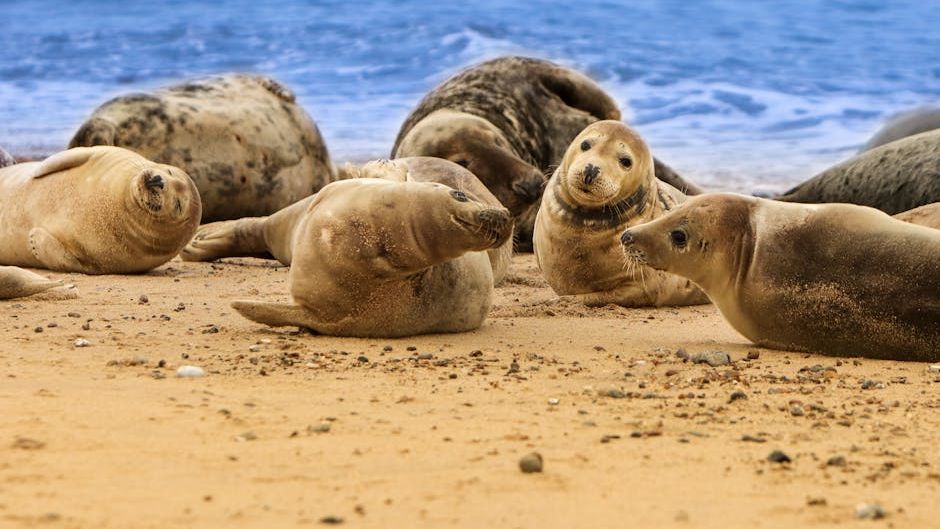
There’s something deeply unsettling about a virus that was once confined to poultry farms now showing up in the open ocean. H5N1 avian influenza has been making headlines for years, but the latest findings are taking things in a direction that few people anticipated. Marine mammals – creatures that live far from any farm or flock – are dying from it in growing numbers.
What’s driving this? How did a bird flu get so deep into the ocean’s food chain? The answers are both fascinating and honestly a little frightening. Let’s dive in.
A Virus That Refuses to Stay in Its Lane
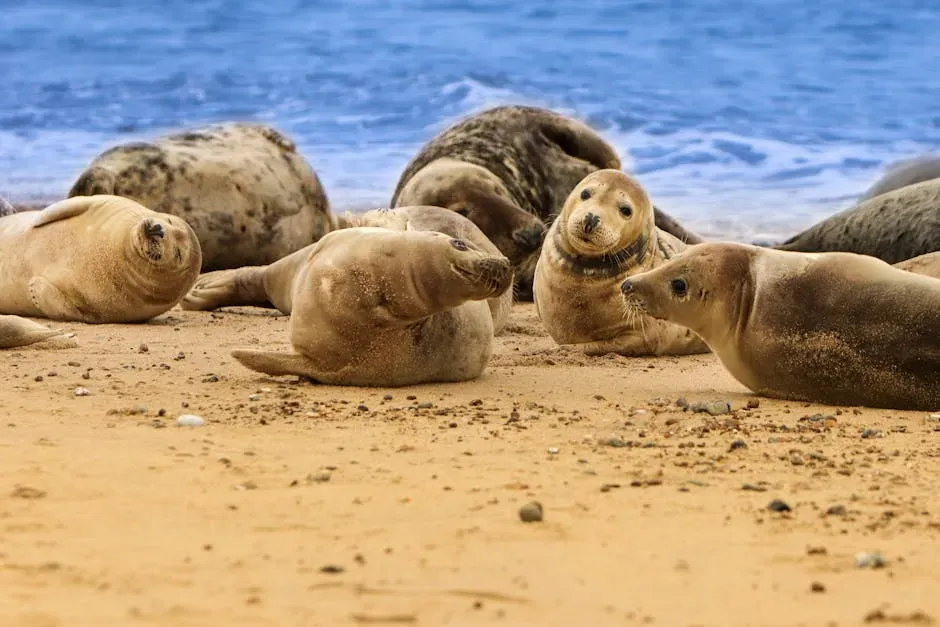
Let’s be real – most people still think of H5N1 as a “bird thing.” A disease that moves through poultry, occasionally jumps to a human who gets too close, and stays mostly land-bound. That assumption is increasingly wrong, and the numbers emerging from marine mammal populations are making scientists sit up straight.
H5N1 has been documented in a remarkable range of species over the past few years, including sea lions, seals, dolphins, and even whales. These are animals that have almost no direct contact with domestic poultry. Their exposure is happening through the wild bird populations that share their coastlines and open-water habitats.
The sheer geographic spread is staggering. Cases have been recorded from the coasts of South America all the way to polar regions, suggesting the virus is moving along migratory bird routes and jumping species at contact points along the way.
How Marine Mammals Are Getting Infected
Here’s the thing – the ocean isn’t a barrier to this virus. It’s practically become a highway. Wild seabirds carrying H5N1 defecate into the water, rest on the same rocks where sea lions haul out, and sometimes die on beaches where scavenging marine mammals feed. The virus finds a way.
Seals and sea lions are particularly vulnerable because of their behavioral overlap with seabirds. They share feeding grounds, roosting areas, and sometimes even compete for the same fish. That proximity creates what researchers describe as multiple “spillover” opportunities.
Dolphins and whales present a more complicated puzzle. Their exposure likely happens through infected fish or other marine animals they consume, though scientists are still mapping out the exact transmission pathways. The ocean ecosystem is deeply interconnected, and H5N1 is essentially exploiting every link in that chain.
The Death Toll Is Climbing
The mortality figures are hard to look at without feeling something shift in your gut. Thousands of South American sea lions have died in outbreaks tied to H5N1 over recent years. Elephant seals, harbor seals, and fur seals have all been found dead with confirmed infections. In some colonies, the losses have been catastrophic at a local level.
What makes this especially troubling is that many of these species are already under pressure from climate change, overfishing, and habitat degradation. Adding a highly lethal viral disease on top of existing stressors creates a compounding crisis that conservation biologists are genuinely worried about.
Some colonies of South American sea lions suffered mortality events where a significant portion of local populations were wiped out in a matter of weeks. That kind of acute, rapid die-off is the sort of thing that can push already-stressed populations into long-term decline.
What Makes H5N1 So Lethal to These Animals
Part of what makes this situation so dire is that marine mammals have no evolutionary history with this pathogen. They have essentially zero prior exposure, which means no inherited immune memory to draw on. When H5N1 arrives in a naive population, it can burn through it almost unopposed.
The virus causes severe neurological symptoms in many marine mammals, including seizures, disorientation, and loss of coordination. Affected sea lions have been found stumbling on beaches, unable to respond normally to human presence – which is deeply abnormal behavior for animals that are typically alert and reactive.
Respiratory failure is also a common cause of death. The pathology mirrors what the virus does in heavily infected birds, and in some respects, it appears even more aggressive when it crosses into mammalian hosts that lack any adaptive immune response to it. Honestly, it’s a grim picture from a purely biological standpoint.
Scientists Are Watching for Mammal-to-Mammal Transmission
This is where things get particularly sensitive from a public health perspective. One of the core concerns with H5N1 has always been its pandemic potential. For that potential to be realized, the virus needs to become more efficient at spreading between mammals. Marine mammal die-offs are providing something scientists rarely get: a chance to observe H5N1 behavior in large, densely grouped mammal populations.
Researchers have found genetic evidence in some marine mammal isolates suggesting the virus may be adapting to mammalian hosts. Certain mutations associated with improved mammalian respiratory tract binding have appeared in strains recovered from sea lions. That’s not cause for immediate panic, but it is absolutely cause for careful, sustained surveillance.
It’s hard to say for sure whether true mammal-to-mammal transmission is occurring at scale, but the epidemiological patterns in some colonies are consistent with more than just repeated independent spillover from birds. The science is still unfolding, and researchers are being appropriately cautious about drawing firm conclusions.
The Broader Ecological Ripple Effect
Think of a marine ecosystem like a very precise machine. Every species plays a role – predator, prey, scavenger, nutrient recycler. When you start removing thousands of sea lions and seals from coastal systems, the effects ripple outward in ways that are difficult to predict and slow to reverse.
Fish populations that were previously kept in check by marine mammal predation can surge. Competing predators like sharks may shift their behavior. Seabird colonies that share beach space with seals may face increased or decreased competition. It’s a cascade effect, and not a simple one.
Beyond the ecological math, there’s something almost philosophical about this moment. These are wild animals in wild places, dying from a disease that originated in domesticated poultry and spread through the pressures of a globalized, ecologically disrupted world. The ocean wasn’t supposed to be the next front – and yet here we are.
What Researchers and Conservationists Are Doing Now
Surveillance has intensified significantly in response to these events. Research teams are collecting samples from stranded and dead marine mammals across multiple continents, building a genetic database of H5N1 strains circulating in ocean wildlife. The goal is to track how the virus is evolving in real time.
Veterinary teams working with wildlife rehabilitation facilities are now operating under enhanced biosafety protocols when handling marine mammals, particularly pinnipeds. The risk to human handlers is considered low but not zero, and precautions are being taken seriously.
On the conservation side, several organizations are pushing for expanded monitoring programs and faster response infrastructure for marine mammal die-off events. The challenge is enormous. These animals live across vast stretches of open ocean, making systematic surveillance genuinely difficult. Still, the data being gathered now is building a foundation that may prove critically important in the years ahead.
Conclusion: The Ocean Is Telling Us Something
It would be easy to file this under “another grim environmental story” and move on. I’d argue that would be a mistake. What’s happening with H5N1 in marine mammals is a vivid demonstration of how interconnected our planet’s biological systems really are. A virus from a poultry barn in one hemisphere ends up killing sea lions thousands of miles away. That’s not a coincidence – it’s a consequence.
The ocean has always been seen as a kind of buffer, a vast space that slows or stops the spread of terrestrial problems. H5N1 is challenging that assumption in real time. The animals dying on remote beaches aren’t just casualties – they’re signals. Whether we choose to read those signals seriously is, I think, one of the more important questions of this decade.
What do you think? Is the world paying enough attention to what’s happening to our marine wildlife? Drop your thoughts in the comments.

- Urban Coyotes Show Remarkable Adaptability, Learning to Thrive in City Environments - July 22, 2026
- Beavers Are Nature’s Engineers, Creating Vital Habitats for Other Wildlife Species - July 21, 2026
- The Recovery of the California Condor Offers Hope for Other Critically Endangered Birds - July 21, 2026