

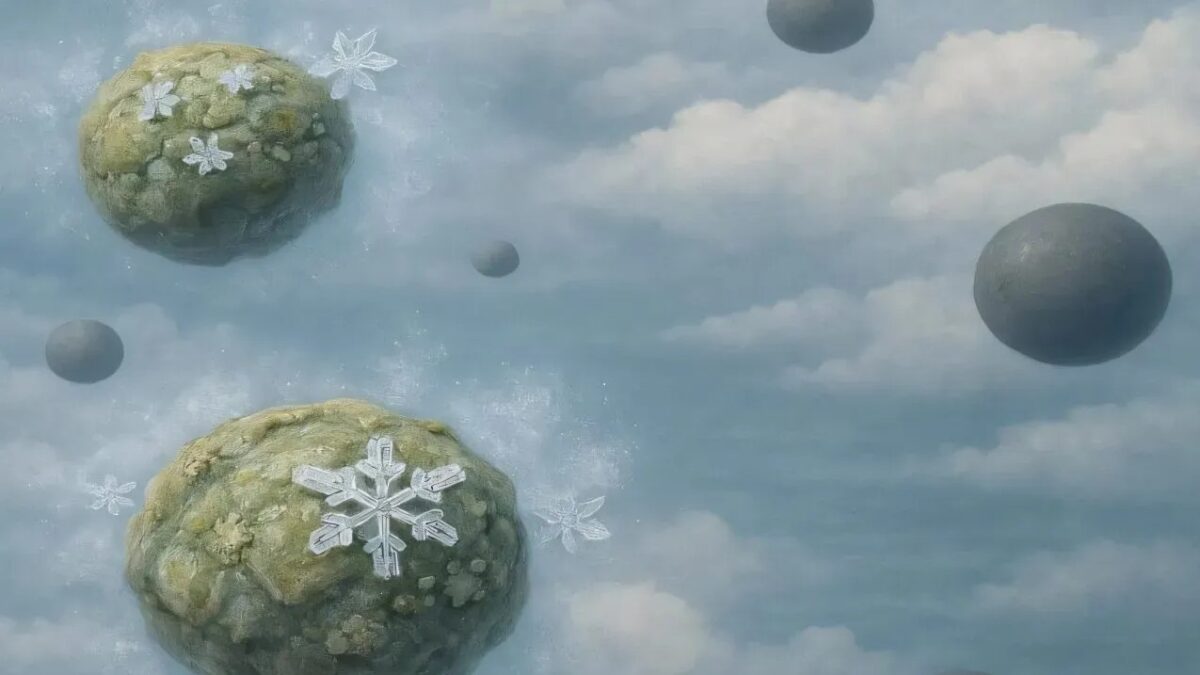
There is something deeply unsettling about looking up at a clear sky and knowing it might be full of things we never expected to find there. Clouds have always felt clean, distant, almost untouchable. So when scientists began discovering that ice clouds high above the Earth’s surface contain not just water crystals but living microbes and synthetic plastic particles, the scientific community had every reason to pay attention.
This is not a distant theory or a speculative model. Researchers have been pulling real data from real atmospheric samples, and what they are finding challenges some of our most basic assumptions about the atmosphere, about pollution, and honestly, about life itself. If you thought the sky was one of the last pristine frontiers, prepare to think again. Let’s dive in.
The Ice Cloud Discovery That Started It All
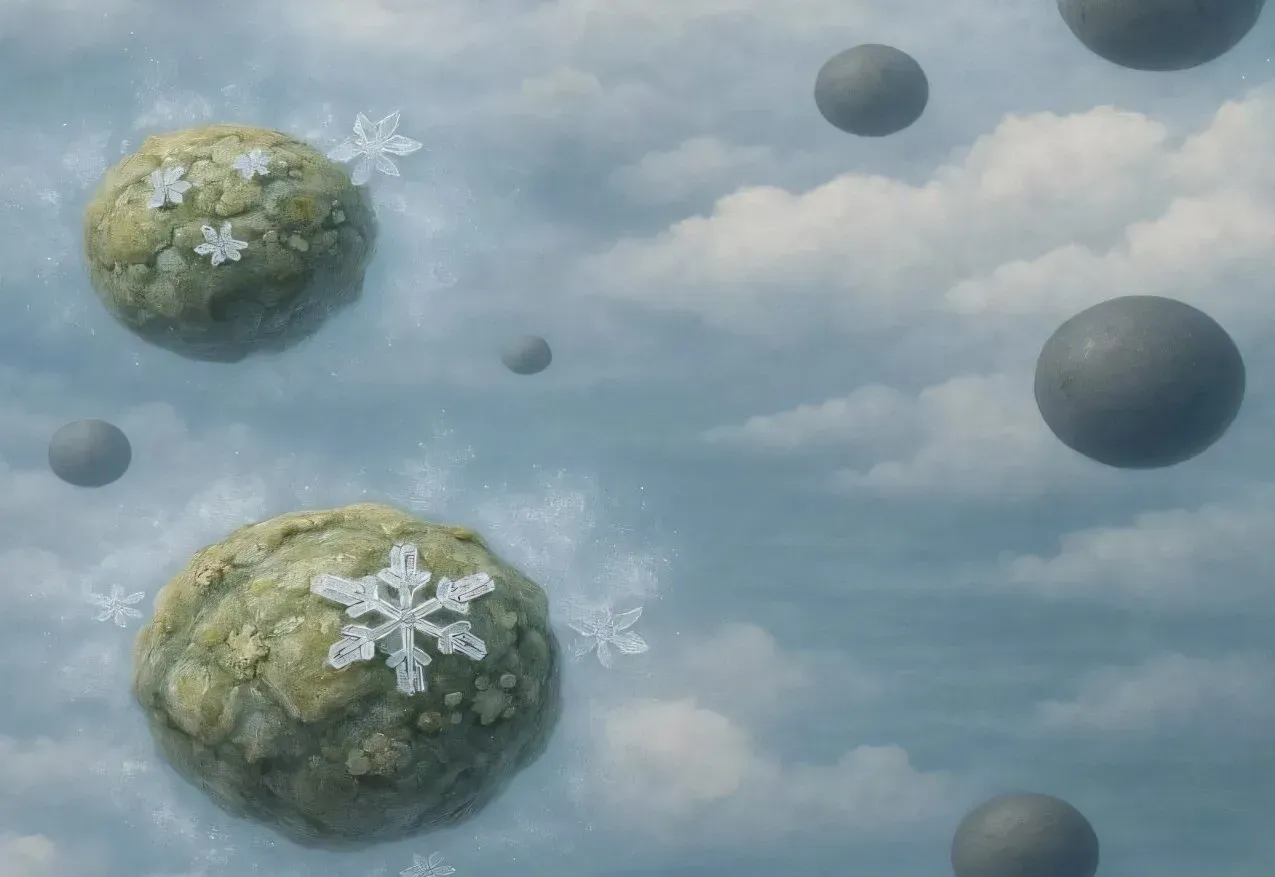
Here’s the thing about ice clouds – they form at incredibly high altitudes, sometimes several kilometers above the surface, where temperatures plunge well below freezing. Scientists have long known that tiny particles called ice-nucleating particles help water vapor freeze into ice crystals, seeding the formation of these clouds. What they did not fully appreciate until recently is just how biological and synthetic those particles can be.
New research has confirmed that microbes, meaning living bacteria and fungal spores, are present inside ice clouds and are actively participating in cloud formation. These microorganisms are not just passive hitchhikers. They appear to serve as nucleation sites, essentially acting as the seeds around which ice crystals form. It is a finding that reshapes how atmospheric scientists think about cloud physics.
Microplastics Have Reached the Sky
If microbes in clouds sounds surprising, microplastics in clouds might sound like science fiction. It is not. Plastic particles, often invisible to the naked eye, have been detected in atmospheric samples at high altitudes, meaning they have traveled from Earth’s surface all the way up into cloud-forming regions of the atmosphere. The sheer ubiquity of microplastics at this point is genuinely staggering.
Microplastics are known to be carried by wind currents, but their presence within ice clouds suggests they are also influencing cloud formation processes. Much like biological particles, plastic fragments can act as nucleation surfaces, potentially altering how clouds develop, how long they persist, and how much precipitation they produce. When a piece of a plastic bag helps form a raindrop, something has gone deeply wrong with our relationship to waste.
How Microbes Survive at Such Extreme Altitudes
Honestly, one of the most fascinating parts of this story is the sheer resilience of microbial life. The upper atmosphere is a brutal environment. Temperatures are extreme, ultraviolet radiation is intense, and pressure is low. Most living things would simply cease to function under those conditions. Yet certain microbes not only survive the journey up there, they appear to thrive long enough to influence atmospheric chemistry.
Researchers believe these microbes are lifted from the surface by updrafts and turbulent weather systems, essentially hitchhiking on rising air masses. Some species have developed protective mechanisms against UV radiation and desiccation, making them surprisingly well-suited for atmospheric travel. It’s a bit like finding out that someone not only survived a trip to the top of Everest in a t-shirt, but actually enjoyed it.
The Role of Ice-Nucleating Particles in Climate
Ice-nucleating particles, or INPs as scientists call them, play a far bigger role in Earth’s climate than most people realize. They influence cloud formation at a fundamental level, affecting everything from rainfall patterns to the reflectivity of clouds, which in turn affects how much solar energy is absorbed or reflected back into space. In other words, what seeds a cloud actually matters for the global energy balance.
The discovery that biological organisms and microplastics are acting as INPs adds a troubling layer of complexity to climate models. Most existing models assumed INPs were primarily mineral dust or sea salt particles. If living microbes and synthetic plastics are now significant contributors, those models may need serious revision. That is not a small adjustment. That is a potential rethinking of foundational climate science assumptions, and it carries real implications for how we project future climate conditions.
What This Means for Precipitation and Weather Patterns
Clouds do not just sit there looking beautiful. They are active participants in weather systems, delivering rain, snow, and hail to the surface below. If the composition of ice-nucleating particles within those clouds is shifting due to increased biological and microplastic content, it stands to reason that precipitation patterns could be shifting too.
Some researchers suggest that biological INPs tend to nucleate ice at warmer temperatures than mineral dust, which could mean clouds form earlier and behave differently than they would in a pre-pollution atmosphere. Microplastics, with their varied surface chemistries, add yet another layer of unpredictability. We are, in a very real sense, running an uncontrolled experiment on the atmosphere, and we are only just beginning to measure the results.
The Broader Pollution Picture
Finding microplastics in ice clouds is not entirely surprising when you consider the broader trajectory of plastic pollution. Microplastics have already been discovered in the deepest ocean trenches, in Arctic sea ice, in human blood, and in the placentas of unborn babies. The atmosphere was perhaps the last major reservoir we had not fully catalogued. Now we have, and the answer is what many feared.
The biological dimension adds another layer of concern. As human activity alters land use, agriculture, and urban environments, the microbial communities being lofted into the atmosphere are also changing. Pathogens, agricultural bacteria, and novel microbial combinations are potentially being distributed across vast distances through the atmosphere. It is hard to say for sure what long-term consequences that carries, but the question deserves serious scientific attention.
What Comes Next for Atmospheric Research
The science is still catching up to the reality. Atmospheric sampling at high altitudes is technically demanding and expensive, which means our current data represents only a narrow window into what is actually happening in ice clouds globally. Researchers are calling for more comprehensive sampling programs that span different regions, seasons, and altitudes to build a fuller picture.
There is also a growing call to integrate biological and plastic particle data into the next generation of climate models. Without doing so, those models will remain incomplete. I think what makes this research genuinely exciting, despite its troubling implications, is that it opens up entirely new interdisciplinary conversations between microbiologists, atmospheric physicists, and climate scientists. The atmosphere, it turns out, is far more alive and far more polluted than we ever gave it credit for.
A Sky That Is No Longer What We Thought It Was
It is worth sitting with that for a moment. The clouds above us, the ones that bring rain to crops and shade on summer days, are now understood to be shaped in part by microbes and the plastic waste humanity has scattered across the planet. That is not a comfortable thought, but it is an important one.
Science has a way of stripping away comfortable illusions, and this discovery is a prime example. We cannot address what we do not understand, and understanding what is happening in our ice clouds is now a matter of genuine urgency. The atmosphere is not a passive backdrop to human civilization. It is a living, reactive system, and we are changing it in ways we are only beginning to grasp.
The question is not just what is in our clouds. The real question is what we are going to do about it now that we know. What do you think about it? Tell us in the comments.

- Urban Coyotes Show Remarkable Adaptability, Learning to Thrive in City Environments - July 22, 2026
- Beavers Are Nature’s Engineers, Creating Vital Habitats for Other Wildlife Species - July 21, 2026
- The Recovery of the California Condor Offers Hope for Other Critically Endangered Birds - July 21, 2026