

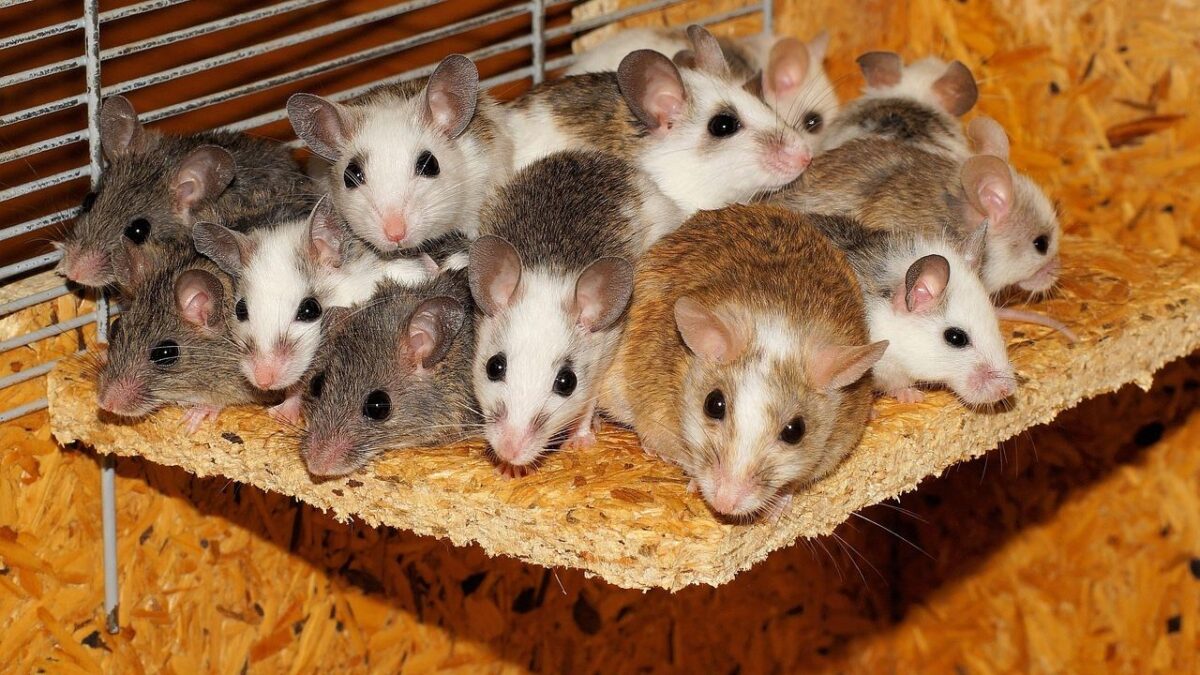
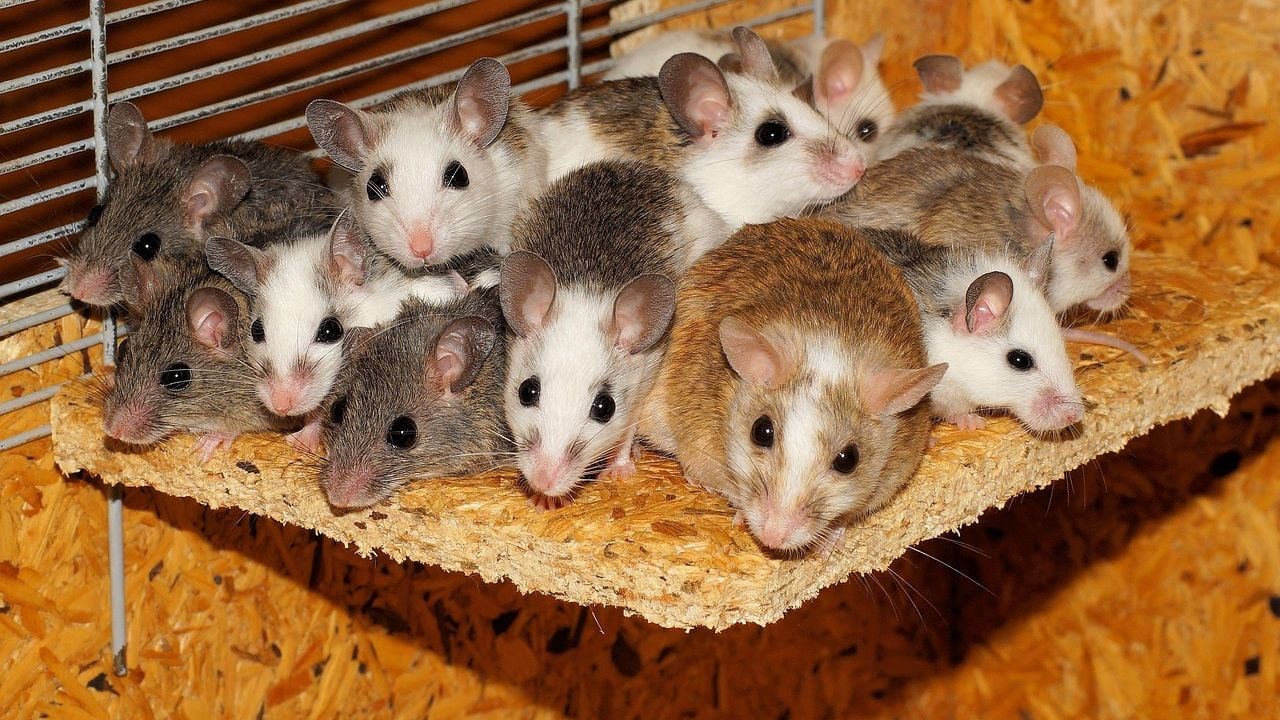
A Mutation Gave Humans the Gift of Speech. These Mice Have It, Too. – Image for illustrative purposes only (Image credits: Pixabay)
Alston’s singing mice produce rapid duets that alternate with split-second precision, echoing the turn-taking rhythm of human dialogue. Researchers at Cold Spring Harbor Laboratory discovered that these rodents evolved roughly three times as many neural connections from a key mouth-control brain region to areas handling hearing and vocal initiation compared to standard lab mice.[1][2] This targeted expansion, without any major overhaul of brain structure, enables their elaborate songs and offers fresh insights into how complex communication emerged in mammals.
The findings, detailed in a study published in Nature, challenge assumptions that sophisticated vocal behaviors demand sweeping neural redesigns.[2] Instead, subtle quantitative tweaks in existing circuits appear sufficient.
Unraveling the Songs of Alston’s Mice
Males of the Alston’s singing mouse, or Scotinomys teguina, belt out loud, rhythmic songs audible to human ears from Central American cloud forests. They use these vocalizations to defend territory or court mates, often engaging in back-and-forth exchanges that resemble polite conversations.[3] Unlike the faint ultrasonic squeaks of typical lab mice, these songs feature structured syllables delivered at high speed.
Previous work had noted the conversational quality of these duets, but the neural basis remained unclear. In 2019, scientists including Arkarup Banerjee observed how the mice adjusted their singing during interactions, hinting at sophisticated motor control. The new research builds on that by pinpointing the circuit changes that make such precision possible.[4]
Pinpointing the Neural Differences
The team employed advanced techniques to map projections from the orofacial motor cortex, or OMC, which governs mouth movements essential for vocalization. They injected barcoded viruses into the OMC of both singing mice and lab mice, then sequenced over 76,000 neurons to trace connections across the brain.[2] This high-resolution method, pioneered by CSHL Professor Anthony Zador, revealed striking specifics.
Singing mice showed a 2.8-fold increase in OMC projections to the auditory cortical region, which processes sound, and a 3.3-fold boost to the midbrain periaqueductal gray, or PAG, a vocal control hub conserved across mammals. No novel pathways emerged; the rest of the wiring matched lab mice exactly. Graduate student Emily Isko, who led the tracing, noted, “When you look at singing mice and lab mice side by side, their brains are almost indistinguishable… The differences only show up when you trace where individual neurons send signals.”[1]
| Projection Pathway | Lab Mice Probability | Singing Mice Probability | Fold Increase |
|---|---|---|---|
| OMC to Auditory Cortex (IT neurons) | 0.05 | 0.14 | 2.8 |
| OMC to PAG (PT neurons) | 0.12 | 0.31 | 3.3 |
Evolution’s Subtle Strategy
Alston’s singing mice and lab mice diverged around 18 million years ago, yet the former developed songs – a novelty in their rodent lineage – through these precise expansions. The study suggests that amplifying ancestral connections suffices for behavioral leaps, bypassing the need for new brain modules.[2] Projections to the auditory region may help mice monitor their own songs without interference, while enhanced PAG links likely sharpen control over rhythm and tempo.
Banerjee emphasized the implications: “You might expect that evolving a whole new means of vocal communication would require a significant reorganization of brain circuitry. Instead, we found a couple of targeted changes to existing wiring patterns.”[1] This “playbook” could guide studies of other species pairs with stark behavioral contrasts.
Bridges to Human Communication
Human speech relies on heightened cortical oversight of vocalization, a shift that occurred after our split from chimpanzees. Neuroimaging confirms stronger motor-auditory links in people than in other primates, mirroring the singing mice’s upgrades.[5] The PAG, vital for vocal gating in mammals, underscores shared circuitry.
Though humans layer syntax and meaning atop basics, these findings illuminate preadaptations for fluid dialogue. Disorders disrupting such connections, like aphasia after stroke, highlight the fragility of these pathways. The mice model offers a tractable system to probe them further.
Engineering the Next Steps
Zador raised a provocative question: “The fact that these changes are relatively simple and targeted raises an exciting possibility… Could we make a lab mouse sing?”[5] Optogenetic or viral tweaks might test this, yielding tools for speech therapies or AI vocal models.
While caveats remain – such as whether projection strength or inputs also shifted – the work sets a quantitative benchmark for circuit evolution. As researchers scale these maps, singing mice may continue to harmonize insights across species.
Ultimately, this discovery reminds us that profound abilities often stem from modest refinements, much like a single adjusted string transforming a murmur into melody.

As a little kid, I fell in love with nature, wildlife, and animals. Living in the USA, South Africa, Italy, China and Germany gave me the opportunity to discover the world's Wildlife. My favorite animals are Mountain Gorillas, Siberian Tigers, and Great White Sharks.
I'm a certified PADI Open Water Diver, went to Everest Base Camp and Trekked Gorillas in Uganda. I hold a Master of Science in Economics and Finance.
Please send any feedback to feedback@animalsaroundtheglobe.com
- The Best Ways to Introduce New Fish to an Existing Aquarium - July 30, 2026
- 10 Creatures With the Strongest Jaws on Earth - July 30, 2026
- 14 Animals Endangered in the U.S. And Whats Being Done - July 30, 2026