

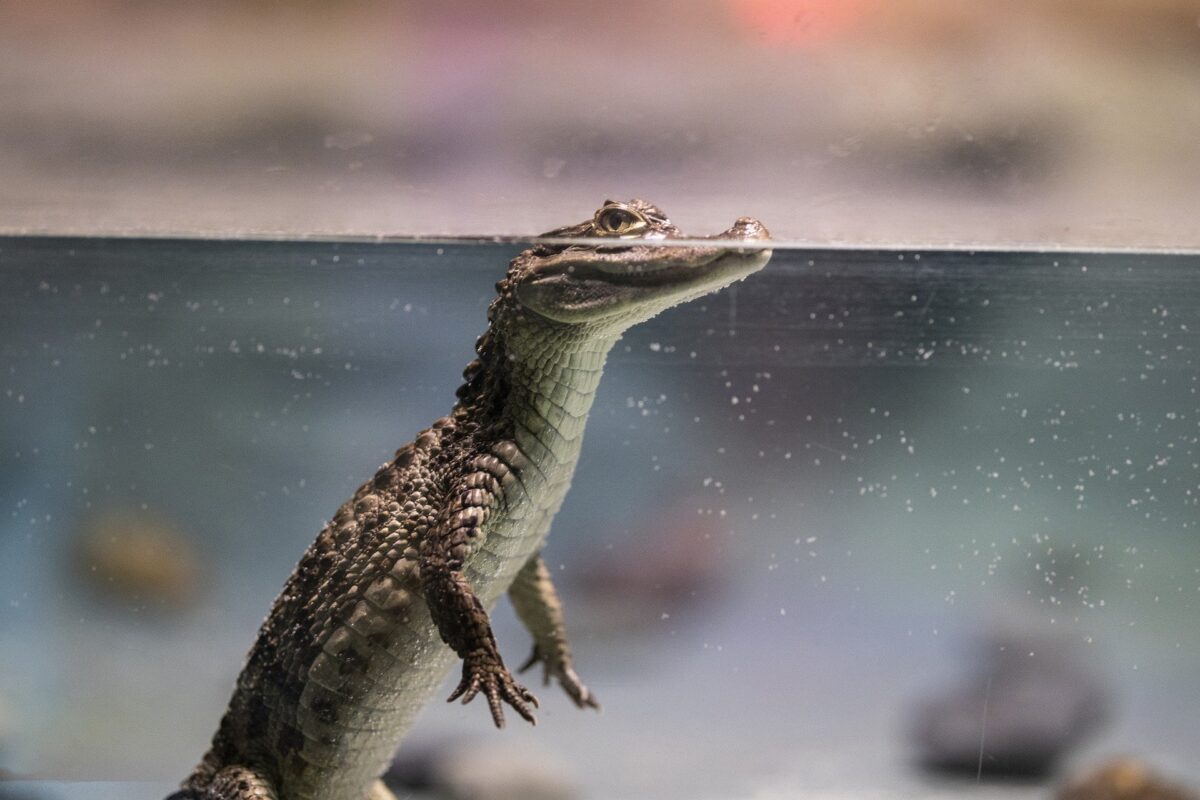
Crocodiles Grow in Multiple Cycles (Image Credits: Pixabay)
For decades, scientists have relied on microscopic growth rings inside bones—similar to tree rings—to estimate the age of animals both living and extinct. These rings, formed during periodic growth slowdowns, have been widely used in a technique known as skeletochronology to determine how old creatures like reptiles, amphibians, and even dinosaurs were when they died.
But a new study focusing on living crocodiles is forcing scientists to rethink that assumption. Researchers examining young Nile crocodiles discovered that their bones can record multiple growth cycles within a single year, potentially throwing off age estimates by several years and raising important questions about how paleontologists interpret the fossil record.
The Science of Counting Growth Rings
Many vertebrates grow in cycles, leaving distinct growth marks in their bones. These rings form when growth slows down—often during colder seasons or periods of stress—much like the rings seen in trees.
Scientists use these marks to estimate an animal’s age and reconstruct its growth history. This method, called skeletochronology, has been applied widely across living species and fossils, helping researchers estimate the lifespans and developmental stages of ancient animals.
In theory, each growth ring represents roughly one year of life. But the new crocodile research suggests that assumption may not always hold true.
A Surprising Discovery in Young Crocodiles
To investigate how reliable growth rings really are, researchers examined the bones of four two-year-old Nile crocodiles raised under controlled conditions. Scientists introduced antibiotics at specific times during the animals’ growth, allowing the drugs to leave chemical markers in the bones.
Later microscopic analysis revealed something unexpected: the crocodiles’ bones contained far more growth marks than expected for their age. Instead of the two rings scientists anticipated for two-year-old animals, some bones showed five or six growth cycles.
If researchers had simply counted the rings without knowing the crocodiles’ real age, they would have estimated the animals to be five or six years old—more than double their actual age.
Why Crocodiles Grow in Multiple Cycles
The extra rings appear to form when crocodiles temporarily slow their growth in response to environmental conditions. Factors such as temperature changes, competition for food, dominance interactions, or other stresses may trigger these brief pauses.
During favorable conditions—like warm seasons with abundant food—crocodiles may grow rapidly. But if growth slows even briefly, the bones can record a new ring, creating additional markers within the same year.
This flexibility shows that crocodile growth is far more dynamic than scientists once believed.
What This Means for Dinosaur Research
The findings have implications far beyond crocodiles. Paleontologists frequently rely on bone growth rings to estimate the ages and growth rates of extinct animals, especially dinosaurs.
Because crocodiles are among the closest living relatives of dinosaurs, they are often used as biological models for interpreting fossil evidence. If crocodiles can produce multiple rings in a year, the same may have been true for dinosaurs and other ancient reptiles.
This means some dinosaur age estimates could potentially be inflated if researchers assumed each ring represented exactly one year.
Rethinking a Key Paleontology Tool
The study doesn’t mean that skeletochronology is useless—but it does suggest the method should be applied with caution. Bone growth patterns can vary depending on environment, nutrition, and biological stress.
Researchers emphasize that growth rings may still provide valuable information about growth rhythms and life history. However, relying on them alone to determine exact age could lead to misleading conclusions.
Future studies may combine bone analysis with other techniques to improve accuracy when studying extinct species.
Living Crocodiles as Windows into Deep Time
Modern crocodiles are often described as “living fossils,” having changed relatively little over millions of years. Because of this, they serve as important reference points for understanding ancient reptiles and dinosaurs.
By studying their growth patterns, scientists gain insight into how prehistoric animals might have developed, matured, and responded to environmental pressures. Even subtle biological details—like the number of growth rings in bone—can reshape our understanding of evolution.
Conclusion: A Reminder That Nature Rarely Follows Simple Rules
Science often relies on elegant assumptions: one ring equals one year, one measurement equals one answer. Yet nature rarely behaves so neatly. The discovery that crocodiles can produce multiple growth cycles within a year highlights just how complex biological systems can be.
More importantly, the study reminds us that interpreting the past requires humility. Fossils preserve extraordinary clues about ancient life, but those clues must be read carefully. If living crocodiles can challenge long-standing methods used to age dinosaurs, then the history written in fossilized bones may still hold many surprises waiting to be uncovered.

- Urban Coyotes Show Remarkable Adaptability, Learning to Thrive in City Environments - July 22, 2026
- Beavers Are Nature’s Engineers, Creating Vital Habitats for Other Wildlife Species - July 21, 2026
- The Recovery of the California Condor Offers Hope for Other Critically Endangered Birds - July 21, 2026