
Worried about unexpected vet bills?
Pet insurance can cover thousands in unexpected vet costs. Get a free quote from Lemonade in under 2 minutes.
Get My Free Quote →Sponsored · Opens Lemonade.com
There is something profoundly humbling about staring into a night sky and realizing that nearly everything you see – every star, every galaxy, every shimmering point of light – makes up only a tiny sliver of what actually exists out there. The rest? Invisible. Unknown. Possibly unknowable with the tools we currently have.
We live in an era of staggering scientific achievement. We’ve landed robots on Mars, photographed black holes, and detected ripples in the very fabric of spacetime. Yet the deeper we look into the cosmos, the more questions pile up – faster than answers ever can. Honestly, that is both terrifying and thrilling in equal measure. So fasten your seatbelt, because this is a wild ride into the universe’s deepest, strangest, most mind-bending unsolved puzzles. Let’s dive in.
The Dark Matter Problem: The Ghost Holding the Universe Together
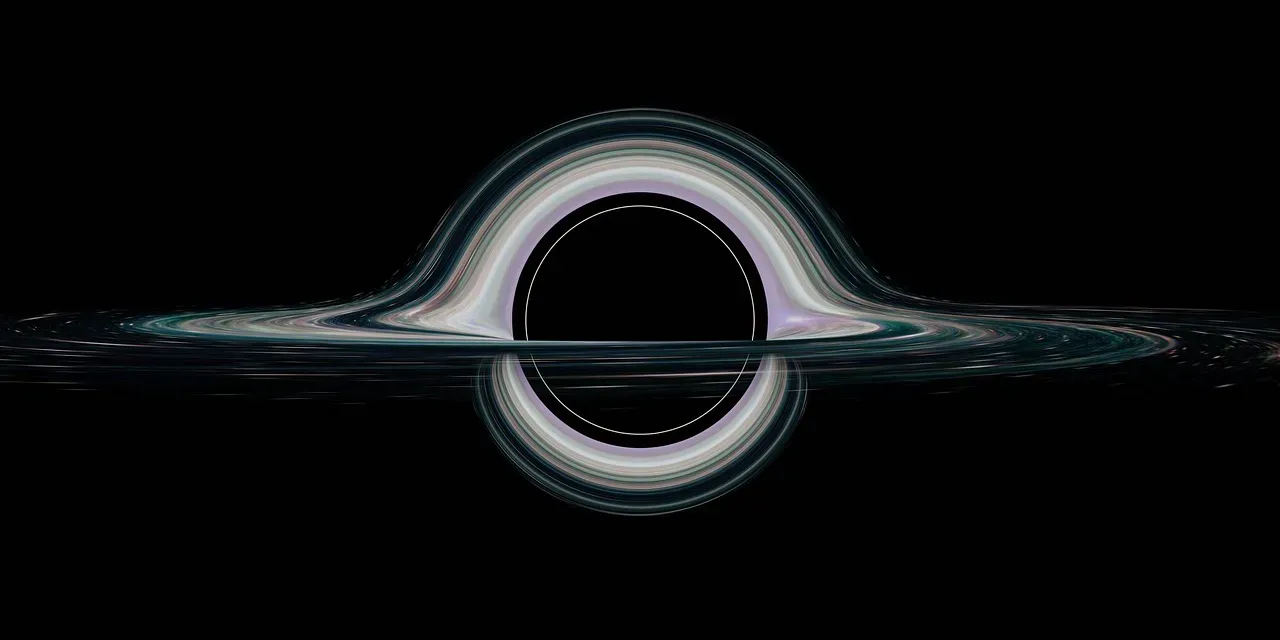
Here’s the thing that should genuinely astonish you. Only about five percent of the entire universe is composed of the visible, baryonic matter that makes up everything we can see, from stars to planets and us. Everything. Every mountain, ocean, galaxy, and human being – all of it, just five percent.
The remaining roughly a quarter is thought to be dark matter, a mysterious, invisible substance that interacts with ordinary matter only through gravity – and its existence is inferred solely from its profound gravitational influence on galactic rotation, making it the dominant form of mass in the cosmos. Think of it like music playing in a room where you cannot see the speakers. You know it’s there. You feel the vibrations. You just cannot find the source.
Galaxies in our universe seem to be achieving an impossible feat – they are rotating with such speed that the gravity generated by their observable matter could not possibly hold them together; they should have torn themselves apart long ago. Dark matter is theorized to be the invisible scaffolding preventing that cosmic catastrophe.
Despite decades of intense searching, multi-billion-dollar experiments deep underground have failed to directly detect a single dark matter particle, creating a massive crisis in particle physics – and its composition and the reason for its complete elusiveness remain the greatest unsolved problem in the standard model of modern physics. We’ve spent generations looking. Still nothing. Not one particle.
Dark Energy: The Force That Is Tearing Everything Apart
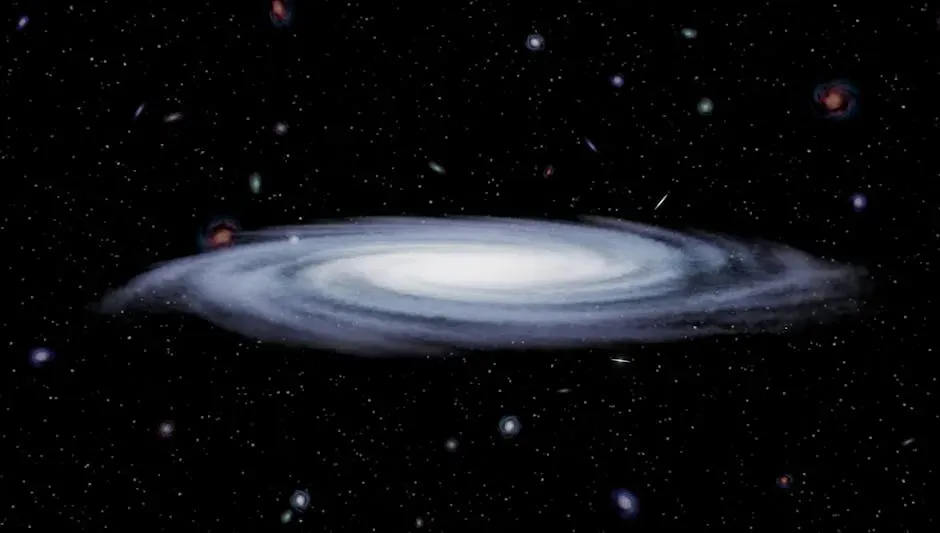
Dark energy is even more mysterious, and its discovery in the 1990s was a complete shock to scientists. Previously, physicists had assumed that the attractive force of gravity would slow down the expansion of the universe over time. But when two independent teams tried to measure the rate of deceleration, they found that the expansion was actually speeding up. It was, as one scientist memorably put it, like throwing keys into the air and watching them fly straight toward the ceiling.
The universe is expanding at an accelerating rate, driven by a force that counteracts gravity rather than strengthening it – dark energy appears evenly distributed throughout space and dominates the universe’s total energy content, and its origin and behavior remain unknown, making it one of the most puzzling cosmic mysteries.
From what scientists can tell, visible matter makes up only five percent of the universe, while dark matter and dark energy are believed to make up the other roughly a quarter and more than two thirds respectively. In other words, what we know well doesn’t even come close to explaining the nature of the vast majority of the universe. I find that deeply humbling every single time I think about it.
Fast Radio Bursts: The Universe’s Most Baffling Screams
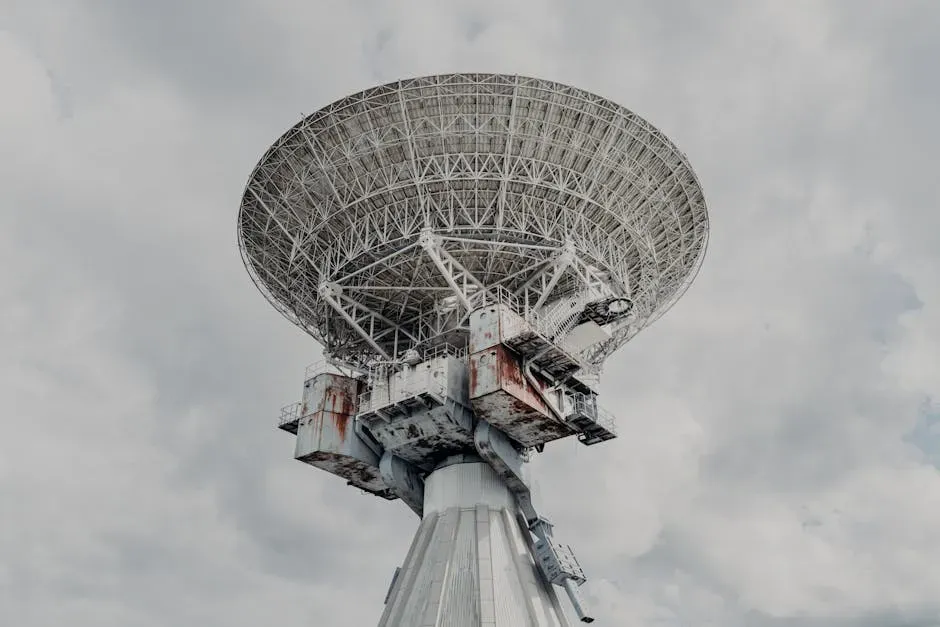
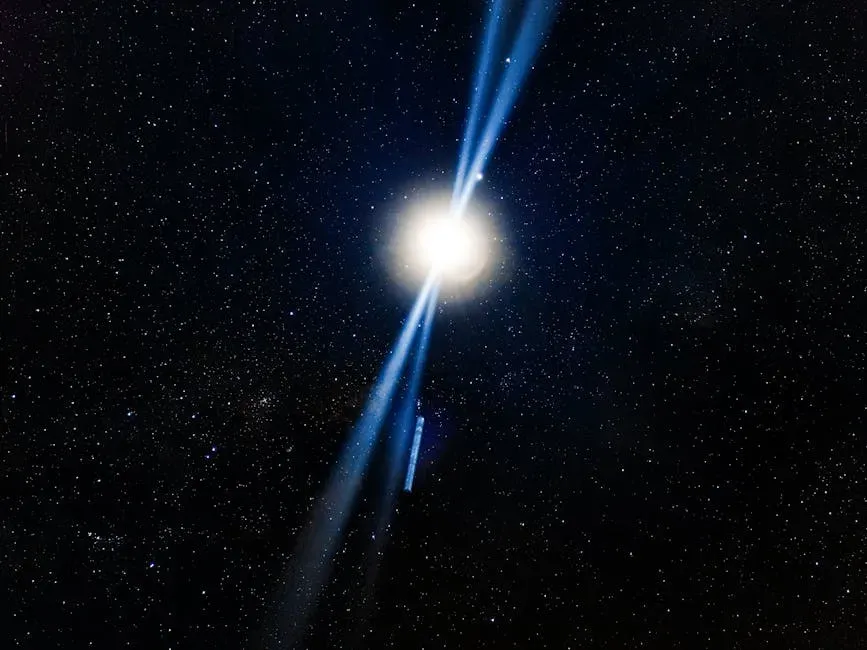
Imagine a signal so powerful it briefly outshines an entire galaxy – and then vanishes in under a millisecond. That is a fast radio burst, and they are absolutely extraordinary. Fast radio bursts are brief and brilliant explosions of radio waves emitted by extremely compact objects such as neutron stars and possibly black holes – these fleeting fireworks last for just a thousandth of a second and can carry an enormous amount of energy.
Since the first fast radio burst was discovered in 2007, astronomers have detected thousands of FRBs, whose locations range from within our own galaxy to as far as eight billion light-years away – and exactly how these cosmic radio flares are launched is a highly contested unknown. Eight billion light-years. Let that sink in.
Astronomers have traced two mysterious fast radio bursts from space to wildly different places, which suggests the phenomenon may originate in diverse ways. Even more puzzling, in January 2025, astronomers discovered radio waves from a galaxy that is roughly two billion light-years away and is believed to be more than eleven billion years old – and these FRBs are associated with a galaxy that was believed to be dead. A dead galaxy. Still screaming across the cosmos.
The Hubble Tension: Science’s Most Embarrassing Disagreement
Let’s be real – when two of the most precise measurement methods in all of physics give flatly contradictory results about something as fundamental as the expansion rate of the universe, something is seriously wrong. Measurements based on observations of the early universe conflict with those drawn from the more recent universe – this mismatch is known as the Hubble tension, and it stands as one of the most important unresolved problems in modern cosmology.
When scientists analyze the cosmic microwave background to estimate the Hubble constant, they obtain a lower value of 67 km/s/Mpc – but direct measurements of nearby objects consistently return a higher value of 73 km/s/Mpc, and this mismatch is called the Hubble tension. Those two numbers seem small. The implications are enormous.
It’s well established that the universe is expanding, but there’s serious disagreement among scientists over how fast it’s happening – two of the best ways of measuring the cosmic expansion rate give answers that are stubbornly at odds, presenting a major problem in modern cosmology known as the Hubble tension. Some researchers suspect this discrepancy could point to entirely new physics lurking beyond our current models. Others suspect measurement errors. Nobody knows for certain.
The Matter-Antimatter Mystery: Why Does Anything Exist at All?
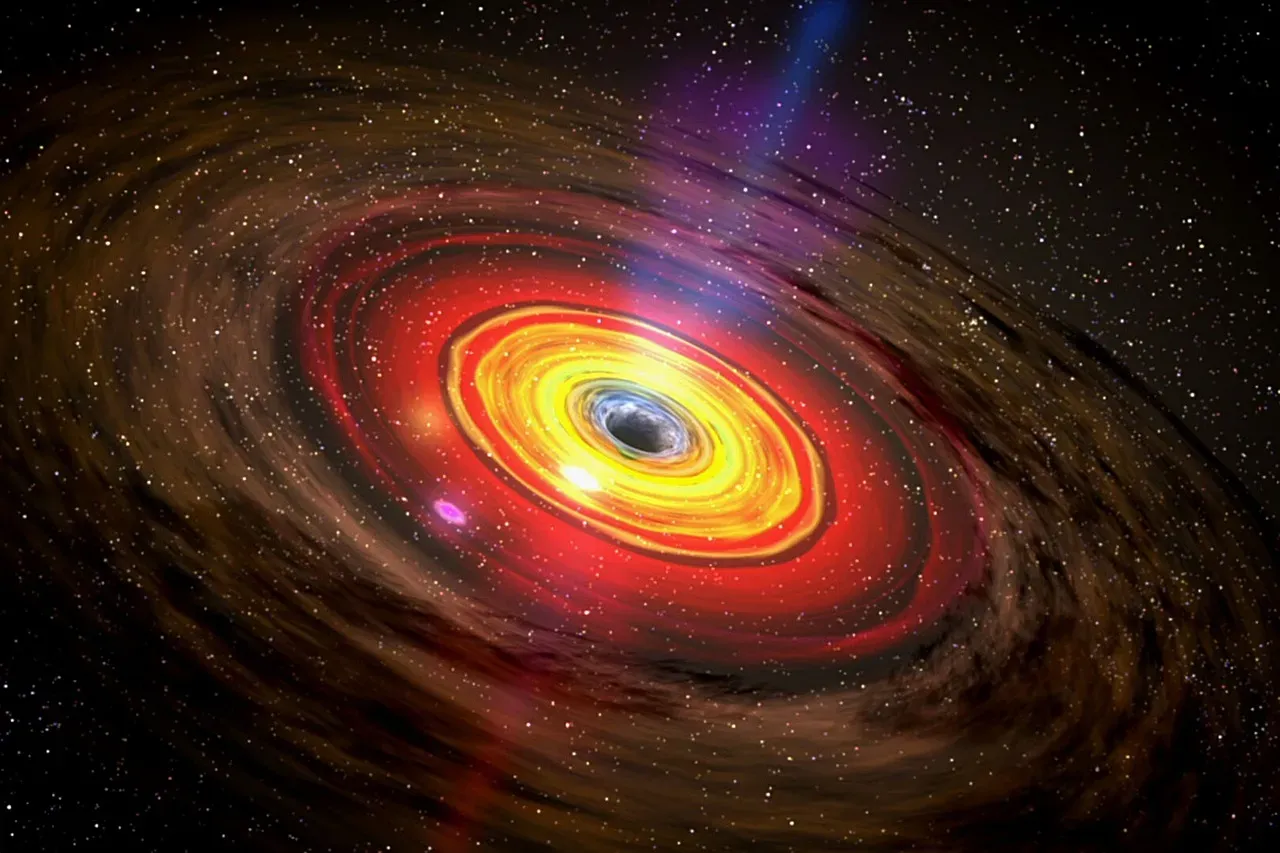
This one is perhaps the most philosophically dizzying of them all. Early in its history, shortly after the Big Bang, the universe was filled with equal amounts of matter and antimatter – particles that are matter counterparts but with opposite charge. But then, as space expanded, the universe cooled. Today’s universe is full of galaxies and stars made of matter. Where did the antimatter go, and how did matter come to dominate the universe?
The Big Bang should have created equal amounts of matter and antimatter, which would have annihilated each other – instead, matter dominates the observable universe, and explaining why antimatter nearly vanished remains an unresolved challenge in cosmology. Matter and antimatter should have cancelled each other out completely, leaving nothing. No stars. No planets. No you, no me. Just empty, silent space.
The fact that anything exists at all suggests there was some tiny, mysterious asymmetry baked into the earliest moments of creation. Scientists are still trying to figure out what caused it. It is hard to say for sure, but some physicists suspect the answer might require physics we haven’t even invented yet.
What Lies Inside a Black Hole: Physics Breaks Down Completely
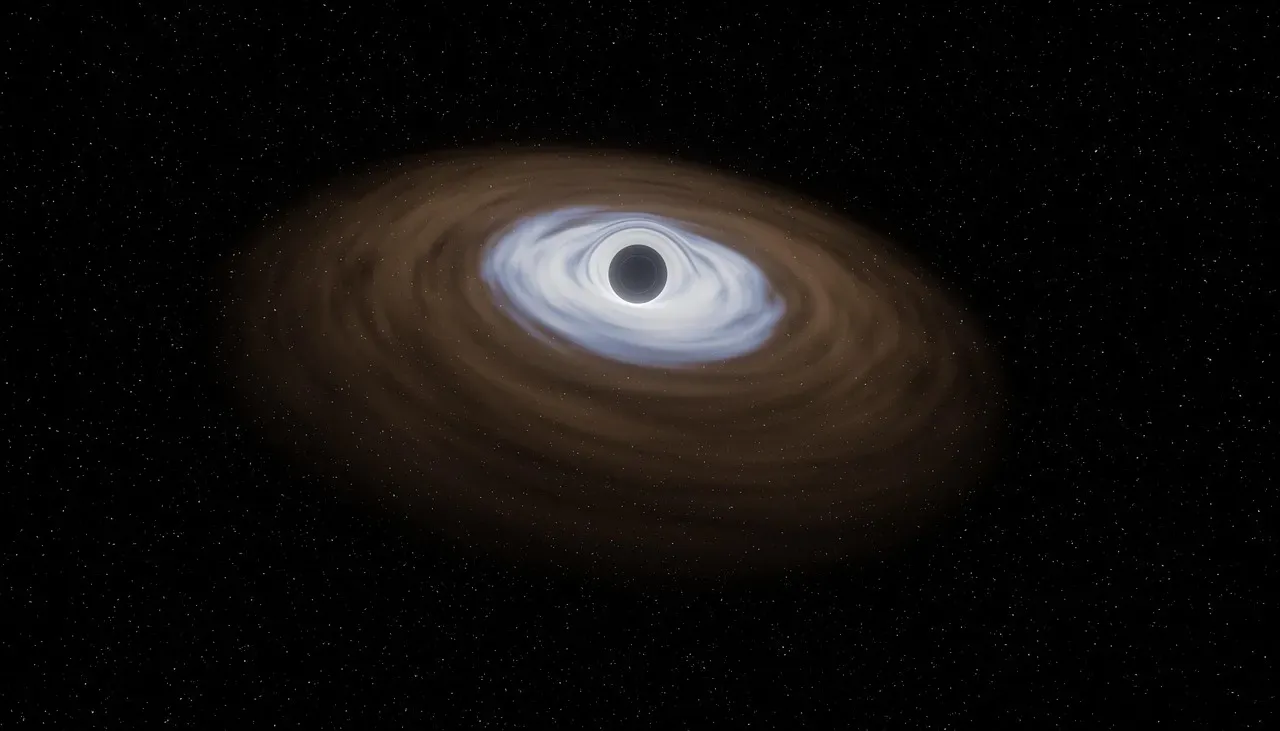
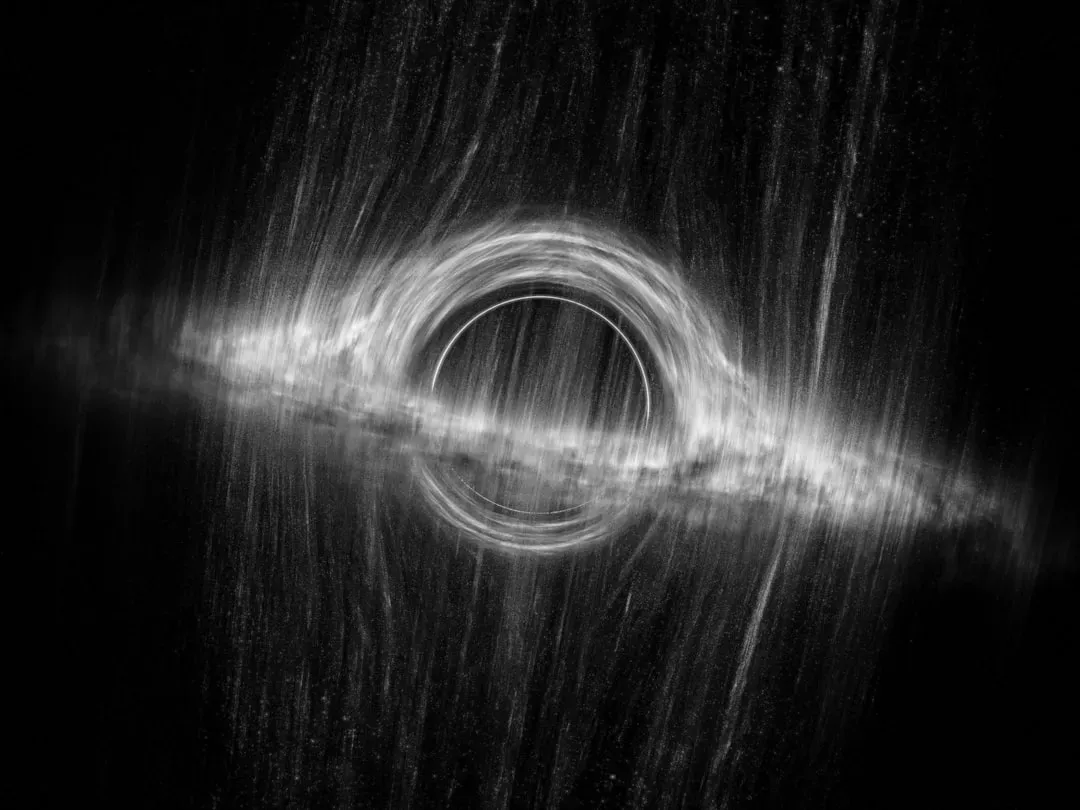
Beyond a black hole’s event horizon, current physics can no longer describe what happens to matter or spacetime – theories predict singularities, where density becomes infinite, but such conditions break known physical laws. A singularity is, essentially, where mathematics throws up its hands and stops making sense. It’s the universe’s version of a “404 error.”
The black hole information paradox raises the question of whether black holes produce thermal radiation and – if they can evaporate away – what happens to the information stored in them, which appears to be an issue because the unitarity of quantum mechanics does not allow for the destruction of information. Think of it this way. You throw a book into a black hole. The book is gone. But quantum physics insists the information in that book cannot simply vanish. So where does it go?
This contradiction between general relativity and quantum mechanics has haunted physicists for decades. Quantum gravity seeks to unify general relativity with quantum mechanics, two theories that work well separately but conflict at extreme scales – this gap limits understanding of black holes and the universe’s earliest moments, and a complete theory could redefine how space and time behave.
Ultra-High-Energy Cosmic Rays: Particles That Should Not Exist
Cosmic rays are high-energy particles that constantly bombard Earth – yet every so often, scientists detect ultra-high-energy cosmic rays that possess more energy than any particle accelerator on Earth can produce, and the sources and mechanisms that generate these extreme energy levels remain unknown to astronomers. We’re talking about single subatomic particles carrying as much energy as a professionally thrown baseball. That is obscene.
Furthermore, many ultra-high-energy cosmic rays seem to originate from regions of the universe that appear devoid of sources, which contradicts models of particle decay, and these rays challenge the current established limits of physics on how far high-energy particles can travel before losing energy, a phenomenon known as the Greisen-Zatsepin-Kuzmin limit.
A 2024 analysis from the Pierre Auger Observatory suggested that the highest-energy rays likely originate from outside the Milky Way, contradicting some established astrophysical models. So we know they come from very far away. We just have no idea what could possibly generate that kind of energy. Whatever it is, it makes our most powerful accelerators look like toys.
The Cosmic Microwave Background: Ancient Light With Troubling Secrets
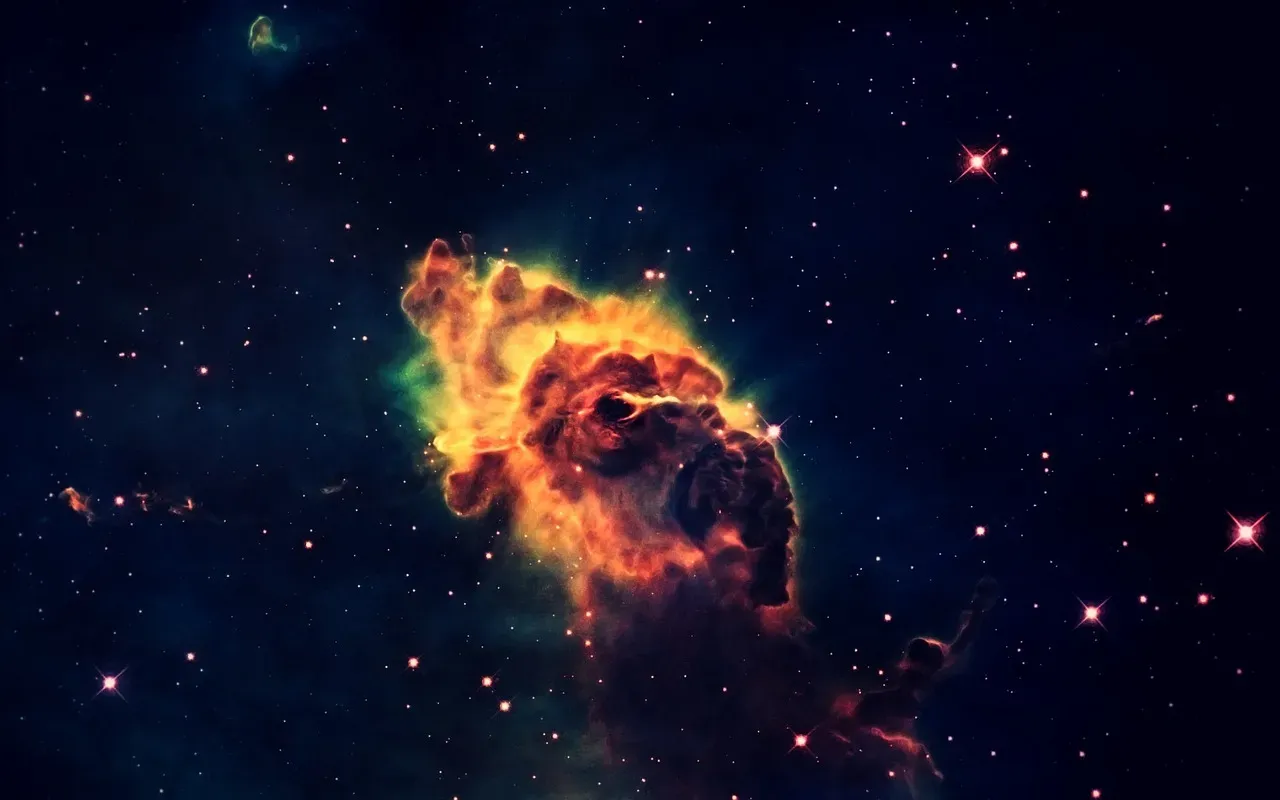
The cosmic microwave background, or CMB, is essentially a photograph of the universe when it was only about 380,000 years old – ancient light that has been traveling toward us ever since. Scientists have used it as a bedrock of cosmological understanding for decades. Except now, some researchers are questioning everything they thought they knew about it.
In May 2025, a new theory emerged suggesting that scientists might have gotten the CMB all wrong – a team from Germany and China says the cosmic glow could be at least partly caused by early-type galaxies, and they claim the CMB might not exist at all in the way we currently understand it. That is a stunning claim. If even partially correct, it would force a dramatic rethink of cosmological history.
The researchers say that new data points to early-type galaxies forming and spreading through the universe even earlier than previously thought, with these radical new models based on recent data from the James Webb Telescope – and the research is still in its early stages, but it raises questions about how scientists view the universe’s evolution. The James Webb Space Telescope keeps delivering surprises. Not always comfortable ones.
The Fermi Paradox: Where Is Everybody?
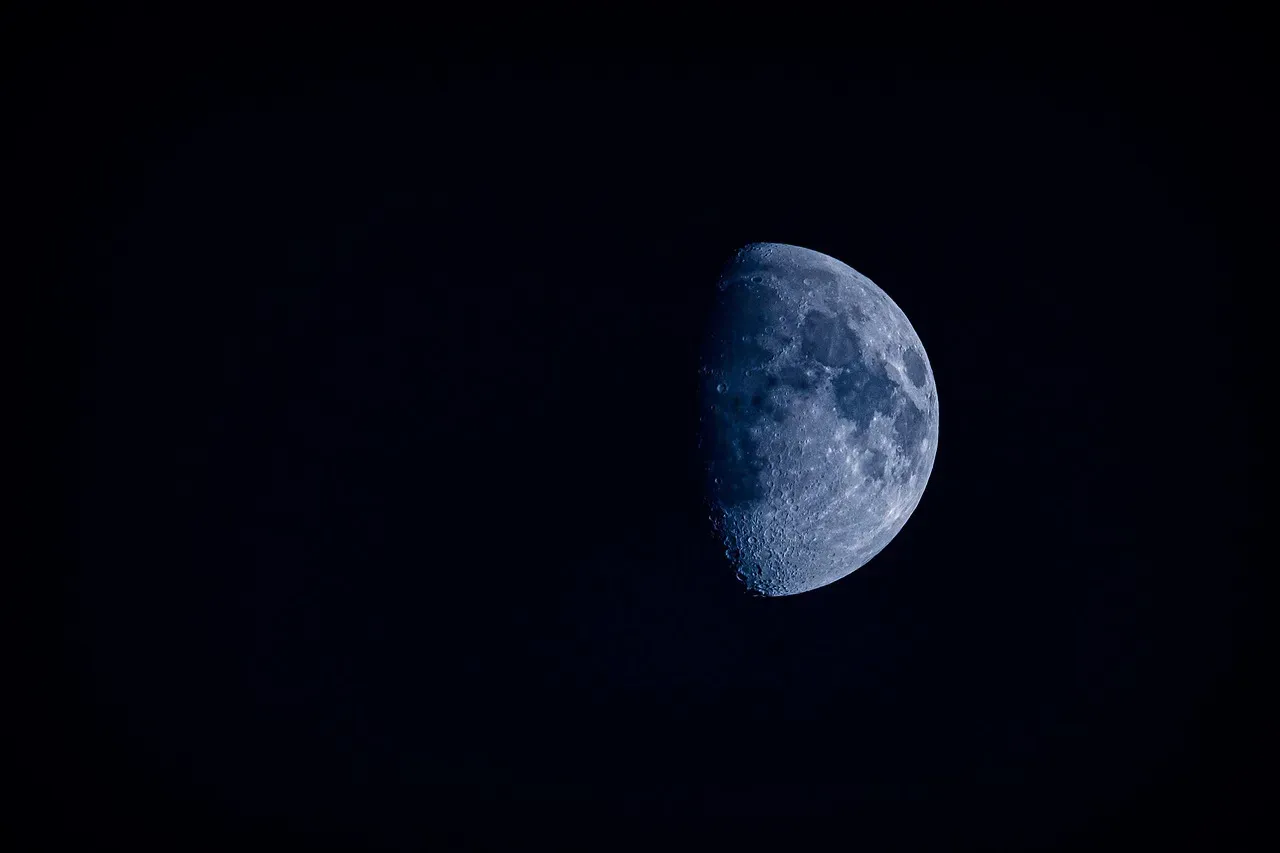
Here is a question that sounds almost casual until you really sit with it. Given the vast number of potentially habitable planets, intelligent life should be common in the universe – yet there is no clear evidence of extraterrestrial civilizations, and this contradiction raises questions about whether life is rare, short-lived, or simply difficult to detect.
Our galaxy alone contains hundreds of billions of stars. By 2025, thousands of exoplanets have been discovered, many located within their star’s habitable zone where conditions may be suitable for life, and the advent of powerful space telescopes like the James Webb Space Telescope has allowed astronomers to analyze the atmospheres of these distant worlds for signs of habitability or even biosignatures.
So if the ingredients for life are so common, why is the cosmos so eerily, stubbornly quiet? The silence is deafening. Maybe civilizations self-destruct before they can reach out. Maybe they’re hiding. Maybe the distances are simply too vast. Or maybe – and this is the one that keeps scientists up at night – we’re genuinely, utterly alone. Every proposed explanation raises more questions than it answers.
Intermediate-Mass Black Holes: The Missing Middle Child of the Cosmos
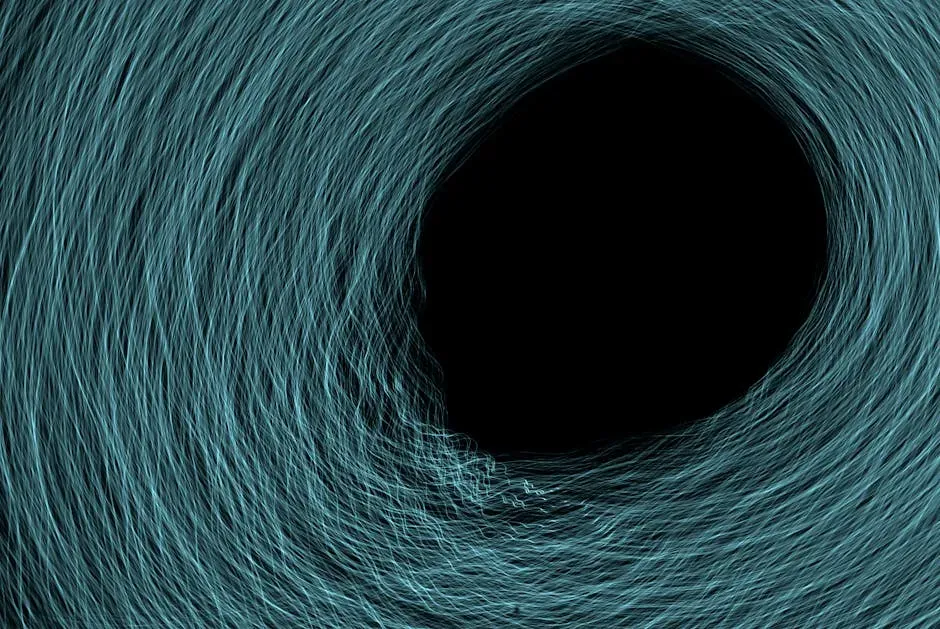
Science has a reasonably solid handle on two flavors of black holes. Small stellar black holes, formed when massive stars collapse. And supermassive black holes, lurking at the centers of most galaxies, sometimes containing billions of times the mass of our Sun. The problem is everything in between. Nobody really knows what intermediate-mass black holes are like – scientists are aware that they exist, but when it comes to their origins or how they behave, information is scarce.
Researchers around the world are using data from gravitational-wave detectors to try to learn more about these mysterious objects, but these sensors only offer a tiny glimpse of black holes as they smash into each other and fuse together. They’re like trying to understand an entire ocean by watching a single wave crash.
Scientists hope that future space-based detectors could help explore intermediate-mass black holes with a level of precision never seen before. Until then, this critical missing link in black hole evolution remains stubbornly out of reach, leaving a gaping hole in one of our most fundamental theories about how the universe’s biggest structures are born and grow. The universe, it seems, has a very deliberate way of keeping its best secrets locked away.
Conclusion: The More We Know, the Stranger It Gets
The universe is filled with mysteries that continue to challenge even the most advanced scientific tools – despite powerful observatories and decades of research, many cosmic questions remain unanswered, revealing how limited our understanding of reality still is. That isn’t a failure. It is an invitation.
Every one of these ten mysteries is a door. Behind some of them may be simple answers we’ve been overlooking. Behind others might be entirely new branches of physics, new ways of understanding space, time, matter, and reality itself. These unsolved universe enigmas are not failures of science, but signs that exploration is far from complete.
What strikes me most is this: we’ve built civilization, written history, composed symphonies, and launched probes beyond our solar system – all while understanding less than five percent of the universe we actually live in. The cosmos is patient. It has been keeping these secrets for nearly fourteen billion years. The question is whether we are clever enough, and humble enough, to one day understand them.
Which of these ten mysteries feels most unsettling to you – and does it change how you see the night sky?
Worried about unexpected vet bills?
Pet insurance can cover thousands in unexpected vet costs. Get a free quote from Lemonade in under 2 minutes.
Get My Free Quote →Sponsored · Opens Lemonade.com

- 17 Dog Breeds That Are Nearly Impossible to Housebreak - June 11, 2026
- The Ocean’s Deepest Creatures Hold Surprising Secrets to Longevity - June 10, 2026
- 6 Scents That Make Mosquitoes Target You First - June 10, 2026