

In the vast emptiness of space, where temperatures fluctuate between extreme cold and scorching heat, where radiation is abundant, and where there’s no oxygen or atmospheric pressure, life as we know it cannot survive. Yet, against all odds, there exists one remarkable creature that defies these harsh conditions: the tardigrade, also known as the water bear or moss piglet. These microscopic organisms have captured the imagination of scientists worldwide due to their extraordinary ability to survive in environments that would be fatal to almost every other living thing on Earth, including the vacuum of space. This article explores the fascinating world of tardigrades, their remarkable survival abilities, and what they teach us about the resilience of life.
Meet the Tardigrade: Earth’s Toughest Animal

Tardigrades are microscopic, water-dwelling organisms that grow to an average length of just 0.5 mm (0.02 inches) when fully grown. First discovered in 1773 by German zoologist Johann August Ephraim Goeze, these eight-legged creatures belong to the phylum Tardigrada. Despite their diminutive size, tardigrades have captured scientific attention due to their remarkable resilience. They’re found virtually everywhere on Earth—from the deepest ocean trenches to the highest mountains, from tropical rainforests to Antarctic ice. Over 1,300 species of tardigrades have been identified, inhabiting a diverse range of environments and demonstrating the incredible adaptability of these tiny animals.
The Space-Surviving Superpower: Cryptobiosis

The secret to tardigrades’ extraordinary survival in space lies in their ability to enter a state called cryptobiosis—a condition where metabolic processes come to a near-complete halt. When faced with extreme environmental conditions, tardigrades can reduce their water content to less than 3% of normal, form a protective coating, and enter a dehydrated state known as a “tun.” In this tun state, they essentially become dormant, suspending their metabolic processes almost entirely. What’s remarkable is that they can remain in this state for decades and then return to normal activity when rehydrated. This adaptation is what allows them to survive the vacuum, radiation, and temperature extremes of outer space.
Space Experiments: Tardigrades in Orbit

Tardigrades have been the subject of several space experiments that have confirmed their ability to survive in the vacuum of space. In 2007, the European Space Agency sent 3,000 tardigrades into low Earth orbit on the FOTON-M3 mission. The tardigrades were exposed to the vacuum of space and harmful solar radiation for 12 days. Upon return to Earth, scientists were amazed to find that many had survived the journey. Even more impressively, some female tardigrades that had been exposed to space were able to lay eggs that hatched normally after their return. In 2019, the Israeli spacecraft Beresheet, which crashed on the moon, was carrying thousands of dehydrated tardigrades. Scientists believe there’s a possibility these resilient creatures could still be alive on the lunar surface.
Radiation Resistance: Defying Deadly Rays

One of the most lethal aspects of space for living organisms is radiation. The vacuum of space offers no protection from the harmful ultraviolet radiation and cosmic rays that permeate the universe. Yet tardigrades have demonstrated an extraordinary resistance to radiation levels that would be fatal to humans and most other life forms. They can withstand radiation doses of up to 5,000 to 6,000 Grays (Gy), while a dose of just 5 Gy would kill most humans. This remarkable radiation resistance is due to a protein called Dsup (Damage Suppressor), which protects their DNA from the harmful effects of radiation. Scientists are studying this protein in hopes of applying its protective properties to human cells, potentially providing radiation protection for astronauts on long-duration space missions.
Temperature Extremes: From Near Absolute Zero to Boiling Point

Space presents extreme temperature variations that would be fatal to most organisms. Temperatures can range from -270°C (-454°F) in the shadows to over 120°C (248°F) in direct sunlight. Tardigrades demonstrate remarkable temperature tolerance, surviving temperatures as low as -272°C (-458°F), just a degree above absolute zero, and as high as 150°C (302°F). This extraordinary temperature range exceeds what they would encounter even in the harsh environment of space. Their ability to withstand such extreme temperatures is linked to their cryptobiotic state and the production of special protective proteins called heat-shock proteins, which prevent cellular damage during temperature fluctuations.
Pressure Resistance: From Vacuum to Deep Ocean

Another deadly aspect of space is the complete absence of atmospheric pressure. Most organisms would quickly die in a vacuum as their bodily fluids would boil away and their cells would rupture. Tardigrades, however, can withstand the vacuum of space with remarkable resilience. They can also survive at the other extreme, enduring pressures more than six times greater than those found in the deepest ocean trenches. This pressure range—from zero to over 6,000 atmospheres—is unmatched in the animal kingdom. In their tun state, the structure of tardigrade cells changes to prevent damage from the expansion that would normally occur in a vacuum, allowing them to survive pressure conditions that would destroy most other life forms.
The Genetic Secrets Behind Tardigrade Survival

Recent genomic studies have begun to unravel the genetic basis for tardigrades’ extraordinary survival abilities. Scientists have discovered that tardigrades possess unique genes that encode for proteins involved in DNA repair and protection. One such protein is the previously mentioned Dsup (Damage Suppressor), which physically shields DNA from radiation damage. Additionally, tardigrades have genes for proteins that replace water in their cells during dehydration, maintaining the structural integrity of sensitive cellular components and preventing fatal damage. What’s particularly fascinating is that some of these genes appear to have been acquired through horizontal gene transfer from bacteria and other organisms, suggesting that tardigrades have “borrowed” survival mechanisms from different life forms throughout their evolutionary history.
Tardigrades and Astrobiology: Implications for Life Beyond Earth

The space-surviving abilities of tardigrades have profound implications for astrobiology—the study of life throughout the universe. Their extraordinary resilience suggests that life might be able to survive in environments previously thought to be uninhabitable. If microscopic life forms like tardigrades can endure the harsh conditions of space, then similar organisms might potentially exist on other celestial bodies with extreme environments, such as Mars, Europa (a moon of Jupiter), or Enceladus (a moon of Saturn). Furthermore, tardigrades provide evidence for the concept of panspermia—the hypothesis that life could be distributed throughout the universe by meteoroids, asteroids, and comets. If tardigrades can survive in space, it’s conceivable that microscopic life forms could travel between planets, potentially seeding life throughout our solar system or beyond.
The Limits of Tardigrade Survival

Despite their remarkable resilience, tardigrades do have limitations to their survival capabilities. While they can endure short-term exposure to the vacuum and radiation of space, prolonged exposure eventually proves fatal. In the 2007 FOTON-M3 experiment, tardigrades exposed to both vacuum and solar radiation had a significantly lower survival rate than those exposed to vacuum alone. Additionally, their survival in space depends on being in the cryptobiotic tun state; active tardigrades would quickly perish in such extreme conditions. It’s also worth noting that while individual tardigrades can survive in space temporarily, they cannot reproduce or thrive there—they essentially enter a state of suspended animation until returned to more favorable conditions. These limitations remind us that while tardigrades are extraordinarily resilient, they remain Earth organisms adapted primarily for life on our planet.
Other Space-Resistant Organisms

While tardigrades are the most famous space survivors, they’re not entirely alone in their resilience. Certain bacteria, particularly some species of the genus Deinococcus, have demonstrated remarkable radiation resistance and can survive brief exposure to the vacuum of space. Bacillus subtilis spores have also survived in space experiments. Lichens, which are symbiotic associations of fungi and algae, have shown surprising space resilience in experiments aboard the International Space Station. However, none of these organisms match the complete package of survival abilities demonstrated by tardigrades. The water bears remain unrivaled in their combination of resistance to radiation, temperature extremes, dehydration, and vacuum, making them truly the champions of space survival among Earth’s organisms.
The Evolutionary Puzzle: Why Such Extreme Survival Abilities?

An intriguing question about tardigrades is why they evolved such extreme survival abilities when the conditions they encounter on Earth, while sometimes harsh, are nowhere near as extreme as the vacuum of space. Scientists believe that tardigrades’ space-surviving abilities are actually a byproduct of adaptations to survive more terrestrial threats, particularly dehydration. Many tardigrade species live in environments that can dry out completely, such as moss cushions or lichen patches. Their ability to enter cryptobiosis evolved as a response to these periodic dehydration events. The same adaptations that allow them to survive without water also happen to provide protection against other extreme conditions like radiation, temperature, and vacuum. This is a fascinating example of exaptation in evolution—where a trait evolved for one purpose ends up being useful for something entirely different. Tardigrades didn’t evolve to survive in space; they evolved to survive dry periods on Earth, and space survival came as a bonus.
Tardigrades in Popular Culture and Science Education
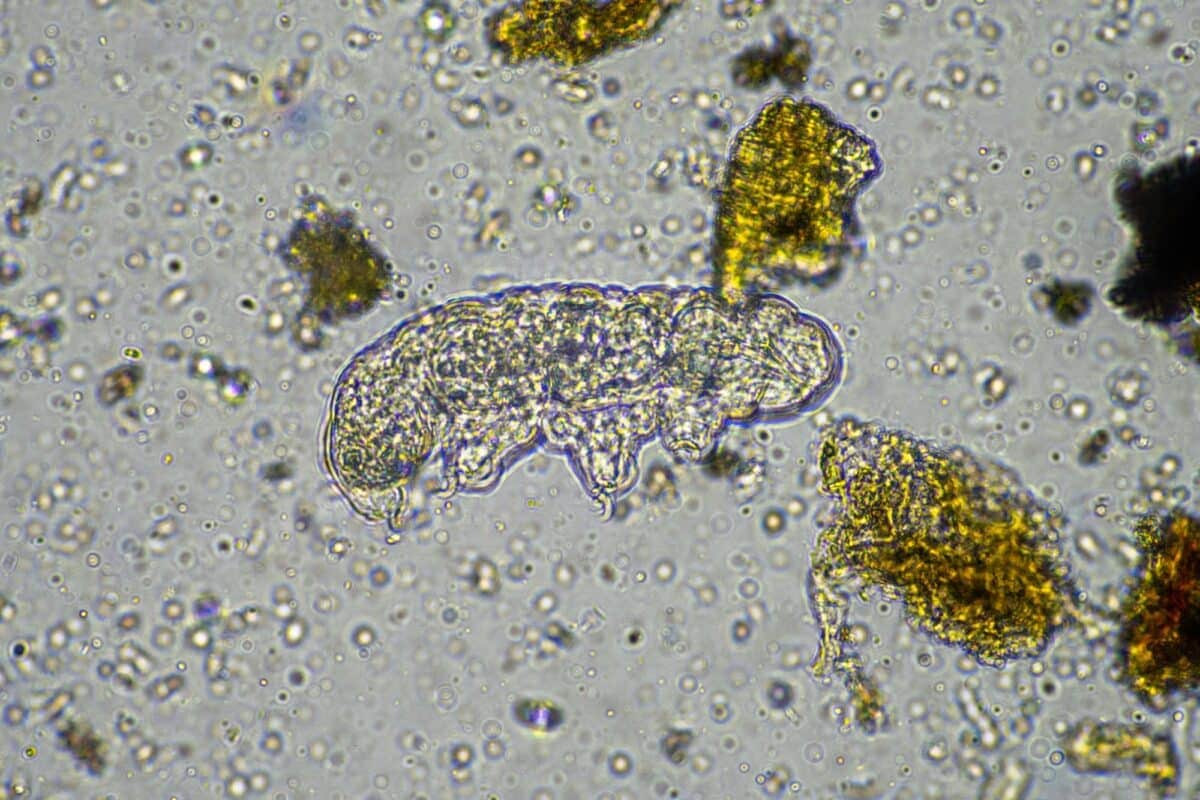
The extraordinary abilities of tardigrades have captured the public imagination, earning them a special place in popular culture. They’ve been featured in science fiction, including an episode of “Star Trek: Discovery” where tardigrade DNA played a crucial role in an interstellar propulsion system. Their cute appearance—with plump bodies and lumbering gait that earned them the nickname “water bears”—has made them popular subjects for science communication and education. Tardigrades have become ambassadors for extremophiles and astrobiology, helping to engage the public with these scientific fields. Their remarkable abilities serve as a powerful reminder of the extraordinary adaptability of life and the potential for life to exist in environments we might previously have considered uninhabitable. As tiny as they are, tardigrades have had an outsized impact on our understanding of the resilience of life and its potential throughout the universe.
Conclusion: The Cosmic Significance of Earth’s Toughest Animal
Tardigrades stand as a testament to the extraordinary resilience and adaptability of life on Earth. Their ability to survive in the vacuum of space—enduring radiation, temperature extremes, and zero pressure—challenges our understanding of the limits of life and expands our perspective on where life might exist beyond our planet. As we continue to explore the cosmos and search for extraterrestrial life, these microscopic survivors provide valuable insights into how life might adapt to the harshest environments in the universe. While humans require sophisticated technology and protective equipment to venture into space, tardigrades need only their evolved biological mechanisms—a humbling reminder of nature’s ingenuity. These remarkable creatures may be tiny, but their significance to astrobiology, evolutionary biology, and our understanding of life’s potential is truly cosmic in scale.

- This River Delta Is a Magnet for Endangered Birds - July 17, 2026
- New Fossils in Baja California Reveal a Never-Before-Seen Grouper - July 17, 2026
- The Most Venomous Animal on Land—And How It Kills - July 17, 2026