
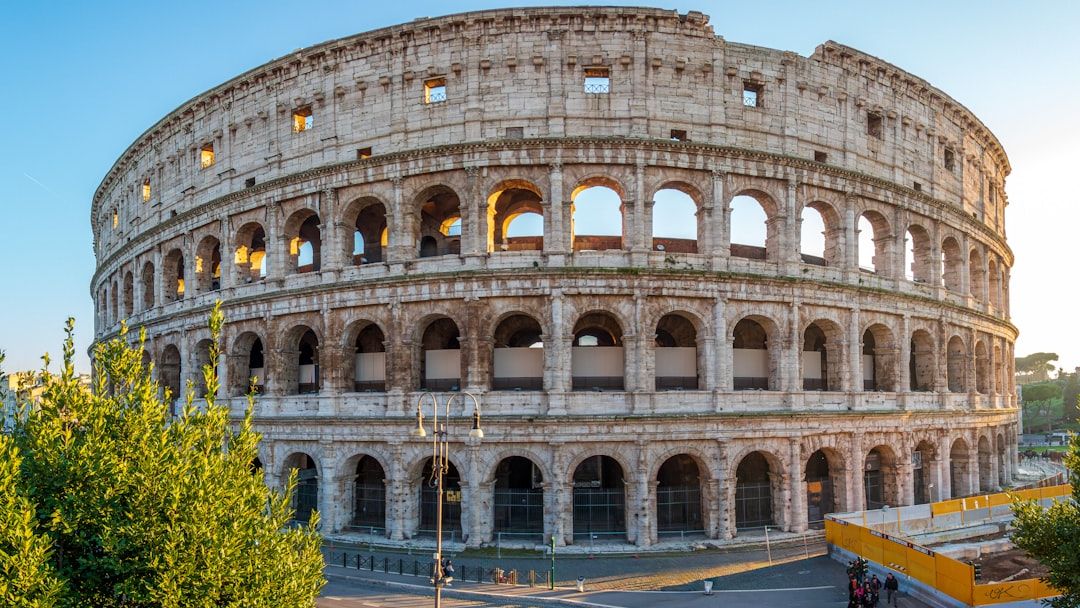
Standing tall at the heart of Rome for nearly two thousand years, the Colosseum whispers stories of an empire that once ruled the world. Imagine the ground trembling beneath your feet as thousands of Romans roared in unison, their voices echoing through stone arches that still stand defiantly against time. This isn’t just another ancient ruin gathering dust in history books. It’s a living, breathing monument that captures something raw and powerful about human ambition, entertainment, and engineering genius.
Walk through its weathered archways today and you can almost hear the past calling out. As one of the few mostly intact structures from the Roman Empire, the Colosseum stands today as a monument to ancient Rome’s architectural and engineering prowess. Let’s be real, there’s something almost intimidating about standing before a structure that has survived earthquakes, lightning strikes, wars, and the slow decay of time itself. So let’s dive in and discover what makes this amphitheater one of humanity’s most remarkable achievements.
The Birth of a Monument: From Vision to Reality
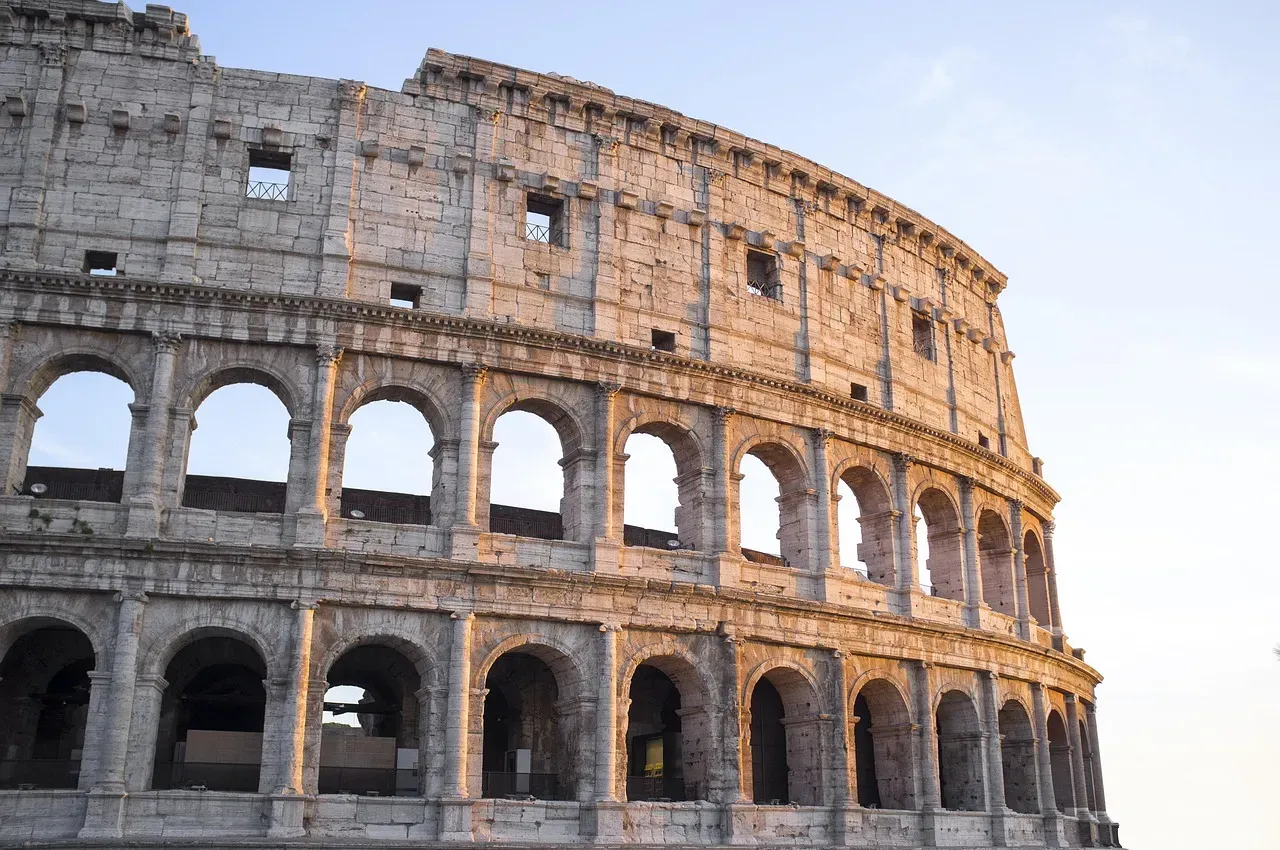
Construction of the Colosseum began under the Roman emperor Vespasian between 70 and 72 ce, and the completed structure was dedicated in 80 ce by Titus, Vespasian’s son and successor. Here’s the thing: Vespasian wasn’t just building an arena. He was making a political statement. The site itself carried symbolic weight because it replaced Nero’s extravagant private lake with a public amphitheater, essentially returning stolen land to the people.
Think about the logistics for a moment. The actual building was done largely by Jewish slaves, overseen by Roman engineers and craftsmen, and it is estimated that 60,000 to 100,000 were employed in the construction. That’s an entire city’s worth of forced labor, working tirelessly to create what would become the world’s largest amphitheater.
After nearly a decade of construction – a relatively quick time period for a project of such a grand scale – Titus officially dedicated the Colosseum in A.D. 80 with a festival including 100 days of games. Honestly, a hundred days of continuous entertainment seems almost unimaginable today. The scale of ambition behind this opening ceremony reveals just how desperately the Flavian emperors wanted to cement their legacy and win the people’s favor.
Engineering Marvel: Building the Impossible
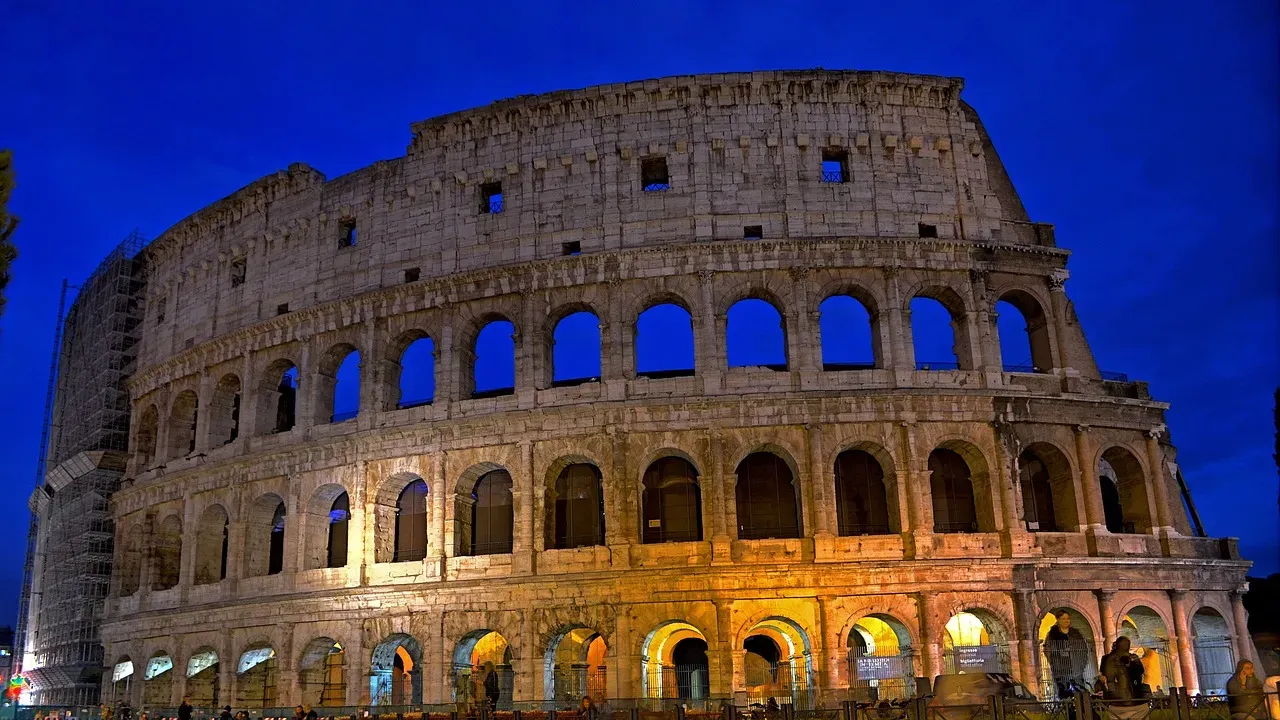
Made primarily of concrete, 3.5 million cubic feet of travertine, and similar amounts of marble, stone and timber, the Colosseum rose to 157 feet (roughly the height of a 15-story building), with a capacity for an estimated 50,000 to 80,000 people. The sheer volume of materials involved boggles the mind. Somewhere between modern football stadium and architectural miracle, the Colosseum represented cutting-edge Roman technology.
The Colosseum’s greatest innovation was its use of concrete, and the concrete construction is really what allows the Colosseum to be built. I think people don’t fully appreciate how revolutionary Roman concrete was. Unlike anything that came before, this hydraulic cement could set underwater and actually grew stronger over time through chemical processes.
Modern engineers believe the main reason that the Colosseum is still standing today is because of its solid concrete foundation, as the Colosseum was built on a wetland near the Tiber River. Building on swampy ground near a river should have been an engineering disaster. Yet Roman builders turned this challenge into a triumph through deep foundations and brilliant material science. Unlike earlier amphitheaters, the Colosseum is a freestanding structure of stone and concrete that uses a complex system of vaults.
Architectural Brilliance: Layers of Genius
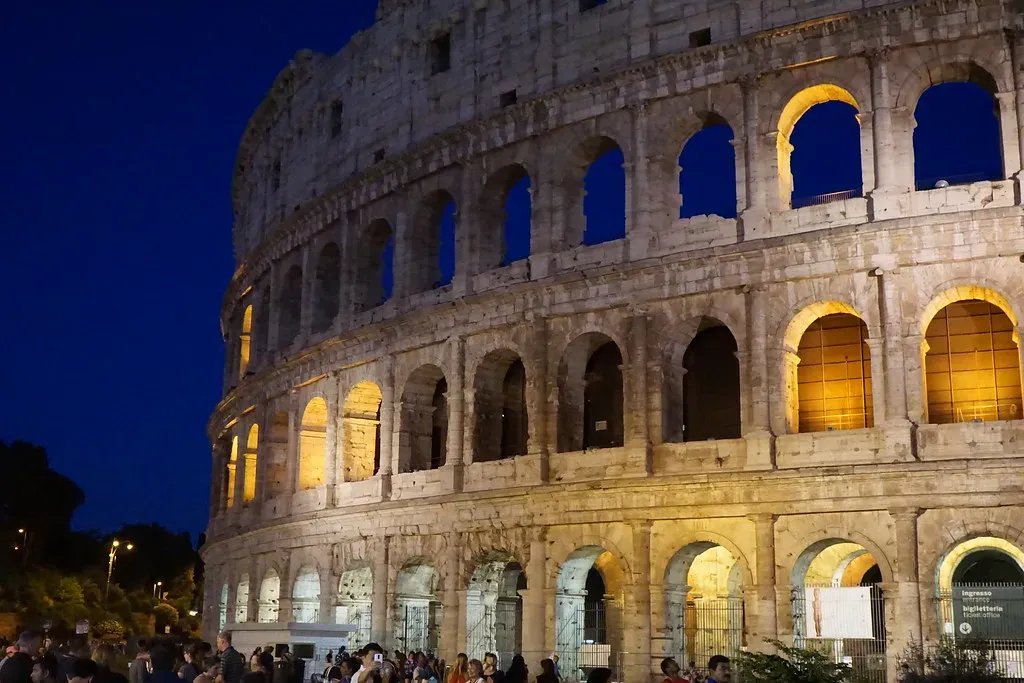
The exterior façade alone tells a story of Roman sophistication. Three of the arena’s stories are encircled by arcades framed on the exterior by engaged columns in the Doric, Ionic, and Corinthian orders; the structure’s rising arrangement of columns became the basis of the Renaissance codification known as the assemblage of orders. Each level showcased a different architectural style, creating a visual hierarchy that educated architects would study for centuries.
Let’s talk about the hypogeum, the underground network that made the magic happen. It was an elaborate network of tunnels and chambers over two levels that was used to house gladiators and animals before the shows, and eighty vertical shafts connected the hypogeum to the arena. Picture this complex machine of death and spectacle: elevators hoisting caged lions, trap doors springing open, scenery appearing as if by magic.
The Colosseum was built from an estimated 100,000 cubic meters of travertine stone, plus a similar measure of Roman cement, bricks, and tuff blocks. Every stone was carefully selected and placed. Around 300 tons of iron clamps were used to hold the large stone blocks together. Unfortunately, those same iron clamps became targets for scavengers during the Middle Ages, leaving the pockmarked scars we still see today.
Blood, Games, and Empire: Entertainment Roman Style
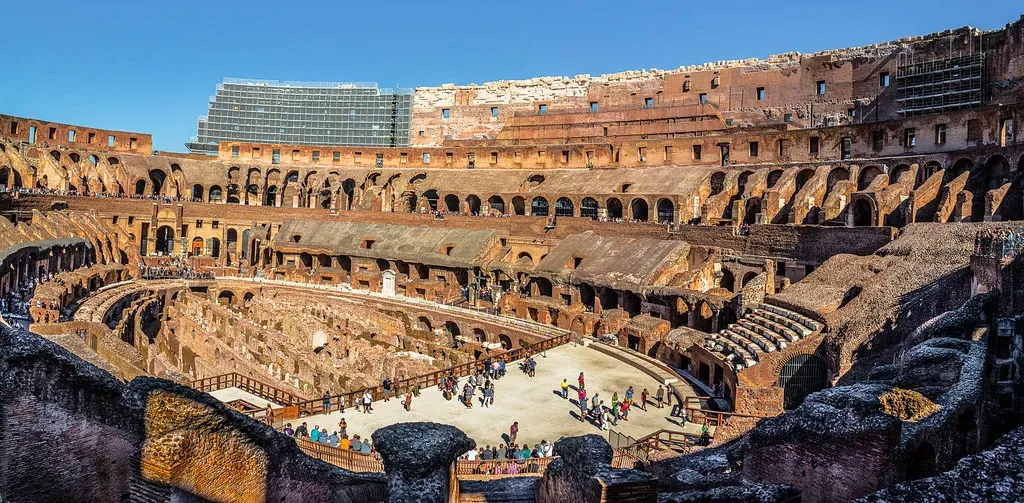
The Colosseum was famously used for gladiatorial combat, and it was the scene of thousands of gladiator combats, contests between men and animals, and mock naval engagements. The inaugural games set the bar impossibly high. At the inauguration of the Colosseum, the games lasted 100 consecutive days during which more than 5,000 wild beasts were killed, and during the celebration of Emperor Trajan’s victory over the Dacians in AD 107, the games lasted 123 consecutive days with 11,000 great beasts killed and 10,000 gladiators participating.
It’s hard to say for sure, but the violence must have been absolutely staggering. These all-day spectacles were typically divided into three parts: animal hunts in the morning, executions at midday, and gladiatorial games in the afternoon. Romans didn’t do anything halfway, did they?
Here’s what’s fascinating: Gladiators did not die at rates portrayed in modern media, and sometimes wealthy influential Romans tested their skills. The reality was more complex than Hollywood suggests. Gladiators were generally enslaved peoples, condemned criminals or prisoners of war. Yet some achieved celebrity status, becoming the ancient world’s equivalent of sports superstars.
Politics and Power: Bread and Circuses
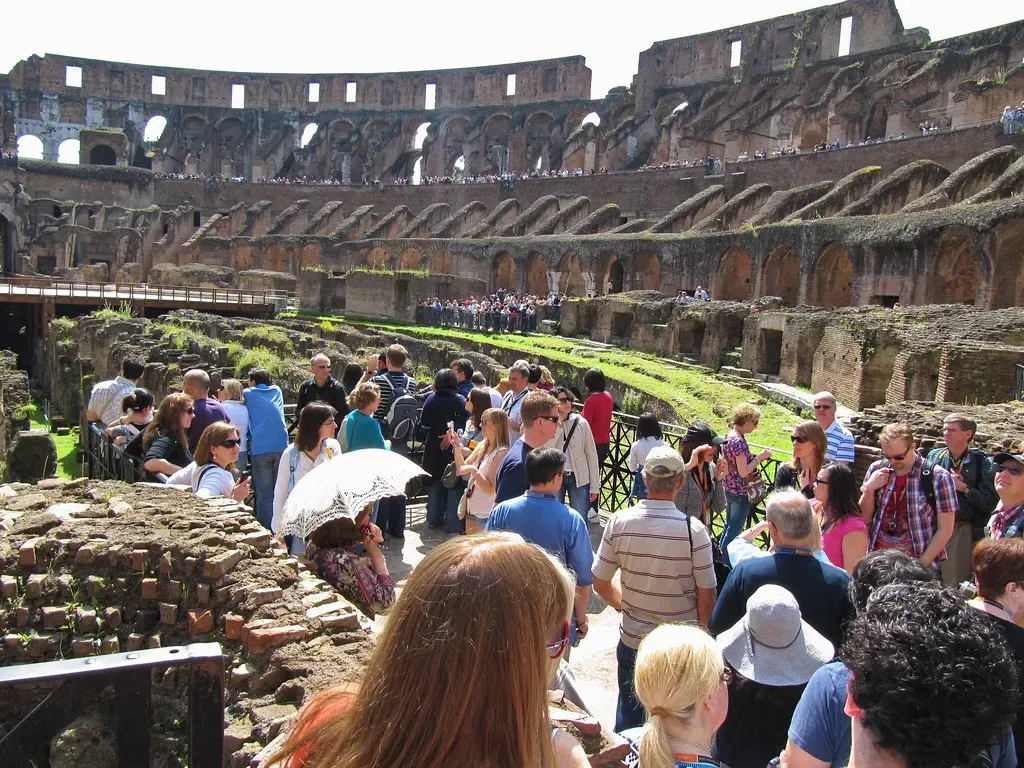
The Colosseum was an ideal tool to strengthen the social cohesion of the Roman people, perfectly illustrating the demagogic policy of the Flavian emperors, as the circus games were a gift from the emperor to the Romans with all expenses paid by the emperor himself. Smart politics, really. Keep the masses fed and entertained, and they won’t ask too many uncomfortable questions about inequality or imperial overreach.
The Colosseum was used only about a dozen times a year, on religious holidays, festivals or the Emperor’s birthday. That exclusivity made each event more special, more anticipated. The entire social hierarchy of Rome was on display during these spectacles. Class hierarchies in Imperial Rome dictated where people sat in the Colosseum.
The emperors understood spectacle as political currency. The sheer size of the arena and scale of the performances showed off the power of the Empire, while segregating spectators by class reinforced the status quo, creating a sense of solidarity and community amongst the spectators. Clever manipulation masked as public generosity.
Decline and Survival: From Glory to Ruin
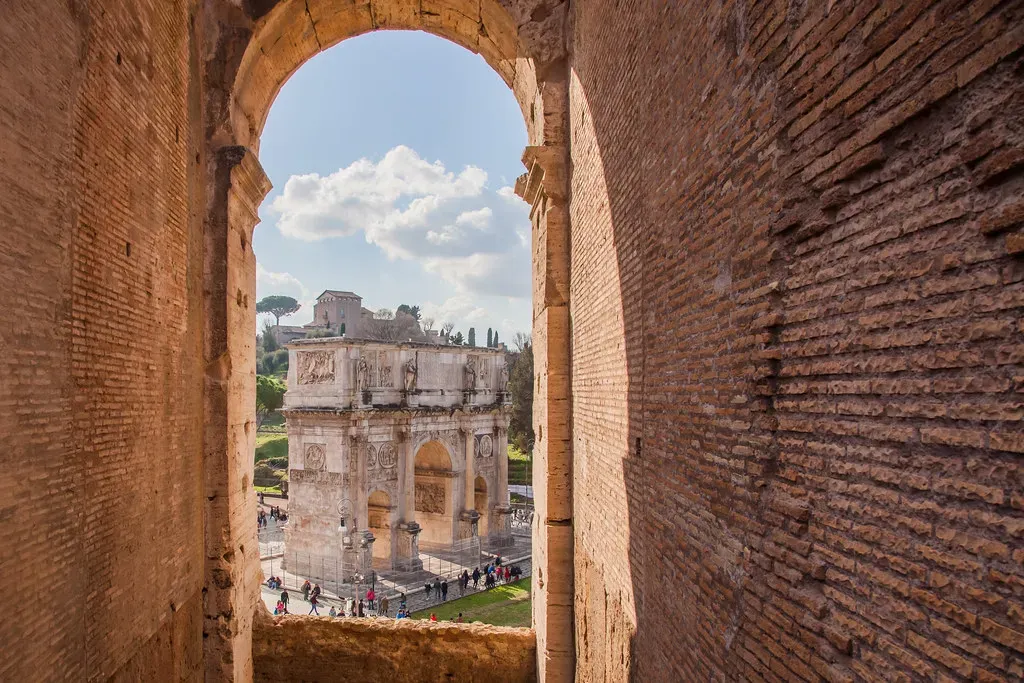
The Colosseum saw some four centuries of active use, until the struggles of the Western Roman Empire and the gradual change in public tastes put an end to gladiatorial combats and other large public entertainments by the 6th century A.D., and even by that time, the arena had suffered damaged due to natural phenomena such as lightning and earthquakes. Nature and time are relentless judges.
What happened next was almost tragic. During the Middle Ages, the Colosseum was used as a church, then as a fortress by two prominent Roman families, and it was damaged by lightning and earthquakes and, even more severely, by vandalism and pollution, with all the marble seats and decorative materials disappearing as the site was treated as little more than a quarry for more than 1,000 years.
Imagine this magnificent structure reduced to a mere source of building materials. Its stones were used to make the steps of St Peter’s Basilica and innumerable churches of the Baroque era’s building boom. It’s almost ironic that pieces of the Colosseum now form parts of Rome’s most sacred Christian sites.
Modern Restoration: Saving History for Tomorrow
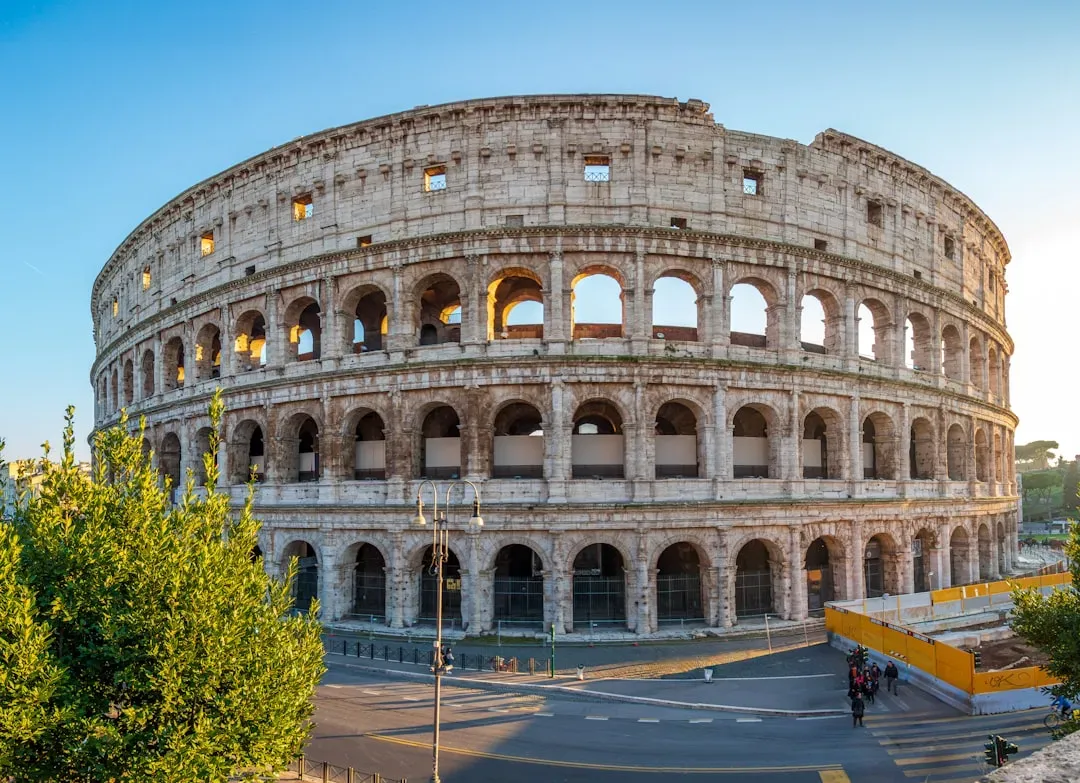
Preservation of the Colosseum began in earnest in the 19th century, with notable efforts led by Pius VIII, and a restoration project was undertaken in the 1990s. Thank goodness attitudes eventually shifted from exploitation to preservation. From 2013-2021, the Colosseum underwent a two-phase $30 million restoration project, with the restoration of the external façade completed in 2016, and the second phase initiated in 2018 focused on the Colosseum’s hypogea.
The extensive restoration effort employed a diverse team comprising archaeologists, structural engineers, specialized designers, conservators, and dedicated technicians, and throughout this period, the Colosseum continued to welcome visitors, with approximately six million tourists annually enjoying access even amid ongoing conservation efforts. Keeping the monument open while restoring it required careful balancing.
The Colosseum is cleaned and conserved using a variety of techniques, including dry and wet cleaning, laser cleaning, and chemical cleaning, with the goal of removing dirt, grime, and other pollutants that can damage the structure over time. Modern technology meets ancient stone, preserving what our ancestors built for future generations yet to come.
Living Legacy: The Colosseum Today
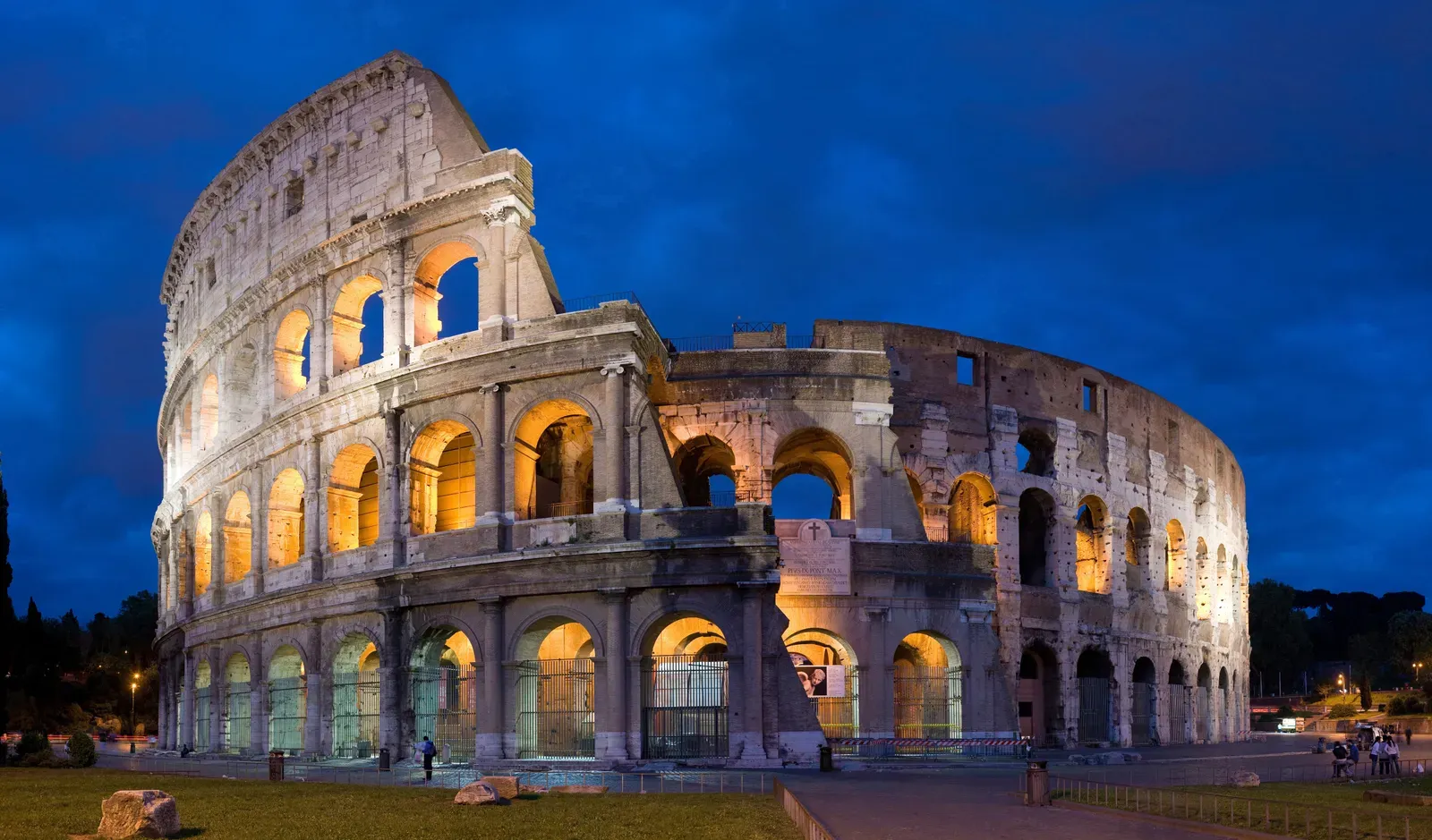
It has long been one of Rome’s major tourist attractions, receiving close to seven million visitors annually. That’s more visitors than many cities have permanent residents. Today, the Colosseum stands as a UNESCO World Heritage Site, visited by over 7 million visitors each year, a testament to the enduring power of human creativity and the enduring legacy of Ancient Rome.
What makes the Colosseum truly special isn’t just its age or architectural sophistication. It’s how it bridges past and present, reminding us that human beings have always sought spectacle, community, and meaning through shared experiences. The Romans built bigger and bloodier than we’d find acceptable today, yet their engineering solutions and architectural innovations continue influencing modern stadium design.
The Colosseum survived because enough people across generations believed it mattered. From medieval families repurposing it as a fortress to modern conservators cleaning each stone with laser precision, the monument endures through collective commitment to memory. Walking through those ancient archways today connects us directly to ancestors who lived utterly different lives under the same Roman sky.
So what will you think about when you finally stand before those weathered stones? Will you hear the ghosts of ancient crowds, or simply marvel at human ingenuity? Either way, the Colosseum continues doing what it has done for two thousand years: commanding attention, inspiring awe, and reminding us that truly great achievements outlast empires. What would the Romans think if they could see their arena still standing, still captivating minds, still proving that some monuments really are eternal?
