
For decades, the intelligence hierarchy felt settled: primates at the top, everyone else scrambling far below. We built entire fields of study around the idea that big, wrinkled mammalian brains were the only architecture capable of real thought – planning, reasoning, deception, self-control. Then scientists started paying closer attention to crows, and the whole ranking started to wobble.
What they found wasn’t a fluke or a party trick. Controlled lab experiments – the kind designed specifically for primates – kept producing the same uncomfortable result: crows were keeping up. In some tests, they were winning. The evidence spans tool-building, memory, future planning, face recognition, and abstract reasoning, and it forces a genuinely unsettling question: what if we’ve been wrong about intelligence this whole time?
#8 – Working Memory That Matches Monkeys Almost Exactly
This is where the story gets personal for researchers, because working memory tests are among the most primate-specific tools in cognitive science. They were designed with monkey brains in mind. So when scientists ran carrion crows through the exact same visual working memory tasks used on monkeys, nobody was expecting a tie – but that’s what they got.
Crows held roughly four items in working memory at a time, the same ceiling clocked by their primate counterparts. Even more surprising, they showed independent processing across visual fields – a feature scientists had long filed under “primate only.” These are birds whose lineage split from ours hundreds of millions of years ago, with brains structured nothing like a mammal’s. And they matched the monkeys anyway. That’s not a coincidence. That’s convergent evolution doing something extraordinary.
Fast Facts
- Carrion crows were tested on the exact same working memory paradigm used on rhesus monkeys – same design, same rules.
- Both species topped out at ~4 items held simultaneously in visual working memory.
- Both crows and monkeys showed largely independent capacity across visual hemifields – a hallmark of high-level cognition.
- Birds and mammals have been on separate evolutionary paths for roughly 320 million years, yet the result was identical.
- The research, published in Scientific Reports, concluded this is a clear example of convergent evolution of higher cognitive abilities.
#7 – They Build Compound Tools. Like Apes Do.
Tool use alone isn’t rare in the animal kingdom. Otters use rocks. Dolphins use sponges. But building a tool – taking multiple non-functional parts and assembling them into something that works – that was supposed to be the exclusive territory of humans and great apes. Then New Caledonian crows walked into a lab and started doing it without being shown how.
In controlled experiments, these birds combined sticks and other objects into functional implements on the spot, improvising solutions to problems they’d never encountered. No demonstration. No template. Just problem, materials, and a crow deciding what to build. Wild populations show the same behavior, and there’s evidence they refine techniques over time by watching each other. The researchers who first documented this had to run the tests multiple times. They kept expecting the birds to fail. They didn’t.
“The results corroborate that these crows possess highly flexible abilities that allow them to solve novel problems rapidly.”
Alex Kacelnik, Professor of Behavioural Ecology, University of Oxford
#6 – Planning for the Future, Not Just the Present
One of the sharpest lines between human-level cognition and animal instinct has always been mental time travel – the ability to picture a future state and act on it now. It requires holding an imagined scenario in mind while ignoring every immediate distraction around you. Scientists assumed this was a primate privilege. Crows have other ideas.
New Caledonian crows select and cache specific tools they’ll need for upcoming tasks, even when there’s no immediate reward on offer. They pass up easier options in the present to secure better outcomes later. Studies confirm this isn’t blind hoarding – it’s context-specific preparation that mirrors what apes do in comparable experiments. The crow, sitting there with a stick it won’t use for hours, is holding a mental image of a future it hasn’t lived yet. That’s a deeply strange thing to sit with.
#5 – A Walnut-Sized Brain That Punches Like a Primate
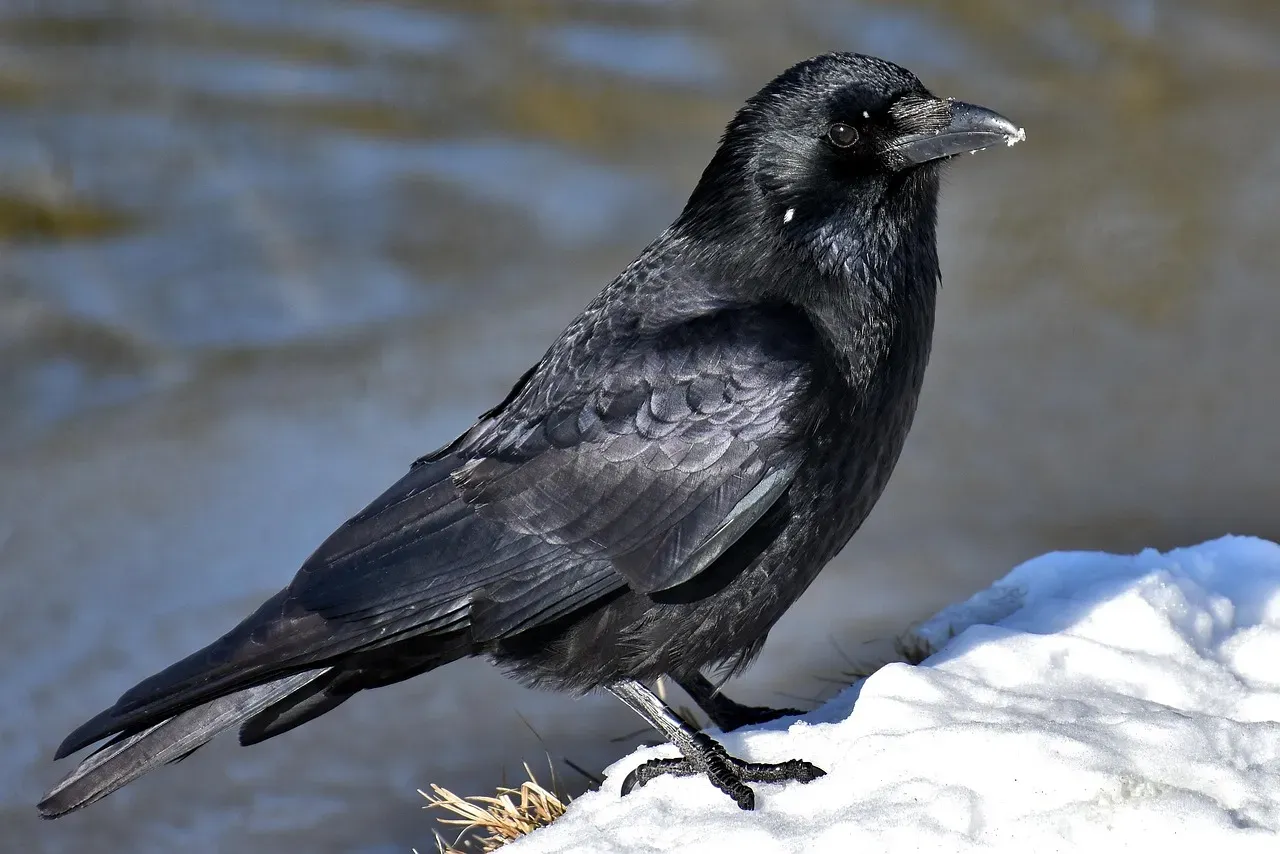
The obvious objection to all of this is size. Surely a crow’s tiny brain can’t genuinely compare to the sprawling neural architecture of a chimpanzee or macaque. And structurally, that’s true – crows don’t have a layered neocortex. But it turns out the neocortex isn’t the only way to build an intelligent brain. Evolution found a shortcut.
Crow brains pack neurons with extraordinary density, particularly in a region called the nidopallium caudolaterale, which functions similarly to the mammalian prefrontal cortex in coordinating complex decisions. When researchers adjust for body mass, corvid brain-to-body ratios approach those of great apes. They’re not working with less – they’re working with a different design that arrives at comparable performance through sheer efficiency. It’s the cognitive equivalent of a compact engine outrunning something three times its size.
At a Glance: Crow Brain vs. Primate Brain
- Brain-to-body ratio: Corvids match chimpanzees on encephalization – despite weighing far less overall.
- Key structure: The crow’s nidopallium caudolaterale (NCL) acts as a functional analog to the mammalian prefrontal cortex.
- Neuron density: Carrion crows have approximately 9× more nidopallial neurons than pigeons or chickens.
- Processing power: The corvid brain affords roughly twice as many neurons as a primate brain of equal mass.
- Design difference: No layered neocortex – but the connectivity achieves comparable executive function through a completely different architecture.
#4 – Abstract Reasoning That Stopped Researchers Cold
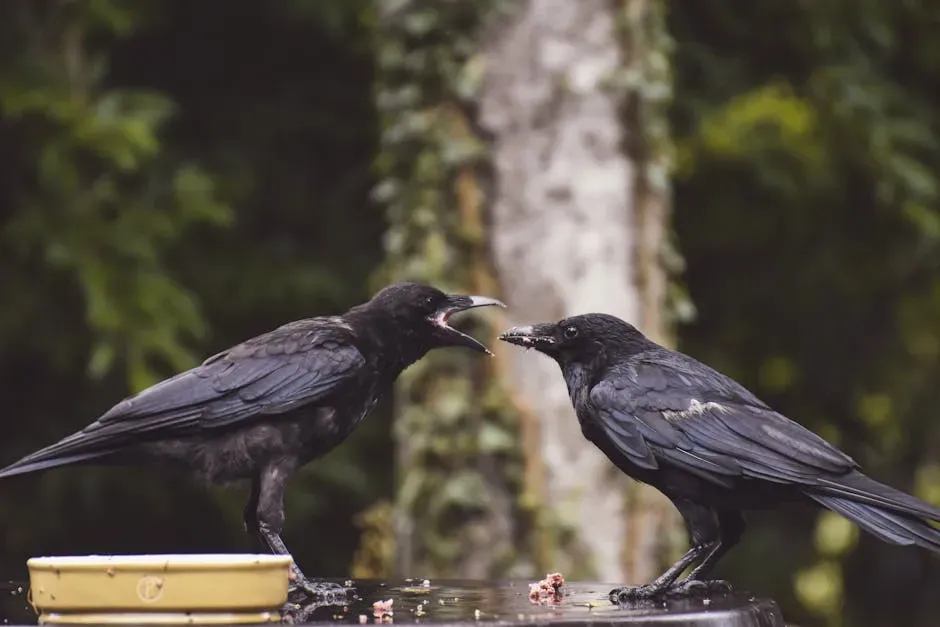
Understanding “sameness” and “difference” as abstract concepts – not just reacting to specific objects, but grasping the relationship between them – sits near the top of the primate cognitive résumé. It requires holding a rule in mind and applying it flexibly to things you’ve never seen before. Scientists weren’t looking for this in crows. They found it anyway.
Russian research teams documented crows spontaneously applying relational rules in controlled settings, without the extensive shaping and training that primate studies typically require. The birds weren’t just learning patterns – they were demonstrating understanding of the underlying logic. One researcher described the result as “deeply unexpected.” When animals that weren’t supposed to be capable of conceptual thought start showing conceptual thought, it doesn’t just change the data. It changes the question.
#3 – They Know Your Face. And They Talk About You.
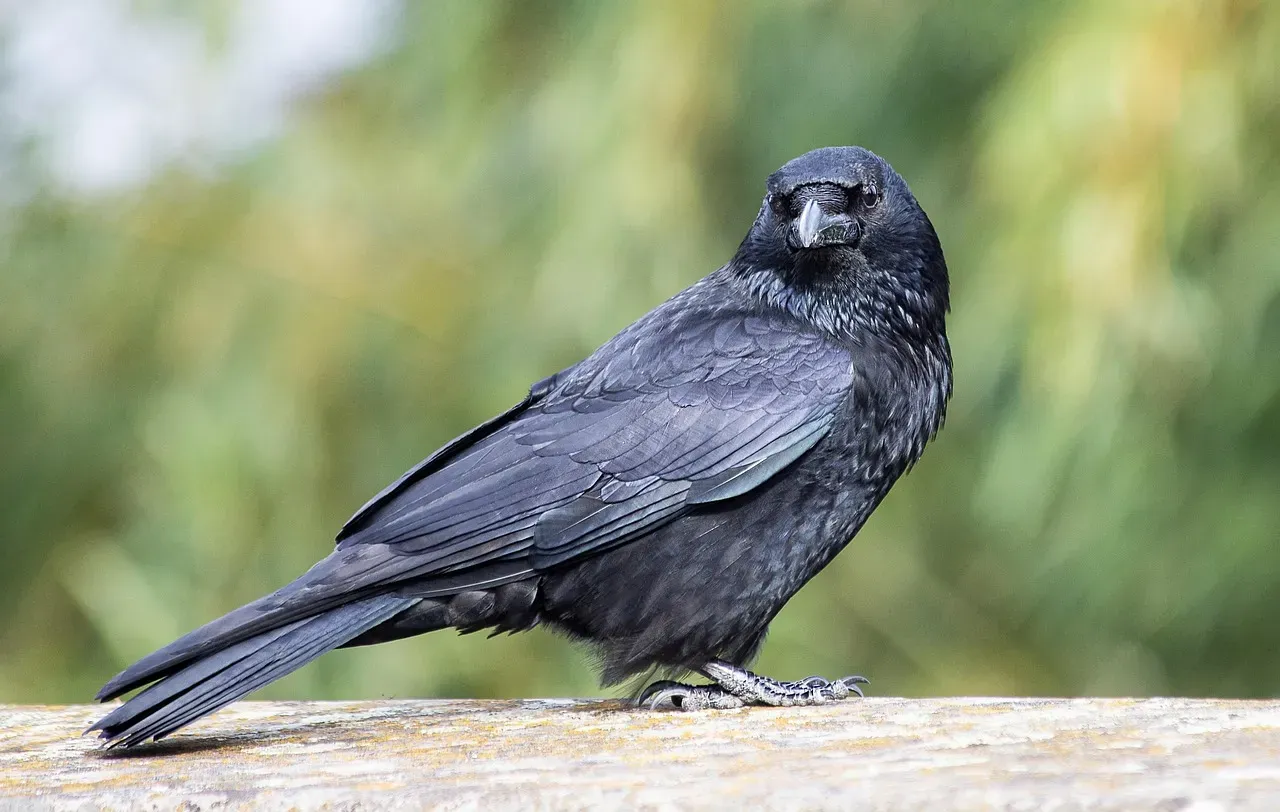
Crows don’t just recognize individual human faces – they remember them for years and hold grudges with a consistency that has genuinely unnerved researchers who’ve tested it. In famous experiments at the University of Washington, crows that were caught and banded by people wearing specific masks continued to scold and mob those mask-wearers long afterward, even in different locations, even as the flock expanded with birds that had never encountered the original threat.
The social layer beneath this is what really earns its place on this list. Crows pass information about dangerous individuals to other members of their group through specific alarm calls and behavior – a form of cultural transmission that mirrors what some monkey species do. They also deceive competitors by pretending to cache food when being watched, then moving the real cache when the coast is clear. That’s not instinct. That’s theory of mind. That’s understanding what another individual can and cannot see – and exploiting it.
Worth Knowing
- Crows can remember specific human faces for years and pass that information to other flock members who were never present.
- In 2020, a landmark study confirmed carrion crows possess sensory consciousness – subjective experience previously thought limited to humans and primates.
- In 2024, researchers in Germany documented crows counting out loud, using vocalizations to correspond with numerical values.
- Crows perform “false caching” – pretending to hide food while being watched, then relocating it privately. This requires modeling another animal’s perspective.
- Statistical inference abilities in crows have previously only been matched by great apes and kea parrots among non-human species.
“The more we study crows, the more we realize we’re dealing with a different kind of mind – not lesser, just different.”
John Marzluff, wildlife biologist, University of Washington
#2 – Self-Control Strong Enough to Rival Great Apes
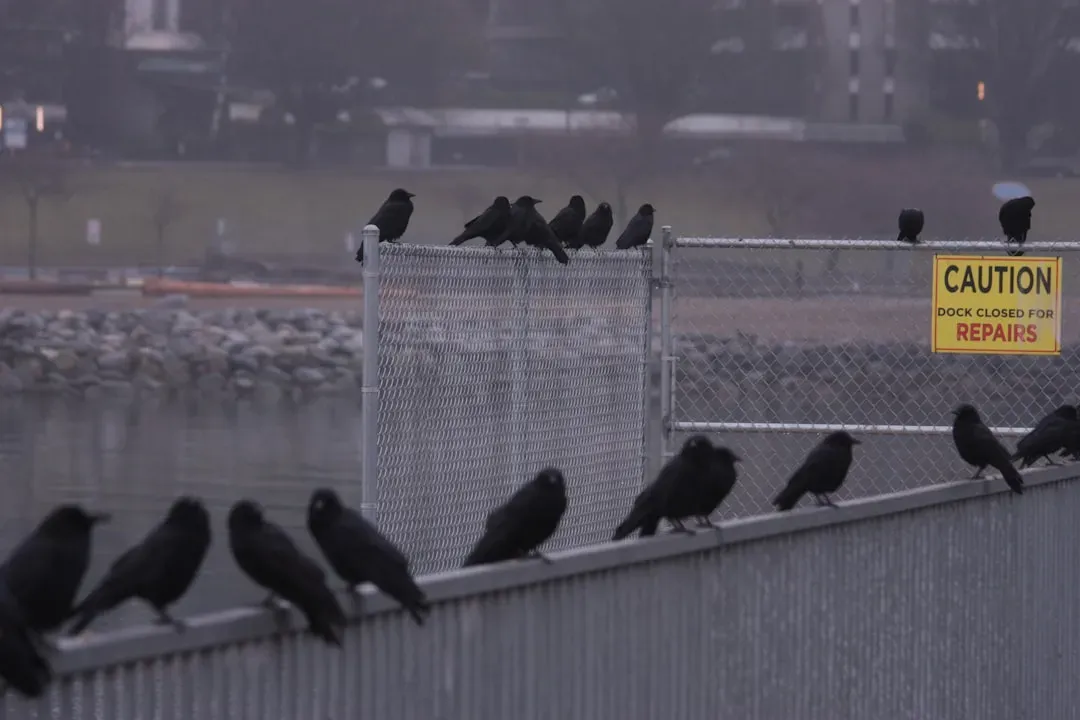
Delayed gratification is the cognitive skill that separates impulsive behavior from strategic thinking. It requires suppressing an immediate urge – the impulse to grab the food right in front of you – while holding a more valuable future outcome in mind. It’s hard for humans. It’s hard for apes. Scientists assumed it would be essentially impossible for birds.
Crows in self-control experiments consistently forego immediate food rewards in exchange for tools or tokens that unlock larger payoffs later. Their performance in these paradigms lands in the same range as great apes – not below, not even close to below. In the right conditions, some corvid results exceed what certain primate species manage. The practical implication is real: self-control in variable, unpredictable environments is a survival advantage, and crows have spent millions of years in exactly those environments. They didn’t develop this by accident.
#1 – Convergent Evolution Just Rewrote the Intelligence Playbook
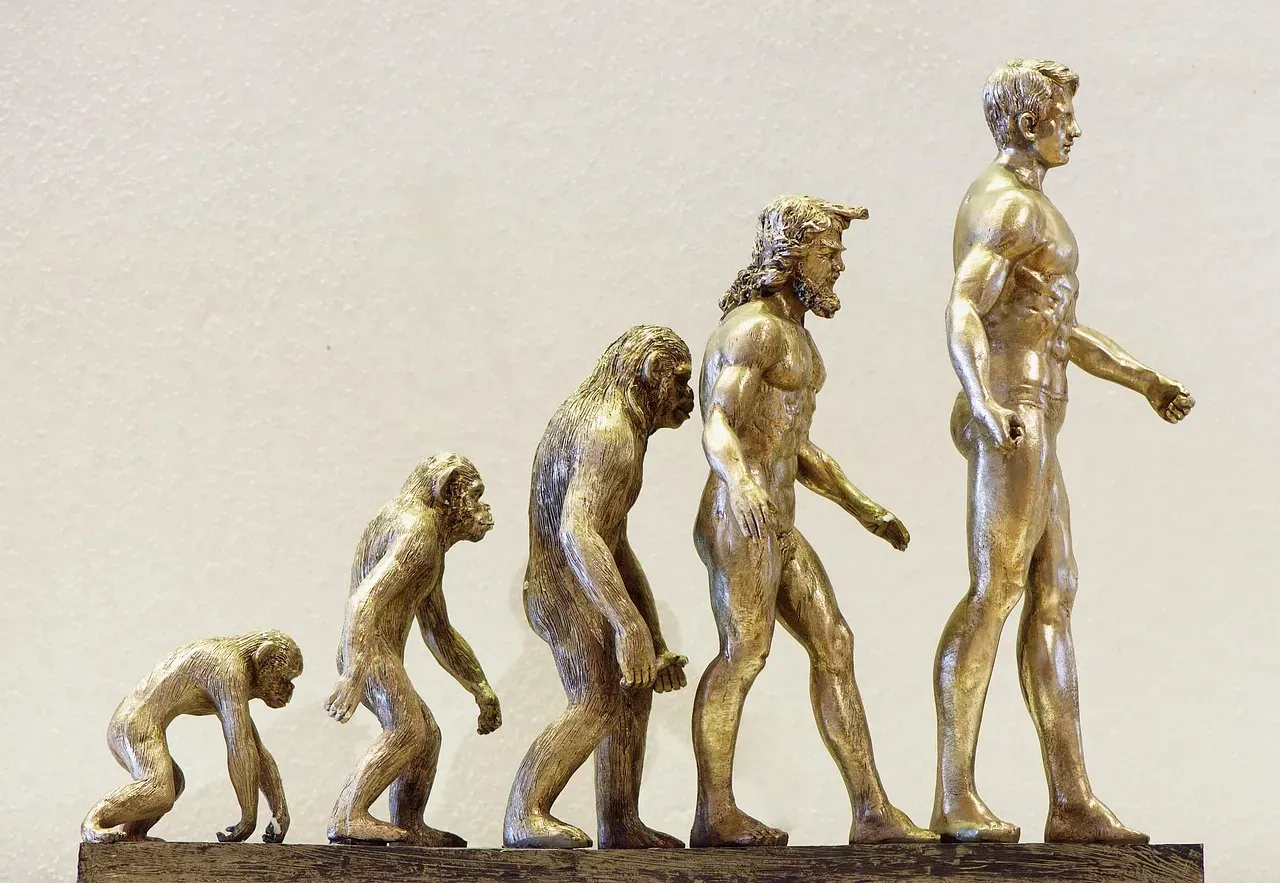
Here’s the thing that makes all of this more than a collection of impressive party facts: none of it happened because crows share ancestry with primates. Birds and mammals split off from a common ancestor roughly 320 million years ago. Everything that crows can do – tool-building, planning, abstract reasoning, social deception, self-control – evolved completely independently, through a completely different brain structure, under completely different evolutionary pressures. That’s the finding that genuinely disturbs the old hierarchy.
Convergent evolution means that intelligence isn’t a single primate invention that trickled outward. It means complex cognition is a solution that life keeps discovering on its own, in different bodies, in different epochs, with different hardware. Crows didn’t climb toward primate-level thinking. They arrived there from the opposite direction. And that means the question scientists are really grappling with now isn’t “how smart are crows?” – it’s “how many other minds are out there that we’ve already decided aren’t worth testing?”
Quick Compare: Where Crows Stand Against Primates
- Working memory capacity: Crows ≈ Rhesus monkeys (~4 items) ✔
- Compound tool construction: Crows = Captive great apes (unique outside humans & apes) ✔
- Delayed gratification: Carrion crows & ravens perform comparably to primates in exchange tasks ✔
- Statistical inference: Crows match great apes; exceed most other primates ✔
- Sensory consciousness: Confirmed in carrion crows (2020) – previously thought primate-exclusive ✔
- Brain-to-body ratio: Corvids equal chimpanzees on encephalization index ✔
The Conclusion – And Why This Should Bother Us a Little
The honest takeaway from all of this isn’t simply “crows are surprisingly smart” – it’s that we built a cognitive hierarchy based on brain architecture we recognized, and then called everything else inferior by default. Crows didn’t fit the blueprint, so we assumed they couldn’t match the output. The experiments say otherwise, repeatedly, across labs on multiple continents.
Not every crow species clears every primate benchmark. The claim of flat-out superiority is still an overreach. But in compound tool construction, working memory, future planning, abstract reasoning, and self-control, the gap that was supposed to separate birds from primates has collapsed to something embarrassingly thin. The uncomfortable opinion worth sitting with is this: we probably owe a serious scientific debt to every species we dismissed before we actually bothered to ask the right questions. The crows, for their part, have been watching us figure this out – and almost certainly judging.
