

The African continent is home to two magnificent rhinoceros species that, despite sharing similar habitats and being equally threatened with extinction, differ in remarkable ways. The white rhino and black rhino represent fascinating examples of how evolution shapes species to fill distinct ecological niches. Despite what their names might suggest, color isn’t actually what distinguishes these impressive megaherbivores from one another. Instead, their differences lie in their physical characteristics, behaviors, feeding habits, and population status. Understanding these distinctions not only satisfies our curiosity about these prehistoric-looking creatures but also helps inform conservation efforts to protect these endangered species for generations to come.
A Case of Misnaming: The Color Misconception

Perhaps the most ironic aspect of white and black rhinos is that neither species actually matches its name. Both species are actually grayish in color, with minimal differences in their skin tone. The term “white” in white rhino is believed to stem from a misinterpretation of the Dutch word “wijd,” meaning “wide,” which refers to the animal’s broad, square lip. Over time, “wijd” was mistranslated to “white.” In response to this naming, the other African rhino species was dubbed “black” simply to distinguish it, despite having virtually the same gray coloration as its counterpart. This linguistic confusion has persisted for centuries, creating one of zoology’s most famous misnomers. The subtle differences in their skin appearance come primarily from their wallowing habits and the soil of their respective habitats rather than actual biological pigmentation.
Size and Physical Build: The Giants Compared

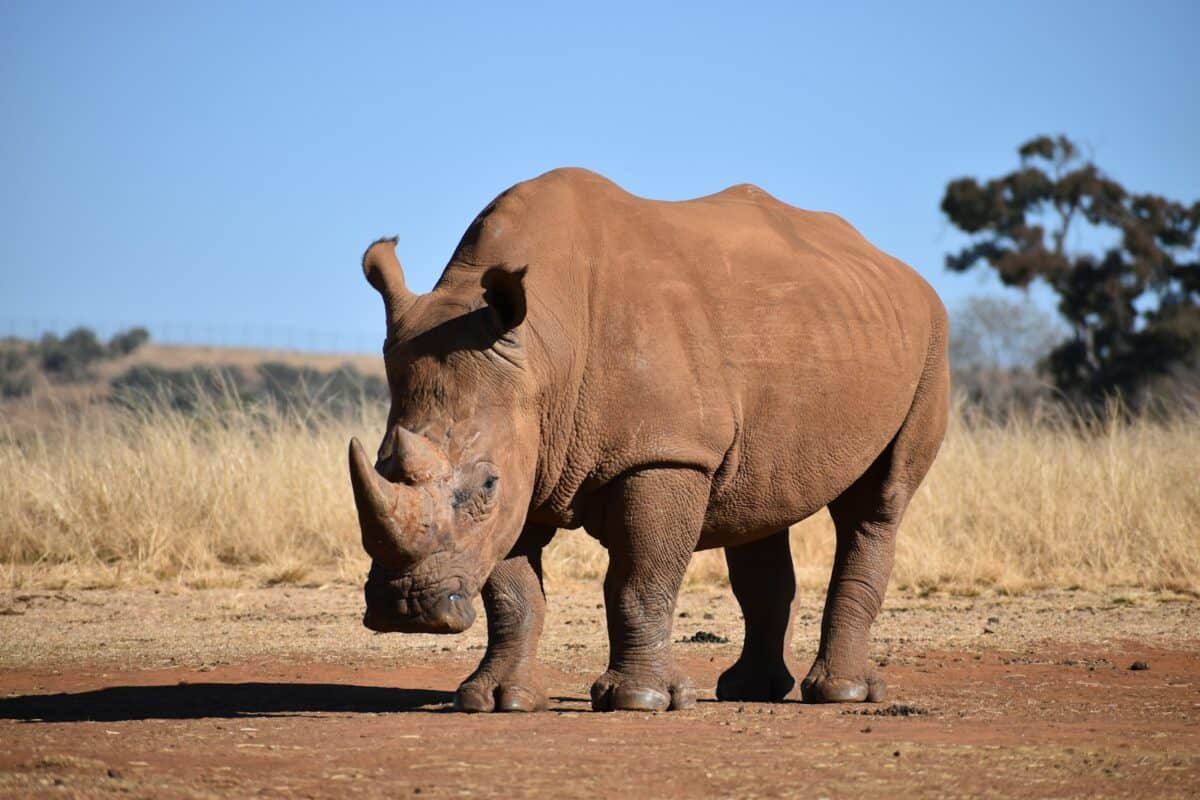
White rhinos hold the title of second-largest land mammals after elephants, with adult males weighing between 4,000-6,000 pounds (1,800-2,700 kg) and standing approximately 6 feet (1.8 meters) tall at the shoulder. Their bodies can measure up to 13 feet (4 meters) in length. Black rhinos, while still impressively large, are noticeably smaller, typically weighing 1,760-3,080 pounds (800-1,400 kg) and standing about 5 feet (1.5 meters) tall. The white rhino also tends to have a longer skull and a more pronounced hump on its neck made of muscle and fat, which supports its massive head. The physical difference in size creates a stark contrast when the species are viewed side by side, with the white rhino presenting a more imposing silhouette on the African savanna.
Mouth Structure: Specialized for Different Diets
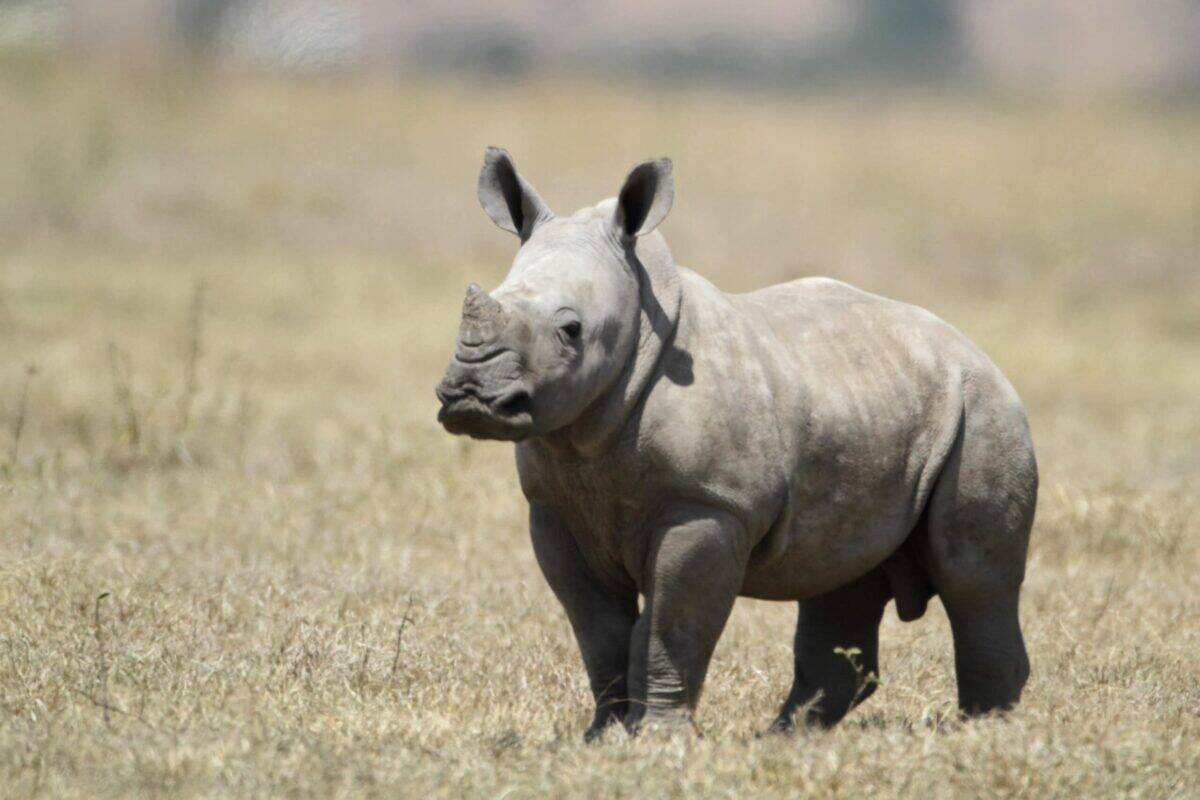
The most definitive physical difference between these species lies in their mouth structure, which directly relates to their feeding habits. White rhinos possess a wide, square-shaped upper lip, perfect for grazing on grasses. This flat lip allows them to efficiently crop short grasses close to the ground, much like a lawn mower. Black rhinos, by contrast, have a hooked, prehensile upper lip that acts almost like a finger, enabling them to grasp and pluck leaves, buds, and branches from shrubs and trees. This pointed lip is remarkably dexterous and can manipulate vegetation with surprising precision. The distinct mouth shapes provide immediate visual identification for observers and represent a textbook example of evolutionary adaptation to different food sources within the same general habitat.
Feeding Habits: Grazers vs. Browsers

The specialized mouth structures of these rhinos dictate their distinct feeding behaviors. White rhinos are dedicated grazers, spending their days with heads lowered to the ground, consuming large quantities of grasses. Their digestive systems are adapted to process this fibrous diet, which is typically lower in nutrients but abundantly available across the savanna landscapes they inhabit. Black rhinos, as browsers, feed primarily on leaves, branches, and fruits from bushes and trees. They’re selective feeders, often traveling between preferred plant species and consuming a more varied diet than their grass-eating counterparts. These different feeding strategies reduce competition between the species when they share territories, allowing them to coexist without directly competing for the same food resources—an elegant example of what ecologists call “niche partitioning.”
Habitat Preferences: Where They Roam

While both rhino species inhabit African savannas and grasslands, their specific habitat preferences differ based on their feeding requirements. White rhinos favor open grasslands and plains with short grasses and scattered trees, where their grazing lifestyle can be most efficiently maintained. They typically require access to water and mud wallows for temperature regulation and skin protection. Black rhinos are more adaptable to varying habitats but generally prefer areas with dense thickets, woodlands, and savanna with substantial bush cover. They can thrive in more arid environments than white rhinos and are found in a wider range of habitats, from desert margins to mountain forests. Historically, black rhinos had a broader distribution across sub-Saharan Africa, while white rhinos were more concentrated in southern regions. These distribution patterns have been significantly altered by human encroachment and poaching, which have fragmented and reduced the natural ranges of both species.
Social Behavior: Solitary vs. Social

The social structures of these rhino species differ considerably. White rhinos demonstrate more social behavior, with females often forming small groups called “crashes” consisting of 3-5 individuals, typically a cow and her calves. Adult males (bulls) establish territories of 1-3 square miles that they mark with dung piles and patrol regularly, challenging intruding males but allowing females to move through. Black rhinos, by contrast, are primarily solitary animals, with adults of both sexes preferring to live alone except during mating or when a mother is raising a calf. They maintain home ranges rather than defended territories, though these ranges often overlap, particularly around resources like water holes. Male black rhinos tend to be more aggressive toward one another than white rhinos, and their confrontations can sometimes result in serious injuries from their formidable horns. These behavioral differences reflect the species’ different evolutionary adaptations and ecological roles.
Horn Configuration: Dual Weapons

Both rhino species possess two horns on their snouts, but there are subtle differences in their typical horn configurations. The white rhino’s front horn averages 35-40 inches (90-100 cm) in length, while the second horn is smaller and less pronounced. Black rhinos tend to have a more prominent front horn, typically measuring 20-32 inches (50-80 cm), with their second horn often being more developed than that of white rhinos. The shape also differs slightly, with black rhinos sometimes having more curved horns compared to the straighter horns of white rhinos. These differences, while not absolute rules, can help in identification. Importantly, the horns of both species are not true horns in the biological sense—they’re composed of keratin (the same protein found in human fingernails) rather than bone, and grow throughout the animal’s life. Tragically, it’s these horns that have made rhinos targets for poachers, as they’re valued in traditional medicine markets despite having no proven medicinal properties.
Population Status: A Tale of Conservation

The population trends of the two rhino species have followed different trajectories in recent decades. White rhinos have had a relative conservation success story, rebounding from fewer than 50 individuals in the early 20th century to approximately 18,000 today. However, this figure primarily represents southern white rhinos, as the northern white rhino subspecies is functionally extinct with only two females remaining in the world. Black rhinos have fared worse overall, declining from approximately 65,000 in the 1970s to around 5,500 today due to intensive poaching. Both species remain endangered, with the black rhino classified as critically endangered by the International Union for Conservation of Nature (IUCN). The contrasting population trends reflect different conservation approaches, habitat availability, and poaching pressures across their ranges. The survival of both species continues to depend on intensive anti-poaching efforts, habitat preservation, and carefully managed breeding programs.
Subspecies Variations: Diversity Within Species

Both rhino species have developed distinct subspecies adapted to different regions of Africa. The white rhino has two recognized subspecies: the southern white rhino (Ceratotherium simum simum), which constitutes the vast majority of remaining white rhinos, and the northern white rhino (Ceratotherium simum cottoni), now functionally extinct in the wild. Black rhinos historically had four subspecies: eastern (Diceros bicornis michaeli), south-western (Diceros bicornis bicornis), south-central (Diceros bicornis minor), and western (Diceros bicornis longipes)—with the western black rhino declared extinct in 2011. Each subspecies developed subtle adaptations to their specific environmental conditions over thousands of years, including differences in size, horn shape, and behavioral traits. These evolutionary adaptations highlight the remarkable ability of these ancient animals to specialize for different ecological niches across the African continent, though human activity has severely disrupted these natural patterns of diversification.
Temperament and Behavior Toward Humans

The rhino species differ noticeably in their typical responses to human presence. Black rhinos have earned a reputation for being more aggressive and unpredictable, with a tendency to charge when they feel threatened. Their poor eyesight combined with a nervous disposition makes them quick to perceive threats, and they can reach speeds of up to 35 mph (55 km/h) when charging. White rhinos, while certainly dangerous if provoked, are generally considered more placid and less reactive to human presence. Their grazing behavior keeps them more focused on the ground, and they’re less likely to be startled by distant movements. Wildlife guides often describe white rhinos as more “readable” in their behavior, making their reactions somewhat more predictable. However, it’s crucial to remember that both species are wild animals capable of inflicting serious or fatal injuries when threatened, and their massive size and strength demand respect regardless of species.
Reproduction and Lifespan: The Slow Road to Recovery

The reproductive patterns of rhinos pose challenges for conservation efforts aimed at rebuilding their populations. Both species have similar gestation periods of 15-16 months, one of the longest among land mammals. Females typically give birth to a single calf every 2.5-4 years, meaning that population growth is inherently slow. Calves stay with their mothers for 2-3 years, learning vital survival skills before independence. White rhinos reach sexual maturity slightly earlier than black rhinos, with females becoming reproductively active around 6-7 years of age compared to 7-9 years for black rhinos. Both species can live 35-50 years in the wild under optimal conditions. These slow reproductive rates mean that losses from poaching have devastating long-term impacts on population recovery, as each breeding female lost represents years of potential population growth eliminated. Conservation breeding programs must account for these biological limitations when developing strategies to maintain genetic diversity and increase population numbers.
Conservation Challenges: Different Species, Shared Threats
Despite their differences, both rhino species face similar existential threats in the modern world. Poaching for horns remains the primary threat, driven by demand from traditional Asian medicine markets and status symbols, particularly in Vietnam and China, where rhino horn can fetch prices exceeding gold by weight. Habitat loss and fragmentation present additional challenges, as human population growth converts natural landscapes to agricultural and urban uses. Climate change introduces new pressures, potentially altering the distribution of suitable habitat and food resources. Conservation strategies include armed anti-poaching units, dehorning programs (removing horns humanely to deter poachers), translocation to secure reserves, and international cooperation to reduce demand for rhino products. Innovative approaches such as synthetic horn development and advanced monitoring technologies offer some hope, but the battle to save these iconic species requires sustained global commitment and resources. The differences in their ecology and behavior necessitate species-specific conservation approaches while addressing these common threats.
Conclusion: Giants Worth Saving

The distinctions between white and black rhinos represent a fascinating study in evolutionary adaptation, with each species developing specialized traits to exploit different ecological niches within the African landscape. From their distinctive mouth shapes and feeding habits to their social structures and habitat preferences, these differences highlight the remarkable diversity that can evolve even among closely related species. Despite their differences, both rhino species now share a precarious future, threatened by human activities and fighting for survival in an increasingly challenging world. Their conservation is not merely about preserving biological curiosities but about maintaining the ecological integrity of the ecosystems they inhabit and recognizing our responsibility to protect the natural heritage that belongs to all humanity. As we work to secure a future for these magnificent animals, understanding their unique characteristics and needs becomes essential to developing effective conservation strategies that will allow future generations to marvel at these living relics of a prehistoric world.

- The Secret Language of Dolphins Decoded by Researchers - July 20, 2026
- 7 Animals That Can Survive Extreme Environments You Couldn’t - July 20, 2026
- The Longest Snake Ever Found in the U.S. - July 20, 2026