

Every autumn, something quietly extraordinary happens in rivers across the Pacific Northwest, Alaska, Norway, and Canada. Fish that spent years in the open ocean begin moving with uncanny precision back toward the exact mountain streams where they were born. No map. No trail markers. No living guide.
Salmon hatch in a gravel bed in a stream somewhere deep in the wilderness, wiggle up into a water current, and eventually enter an overwhelmingly vast ocean. After years of swimming with whales and avoiding sharks, they travel sometimes thousands of miles back to that same little stream, where they reproduce and die. The sheer audacity of this journey has fascinated scientists for generations. Even now, with modern genomics, acoustic tagging, and satellite tracking at their disposal, researchers will tell you honestly: we still don’t have the full picture.
An Internal GPS Written in Iron and Magnetism
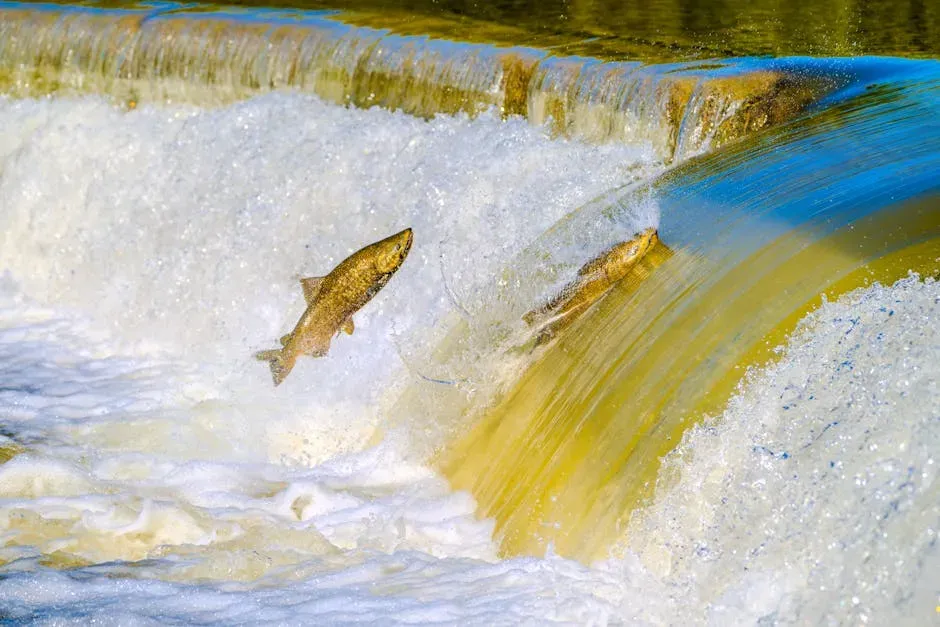
How does a fish the size of your forearm navigate thousands of miles of featureless ocean and arrive at the right river mouth? The answer, scientists increasingly believe, involves the Earth’s own magnetic field.
When salmon are young, the theory goes, they imprint on the pattern of the Earth’s magnetic field at the mouth of their native river. Years later, when the salmon head back home to spawn, they home in on that pattern. It functions less like a compass and more like a coordinate system locked into the fish’s nervous system from the very beginning of its ocean life.
The salmon is developing its magnetoreception. In the ocean, it feeds on fish and krill, ingesting more iron and storing more magnetite, traveling thousands of miles – up to 18 miles a day – over the next few years, guided in the dark waters by its three-dimensional magnetoreception, sensing not only direction but intensity and inclination of the magnetic field.
The ferromagnetic mineral magnetite in the creature’s brain may function as a biological compass which is “set” at the time of entry into the ocean. The information retained is the vertical and horizontal components of the Earth’s magnetic field at that point, and the declination of the horizontal component. Tiny chains of this mineral, located near the nose and along the body’s lateral lines, are thought to respond to changes in field strength and inclination like a finely tuned instrument.
The magnetoreceptor itself is still elusive. Scientists know what the fish is sensing. They still haven’t fully worked out the exact biological machinery doing the sensing. That gap alone has kept researchers busy for decades.
The Role of Smell: A Memory Built in the Water
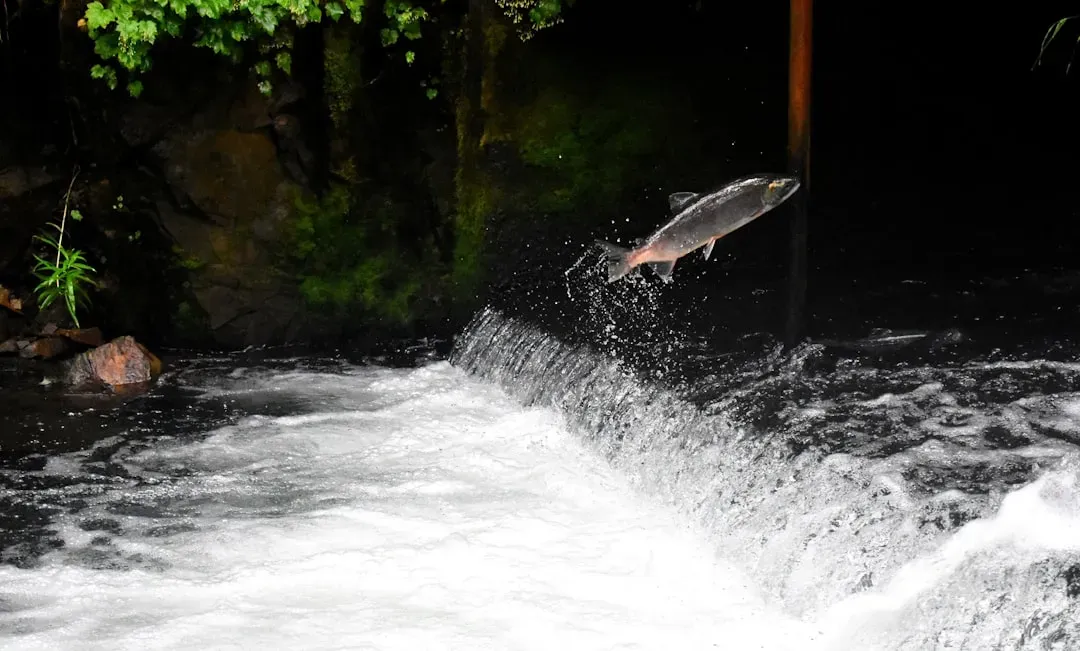
Magnetic navigation gets a fish to the right coastline. Getting it to the right stream requires something else entirely. That something is smell – and salmon’s olfactory abilities are extraordinary by any standard.
When it’s time to return to the home river, magnetoreception is aided by another sense in the nose: smell. The salmon can detect just a few parts per million of its birth river in ocean currents and follow them home. In practice, they can follow a scent trail as faint as just one drop of their home-stream water in 250 gallons of seawater.
It has been known for several decades that the smell of the water is key to salmon detecting their home river. Experiments in the 1950s showed that salmon rendered unable to smell could not distinguish their home stream. Furthermore, when odors were artificially added to some rivers, and the odors were subsequently moved from one river to another, returning salmon could be fooled into returning to the wrong river.
Salmon may follow a magnetic “map” to direct their long-distance migrations, then switch to using chemical cues to home in on a specific stream – similar to the way we may use a GPS system to navigate on long road trips, then switch to following visual landmarks as we get closer to home. It is a two-stage system of remarkable elegance, and it has been refined across thousands of generations.
The Journey Itself: Scale and Survival Against the Odds
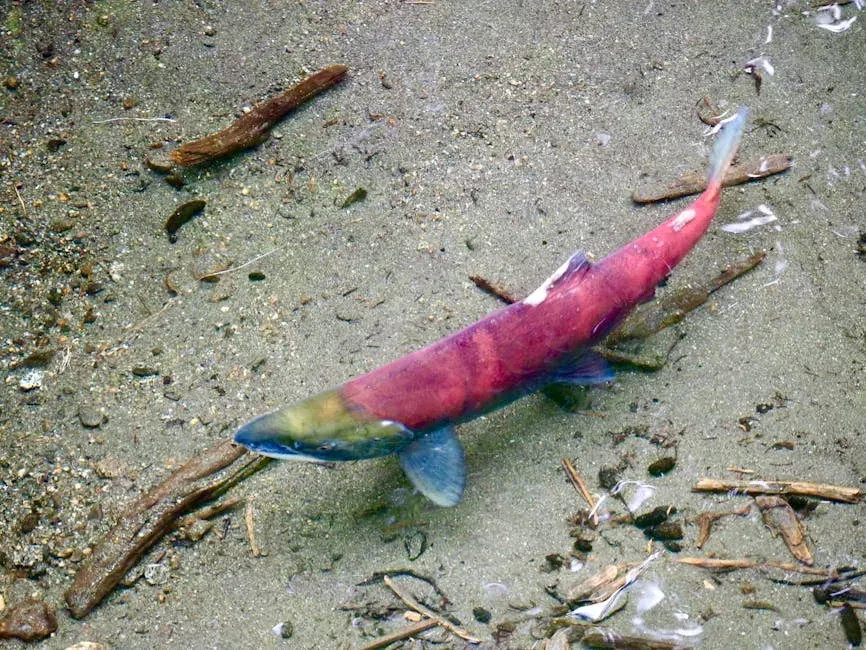
The physical scale of salmon migration is difficult to fully appreciate until you look at the numbers closely. Atlantic salmon spawned in Maine rivers migrate through estuaries, the Gulf of Maine, the Scotian Shelf, the Labrador Sea, and eventually to the coast of Greenland before returning home to spawn. This journey is about 5,000 miles – about the same distance as a round trip between New York City and Los Angeles.
Scientists have long suspected that the fate of salmon migrating into the ocean is sealed during their first year at sea. The fish that grow large enough, fast enough to elude predators and make it through the first winter are the fish that will return to rivers to spawn. Most do not make it that far.
Data from past years has revealed that salmon have an average survival rate of around two percent, which means that very few of the smolts entering the water in any given year will come back to spawn. This brutal attrition is not a sign of failure. It is baked into the biology – offset by enormous numbers of eggs and the outsized ecological rewards delivered by those that do return.
Individuals have been found to migrate further north and east than previously reported, displaying increased diving activity near oceanographic fronts, emphasizing the importance of these regions as feeding areas. Every new tracking study seems to add another layer of complexity to a picture scientists thought they understood.
Salmon as Ecosystem Engineers: The Ocean Comes to the Forest
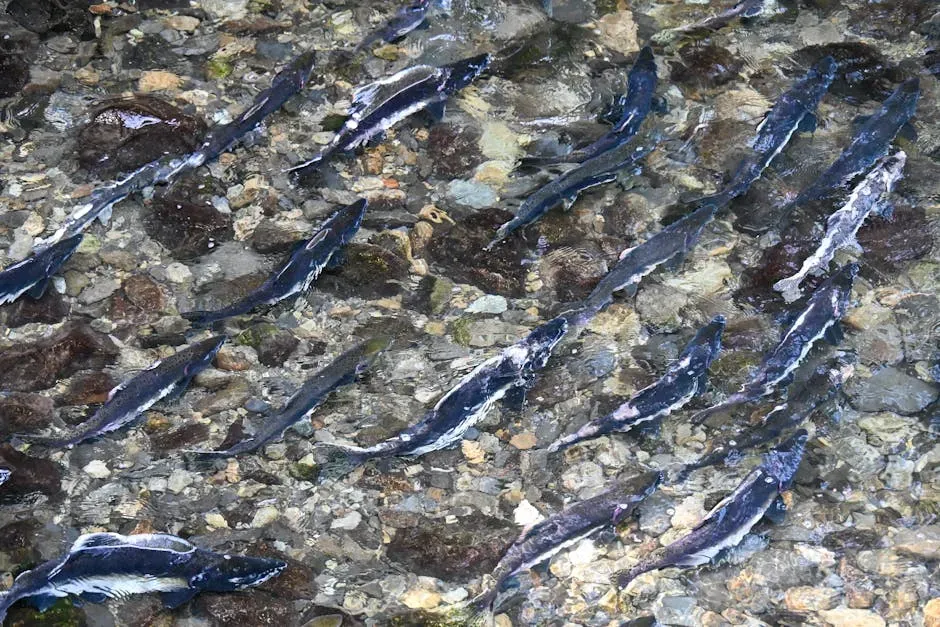
The migration doesn’t just matter to the salmon. It matters to the entire landscape they pass through and die in. The ecological role that returning salmon play is one of the more quietly staggering facts in natural science.
Pacific salmon transport large amounts of marine nutrients to freshwater and forest ecosystems when they migrate from the ocean, spawn, and die. Pacific salmon acquire most of their biomass in the ocean before returning to spawn and die in coastal streams and lakes, thus providing subsidies of marine-derived nitrogen to freshwater and terrestrial ecosystems.
More than 130 animal species, including the orca whale and the grizzly bear, feed on salmon and reap the benefits of the protein and nutrients contained in the fish. Bears carry carcasses into the forest. Eagles drop fragments from above. Wolves, ravens, and insects all take their share. Through each of these pathways, ocean-derived nutrients move steadily into the trees.
According to a 2011 study published in Fisheries, only five to seven percent of historic levels of marine-derived nitrogen and phosphorus are now available to ecosystems in the U.S. Pacific Northwest owing to dramatic salmon population declines following European contact. That loss of nutrient flow reverberates through food webs in ways scientists are still measuring. These myriad effects have contributed to salmon being identified as a keystone species in structuring the ecology of riparian “salmon forests.”
Climate Change and the Uncertain Future of Migration Timing
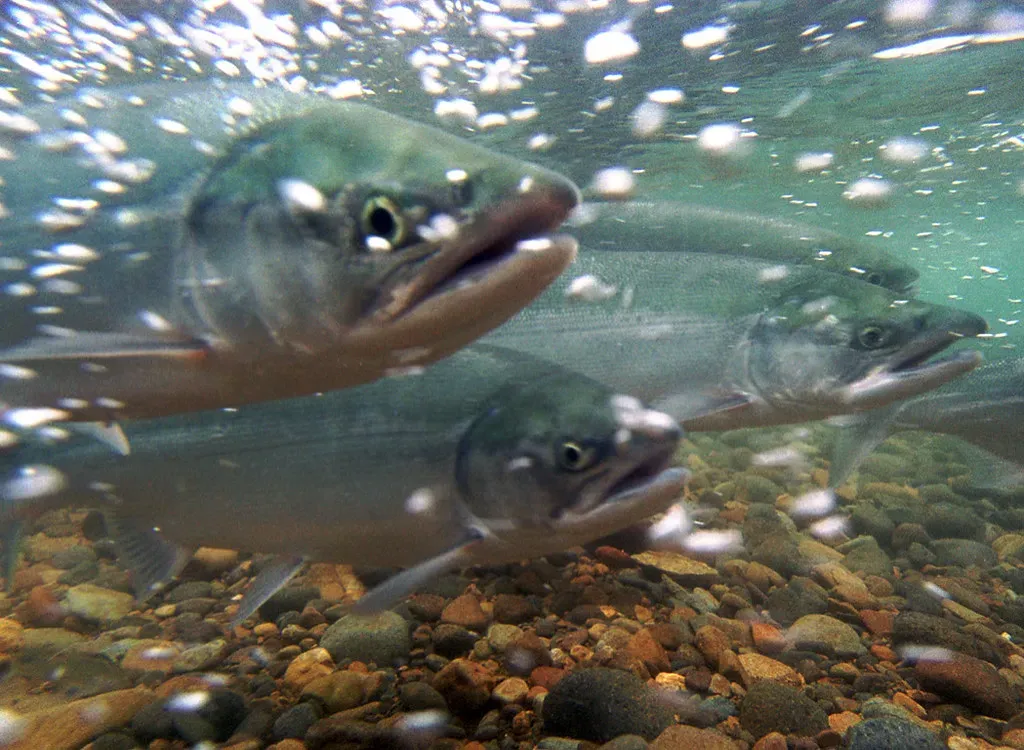
Migration, for salmon, isn’t just about navigation. It’s also about timing. Arriving at the right river at the right moment – when water temperature, flow, and food availability align – determines whether a run succeeds or fails. Climate change is quietly disrupting that timing in ways that are difficult to predict.
A recent study, the largest of its kind, showed unpredictable changes in juvenile salmon migration timing in response to climate change. A new study published in the journal Nature Climate Change found that salmon migration timing is changing in unpredictable ways in response to climate change. Crucially, this unpredictability isn’t uniform. In response to the same level of warming, some populations had earlier migration timing, while others had no change, or even migrated later in the year.
Climate change stresses many species worldwide, but it brings some special challenges for salmon and other anadromous fish because they have to contend with changes in each of the vastly different ecosystems they pass through. A fish that must perform well in cold mountain streams, coastal estuaries, and open ocean all within a single lifetime has very little margin for error when each of those environments shifts.
In recent decades, river communities in Alaska have seen a major decline in the number of young and adult salmon in the water. One study estimated that Chinook salmon populations in the Yukon River, Alaska’s largest, plummeted by more than 57 percent between 2003 and 2010. The consequences extend beyond ecology. When researchers visited Indigenous tribes near the Alaska-Yukon border along the Yukon River, community members told them that they hadn’t been able to fish Chinook in 30 years. The loss of fish means people are relying more on buying food from the store, which is expensive and doesn’t meet their nutritional needs.
Not all causes of low ocean survival are well known. Threats like climate and ocean changes, plus shifts in predator and prey abundance and distribution, appear to affect salmon survival at sea. That sentence, from NOAA Fisheries, captures the honest state of the science: researchers know something is going wrong out in the ocean during the years salmon spend there, but piecing together the exact causes remains an active challenge.
Conclusion: What the Salmon Still Has to Teach Us
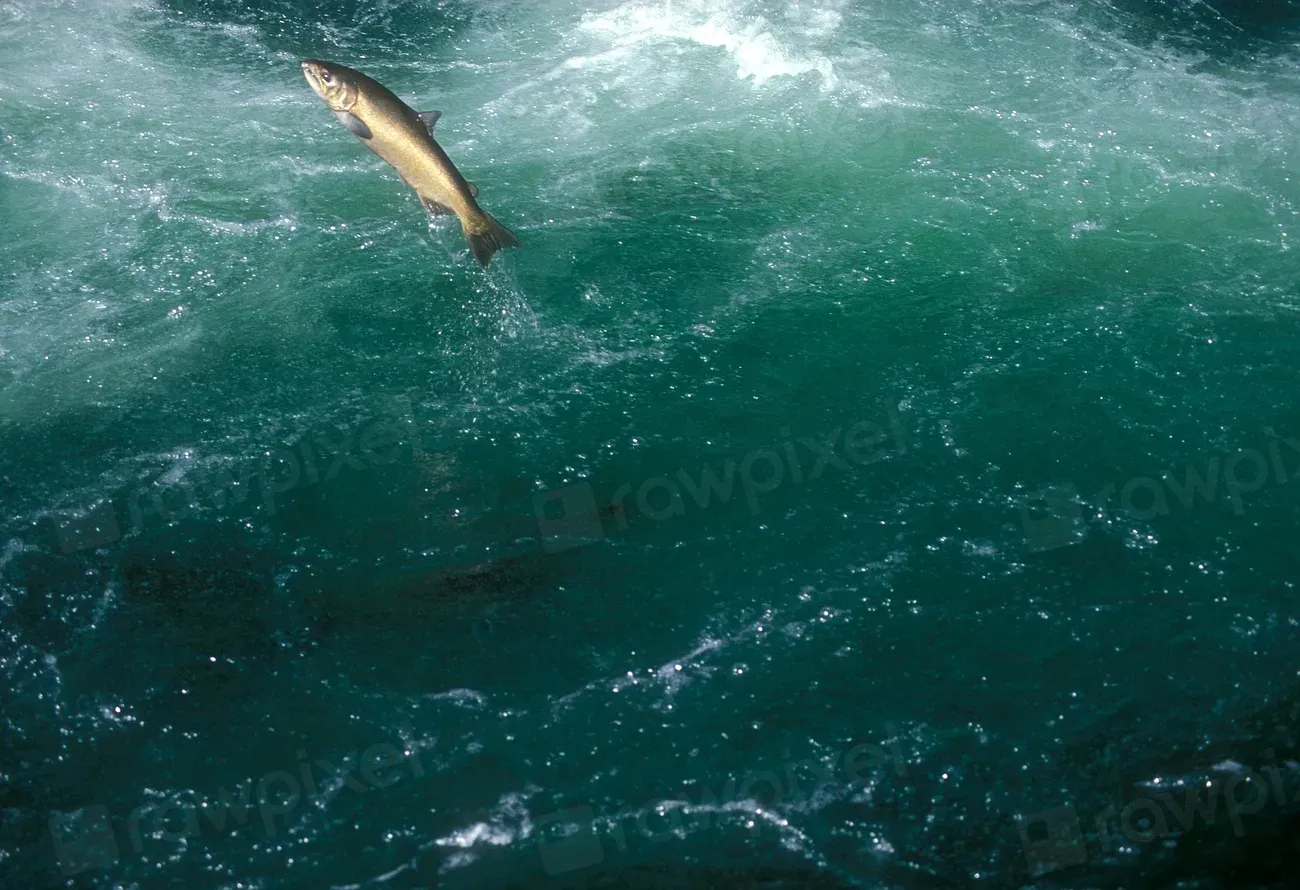
After decades of study, salmon migration remains one of the more genuinely unresolved puzzles in biology. Not because science has failed to make progress – it has, significantly – but because each answer tends to surface two or three new questions. The magnetic map is real. The olfactory precision is documented. The ecological importance is not in doubt. Yet the exact neural machinery of magnetoreception, the full picture of ocean survival, and the precise genetic architecture of migration timing are all still being worked out.
The Atlantic salmon is one of the world’s most studied fish, but detailed knowledge of its ocean distribution and behaviour is limited. That sentence from a peer-reviewed study says something worth sitting with. Intensively studied for generations, and we’re still mapping the basics.
There is something clarifying about that. Salmon don’t travel thousands of miles because it’s easy. They do it because their survival as a species has always depended on it, and the systems that guide them home are older than anything we’ve built. Whether science eventually cracks every remaining detail of how they do it, the migration itself will remain one of the natural world’s most compelling demonstrations of precision, endurance, and ecological purpose.

- Why Wolves Were Reintroduced to Yellowstone - July 15, 2026
- The Resurgence of America’s Wild Horses: A Symbol of Freedom and Hope - July 15, 2026
- 10 Cat Breeds That Tolerate Dogs Surprisingly Well - July 15, 2026