


Jane Goodall revolutionized our understanding of chimpanzees and transformed the field of primatology through her pioneering research that began in 1960. When a young, untrained woman ventured into the forests of Gombe Stream National Park in Tanzania, few could have predicted how profoundly she would change scientific understanding of our closest relatives. Through patient observation and an unorthodox approach that included naming rather than numbering her subjects, Goodall discovered behaviors that shattered existing scientific paradigms. Her work revealed that humans aren’t the only tool-makers, that chimpanzees have complex emotional lives, and that they engage in behaviors previously thought uniquely human. Beyond her scientific contributions, Goodall evolved into one of the world’s most influential conservationists and advocates for animal welfare, inspiring generations of researchers and activists. This article explores the remarkable discoveries that defined her career and their lasting impact on science and conservation.
Early Life and Path to Primatology

Born on April 3, 1934, in London, England, Jane Goodall displayed an affinity for animals from an early age. As a child, she would spend hours observing birds and insects in her garden, and her mother famously did not scold her when, at age four, she hid in a henhouse for hours to witness how hens laid eggs. This early curiosity foreshadowed her future as one of the world’s preeminent animal behaviorists. Without the means to attend university immediately, Goodall worked as a secretary and later as an assistant on a film set in London.
Her breakthrough came in 1957 when a school friend invited her to Kenya. There, she met the renowned anthropologist and paleontologist Dr. Louis Leakey, who hired her as an assistant. Recognizing her patience, meticulous nature, and genuine interest in animals, Leakey eventually proposed something revolutionary: sending Goodall to study chimpanzees in the wild at Gombe Stream Chimpanzee Reserve (now Gombe National Park) in Tanzania. Despite her lack of formal scientific training at the time, Leakey believed her fresh perspective might yield unique insights—a hypothesis that would prove remarkably prescient.
The Gombe Stream Research Center
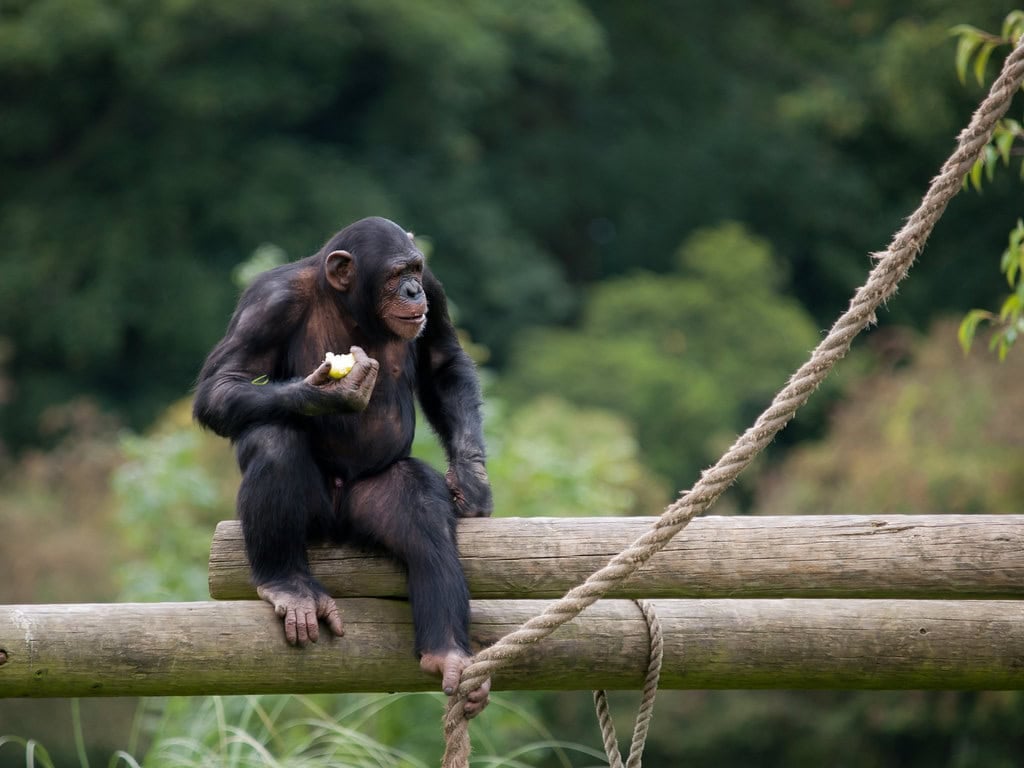
In July 1960, 26-year-old Jane Goodall arrived at Gombe Stream Chimpanzee Reserve accompanied by her mother and an African cook. The conditions were challenging—a small tent served as her initial shelter, and the dense forest made observing the initially elusive chimpanzees difficult. For months, Goodall endured long, often fruitless days as the chimpanzees fled whenever they spotted her. Gradually, through remarkable persistence, she gained their acceptance, establishing what would become the Gombe Stream Research Center—the world’s longest continuous wildlife study.
The research center evolved from humble beginnings into a globally recognized institution that has hosted hundreds of researchers over decades. Goodall’s approach was groundbreaking not only in its scientific methodology but also in its staffing—she prioritized hiring local Tanzanians, creating economic opportunities while building research capacity within the country. The research at Gombe has expanded beyond Goodall’s initial focus to include studies on baboons, forest ecology, and the complex relationship between humans and wildlife in the region, though the chimpanzee population remains at the heart of its mission.
Tool Use and Manufacturing

On November 4, 1960, Goodall observed something that would fundamentally alter our understanding of human uniqueness. She witnessed a chimpanzee she had named David Greybeard carefully selecting a grass stem, stripping off the leaves, and inserting it into a termite mound. After waiting patiently, he withdrew the stem, now covered with termites, which he promptly ate. Later observations confirmed that chimpanzees were not only using tools but modifying natural objects to make them more effective—they were manufacturing tools. When Goodall reported this finding to her mentor Louis Leakey, he famously replied: “Now we must redefine tool, redefine man, or accept chimpanzees as humans.”
This discovery demolished the long-held scientific belief that humans were the only tool-makers in the animal kingdom. The implications were profound, suggesting that the evolutionary roots of this behavior predated the divergence of humans and chimpanzees approximately 6-7 million years ago. Subsequent research revealed an extensive “chimpanzee toolkit” including stones used as hammers to crack nuts, leaves fashioned into sponges to collect drinking water, and sticks modified for various purposes including fishing for ants, digging for tubers, and even as rudimentary weapons. These findings dramatically narrowed the perceived cognitive gap between humans and other animals.
Complex Social Structures

Through years of patient observation, Goodall uncovered the intricate social dynamics governing chimpanzee communities. She discovered that chimpanzees live in fission-fusion societies where individuals travel in small, flexible groups that change composition throughout the day. The larger community consists of 20-100 individuals sharing a home range, with males generally remaining in their birth community while females typically transfer to neighboring groups upon reaching sexual maturity. This social system bears striking similarities to patterns observed in some human hunter-gatherer societies, suggesting deep evolutionary roots for certain aspects of human social organization.
Goodall meticulously documented the hierarchical structure within chimpanzee communities, identifying clear dominance relationships, particularly among males. She observed complex political maneuvering as males formed alliances to gain and maintain alpha status. Perhaps most significantly, she revealed that each chimpanzee possesses a distinct personality with individual preferences, temperaments, and relationships. This insight directly challenged the prevailing scientific practice of viewing animals as interchangeable representatives of their species rather than as individuals—a perspective that would ultimately transform how scientists approach animal behavior research across species.
Emotional Lives of Chimpanzees

One of Goodall’s most revolutionary contributions was documenting the rich emotional lives of chimpanzees. Through careful observation, she recorded expressions of joy, sadness, fear, anger, and even grief among her subjects. She witnessed deep bonds between mothers and offspring that could last a lifetime and observed chimps consoling each other after conflicts. Perhaps most poignantly, she documented chimpanzees’ reactions to death, including behaviors suggesting mourning. In one famous case, when an older chimp named Flo died, her adult son Flint fell into what appeared to be depression, stopped eating, and died himself just three weeks later.
By attributing emotions to her subjects, Goodall initially faced significant criticism from the scientific establishment, which considered such interpretations anthropomorphic and unscientific. However, her detailed observations, combined with physiological and neurological evidence gathered in subsequent decades, have validated many of her claims. Modern science now widely accepts that chimpanzees and many other animals experience a range of emotions not dissimilar from humans, though debates continue about the precise nature and complexity of these emotional states. Goodall’s willingness to acknowledge animal emotions has influenced fields ranging from conservation biology to animal welfare science.
Hunting and Meat-Eating Behavior

Before Goodall’s research, chimpanzees were widely believed to be vegetarians. Her observations shattered this misconception when she documented organized hunting parties of male chimpanzees pursuing and catching red colobus monkeys and other prey. This discovery revealed another parallel between chimpanzee and early human behavior. The hunting was not merely opportunistic but involved coordination, with different chimps playing distinct roles in driving, blocking, and capturing prey. After a successful hunt, Goodall observed complex sharing behaviors that followed clear social rules—dominant males typically controlled distribution, with meat often used as a political tool to reward allies and potential mates.
The discovery of systematic hunting had profound implications for understanding human evolution. It suggested that meat-eating and cooperative hunting predated human emergence, challenging the notion that hunting was a uniquely human adaptation that drove our evolutionary development. Additionally, Goodall’s observations of occasional cannibalistic behavior among chimpanzees during inter-community conflicts provided disturbing insights into the evolutionary roots of violence. These findings contributed to ongoing debates about the innate versus cultural nature of human aggression and warfare, with important implications for anthropology and conflict studies.
Maternal Behavior and Learning

Goodall’s long-term observations revealed the crucial role of maternal behavior in chimpanzee society. She documented how chimpanzee mothers typically maintain close physical contact with their infants for the first five months of life and continue intense bonds for several years. Young chimpanzees remain dependent on their mothers for an extended period, not becoming fully independent until around age 7-10. This extended childhood allows for extensive learning through observation and practice—a pattern with clear parallels to human development. Goodall observed that different chimpanzee communities have distinct tool-using techniques and social customs, suggesting that much chimpanzee behavior is learned rather than instinctual.
This research highlighted the importance of intergenerational knowledge transfer in chimpanzee societies. Young chimps learn complex skills like termite fishing or nut-cracking by watching experienced individuals, typically their mothers, and practicing over years. Goodall’s documentation of these teaching relationships and regional “cultural” variations in behavior challenged the sharp distinction many had drawn between human cultural transmission and animal learning. Her findings suggested that the foundations for human cultural evolution—including observational learning, extended juvenile periods, and the accumulation of group-specific practices—were already present in our last common ancestor with chimpanzees.
Inter-community Warfare

One of Goodall’s most disturbing discoveries came in the 1970s when she documented what she called the “Four-Year War” between two chimpanzee communities that formed after the original Gombe group split. During this period, males from the larger Kasakela community systematically attacked and eventually killed all the males in the smaller Kahama community, absorbing their territory and some of their females. These observations revealed that chimpanzees, like humans, engage in coordinated, lethal aggression against members of other groups. The attacks were not random but planned—groups of males would patrol the boundaries of their territory and, upon encountering a lone individual from the other group, would attack with extreme violence.
This discovery had profound implications for understanding human evolution and the origins of warfare. It suggested that intergroup violence has deep evolutionary roots rather than being solely a product of human culture or agriculture, as some anthropologists had theorized. However, Goodall was careful to note that chimpanzees also show remarkable capacity for reconciliation, affection, and altruism within their groups, presenting a complex picture of their behavioral repertoire. Her nuanced documentation of both the violent and compassionate aspects of chimpanzee behavior has informed discussions about human nature and the biological versus cultural foundations of peace and conflict in our own species.
Communication and Language Capabilities

Goodall meticulously documented the rich communication system of wild chimpanzees, identifying over 30 distinct vocalizations with specific meanings. These range from the “pant-hoot”—a loud call that can travel over a kilometer through forest to announce food discovery or signal location—to quiet grunts that maintain contact during travel. Beyond vocalizations, she observed sophisticated use of facial expressions, postures, and gestures that comprise a complex non-verbal communication system. Her observations revealed that chimpanzees can intentionally deceive others, suggesting they possess some understanding of what another individual knows or believes—a cognitive capacity called “theory of mind” previously thought unique to humans.
While chimpanzees in the wild do not develop language comparable to human speech, Goodall’s work laid groundwork for subsequent research on ape language capabilities. Later studies with captive chimpanzees demonstrated their ability to learn hundreds of signs in American Sign Language or use symbolic keyboards, though debates continue about whether these abilities constitute true language. Goodall’s documentation of wild chimpanzee communication showed that the foundations for symbolic thought exist in our evolutionary relatives, suggesting that human language evolved from more basic communicative capabilities present in our common ancestors rather than appearing suddenly and without precursors.
Conservation Impact and Activism

As Goodall witnessed habitat destruction and poaching threatening chimpanzee populations, her focus expanded from research to conservation. In 1977, she founded the Jane Goodall Institute to support ongoing research at Gombe and protect chimpanzees and their habitats throughout Africa. The Institute pioneered community-centered conservation, recognizing that protecting wildlife requires addressing human needs in surrounding areas. Their TACARE program (Lake Tanganyika Catchment Reforestation and Education) works with local communities to develop sustainable livelihoods while restoring forests, exemplifying Goodall’s holistic approach to conservation that integrates human welfare with environmental protection.
Goodall’s advocacy extends beyond chimpanzees to encompass global environmental concerns. She spends approximately 300 days per year traveling and speaking about conservation issues worldwide. In 1991, she founded Roots & Shoots, a global youth service program now active in over 100 countries, empowering young people to implement positive change in their communities. Her evolution from scientist to activist represents her understanding that scientific knowledge alone cannot save endangered species—public engagement, policy change, and grassroots action are essential. Through her eloquent communication and moral authority, Goodall has influenced international agreements on conservation, animal welfare legislation, and public attitudes toward wildlife protection.
Scientific Legacy and Methodological Innovations

Goodall’s unconventional approach to field research—naming rather than numbering her subjects, acknowledging their individual personalities, and describing their emotional states—initially drew criticism from the scientific establishment. However, her detailed observations and meticulous documentation ultimately validated her methods, transforming scientific approaches to animal behavior studies. Her emphasis on long-term field research, now considered the gold standard in primatology, demonstrated that certain behaviors and social dynamics only become apparent through years of continuous observation. The habituation techniques she pioneered to gain the trust of wild animals without disrupting their natural behavior have been adapted for studies of numerous species worldwide.
Her influence extends far beyond primatology. Goodall’s work helped establish cognitive ethology—the study of animal minds—as a legitimate scientific discipline. By demonstrating the complexity of chimpanzee cognition, she contributed to the dismantling of sharp human-animal divides in biology and psychology. Her research provided crucial comparative data for evolutionary psychology and anthropology, offering insights into the evolutionary origins of human behaviors. Perhaps most significantly, by highlighting the individual nature of her subjects, she helped transform scientific attitudes toward animals from objects to be manipulated to beings worthy of moral consideration—a shift with profound implications for research ethics, conservation approaches, and animal welfare policies.
The Enduring Impact of Jane Goodall

Jane Goodall’s groundbreaking discoveries fundamentally altered our understanding of human uniqueness and our relationship with the natural world. Through six decades of research and advocacy, she transformed multiple scientific fields while building a global movement for conservation and compassion. Her work revealed that the boundaries between humans and other animals are far more permeable than previously believed, with profound implications for how we conceptualize our place in nature. The longitudinal data from Gombe continues to yield insights, with research now spanning multiple generations of chimpanzees—an unprecedented scientific resource for understanding great ape behavior, ecology, and development.
Beyond her scientific contributions, Goodall’s greatest legacy may be her ability to communicate the wonder and urgency of the natural world to the public. By humanizing chimpanzees without diminishing their wild nature, she created emotional connections that motivate conservation action more effectively than statistics about biodiversity loss ever could. Her message of hope in the face of environmental challenges has inspired countless individuals to believe in their power to effect positive change. As both scientist and humanitarian, Jane Goodall exemplifies how rigorous research combined with compassionate advocacy can transform our understanding of the world and our commitment to protecting it for future generations of all species.

From exploring the marine wonders in the Azores and witnessing the vast savannas of Kenya, to delving deep into the rich biodiversity of South Africa and traversing iconic landscapes in Australia and the US like Yellowstone, Chris's experiences are vast.
With a penchant for diving alongside sharks, the ocean holds a special place in his heart.
Through his academic insights, he champions wildlife conservation, striving with 'Animals Around The Globe' to cultivate a profound connection between humans and animals, enhancing our mutual appreciation.
Connect with him at Feedback@animalsaroundtheglobe.com.
- What Fossils Reveal About Ancient Animal Behaviors - August 6, 2026
- Where to Dive with Blue Sharks - August 6, 2026
- Could Modern Animals Survive the Age of Dinosaurs? - August 6, 2026