
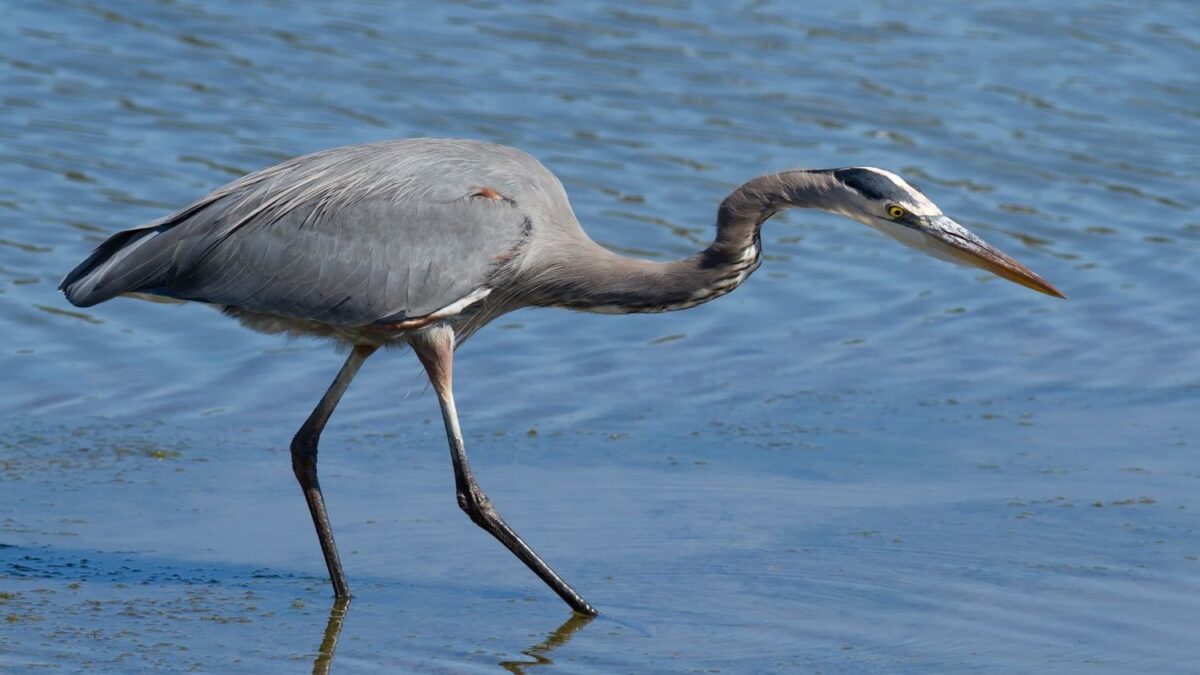
There’s a moment, familiar to anyone who spends time near water, when a large shadow crosses the surface and you look up to find a bird moving through the air with a kind of unhurried authority. That bird is almost certainly the Great Blue Heron. It’s a large wading bird in the heron family, common near shores of open water and wetlands over most of North and Central America, as well as Northwestern South America, the Caribbean, and the Galápagos Islands.
Whether poised at a river bend or cruising the coastline with slow, deep wingbeats, this heron is a majestic sight, with subtle blue-gray plumage and a habit of standing motionless as it scans for prey or wades belly deep with long, deliberate steps. Few birds command quite so much stillness – and yet few are as quietly remarkable once you start looking closer.
A Wingspan That Stops You in Your Tracks
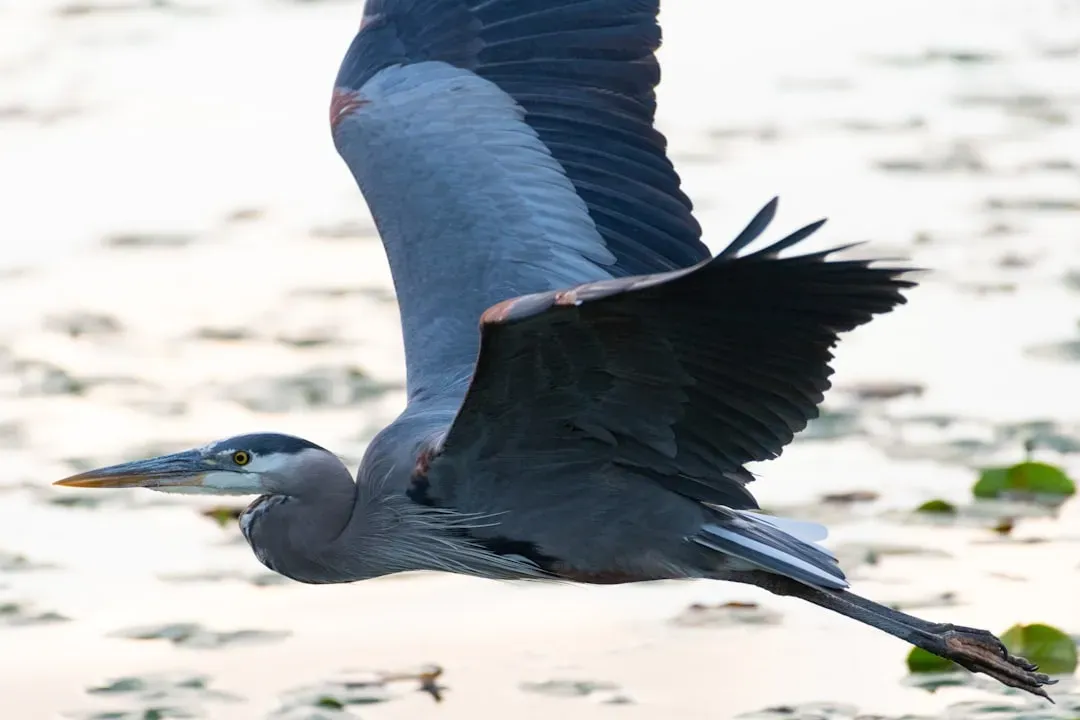
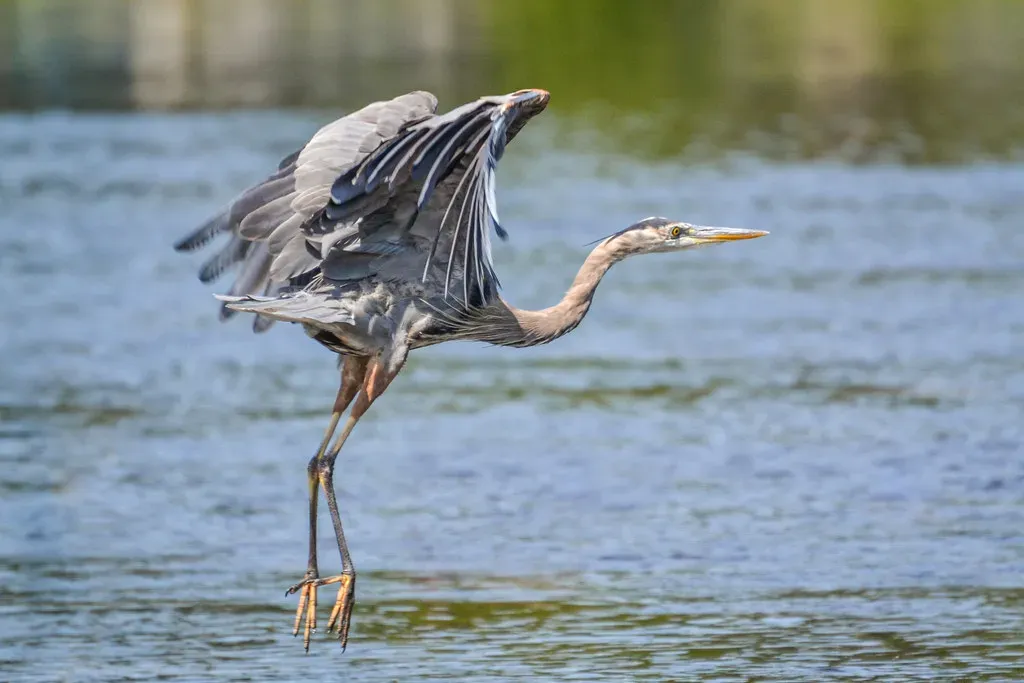
The sheer spread of the Great Blue Heron in flight is one of nature’s more arresting sights. These birds have a wingspan that ranges between roughly five and a half feet and six and a half feet in length, with males sporting the larger wingspan. That’s a measurement that rivals, and sometimes exceeds, the height of an average adult human.
These birds may weigh less than a newborn, but their impressive wingspan is equal to or greater than the average adult human height. It’s one of those biological quirks that makes the species genuinely surprising to encounter up close.
Their wide wingspan helps them take off with ease, remain balanced as they fly and soar, and land with precision. While moving between feeding areas, Great Blue Herons fly low and slow, a feat easily accomplished thanks to their massive wingspan, which allows them to focus less on flapping and more on scanning wetlands for prey.
Their iconic flight profile involves flying with the neck folded into an “S” and long legs trailing, unlike cranes, which fly with neck extended. That folded neck is actually one of the easiest ways to tell a heron from a crane at a distance.
Physical Size and Surprising Lightness
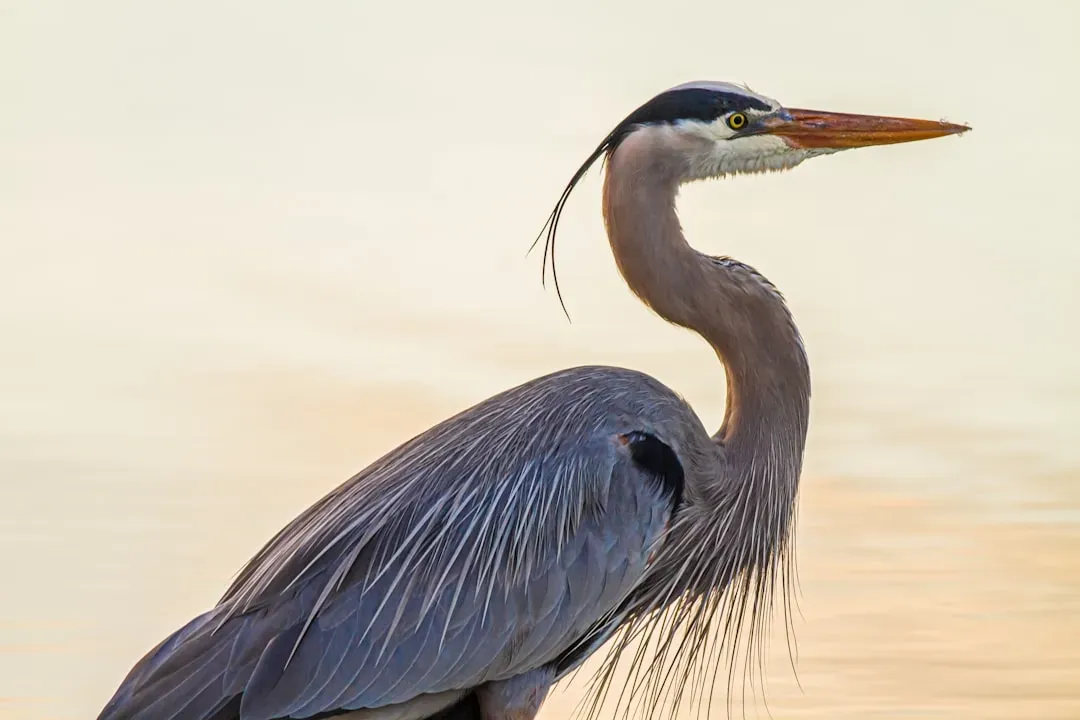
The Great Blue Heron is the largest heron native to North America, surpassed in size globally only by the Goliath heron and the White-bellied heron. That ranking alone sets it apart from every other wading bird on the continent.
Despite their impressive size, Great Blue Herons weigh only five to six pounds thanks in part to their hollow bones, a feature all birds share. It’s a genuine contradiction: a bird that can stand nearly four and a half feet tall and stretch nearly seven feet wing to wing, yet weigh less than a small bag of groceries.
The species exhibits a minor degree of sexual dimorphism. Males are slightly larger than females, but otherwise the sexes are not easily outwardly distinguishable. Hollow bones and lightweight feathers also contribute to their surprisingly low body mass.
Great Blue Herons have gray-blue wings with white plumes of feathers, long necks that range in color from white to gray with patches of rust-red, black crowns, long legs, and yellowish pointed beaks. Breeding season brings its own visual flair: adults grow long black head plumes and shaggy scapular plumes used in courtship displays.
Hunting Skills and a Remarkably Versatile Diet
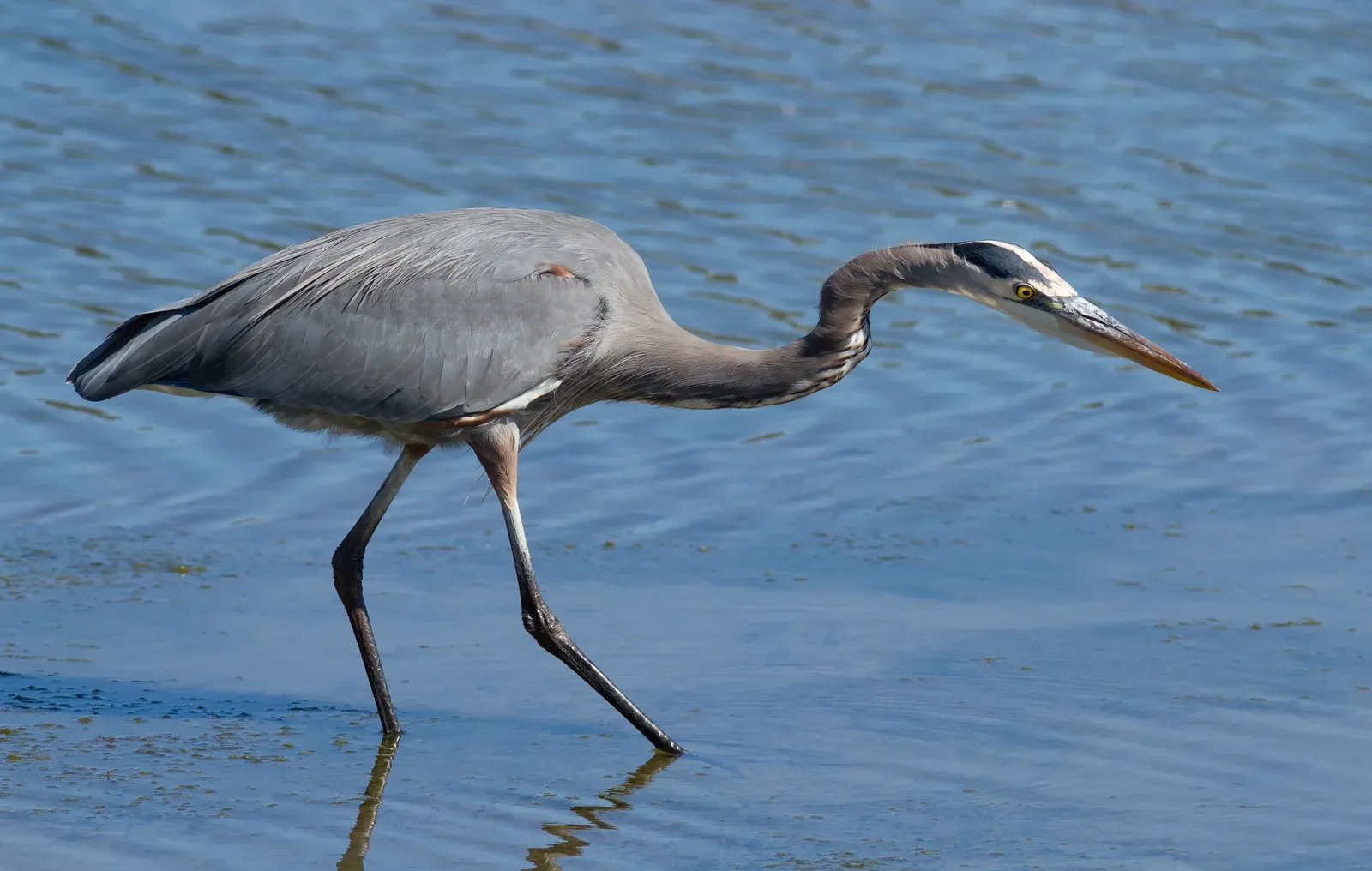
The most commonly employed hunting technique is wading slowly with long legs through shallow water and quickly spearing fish or frogs with a long, sharp bill. Patience, in this case, is genuinely a weapon.
Great Blue Herons can hunt day and night thanks to a high percentage of rod-type photoreceptors in their eyes that improve their night vision. Typically, the bird feeds in shallow waters, usually less than about twenty inches deep, or at the water’s edge during both the night and the day, but especially around dawn and dusk.
While fish is the primary food source, Great Blue Herons can prey on various sizes of fish from small fingerlings to large adult fish, though small to medium-sized fish are usually preferred. The diet is highly variable. They eat mainly fish, but also frogs, salamanders, turtles, snakes, insects, rodents, and birds, and have been seen stalking voles and gophers in fields and capturing rails at the edge of marsh.
Great Blue Herons have been known to choke to death by attempting to swallow fish too large for their long, S-shaped necks. They also have specialized feathers on their chest that continually grow and fray, which they comb with a fringed claw on their middle toes, using the down like a washcloth to remove fish slime and other oils from their feathers as they preen, protecting their underparts against the slime and oils of swamps.
Range, Migration, and the Power of Those Wings in Flight

Great Blue Herons are one of the most widespread species of wading birds in the Western Hemisphere, found throughout North and Central America, northern South America, the Caribbean Islands, and even the Galápagos Islands in the Pacific.
They are partially migratory birds. Those living in the northern United States or Canada migrate south to Central America or the Caribbean, and some individuals make a journey of up to three thousand miles. This long venture takes place between mid-September and December, and to conserve energy, they use a rhythmic flight pattern, flapping their wings around sixty times per minute.
Despite flapping their wings less than many other birds, Great Blue Herons are capable of flying between twenty and thirty miles per hour, and this speed, combined with energy conservation, helps the large birds reach their final destinations with as few stops as possible.
With their variable diet, they can spend the winter farther north than most herons, even in areas where most waters freeze. The Great Blue Heron can adapt to almost any wetland habitat in its range. That adaptability is a large part of why the species is so broadly successful.
Nesting, Breeding, and Lifespan
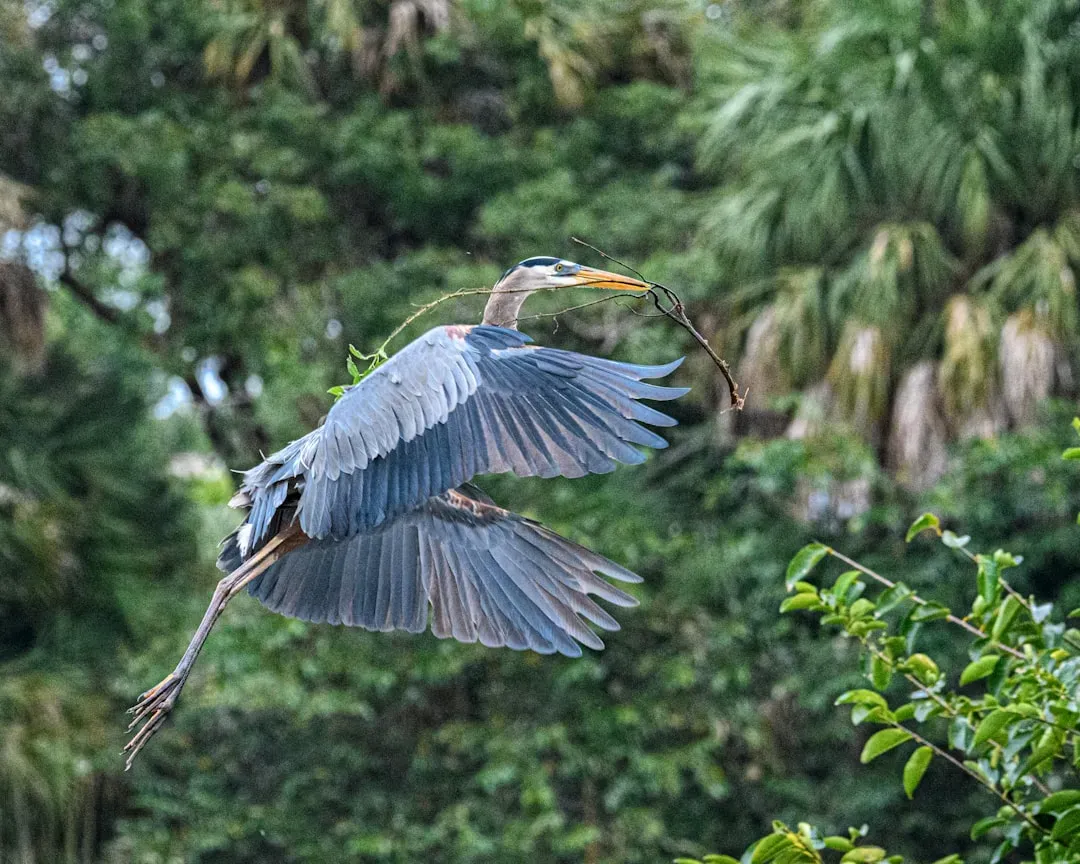
Great Blue Herons build nests, some of which can reach up to about four feet wide and three and a half feet deep, in colonies called rookeries, usually in trees, small shrubs, and near the water’s edge. Although most heron rookeries are made up of around fifty pairs, the largest can contain five hundred or more birds.
The species breeds once per year, with breeding adults finding new mates each year. After an elaborate courtship involving the male flexing his neck, fluffing his neck feathers, and flying around his potential nest site, a female may join him to breed. After fertilization, females deposit between two and seven pale blue eggs in the nest, and both parents take turns incubating them before the eggs hatch some twenty-five to thirty days later.
Young Great Blue Herons are capable of flight at about sixty days and depart the nest at about sixty-five to ninety days. Surviving young reach sexual maturity at age twenty-two months, and they typically live for about fifteen years. However, the oldest known Great Blue Heron is thought to have lived twenty-three years in the wild.
Great Blue Herons are listed as Least Concern by the IUCN Red List, with their populations widespread and on the increase. The key to Great Blue Herons remaining a common sight along rivers, lakes, and marshes is protection of habitat, and because they concentrate their nesting activities in colonies and use these same areas from year to year, protection of nesting habitat is especially important.
A Living Marker of Wetland Health
The Great Blue Heron is more than a striking bird. It is widely recognized as an apex predator within many North American wetland systems, consuming fish, amphibians, reptiles, invertebrates, and small mammals across marshes, river edges, and shallow coastal zones. Adult Great Blue Herons face relatively few natural predators, allowing them to function as dominant top-level consumers and key indicators of ecosystem health, particularly through their sensitivity to bioaccumulated contaminants.
Great Blue Herons in the northeastern United States and southern Canada have benefited from the recovery of beaver populations, which have created a patchwork of swamps and meadows well-suited to foraging and nesting. Their presence, in other words, reflects the condition of the landscape around them.
Great Blue Herons control fish and insect populations in many different habitats and are also an important source of food for the animals that prey on them. They sit at a meaningful intersection in the food web, both shaping it and being shaped by it.
There’s something worth sitting with in that idea. A bird whose wingspan nearly matches a person’s height, whose patience can outlast almost any fish, and whose presence along a shoreline reliably signals a healthy waterway. The Great Blue Heron doesn’t need our attention to thrive. But the more closely we pay it, the more we tend to understand about the places it calls home.

- 6 Exotic Bird Species You Can Spot in U.S. National Parks - July 19, 2026
- 11 Iconic American Birds Facing New Challenges and How You Can Help - July 19, 2026
- 10 Friendliest Animals in the World - July 19, 2026