

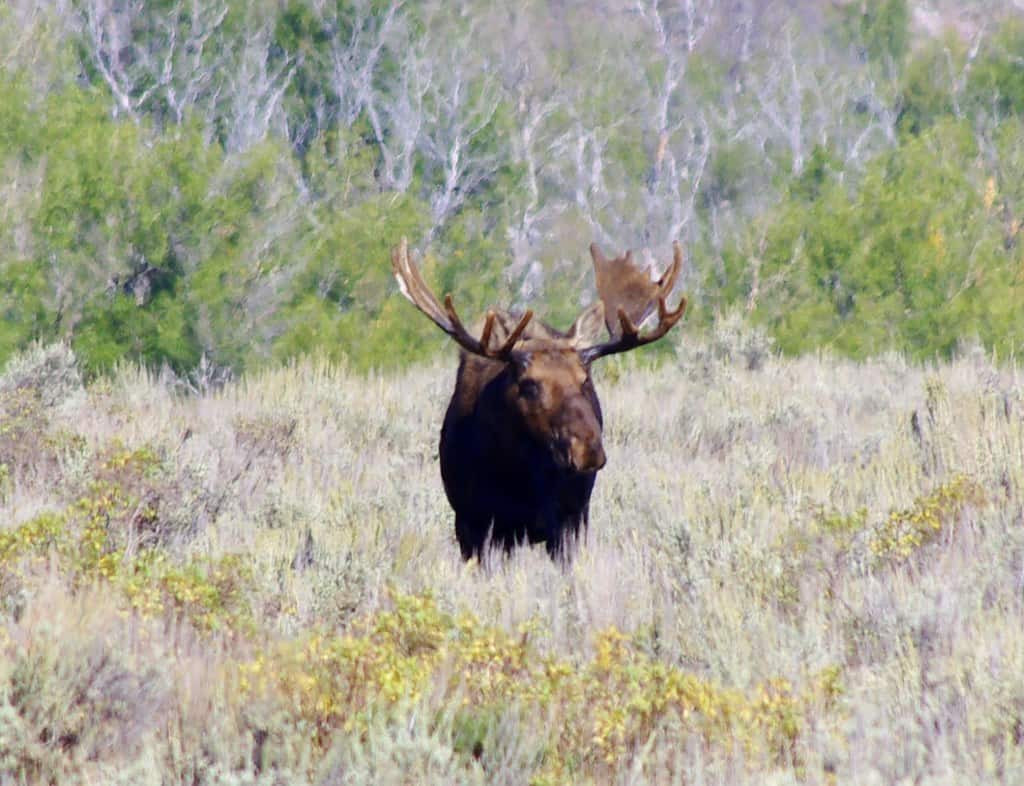
The North American moose (Alces alces) is not only the largest member of the deer family but also one of nature’s most remarkable swimmers. These magnificent creatures, with their imposing stature and distinctive appearance, possess extraordinary aquatic abilities that have fascinated wildlife biologists and nature enthusiasts for generations. Despite their seemingly ungainly appearance on land, moose transform into powerful, efficient swimmers capable of traversing vast stretches of water in search of food, habitat, or to escape predators. This article explores the impressive swimming capabilities of moose, the adaptations that make this possible, and the ecological significance of this behavior in their survival and distribution across North America.
The Physical Adaptations of Swimming Moose

Moose possess several physical adaptations that make them exceptionally well-suited for swimming. Their large, splayed hooves act as natural paddles, providing propulsion through water. Additionally, their long legs generate powerful strokes, enabling them to maintain speeds of up to 6 miles per hour in water—comparable to Olympic swimmers.
Perhaps most crucial is their hollow hair, which provides exceptional buoyancy. This specialized coat traps air and creates significant flotation, allowing moose to stay high in the water with minimal effort. Their massive lung capacity also contributes to their buoyancy, while a water-repellent outer coat keeps them relatively dry even during extended swims. These adaptations collectively transform the seemingly awkward terrestrial moose into an aquatic specialist capable of swimming for hours without fatigue.
Record-Breaking Swimming Distances

The swimming endurance of moose is truly remarkable when examined through documented cases. Research has recorded moose swimming distances of up to 12.5 miles (20 kilometers) across open water. In Alaska and the coastal regions of Maine and New Brunswick, moose have been observed swimming between mainland areas and offshore islands, often traversing channels with strong currents.
One particularly noteworthy case documented a bull moose swimming across Lake Superior from Canada to Isle Royale, covering approximately 20 miles. GPS-collared moose in Scandinavia have demonstrated similar capabilities, with tracked individuals regularly crossing large lakes and fjords during seasonal migrations. These impressive feats of endurance highlight the moose’s exceptional swimming capability and their willingness to undertake significant water crossings when ecological needs arise.
Why Moose Take to the Water

Moose engage in long-distance swimming for several ecological and behavioral reasons. During summer months, moose frequently enter water to feed on aquatic vegetation, which provides essential sodium and other nutrients absent in their terrestrial diet. These aquatic plants can constitute up to 50% of a moose’s summer diet. Water bodies also offer relief from biting insects and help regulate body temperature during warm periods. Importantly, swimming serves as an effective predator avoidance strategy, particularly against wolves, as moose can outswim most predators.
During rutting season, bull moose may swim to reach isolated cows or new territories. Additionally, swimming enables population dispersal, allowing moose to colonize new areas and maintain genetic diversity across seemingly isolated habitats. Climate change and habitat alteration have increasingly forced moose to swim farther distances to find suitable food and habitat conditions.
Swimming Behavior in Calves

Even young moose demonstrate remarkable swimming abilities from an early age. Moose calves typically begin swimming within weeks of birth, often following their mothers across water bodies. Research has shown that by one month of age, calves can swim alongside their mothers for distances exceeding half a mile. This early development of swimming proficiency is crucial for survival in their wetland-rich habitats. Mother moose appear to deliberately introduce their calves to water, starting with shallow crossings and progressively attempting longer swims as the calf develops.
This training seems essential, as approximately 70% of a moose’s summer range may involve aquatic or semi-aquatic environments. The buoyant hollow hairs of calves provide proportionally greater flotation than in adults, compensating for their less developed musculature and swimming technique. This early aquatic adaptation highlights how swimming is not merely an occasional behavior but an essential life skill integrated into moose development from the earliest stages.
Moose Swimming Techniques

Moose employ a distinctive swimming technique that maximizes efficiency during long-distance water crossings. Unlike many mammals that paddle with all four limbs, moose primarily use their front legs for steering while their powerful hind legs provide the main propulsive force. This method creates a smooth, methodical movement pattern that conserves energy. When swimming, moose hold their head high above water, with their distinctive nose and eyes remaining dry while their body is submerged.
Their swimming posture is remarkably level, with their back nearly parallel to the water surface—a position made possible by their natural buoyancy. Interestingly, moose can adjust their swimming depth based on conditions, riding higher in calm waters and lower in rough waters to maintain stability. During extended swims, they occasionally rest by treading water with minimal movement, allowing them to conserve energy before continuing. Wildlife biologists studying this behavior have noted that moose swimming patterns change seasonally, with more deliberate, directed swimming during migration periods versus more casual movements during feeding.
Navigational Abilities During Water Crossings

One of the most fascinating aspects of moose swimming behavior is their navigational prowess across large bodies of water. Studies using GPS-collared moose have revealed that these animals can maintain remarkably straight swimming paths even when visual landmarks are not apparent. This suggests they may possess some form of internal compass, possibly relying on the earth’s magnetic field similar to other migratory animals. Researchers have observed that moose tend to select crossing points where currents are most favorable, demonstrating an understanding of water dynamics.
In coastal areas, moose appear to time their crossings with tidal patterns, preferring to swim during slack tides when currents are minimal. Their excellent vision allows them to detect distant shorelines up to several miles away, helping them target destinations before entering the water. Remarkably, even in fog or darkness, tracked moose maintain directional consistency during swims, further suggesting sophisticated navigational abilities beyond simple visual guidance. This navigational capacity is crucial for successful water crossings and represents an important cognitive adaptation complementing their physical swimming abilities.
Swimming as Migration Strategy

Swimming constitutes a critical component of moose migration patterns, particularly in regions with numerous lakes, rivers, and coastal areas. In places like Alaska, Newfoundland, and Northern Minnesota, seasonal movements often involve multiple water crossings as moose transition between summer and winter ranges. These aquatic passages are not random but follow established “moose swimming lanes” that have been used by generations of animals. GPS tracking studies have revealed that some moose populations swim up to 60 combined miles annually as part of their regular movements.
Interestingly, these swimming migrations often occur during predictable seasonal windows—typically May-June for spring movements and September-October for fall transitions. Climate change has begun altering these patterns, with researchers documenting longer swim distances as moose adapt to shifting habitat conditions. The willingness to undertake these water crossings has allowed moose to colonize islands up to 50 miles offshore in some regions, creating isolated populations with unique genetic characteristics. This swimming-based migration strategy represents a fundamental adaptation that has shaped moose distribution across North America and continues to influence population dynamics in the face of environmental change.
Risks and Challenges of Long-Distance Swimming

Despite their swimming prowess, moose face significant risks during extended water crossings. Hypothermia presents a serious danger, particularly in cold northern waters where even a moose’s insulating coat cannot indefinitely protect against heat loss. In coastal areas, strong tides and currents can sweep moose off course, sometimes carrying them far from intended destinations. Large predatory fish, including certain shark species in coastal waters, have occasionally been documented attacking swimming moose.
Vessel collisions represent an increasing threat, with boat strikes accounting for dozens of moose fatalities annually in high-traffic waterways. Perhaps most dangerous are the periods of vulnerability immediately after a long swim, when moose emerge exhausted onto shore, temporarily compromised in their ability to detect or escape terrestrial predators. Research from Isle Royale National Park has shown that wolves have learned to patrol shorelines where swimming moose typically land. Studies indicate that approximately 3-5% of adult moose mortality in some populations can be directly attributed to swimming-related accidents or predation events associated with water crossings, highlighting that while swimming offers many benefits, it also comes with substantial risks.
Island Colonization Through Swimming

The exceptional swimming abilities of moose have played a pivotal role in their colonization of islands across North America. Isle Royale in Lake Superior, located approximately 15 miles from the nearest mainland, hosts a well-studied moose population established entirely through swimming colonizers. Similar island populations exist throughout Alaska’s coastal archipelagos, Newfoundland, and the lake islands of Minnesota and Maine. Genetic studies confirm that these island populations are regularly supplemented by new swimming arrivals, maintaining genetic diversity despite geographical isolation.
The rate of island colonization appears to be increasing in some regions, possibly in response to changing mainland conditions including predator pressure and habitat alteration. Fascinatingly, the moose that successfully complete these challenging swims and establish island populations may represent a self-selected subset with superior swimming abilities or greater dispersal tendencies. This ongoing process of island colonization through swimming represents a contemporary example of natural selection in action and demonstrates how the moose’s aquatic adaptations continue to shape their distribution and evolution.
Swimming and Predator Avoidance

Water serves as a crucial defensive barrier for moose against their primary predators. When threatened by wolf packs, moose frequently head directly to water, where their swimming advantage becomes immediately apparent. While wolves can swim, they cannot match the speed or endurance of moose in water, typically giving up pursuit once the moose has achieved sufficient distance from shore. This strategy proves particularly important for protecting vulnerable calves during their first year of life. Research in Minnesota’s boundary waters region documented that moose cows with calves utilized islands and peninsulas accessed by swimming at significantly higher rates than those without calves, suggesting intentional use of water barriers as protective measures.
Interestingly, moose appear to make rapid threat assessments when encountering predators, choosing either to stand their ground (particularly for adult bulls facing single predators) or immediately retreat to water when the threat level is deemed high. Trail camera studies have captured numerous instances of moose swimming to escape pursuing predators, with success rates exceeding 90% when water bodies of sufficient size are accessible. This predator avoidance strategy has likely been a key selective pressure favoring the evolution of the moose’s remarkable swimming abilities.
Moose Swimming in Popular Culture

The image of swimming moose has captured human imagination and become embedded in the cultural narratives of many northern communities. Indigenous peoples across the moose’s range incorporated swimming moose into their storytelling traditions, often portraying them as creatures of both land and water with special powers of transition between worlds. Early European explorers frequently documented their astonishment at encountering moose far from shore, sometimes initially mistaking them for other creatures.
In modern times, swimming moose have become iconic wildlife photography subjects, with images of moose crossing misty lakes appearing on countless postcards, calendars, and nature publications. Several notable wildlife documentaries have featured dramatic footage of swimming moose, including the BBC’s “Planet Earth” series. Tourism in regions like Maine, Minnesota, and Alaska frequently promotes “moose watching” experiences focusing on the animals’ aquatic activities, particularly during summer months when moose regularly enter water. The swimming moose has thus transcended its biological significance to become a cultural symbol representing wilderness, adaptation, and the unique natural heritage of northern forests and waterways.
Conservation Implications of Swimming Behavior

Understanding the swimming capabilities of moose has important implications for conservation efforts. Wildlife managers now recognize that seemingly isolated habitat patches connected by swimmable water bodies should be considered as single conservation units from a moose perspective. Conservation planning increasingly incorporates “blue corridors”—water routes that moose use for movement—alongside traditional land corridors in habitat connectivity assessments. However, human development presents new challenges to this ancient behavior. Increased boat traffic in many waterways has led to rising collision incidents with swimming moose.
Shoreline development can eliminate critical entry and exit points for swimming moose, effectively severing aquatic travel routes. Climate change presents perhaps the greatest threat, as altered precipitation patterns and warming temperatures affect the seasonal timing of ice formation and breakup, potentially disrupting traditional swimming migration patterns. Conservation efforts in some regions now include seasonal boating restrictions in known moose swimming corridors and the protection of undeveloped shorelines at traditional crossing points. By recognizing swimming as an essential behavior rather than an occasional curiosity, conservation plans can better protect the full ecological needs of moose populations.
Conclusion: Masters of Water and Land
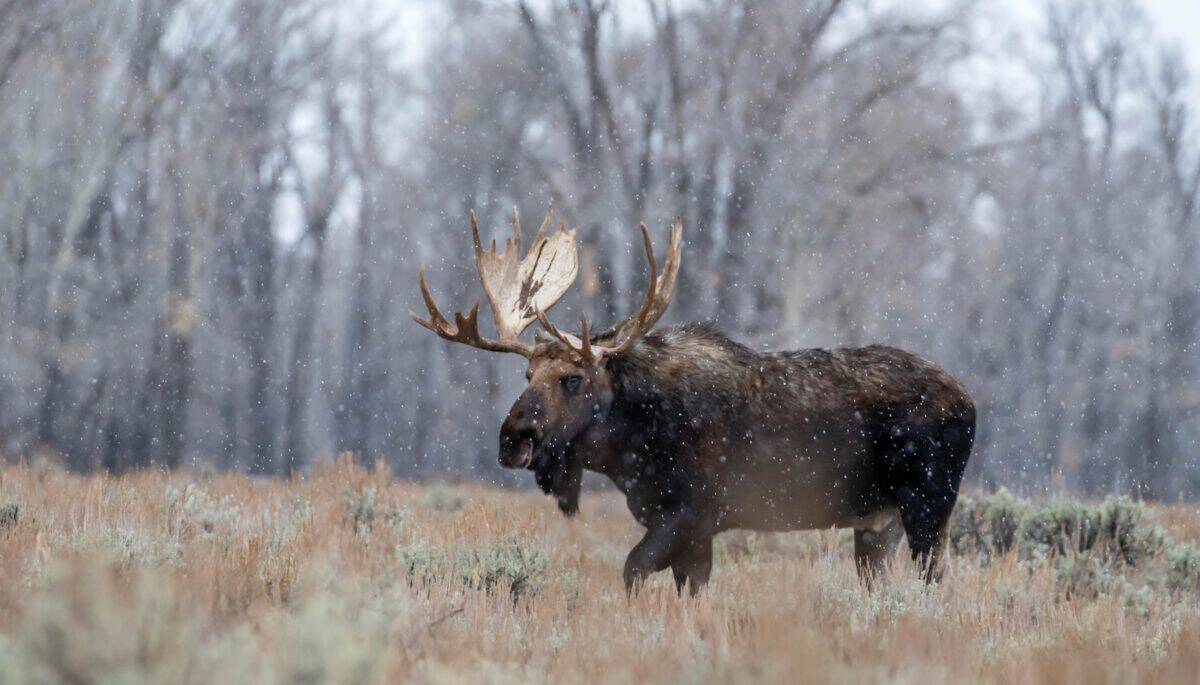
The remarkable swimming abilities of moose represent one of the most impressive yet often overlooked adaptations in North American wildlife. These massive animals, weighing up to 1,500 pounds, possess the physical attributes, navigational skills, and behavioral adaptations to traverse miles of open water with a grace that belies their ungainly terrestrial appearance. Their swimming prowess has shaped their evolution, distribution, and ecological relationships, enabling them to access resources, escape predators, and colonize new territories across a vast range.
As climate change and human development continue to alter northern landscapes, the moose’s swimming abilities may become increasingly crucial to their survival and adaptation. Understanding and protecting this behavior, including the water bodies and shorelines that facilitate it, must be central to comprehensive moose conservation efforts. The swimming moose stands as a powerful reminder that nature’s adaptations often transcend our limited categorizations, creating creatures that masterfully bridge terrestrial and aquatic worlds.

From exploring the marine wonders in the Azores and witnessing the vast savannas of Kenya, to delving deep into the rich biodiversity of South Africa and traversing iconic landscapes in Australia and the US like Yellowstone, Chris's experiences are vast.
With a penchant for diving alongside sharks, the ocean holds a special place in his heart.
Through his academic insights, he champions wildlife conservation, striving with 'Animals Around The Globe' to cultivate a profound connection between humans and animals, enhancing our mutual appreciation.
Connect with him at Feedback@animalsaroundtheglobe.com.
- The Science Behind Bear Hibernation (and Why It’s Not True Sleep) - June 15, 2026
- Why Pandas Were Once Nearly Extinct—and How China Saved Them - June 15, 2026
- Top 10 Animals and Wildlife in the Australian Outback - June 15, 2026