
Worried about unexpected vet bills?
Pet insurance can cover thousands in unexpected vet costs. Get a free quote from Lemonade in under 2 minutes.
Get My Free Quote →Sponsored · Opens Lemonade.com
In the rich tapestry of East Asian mythology, few creatures captivate the imagination quite like the nine-tailed fox. Known as Huli jing in China, Kumiho in Korea, and Kitsune in Japan, this mythical being has woven itself into the cultural fabric of numerous societies across centuries. With its mesmerizing nine tails and supernatural abilities, the fox has transcended mere folklore to become a powerful symbol in literature, art, religion, and modern pop culture. Beyond its striking appearance, the nine-tailed fox represents a complex amalgamation of wisdom, trickery, seduction, and divine power—embodying both benevolence and malevolence depending on the cultural context. This legendary shapeshifter’s enduring presence across East Asian mythology offers fascinating insights into how different cultures perceive the delicate balance between the natural and supernatural worlds.
Origins of the Nine-Tailed Fox Legend

The earliest written records of the nine-tailed fox date back to ancient Chinese texts from as early as the 4th century BCE. The Classic of Mountains and Seas (Shan Hai Jing), a compilation of mythic geography and beasts, contains one of the first mentions of a divine nine-tailed fox. In these early accounts, the creature was often portrayed as an auspicious omen rather than the trickster or malevolent entity it would later become in some traditions. The mythology suggests that the appearance of a nine-tailed fox was a sign of a peaceful and prosperous reign, often associated with wise and virtuous rulers.
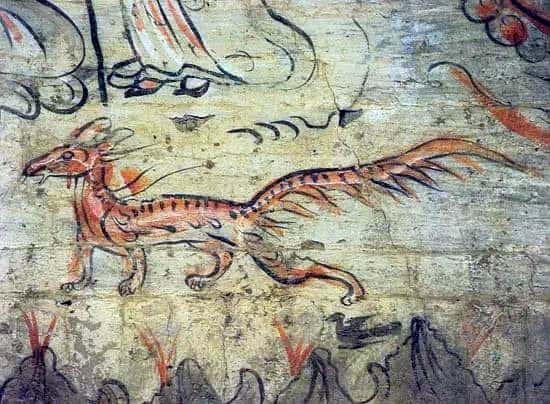
Archaeological evidence further supports the fox’s significance in ancient East Asian cultures. Artifacts from the Han Dynasty (206 BCE-220 CE) feature fox imagery, suggesting the creature’s importance in early Chinese cosmology. The legend gradually spread throughout East Asia via cultural exchange along trade routes, Buddhist missionary activities, and political interactions. As it traveled, the nine-tailed fox myth adapted to local beliefs and cultural contexts, developing distinct characteristics in China, Korea, and Japan while maintaining certain core elements that define this mystical being across all traditions.
The Chinese Huli Jing: Divine Messenger and Dangerous Seductress
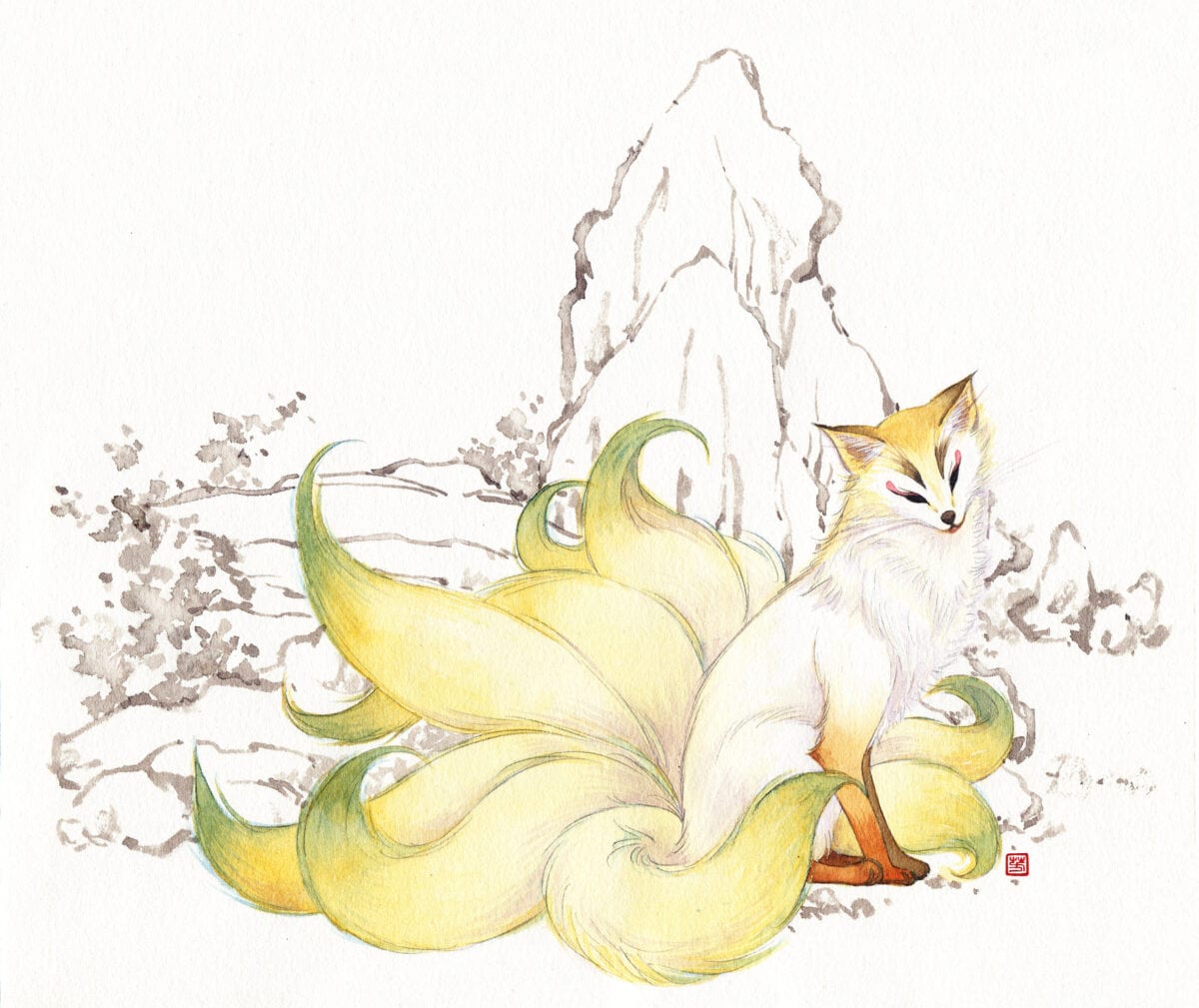
In Chinese mythology, the nine-tailed fox, or Huli jing, embodies a fascinating duality. Early Taoist texts describe these foxes as divine animals associated with the heavenly deity Xi Wangmu (Queen Mother of the West). According to legend, these fox spirits served as her messengers and were considered highly auspicious. The fox’s nine tails represented longevity and spiritual cultivation, with each tail believed to be earned after living for a thousand years. Once a fox achieved nine tails, it was said to have reached near-divine status, gaining profound wisdom and supernatural abilities.
However, as Chinese folk beliefs evolved, particularly during the Tang and Song dynasties (618-1279 CE), the Huli jing developed a more ambiguous reputation. Female fox spirits became associated with seduction and danger, often depicted as beautiful women who enticed scholars and officials to their downfall by draining their life essence. These stories reflected social anxieties about female sexuality and power in Confucian society. Despite this negative portrayal, Chinese fox lore maintains complexity—many tales also feature benevolent fox spirits who reward kindness, protect households, or form genuine loving relationships with humans, illustrating the nuanced nature of this mythological figure in Chinese culture.
Japan’s Kitsune: Tricksters, Guardians, and Divine Servants

The Japanese kitsune represents perhaps the most complex and developed version of the nine-tailed fox mythology. In Japanese folklore, foxes gain additional tails as they grow older and wiser, with nine tails representing the height of their power and knowledge. These nine-tailed kitsune, known as kyūbi no kitsune, were believed to have golden fur, the ability to see and hear anything happening anywhere in the world, and infinite wisdom. They could generate fire from their tails or breathe fire, and some legends claim they could even bend time and space.
Japanese fox lore is distinctly characterized by its association with Inari, the Shinto deity of rice, prosperity, and fertility. White foxes serve as Inari’s messengers and are considered protective, benevolent entities that bring good fortune. Conversely, wild foxes were often portrayed as mischievous tricksters or even dangerous seducers, similar to Chinese fox spirits. This duality reflects the Japanese view of nature as both nurturing and potentially threatening. The kitsune’s shapeshifting abilities—particularly transforming into beautiful women, elderly scholars, or other humans—feature prominently in Japanese folktales, where they might either punish human arrogance or reward kindness, depending on how they are treated.
Korea’s Kumiho: The Darker Side of Fox Mythology

The Korean nine-tailed fox, or kumiho (also spelled gumiho), presents a markedly darker interpretation compared to its Chinese and Japanese counterparts. In Korean folklore, these creatures are predominantly portrayed as malevolent entities with insatiable appetites for human flesh—particularly the liver or heart. According to traditional beliefs, a fox that lives for a thousand years transforms into a kumiho, gaining nine tails and human shapeshifting abilities. Unlike the more morally ambiguous fox spirits in neighboring cultures, the kumiho rarely displays benevolence toward humans.
Korean folk narratives frequently depict the kumiho as a beautiful woman who seduces men before revealing her true nature and consuming them. These tales served as cautionary stories, particularly for young men, about the dangers of being deceived by external beauty. Some legends suggest that a kumiho could potentially become human by abstaining from human flesh for a thousand days or by consuming a human’s liver under specific circumstances. This redemption narrative, though less common, hints at the possibility of transformation and suggests that even in this darkest version of nine-tailed fox lore, the potential for change exists within the mythological framework.
Supernatural Powers and Abilities

Across all East Asian traditions, nine-tailed foxes possess an impressive array of supernatural abilities that set them apart from ordinary spirits and creatures. Their most famous power is shapeshifting—the ability to transform their appearance at will. While they can assume various forms, the most common transformations include beautiful young women, elderly scholars, or other humans. In some traditions, an imperfect transformation might leave fox-like features visible, such as a glimpse of a tail or strange reflections in the eyes, providing clues to their true nature.
Beyond shapeshifting, nine-tailed foxes wield numerous other powers. They can create illusions so convincing they appear completely real, manipulate dreams to communicate or torment humans, possess human bodies, generate fox-fire (mysterious flames that float in the air), and control the weather. In Japanese lore, powerful kitsune can bend time and space. They’re also attributed with exceptional intelligence and cunning, having accumulated centuries or millennia of knowledge. Some traditions believe they can see the future or read minds. Notably, as foxes gain more tails through age and spiritual cultivation, their powers increase exponentially, with nine-tailed foxes representing the pinnacle of supernatural ability—beings so powerful they approach divine status.
Physical Characteristics and Symbolism
The nine-tailed fox’s most distinctive feature is, of course, its nine magnificent tails, which symbolize its age, wisdom, and power. Traditional artistic depictions often show these tails fanned out impressively behind the fox’s body, creating a radiant, almost sun-like appearance. In Japanese art, the kyūbi no kitsune is frequently portrayed with golden or white fur, while Korean traditions often depict the kumiho with white or occasionally red fur. The fox’s eyes are another significant feature, usually described as luminous, hypnotic, or maintaining their vulpine characteristics even when in human form.
The number nine holds profound significance across East Asian cultures, representing completeness and divine power. In Chinese numerology, nine is the largest single digit and associated with the Emperor and heaven itself. This connection reinforces the nine-tailed fox’s supernatural status. The fox’s multiple tails also create a visual connection to divine or celestial imagery—in some depictions, the splayed tails resemble a halo or sunburst, visually linking the creature to heavenly bodies. This celestial association further emphasizes the fox’s position as a liminal being that exists between the earthly and divine realms, capable of traversing both worlds and serving as a messenger between them.
Cultural Impact and Religious Significance

The nine-tailed fox holds significant religious importance, particularly in Japanese Shintoism. As messengers of Inari, foxes became integral to worship practices at thousands of Inari shrines across Japan. Stone fox statues (kitsune) guard these sacred spaces, often depicted holding symbolic items like scrolls or jewels in their mouths. Devotees leave offerings of fried tofu (aburaage)—believed to be the fox’s favorite food—at these shrines to gain the favor of both the foxes and, by extension, Inari. This practice demonstrates how thoroughly the kitsune has been incorporated into formal religious structures.
In China and Korea, fox spirits occupy a more complex religious position. Taoist traditions acknowledge fox spirits as potential immortals or divine servants, while folk religious practices include both propitiating dangerous fox spirits and honoring benevolent ones. Buddhist influence across East Asia introduced new dimensions to fox mythology, sometimes portraying foxes as beings who might achieve enlightenment through proper spiritual development. This religious syncretism reflects broader patterns in East Asian spirituality, where indigenous beliefs blend with imported religious systems. The nine-tailed fox thus serves as a fascinating case study in how mythological creatures adapt and evolve within changing religious landscapes while maintaining their essential cultural significance.
Famous Tales and Literary Appearances

One of the most renowned nine-tailed fox stories comes from ancient China: the tale of Daji, a malevolent nine-tailed fox spirit who possessed a concubine of King Zhou, the last ruler of the Shang Dynasty. According to the classic novel “Investiture of the Gods” (Fengshen Yanyi), Daji manipulated the king into becoming a cruel tyrant, indulging in extravagant and sadistic behaviors that eventually led to the dynasty’s downfall. This narrative established a powerful literary template for the dangerous female fox seductress that would influence countless stories across East Asia.
In Japan, the “Tamamo-no-Mae” legend tells of a beautiful courtesan who was actually a nine-tailed fox in disguise. After bewitching Emperor Toba, she was exposed by an astrologer and fled, later being hunted down and killed. Her spirit became a deadly killing stone (Sessho-seki) that continued to poison those who approached it until a Buddhist monk finally exorcised it. Korean literature features numerous tales of kumiho, including “The Fox Sister,” in which a nine-tailed fox disguises itself as a family’s daughter and systematically devours her adopted brothers. These influential narratives demonstrate how the nine-tailed fox served as a vehicle for exploring themes of deception, temptation, and the potentially destructive power of female sexuality in traditional East Asian societies.
The Nine-Tailed Fox in Modern Popular Culture

In contemporary times, the nine-tailed fox has experienced a remarkable renaissance through anime, manga, video games, and other forms of popular media. The Japanese anime and manga series “Naruto” features a powerful nine-tailed fox spirit (Kyuubi) sealed within the protagonist, introducing this mythological figure to millions of viewers worldwide. Other notable appearances include the Pokémon Ninetales, based directly on the kitsune, and the character Ahri from the video game “League of Legends,” inspired by the Korean kumiho tradition. These modern interpretations have significantly expanded global awareness of this East Asian mythological figure.
While contemporary portrayals often simplify the complex cultural nuances of traditional nine-tailed fox mythology, they have nonetheless preserved key aspects of the legend. Modern adaptations typically maintain the fox’s shapeshifting abilities, supernatural powers, cunning intelligence, and ambiguous moral nature. Some contemporary works even explore deeper themes from the original mythology, such as the relationship between humans and nature, the consequences of deception, and the potential for spiritual transformation. Through these new media, the nine-tailed fox continues to evolve while maintaining a connection to its ancient origins, demonstrating the enduring appeal and adaptability of this mythological figure across time and cultural contexts.
Regional Variations Across East Asia

Beyond the major traditions in China, Japan, and Korea, nine-tailed fox mythology extends to other parts of East Asia with fascinating regional adaptations. In Vietnam, fox spirits (Hồ Tinh) share many characteristics with Chinese Huli jing but are often associated more explicitly with possession and illness. Taiwanese fox lore blends Chinese traditions with indigenous beliefs, sometimes connecting fox spirits to mountain deities or family ancestors. In Mongolia, foxes are considered highly intelligent and potentially magical, though their mythology less frequently emphasizes the nine-tailed variation found in other East Asian cultures.
These regional variations reveal how foundational myths adapt to local environments and social structures. Mountainous regions tend to associate fox spirits with specific peaks or geographic features, while agricultural communities often connect them to crop fertility or protection. Nomadic cultures may emphasize the fox’s cleverness and survival skills rather than its transformative abilities. Despite these differences, common threads persist—the fox’s liminality (existing between human and animal worlds), its intelligence, and its connection to both beneficial and harmful supernatural forces. These shared elements across diverse geographic areas highlight the deep cultural exchanges that occurred throughout East Asian history and the powerful symbolism the fox holds across different societies.
The Psychology Behind the Myth
The enduring appeal of the nine-tailed fox myth can be understood through psychological and sociological lenses. As a shapeshifter that crosses boundaries between animal and human, the fox represents humanity’s complex relationship with the natural world—both our connection to it and our separation from it. The fox’s ability to appear human while retaining its animal essence speaks to ancient anxieties about deception and the unknowable “other” living among us. This may explain why fox stories often served as cautionary tales about strangers or outsiders who might not be what they seem.
From a gender studies perspective, many nine-tailed fox stories—particularly those featuring female fox seductresses—reflect patriarchal societies’ anxieties about female sexuality and power. The beautiful fox woman who destroys men through seduction embodies fears about women operating outside social control. Yet paradoxically, fox spirits also represented freedom from restrictive social norms, which may explain their appeal in folklore and literature. Jung’s concept of the shadow self offers another interpretation—the fox spirit represents disowned aspects of human nature, both creative and destructive. By projecting these qualities onto mythological beings, cultures created a psychological framework for understanding the complex, contradictory aspects of human experience that couldn’t be easily accommodated within everyday social structures.
The Nine-Tailed Fox in Contemporary Spirituality

Despite modernization across East Asia, belief in and reverence for fox spirits persists in contemporary spiritual practices. In Japan, Inari shrines continue to attract millions of visitors annually, with many leaving traditional offerings to the deity’s fox messengers. Some modern practitioners of Shinto and folk traditions maintain household shrines with fox imagery, continuing centuries-old practices of honoring these spirits for protection and prosperity. In rural areas of China and Taiwan, fox spirit beliefs remain part of the living religious landscape, with temples and shrines dedicated to fox deities still receiving regular worship and offerings.
Modern neo-pagan and new age spiritual movements, particularly in Western countries, have also begun incorporating nine-tailed fox symbolism into their practices, attracted by the creature’s associations with wisdom, transformation, and magical power. This cross-cultural adoption has sometimes led to oversimplification or misrepresentation of the original traditions, yet it also demonstrates the nine-tailed fox’s continuing relevance as a spiritual symbol. Contemporary spiritual practitioners often interpret the fox’s journey from ordinary animal to nine-tailed divine being as a metaphor for personal spiritual development and transformation. This modern spiritual interpretation connects to ancient understandings of the fox as a being capable of transcending its original nature through wisdom and spiritual cultivation, showing how ancient mythological motifs can find new meaning in contemporary contexts.
The Enduring Legacy of the Nine-Tailed Fox

The nine-tailed fox remains one of East Asia’s most complex and captivating mythical creatures, weaving its way through centuries of folklore in countries like China, Korea, and Japan. Often portrayed as a shapeshifter with immense powers, this legendary being straddles the line between benevolence and mischief. In some stories, it seduces and deceives, feeding off human energy; in others, it transforms into a wise and loyal woman who brings blessings. Its enduring presence in literature, art, and modern pop culture reflects deep cultural values—symbolizing transformation, mystery, and the eternal tension between appearance and reality.
Worried about unexpected vet bills?
Pet insurance can cover thousands in unexpected vet costs. Get a free quote from Lemonade in under 2 minutes.
Get My Free Quote →Sponsored · Opens Lemonade.com

- 18 Fascinating Facts About Horses and Weather Instincts - June 9, 2026
- 14 Legendary Horses from History and Their Stories - June 9, 2026
- Can We Save the Snow Leopard Before It Disappears? - June 9, 2026