
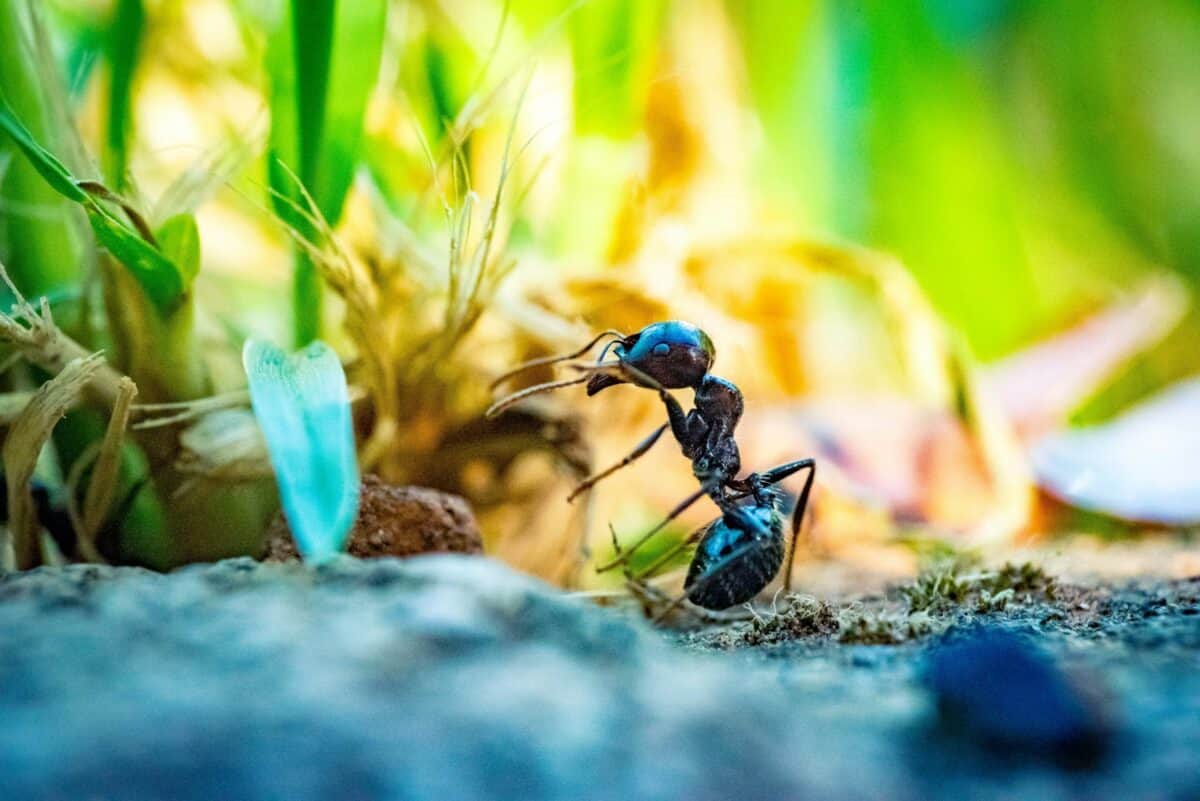
In the fascinating yet disturbing realm where biology meets horror, mind-controlling parasites represent one of nature’s most incredible evolutionary achievements. These organisms have developed the remarkable ability to manipulate their hosts’ behaviors, effectively turning them into zombies that serve the parasites’ reproductive needs. From fungi that force ants to become “zombies” to protozoans that make rats attracted to cats, these parasitic relationships showcase the extraordinary and sometimes terrifying complexity of nature’s evolutionary arms race. This article explores some of the most remarkable mind-controlling parasites, their mechanisms of action, and what they teach us about the delicate dance between parasites and their hosts in the natural world.
Toxoplasma gondii: The Cat Parasite That Affects Humans
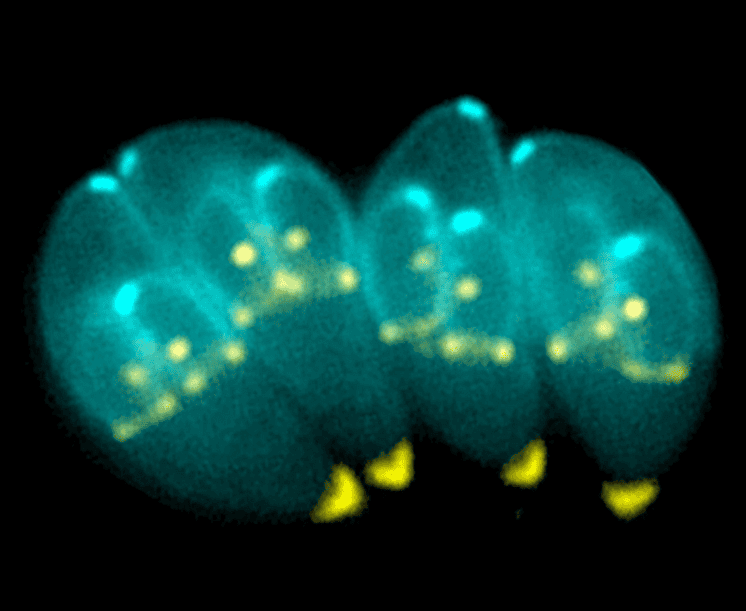
Perhaps the most famous mind-controlling parasite is Toxoplasma gondii, a single-celled protozoan that infects an estimated 30-50% of the global human population. T. gondii has a complex life cycle that requires it to reproduce sexually in cats, its definitive host. To complete this cycle, the parasite has evolved a fascinating behavioral manipulation strategy. When T. gondii infects rodents, it alters their brain chemistry to reduce their innate fear of cat odors and may even make them attracted to these scents—essentially turning the rodent into a suicidal cat-seeking missile, facilitating the parasite’s transmission to its definitive host.
In humans, T. gondii infection typically causes no obvious symptoms, but research suggests it may have subtle behavioral effects. Some studies have linked T. gondii infection to increased risk-taking behavior, slower reaction times, and even correlations with conditions like schizophrenia, although the causal relationship remains debated. The parasite forms cysts in the brain that can remain for the host’s lifetime, potentially exerting influence on neurotransmitter pathways, particularly dopamine production.
Ophiocordyceps unilateralis: The Zombie Ant Fungus

The Ophiocordyceps unilateralis fungus, popularized by documentaries and even inspiring elements of the video game “The Last of Us,” exhibits one of the most dramatic examples of host manipulation. This parasitic fungus targets carpenter ants in tropical forests, primarily in Thailand and Brazil. Once an ant is infected, the fungus begins to grow inside its body and gradually takes control of the ant’s nervous system.
The infected ant is compelled to leave its colony and climb vegetation to a specific height with precise temperature and humidity conditions ideal for fungal growth. The ant then bites down on a leaf vein in what scientists call the “death grip,” securing itself in place. After the ant dies, the fungus continues to consume its internal tissues and eventually sprouts a fruiting body from the ant’s head, releasing spores to infect more ants below. Remarkably, this manipulation is highly specific—the fungus can drive the ant to bite down at precisely the right time of day and in the optimal location for fungal reproduction.
Dicrocoelium dendriticum: The Lancet Liver Fluke

The lancet liver fluke (Dicrocoelium dendriticum) employs a fascinating multi-stage mind control strategy involving two intermediate hosts. The fluke begins its life cycle in snails, but for its next stage, it needs to reach sheep or other grazing mammals. To accomplish this, the fluke first manipulates infected snails to produce slime balls containing parasite larvae, which are then consumed by ants.
Once inside an ant, most of the parasite larvae migrate to the insect’s abdomen, but one or two strategically travel to the ant’s brain. These brain-dwelling flukes force the ant to climb to the top of grass blades every evening and clamp their mandibles onto the grass in a death grip. This behavior makes the ant likely to be consumed by grazing mammals, allowing the parasite to reach its final host. Remarkably, the manipulation only occurs during cooler evening temperatures—during the day’s heat, infected ants behave normally, protecting the parasite from dying in the hot sun before transmission can occur.
Leucochloridium paradoxum: The Green-Banded Broodsac
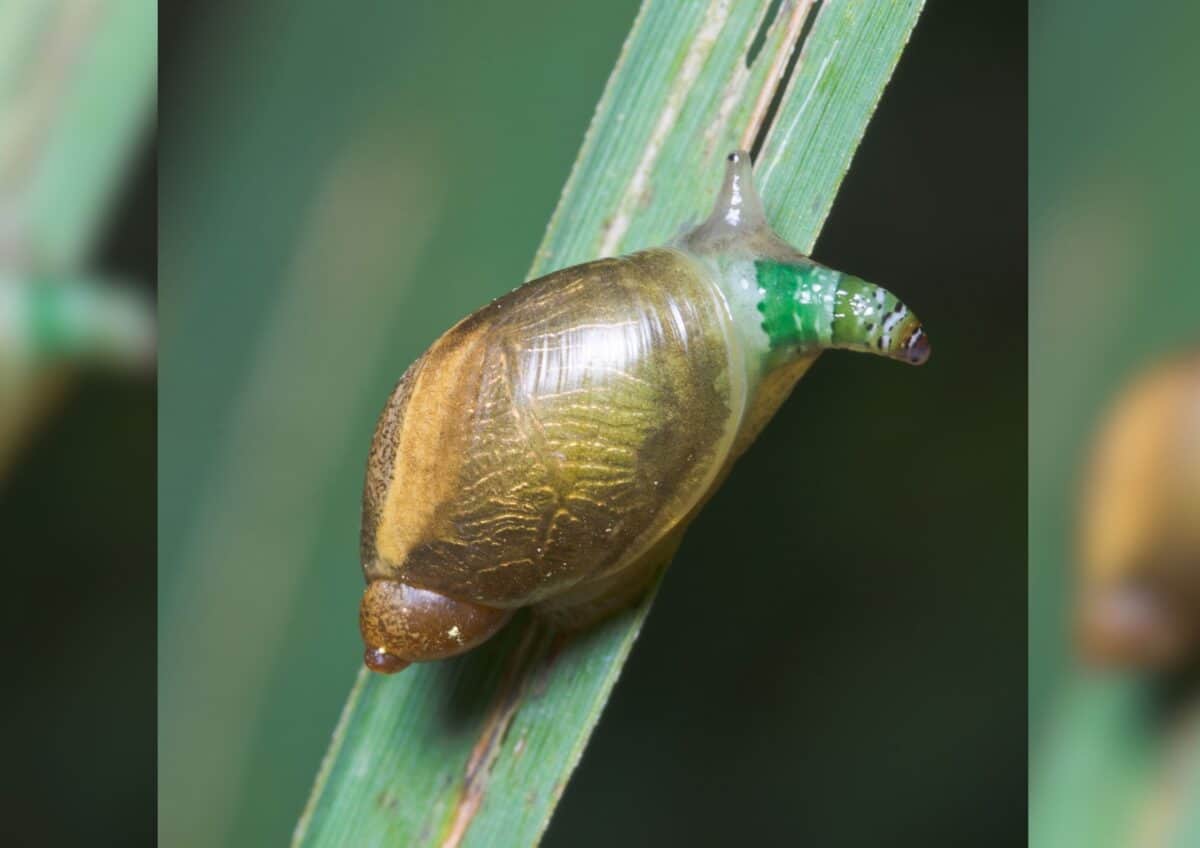
Leucochloridium paradoxum, commonly known as the green-banded broodsac, employs a visual manipulation strategy that borders on the theatrical. This parasitic flatworm targets snails as intermediate hosts but needs to reach birds to complete its life cycle. After infecting a snail, the parasite forms brightly colored, pulsating “broodsacs” that extend into the snail’s tentacles, causing them to swell dramatically.
These infected tentacles pulsate with green and brown bands that mimic the appearance of caterpillars or grubs—attractive food sources for birds. Additionally, the parasite alters the snail’s behavior, driving it to seek out well-lit, exposed locations rather than remaining hidden as snails typically do. This combination of visual mimicry and behavioral manipulation significantly increases the likelihood that a bird will spot and consume the snail’s infected tentacles, allowing the parasite to continue its life cycle in the bird’s digestive system.
Euhaplorchis californiensis: The Fish Brain Manipulator

The trematode parasite Euhaplorchis californiensis demonstrates how even fish can fall victim to parasitic mind control. This parasite begins its life in horn snails before infecting the California killifish as an intermediate host. Once inside the killifish, the parasite forms cysts on the surface of the fish’s brain, where it releases chemicals that interfere with neurotransmitter signaling.
This neurochemical manipulation causes infected killifish to swim closer to the water’s surface and display jerky, flashy movements that make them 10 to 30 times more likely to be spotted and eaten by birds—the parasite’s final host. Remarkably, the parasite achieves this behavioral change without causing obvious harm to the fish’s overall health, ensuring the host survives long enough to be consumed by a bird. Studies have shown that infected fish maintain normal feeding and schooling behaviors when predatory birds aren’t present, demonstrating the precision of this manipulation.
Nematomorpha: The Suicide-Inducing Hairworms

Nematomorpha, commonly known as horsehair worms or Gordian worms, represent one of the most dramatic examples of parasitic mind control. These parasites develop inside terrestrial insects like crickets, grasshoppers, and cockroaches, but need to return to water to reproduce. This creates an evolutionary challenge since their hosts naturally avoid water.
To solve this problem, hairworms produce proteins that act on their host’s central nervous system, driving them to seek out water and jump in—essentially committing suicide. Once the insect enters water, the mature worm, which may be 3-4 times longer than its host when extended, emerges from the insect’s body in a disturbing spectacle. Research has shown that infected insects show altered expression of proteins involved in neurotransmitter activities, suggesting the parasite produces molecules that mimic or interact with the host’s neurochemical systems to drive this dramatic behavioral change.
Ampulex compressa: The Jewel Wasp’s Surgical Strike

The emerald jewel wasp (Ampulex compressa) demonstrates perhaps the most precise neural manipulation of any mind-controlling parasite. This wasp targets cockroaches as living incubators for its offspring. The female wasp delivers two strategically placed stings to the cockroach—the first to the thorax to temporarily paralyze the front legs, and the second directly into the brain with remarkable precision.
The brain sting delivers a cocktail of neurotoxins that specifically target areas controlling the cockroach’s escape response while leaving other functions intact. The cockroach becomes docile and compliant, willingly following the wasp to its burrow like an obedient pet. The wasp then lays an egg on the cockroach’s abdomen, and the hatched larva consumes the still-living cockroach from the inside out. Neuroscientists studying this system have identified specific dopamine-related pathways affected by the wasp’s venom, representing one of our clearest understandings of the neurochemical basis of parasitic mind control.
Glyptapanteles: The Bodyguard-Creating Wasp
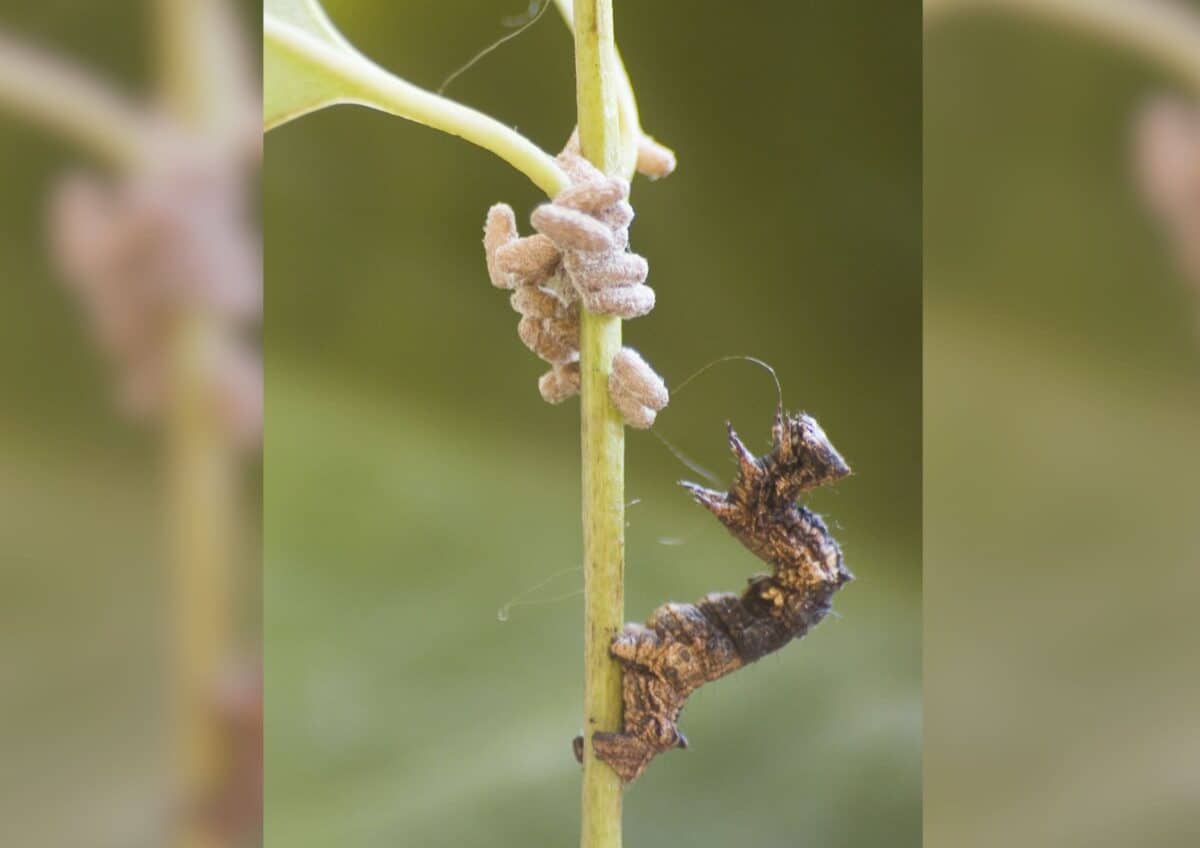
The Glyptapanteles wasp employs a fascinating form of host manipulation that turns its victim into a devoted bodyguard. Female wasps lay eggs inside caterpillars, where the larvae develop by feeding on the caterpillar’s bodily fluids without damaging vital organs. When ready to pupate, the larvae emerge from the caterpillar and form cocoons nearby.
Rather than dying, the caterpillar enters an altered behavioral state where it stops feeding and moving normally. Instead, it stands guard over the wasp cocoons, violently swinging its head to fend off predators that approach the developing wasps. This bodyguard behavior continues until the adult wasps emerge or the caterpillar finally dies from starvation. Research suggests that some larvae may remain inside the caterpillar after the others emerge, potentially controlling the host’s behavior from within to protect their siblings—a remarkable example of extended phenotype where the parasite’s genes express themselves through the host’s behavior.
Massospora cicadina: The Psychedelic Cicada Fungus

Massospora cicadina targets periodical cicadas with a mind-altering strategy that combines chemical manipulation with physical destruction. This fungus infects cicadas as they emerge from the ground for their once-in-13-or-17-years mating event. The fungus begins by consuming the cicada’s abdomen and genitals from the inside out, eventually replacing them entirely with fungal tissue.
Despite this devastating infection, infected cicadas don’t die immediately but enter what researchers call “flying salt shakers of death” mode. The cicadas remain active while their abdomen disintegrates and releases fungal spores to infect other cicadas. More remarkably, recent research has discovered that the fungus produces chemicals including cathinone (an amphetamine-like compound) and psilocybin (the psychoactive compound in magic mushrooms) that may help maintain the cicada’s normal activity levels despite its deteriorating body condition and potentially increase its movement to maximize spore dispersal.
Acanthocephala: The Manipulative Thorny-Headed Worms
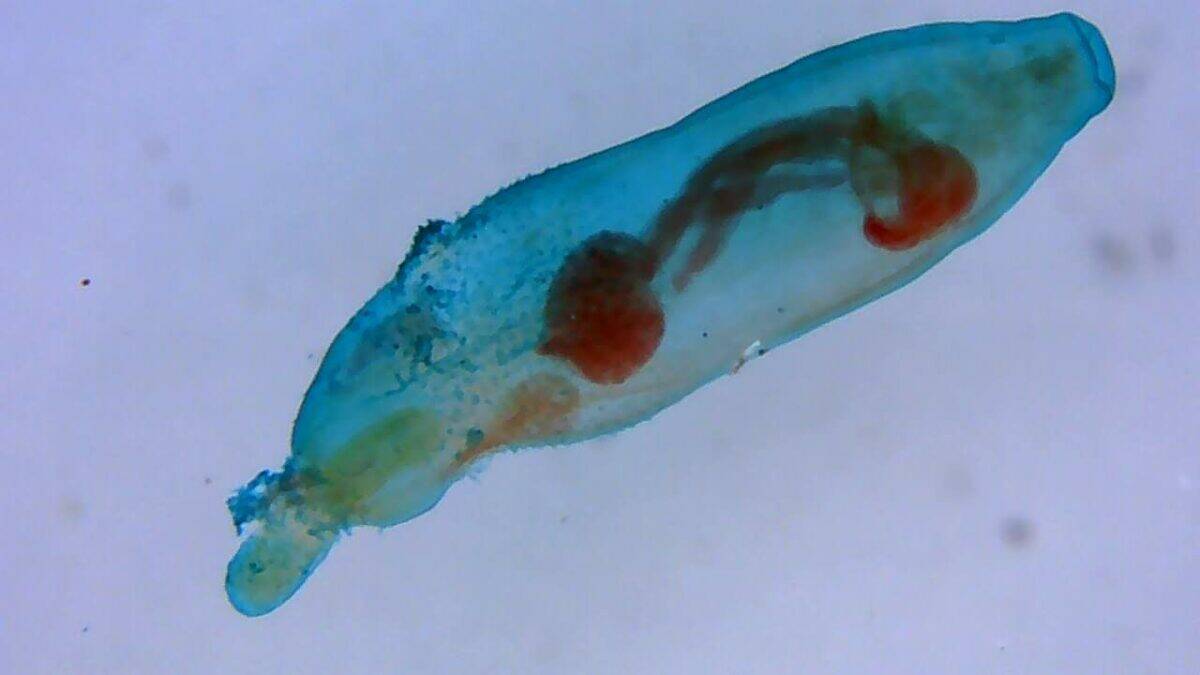
Acanthocephalans, or thorny-headed worms, employ color-changing manipulation to increase predation of their intermediate hosts. These parasites use various aquatic crustaceans as intermediate hosts but need to reach fish, birds, or mammals to complete their life cycle. Research on Pomphorhynchus laevis, which infects freshwater gammarids (small crustaceans), provides a striking example of this strategy.
Infected gammarids develop a bright orange coloration that makes them highly visible to predatory fish, contrasting sharply with their normally sandy, camouflaged appearance. Additionally, the parasite alters the gammarid’s behavior, driving it to swim toward light and stay in exposed, surface locations rather than hiding under rocks as uninfected individuals do. Laboratory studies have demonstrated that fish preferentially target the brightly colored infected gammarids, increasing the parasite’s transmission success rate by exploiting the visual hunting strategies of its definitive hosts.
Spinochordodes tellinii: The Water-Seeking Worm
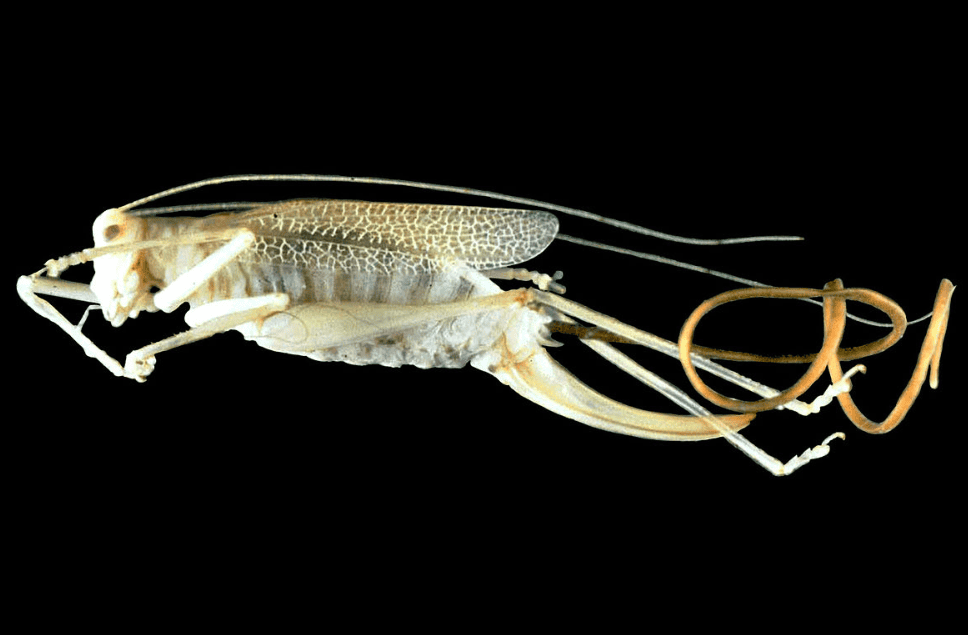
The hairworm Spinochordodes tellinii demonstrates how parasites can hijack complex host behaviors by manipulating specific biochemical pathways. This parasite infects land-dwelling insects like grasshoppers and crickets but needs to return to water for its adult life phase. To accomplish this, the parasite produces proteins that alter the expression of genes in the host’s central nervous system.
Researchers have identified specific proteins in infected cricket brains that influence water-seeking behavior, including compounds similar to the insect’s own neurochemical messengers. When the mature worm is ready to emerge, it drives its host to find and leap into water, often under the cover of darkness. Once in water, the worm—which can be up to three times longer than its host—emerges through body openings in a process that typically kills the host. This manipulation represents a dramatic example of a genetic and biochemical hijacking that causes insects to directly contradict their natural survival instincts.
The Evolutionary Arms Race of Mind Control
Mind-controlling parasites represent extraordinary examples of coevolution between species. These sophisticated manipulation strategies didn’t develop overnight but evolved gradually through natural selection over millions of years. When a parasite mutation arose that slightly increased transmission success by affecting host behavior, that mutation was favored and refined over countless generations. Meanwhile, hosts evolved countermeasures to resist manipulation, creating an ongoing evolutionary arms race.
This process has produced surprisingly specific manipulations tailored to each host-parasite relationship. Rather than causing general illness, these parasites target precise neural circuits or biochemical pathways that affect specific behaviors beneficial to parasite transmission while leaving other host functions intact. The precision of these manipulations—from the jewel wasp’s surgical brain sting to Toxoplasma’s selective effect on fear responses—demonstrates the power of natural selection to produce complex adaptations that might appear designed but emerged through evolutionary processes.
The study of these systems provides valuable insights into neurobiology, behavior, and the molecular mechanisms behind brain function. By understanding how parasites manipulate specific neural pathways, scientists gain new perspectives on how brains generate behavior—insights that may eventually contribute to treatments for human neurological conditions. Additionally, these parasites challenge our concepts of individual autonomy and the boundaries between organisms, as the line between parasite and host blurs when one species controls another’s actions.
Concluding Thoughts on Nature’s Mind Controllers

Mind-controlling parasites represent one of nature’s most fascinating and unsettling evolutionary innovations, showcasing the extraordinary adaptability of life on Earth. These parasites have evolved precision tools to manipulate host behavior at molecular, cellular, and systems levels, effectively turning their hosts into extensions of themselves. While these relationships may seem alien or horrific from a human perspective, they represent successful evolutionary strategies that have persisted for millions of years in the delicate balance of natural ecosystems.
The study of these parasites continues to yield valuable insights across multiple scientific disciplines, from neuroscience and behavioral biology to evolutionary theory and ecology. By deciphering the mechanisms behind parasitic mind control, researchers gain new perspectives on brain function, behavior, and the biochemical underpinnings of decision-making processes. These discoveries not only enhance our understanding of the natural world but may eventually contribute to medical advances in treating neurological disorders.
As research technologies advance, we continue to discover new mind-controlling parasites and unravel the sophisticated mechanisms behind their manipulations. Each new discovery reminds us of the remarkable complexity of life’s interconnections and the extraordinary paths that evolution can take when species engage in long-term coevolutionary relationships. In the grand tapestry of life, these parasites represent not merely evolutionary curiosities but windows into the fundamental processes that shape all life on our planet.
Perhaps most humbling is the recognition that even humans, with our sophisticated brains and sense of autonomous identity, are not immune to subtle influences from the microbial world—a reminder that in nature’s complex web, the line between controlling and being controlled is often thinner than we might like to believe.

- The Story of the Arctic Fox’s Incredible Seasonal Transformation - July 18, 2026
- 10 Most Venomous Snakes in US National Parks - July 18, 2026
- The Moth That Drinks Blood - July 18, 2026