

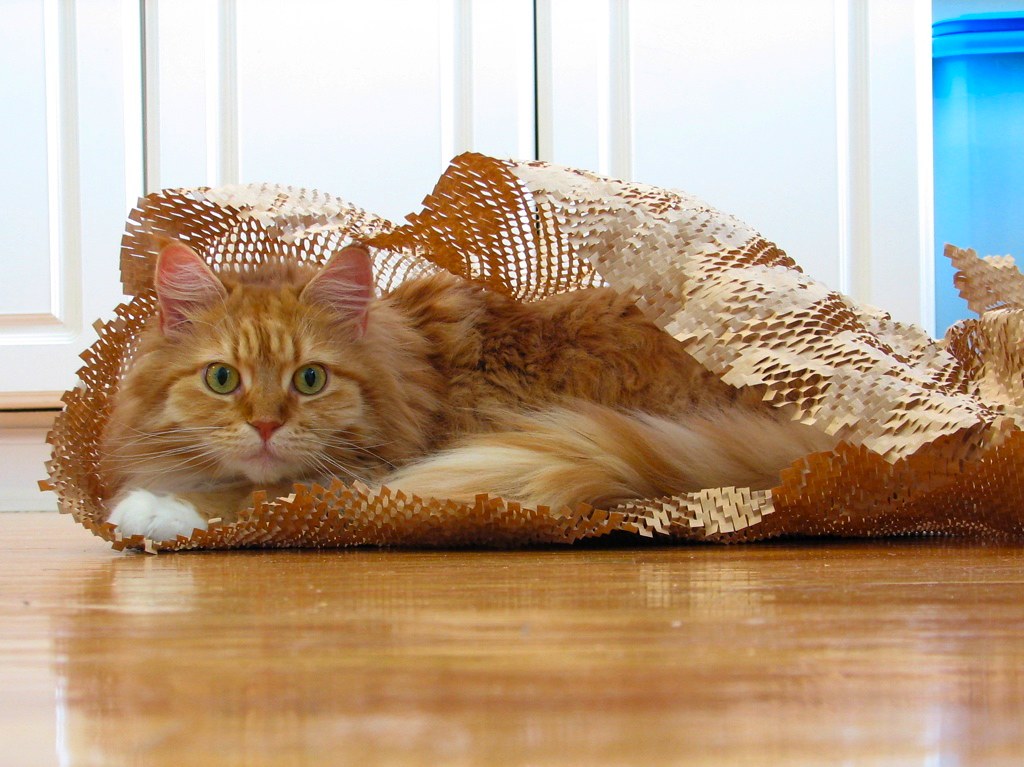
A Spine Built for Supremacy (Image Credits: Flickr)
Domestic cats blend leisurely naps with bursts of athleticism that showcase evolution’s masterful engineering.
A Spine Built for Supremacy
Cats possess up to 53 vertebrae, nearly double the 33 found in humans, granting them unparalleled flexibility.[1][2]
This extensive spinal column, including extra thoracic and lumbar segments, allows the animals to twist their bodies nearly 180 degrees, elongate, or compress with ease.[3] The loosely fitted vertebrae enable independent movement between the front and rear halves of the body. Cats squeeze through tight spaces because their shoulders rotate freely, unhindered by a rigid collarbone.[4]
Overall, cats boast 230 to 250 bones, more than the human count of 206, with much of the excess in the tail’s caudal vertebrae for added mobility.[5][6]
Leaps That Defy Expectations
Hind legs propel cats up to six times their body length in a single bound, a feat powered by robust musculature and elastic tendons.[7]
These powerful limbs, combined with a flexible backbone, facilitate vertical jumps reaching five times the cat’s height. The anatomy supports rapid acceleration, turning felines into instant sprinters from a standstill. Such capabilities trace back to their predatory heritage, where high jumps secured prey or escape routes.
| Feature | Cats | Humans |
|---|---|---|
| Thoracic Vertebrae | 13 | 12 |
| Lumbar Vertebrae | 7 | 5 |
| Total Bones | 230-250 | 206 |
Mastering Mid-Air Maneuvers
The righting reflex ensures cats orient themselves feet-first during falls, activating within milliseconds via the inner ear’s vestibular system.[8][9]
This instinct relies on visual cues and balance sensors to detect “up” from “down,” prompting spinal twists and leg adjustments. Cats tuck and extend limbs to conserve angular momentum, much like a figure skater, while the tail acts as a counterweight.[10] Higher falls paradoxically improve success rates, providing extra rotation time. Kittens develop this skill around three to four weeks old.
- Flexible spine separates upper and lower body rotation.
- Vestibular apparatus senses orientation instantly.
- Lightweight build and shock-absorbing legs cushion impacts.
- Tail stabilizes final descent.
- Arched paws spread force on landing.
Precision in Every Step
Cats achieve silent landings through padded paws that muffle sound and absorb shock, paired with precise muscle control from roughly 500 movable muscles.[11]
The reduced collarbone enhances shoulder freedom for agile turns. Ears swivel 180 degrees via 32 dedicated muscles, aiding spatial awareness. These traits culminate in graceful, near-soundless pounces.
Key Takeaways
- Cats’ extra vertebrae enable extreme flexibility for squeezing and twisting.
- Powerful jumps cover six times body length, fueled by hind leg strength.
- Righting reflex guarantees feet-first landings in most falls.
Cats embody nature’s perfect balance of rest and explosive action, their bodies fine-tuned for survival and stealth. Next time your feline companion scales a bookshelf effortlessly, appreciate the biomechanical genius at work. What amazes you most about cats’ abilities? Tell us in the comments.

- Urban Coyotes Show Remarkable Adaptability, Learning to Thrive in City Environments - July 22, 2026
- Beavers Are Nature’s Engineers, Creating Vital Habitats for Other Wildlife Species - July 21, 2026
- The Recovery of the California Condor Offers Hope for Other Critically Endangered Birds - July 21, 2026