


In the dense rainforests of Peru, a tiny arachnid has perfected a hunting technique so unusual and effective that it has astounded even veteran arachnologists. The triangle weaver spider (Hyptiotes cavatus) creates a web unlike any other in the animal kingdom—one that functions as a powerful slingshot. This engineering marvel allows the spider to dramatically accelerate toward its prey using stored elastic energy, making it one of nature’s most fascinating predators. This unique hunting strategy represents an extraordinary example of how evolution has produced specialized adaptations that defy our expectations of what such small creatures can achieve.
The Discovery of the Slingshot Spider

The remarkable hunting technique of the slingshot spider was formally documented by researchers from Georgia Tech in 2019, though indigenous peoples of the Amazon had knowledge of these spiders for generations. The research team, led by Dr. Saad Bhamla, used high-speed cameras recording at 3,000 frames per second to capture and analyze the spider’s lightning-fast attack mechanism. Their findings, published in the Proceedings of the National Academy of Sciences, revealed that these tiny hunters can accelerate at speeds of up to 4,300 meters per second squared—over 100 times faster than a cheetah’s acceleration. This discovery illustrated how even diminutive creatures that have existed for millions of years can still surprise scientists with previously undocumented hunting strategies and biomechanical innovations.
Anatomy of the Slingshot Spider
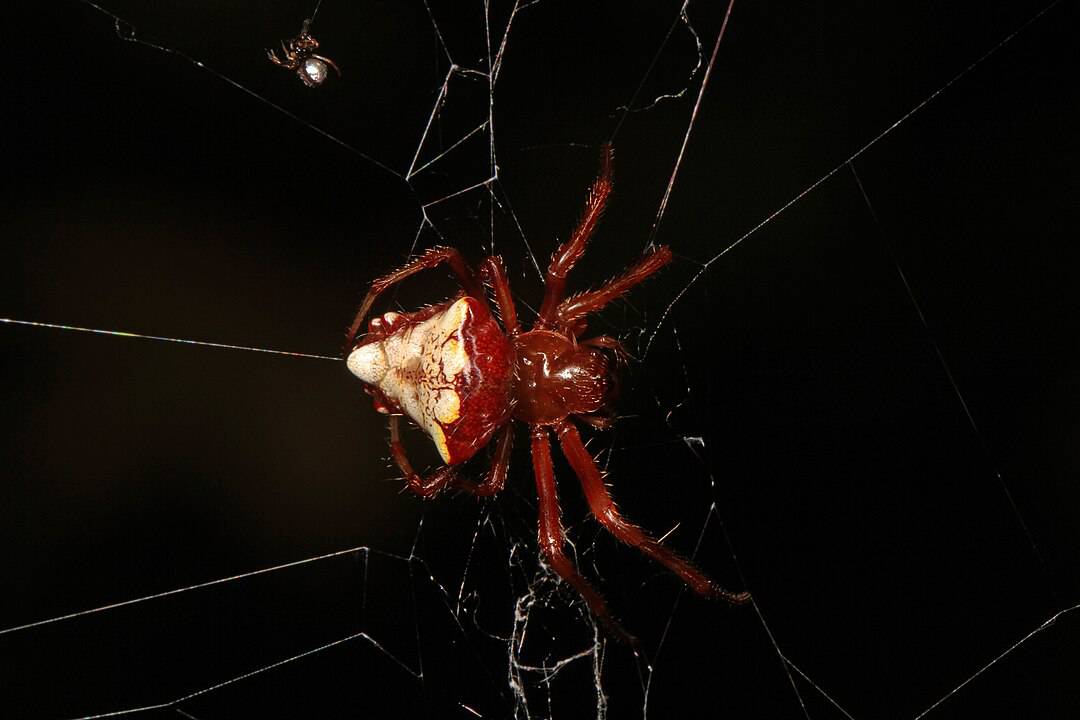
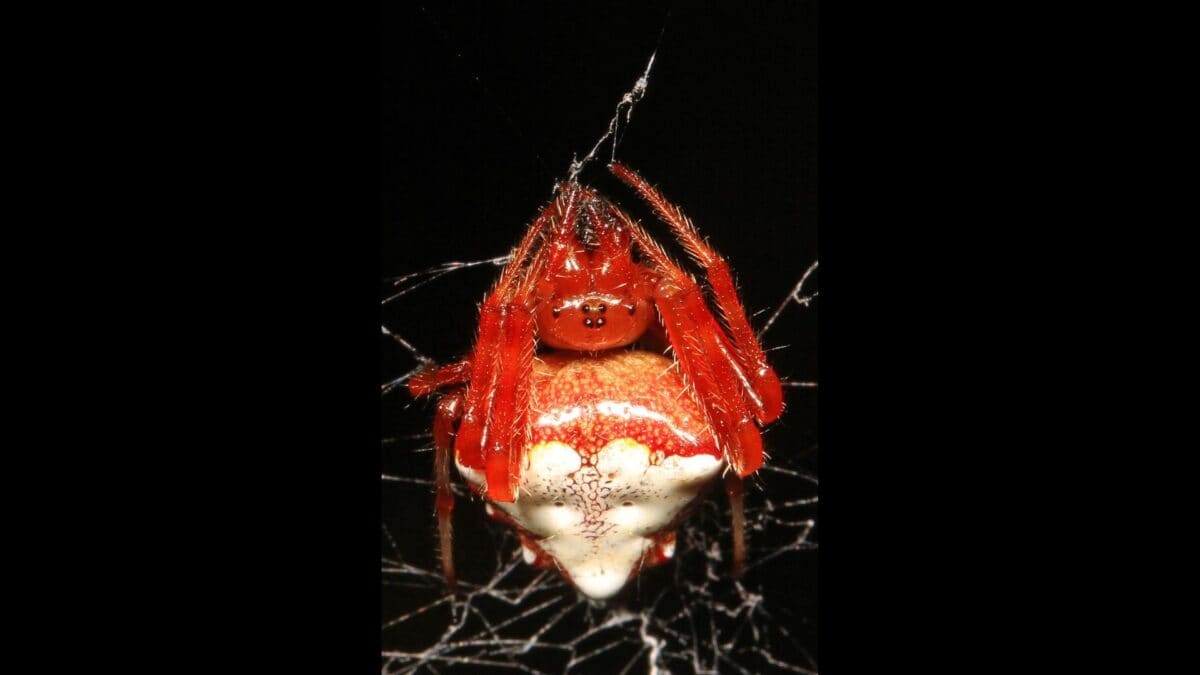
The triangle weaver spider, also known as the slingshot spider, is relatively small, with a body length of about 4-5 millimeters. What it lacks in size, it makes up for in specialized adaptations. Its body is typically brownish or gray, allowing it to blend with tree bark and vegetation. Unlike many web-building spiders, the slingshot spider has particularly strong front legs and specialized silk glands that produce the high-tension threads necessary for its hunting technique. The spider’s muscular system has evolved to maintain tension in its web for extended periods—sometimes hours—while waiting for prey. Perhaps most impressively, these spiders possess neural mechanisms that allow them to release their grip with precise timing, demonstrating remarkable coordination between sensory input and motor response during their ballistic attacks.
Engineering a Tensioned Web

The slingshot spider’s web is a masterpiece of natural engineering. Unlike the typical orb web constructed by many spider species, the triangle weaver creates a specialized triangular web connected to surrounding vegetation by four strands. The most critical element is the tension line—a single thread that connects from the center of the web to the spider’s hiding spot, usually on a nearby twig or leaf. Using its front legs, the spider gradually pulls this tension line, causing the entire web to contract and store elastic potential energy, much like drawing back a bow. The spider can reel in up to 10% of the web’s length, creating significant tension. What’s particularly fascinating is that the silk used isn’t especially elastic compared to other spider silks; rather, it’s the geometric arrangement of the web combined with the spider’s ability to maintain muscle tension that creates this powerful slingshot mechanism.
The Hunting Strategy
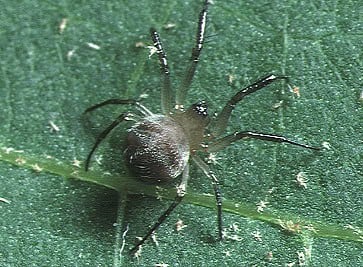
The slingshot spider’s hunting technique begins with patience. After constructing its triangular web and creating tension by pulling on the silk line, the spider waits. It positions itself on a nearby twig, holding the tension thread with its front legs while anchoring itself with its back legs. When an insect flies into the web, the spider instantly releases its grip on the anchor point, causing both the spider and web to catapult forward at astonishing speed. This rapid acceleration allows the web to envelop the prey before it can react or escape. The entire attack occurs in just a few milliseconds—too fast for the human eye to perceive without slow-motion video. After capturing prey, the spider quickly secures it with additional silk before feeding. If the attack fails, the spider simply resets its web by slowly pulling it back into the tensioned position, ready for another attempt.
Record-Breaking Acceleration
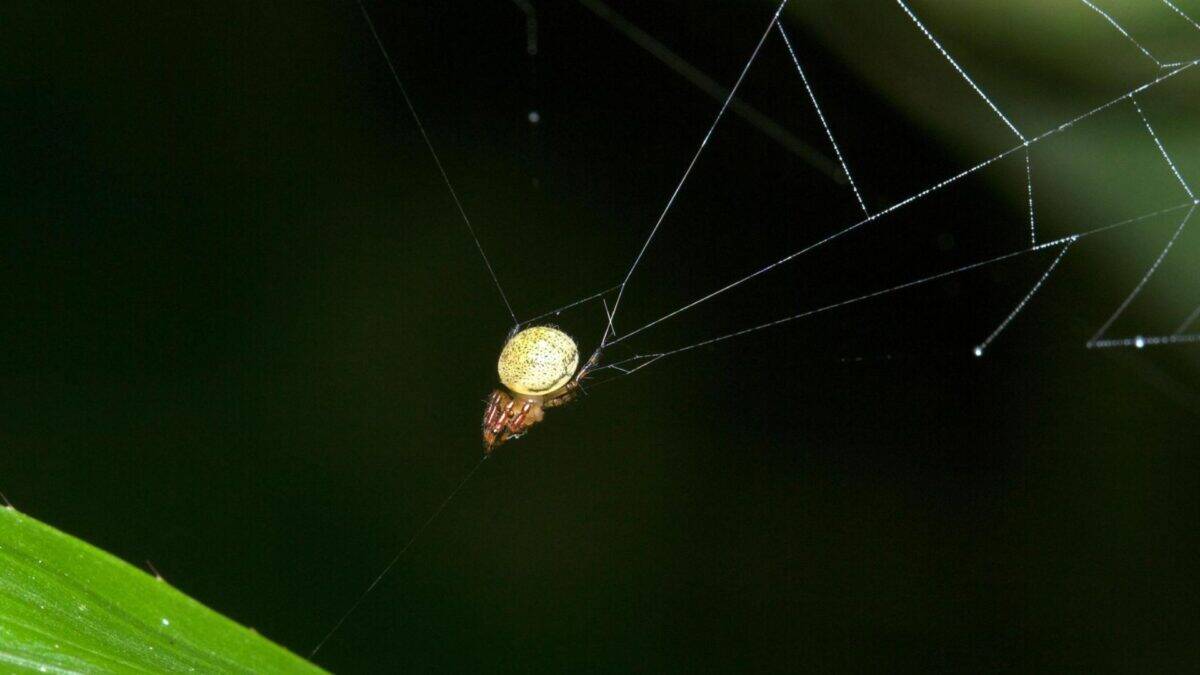
The slingshot spider holds the distinction of achieving one of the fastest accelerations in the animal kingdom, particularly impressive given its tiny size. Research has shown these spiders can reach accelerations of up to 4,300 meters per second squared—equivalent to 440 times the force of gravity (440 g). To put this in perspective, fighter pilots typically lose consciousness at around 9 g, and the highest g-forces humans can briefly withstand without special equipment is around 20-25 g. The spider achieves this phenomenal acceleration in less than a millisecond, reaching speeds of about 4 meters per second. While other animals like trap-jaw ants and mantis shrimp also achieve impressive accelerations, the slingshot spider is unique in using its entire web as a power-amplifying device rather than relying solely on specialized body parts. This represents one of nature’s most effective uses of elastic potential energy for predation.
Biological Power Amplification

What makes the slingshot spider’s hunting method particularly remarkable is its use of power amplification—a biological mechanism that allows animals to produce movements too fast or powerful for their muscles alone. Most animal movements are limited by the inherent constraints of muscle contraction, which can only occur at certain speeds. To overcome this limitation, the slingshot spider uses its muscles slowly to build up energy in the stretched silk—much like stretching a rubber band—and then releases this stored energy almost instantaneously. This power amplification allows the spider to achieve movements approximately 100 times faster than would be possible using muscle power directly. Similar principles are seen in jumping insects, the mantis shrimp’s striking claw, and a chameleon’s projectile tongue, but the slingshot spider is unique in incorporating an external tool—its web—as part of this power amplification system.
Habitat and Distribution
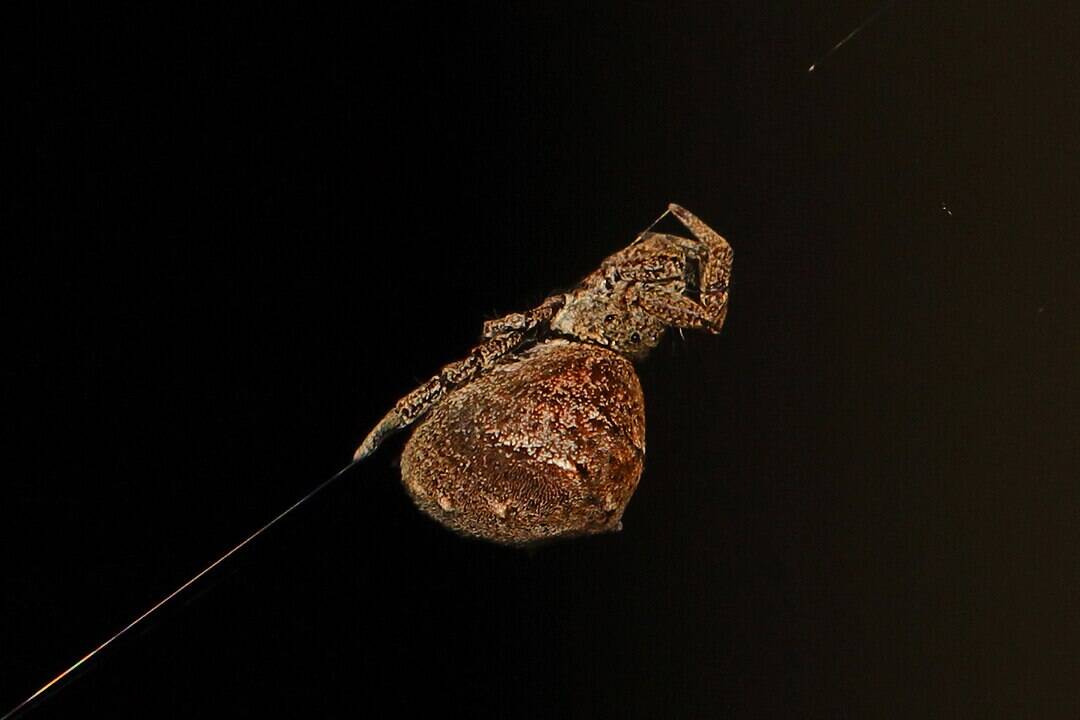
The triangle weaver spider (Hyptiotes cavatus) that uses the slingshot technique is found primarily in the eastern United States and parts of Canada, while related slingshot spider species inhabit tropical rainforests in Peru and other parts of South America. These spiders prefer wooded areas where they can anchor their specialized webs between branches or vegetation. The Peruvian rainforest species studied in recent research thrives in the dense, humid environment that provides both ample anchor points for web construction and abundant flying insect prey. Unlike many spider species that have adapted to human environments, slingshot spiders remain primarily forest dwellers, requiring the specific ecological conditions of woodland or jungle settings to successfully deploy their specialized hunting strategy. Conservation of these forest habitats is therefore crucial for the continued existence of these remarkable arachnids.
Evolutionary Advantages
The evolution of the slingshot hunting technique represents a remarkable adaptation that provides several key advantages. First, it dramatically increases hunting success rates by reducing the time prey has to escape once it contacts the web. Second, the rapid acceleration helps overcome the limitations of the spider’s small size, allowing it to capture larger and faster insects than would otherwise be possible. Third, by controlling the tension in the web, the spider can modulate the force of its attack based on the size of the detected prey, demonstrating remarkable hunting versatility. Evolutionary biologists suggest this specialized technique likely evolved gradually from more conventional web-building behaviors, with natural selection favoring incremental improvements in web tension and release mechanisms. The energetic efficiency of this method is also noteworthy—by using stored elastic energy rather than continuous muscular effort, the spider conserves valuable metabolic resources, allowing it to thrive even when prey is scarce.
Defensive Applications of the Slingshot

While primarily a hunting adaptation, the slingshot mechanism also serves as an effective defense strategy. Researchers have observed that when these spiders detect potential threats—such as larger predators or even human disturbances—they can trigger their slingshot mechanism to rapidly retreat from danger. The sudden backward motion, combined with the spider’s camouflage coloration, makes them extremely difficult for predators to track. If the threat persists, the spider can release its web entirely and drop to safety on a drag line of silk. This dual-purpose adaptation demonstrates how natural selection often favors adaptations that serve multiple functions, increasing their evolutionary value. The defensive use of the slingshot mechanism appears to be especially important during vulnerable periods, such as immediately after molting or during reproductive activities, when the spiders may be more susceptible to predation.
Biomimetic Applications

The slingshot spider’s extraordinary web mechanism has captured the attention of engineers and materials scientists seeking inspiration from nature. This specialized hunting technique offers valuable insights for developing new technologies in several fields. Robotics engineers are studying the power amplification principles to design more energy-efficient jumping or launching mechanisms for small robots. The web’s geometry and tension management system could inform the development of deployable structures for space applications, where compact storage and rapid deployment are essential. Additionally, the precise control of stored elastic energy demonstrated by the spider offers lessons for creating new mechanical systems that require rapid acceleration with minimal energy input. Some researchers are even exploring how the principles behind the slingshot web might influence the design of capture devices for space debris or specialized tools for microsurgery. As with many examples of biomimicry, understanding the slingshot spider’s adaptations may lead to technological innovations that would be difficult to conceive without nature’s example.
Similar Adaptations in Other Species
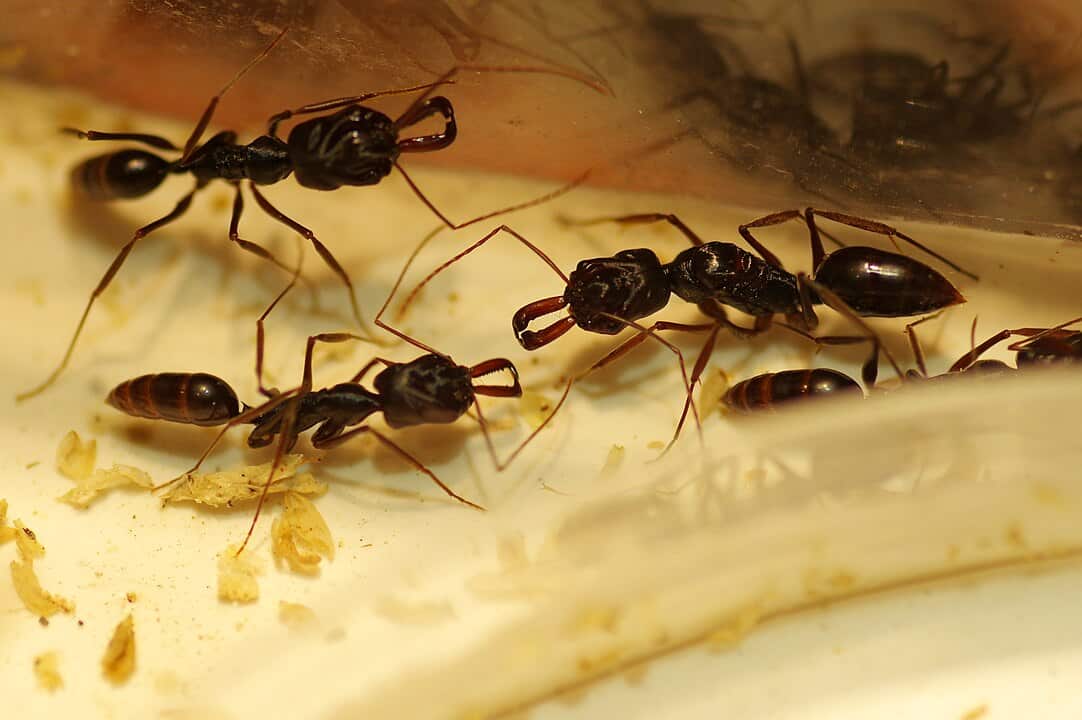
While the slingshot spider’s hunting technique is unique, other organisms have evolved comparable methods of storing and rapidly releasing energy for hunting or movement. The trap-jaw ant can close its mandibles at speeds up to 140 mph using a similar latch-and-release mechanism. Mantis shrimp deliver one of the fastest punches in nature by storing energy in a saddle-shaped structure that works like a spring. Fleas achieve their remarkable jumping ability through a pad of resilin, a highly elastic protein that functions as a biological spring. Even some plants, like the bunchberry dogwood, use hydrostatic pressure to launch pollen at explosive speeds. What distinguishes the slingshot spider is its use of an external construction—the web—rather than relying solely on body structures. This represents an interesting evolutionary parallel to human tool use, where creating external devices extends natural capabilities. By studying these convergent adaptations across different species, scientists gain insight into the physical principles that repeatedly emerge as solutions to similar evolutionary challenges.
Challenges in Researching Slingshot Spiders

Studying the slingshot spider presents unique research challenges that have delayed scientific understanding of these remarkable creatures. Their small size, rapid movements, and forest habitat make observation difficult under natural conditions. The slingshot action happens so quickly—within milliseconds—that only specialized high-speed cameras operating at thousands of frames per second can capture the details. Additionally, these spiders are sensitive to disturbances, often abandoning their webs when researchers approach too closely. The complex three-dimensional structure of the tensioned web requires sophisticated imaging techniques to properly analyze. Laboratory studies are complicated by the difficulty of recreating the proper conditions for web construction and hunting behavior. Despite these challenges, recent technological advances have enabled breakthrough discoveries about these spiders. Field researchers now use portable high-speed imaging systems, laser vibrometry to measure web tension without disturbance, and computer modeling to analyze the physics of the slingshot mechanism, gradually revealing the full complexity of this extraordinary hunting adaptation.
The slingshot spider stands as a powerful reminder of nature’s capacity for ingenious solutions to the challenges of survival. Through millions of years of evolution, this tiny arachnid has developed one of the most sophisticated hunting mechanisms in the animal kingdom—combining principles of physics, materials science, and biomechanics in ways that continue to inspire scientific research. The spider’s ability to store and release energy with such precision challenges our understanding of what small organisms can achieve and demonstrates how evolutionary pressures can lead to remarkable specializations. As we continue to study these extraordinary creatures, they offer not only biological insights but potential applications in human technology. Perhaps most importantly, the slingshot spider reminds us that even in an age of advanced scientific knowledge, nature still holds countless surprises and untold marvels waiting to be discovered in the depths of our forests.

- Why Foxes Scream at Night—and What It Means - July 15, 2026
- Why Salmon Swim Upstream—and How They Do It - July 15, 2026
- The Spider That Uses a Slingshot Web - July 15, 2026
Leave a comment
You must be logged in to post a comment.