

Worried about unexpected vet bills?
Pet insurance can cover thousands in unexpected vet costs. Get a free quote from Lemonade in under 2 minutes.
Get My Free Quote →Sponsored · Opens Lemonade.com
The Sonoran and Mojave Deserts, spanning across the southwestern United States and northwestern Mexico, harbor some of North America’s most fascinating reptilian inhabitants. These arid landscapes, characterized by extreme temperature fluctuations and sparse rainfall, have become evolutionary laboratories where lizards have developed remarkable adaptations to survive and thrive. From the iconic Gila monster with its venomous bite to the tiny zebra-tailed lizard that runs on its hind legs, these desert-dwelling reptiles showcase nature’s ingenuity in the face of harsh environmental challenges. This article explores the diverse lizard species that call these deserts home, examining their unique physical characteristics, behavioral adaptations, ecological roles, and conservation status in these increasingly threatened ecosystems.
The Distinctive Desert Environments
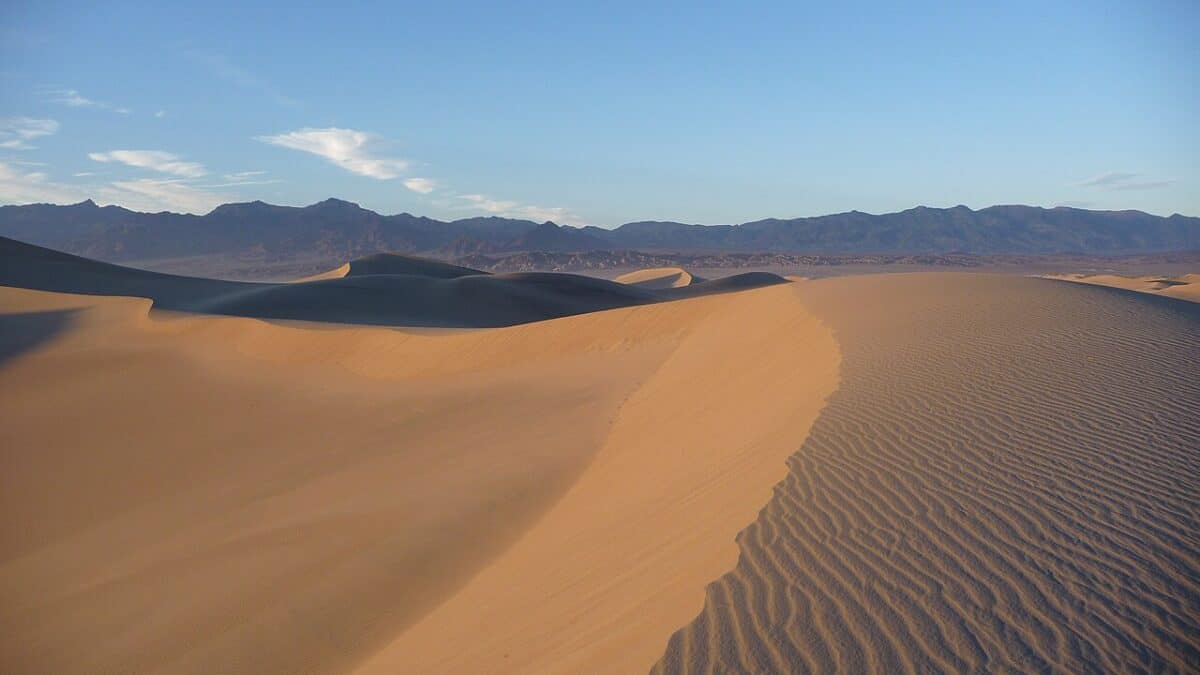
The Sonoran and Mojave Deserts represent two distinct yet interconnected desert ecosystems in North America. The Sonoran Desert, covering approximately 100,000 square miles across Arizona, California, and Mexico, is characterized by its biseasonal rainfall pattern and iconic saguaro cacti. With average summer temperatures exceeding 104°F (40°C) and winter lows rarely dropping below freezing, this desert provides a unique habitat that supports extraordinary biodiversity despite its harsh conditions.
The Mojave Desert, slightly smaller at about 48,000 square miles, stretches across California, Nevada, Utah, and Arizona. Distinguished by its more extreme temperature variations and lower annual rainfall (typically less than 5 inches), the Mojave features Joshua trees as its signature plant. These distinct environmental characteristics have driven the evolution of specialized lizard species with remarkable adaptations for desert survival. The interplay between geography, climate, and evolutionary pressures has created unique ecological niches that different lizard species have evolved to exploit.
The Iconic Gila Monster
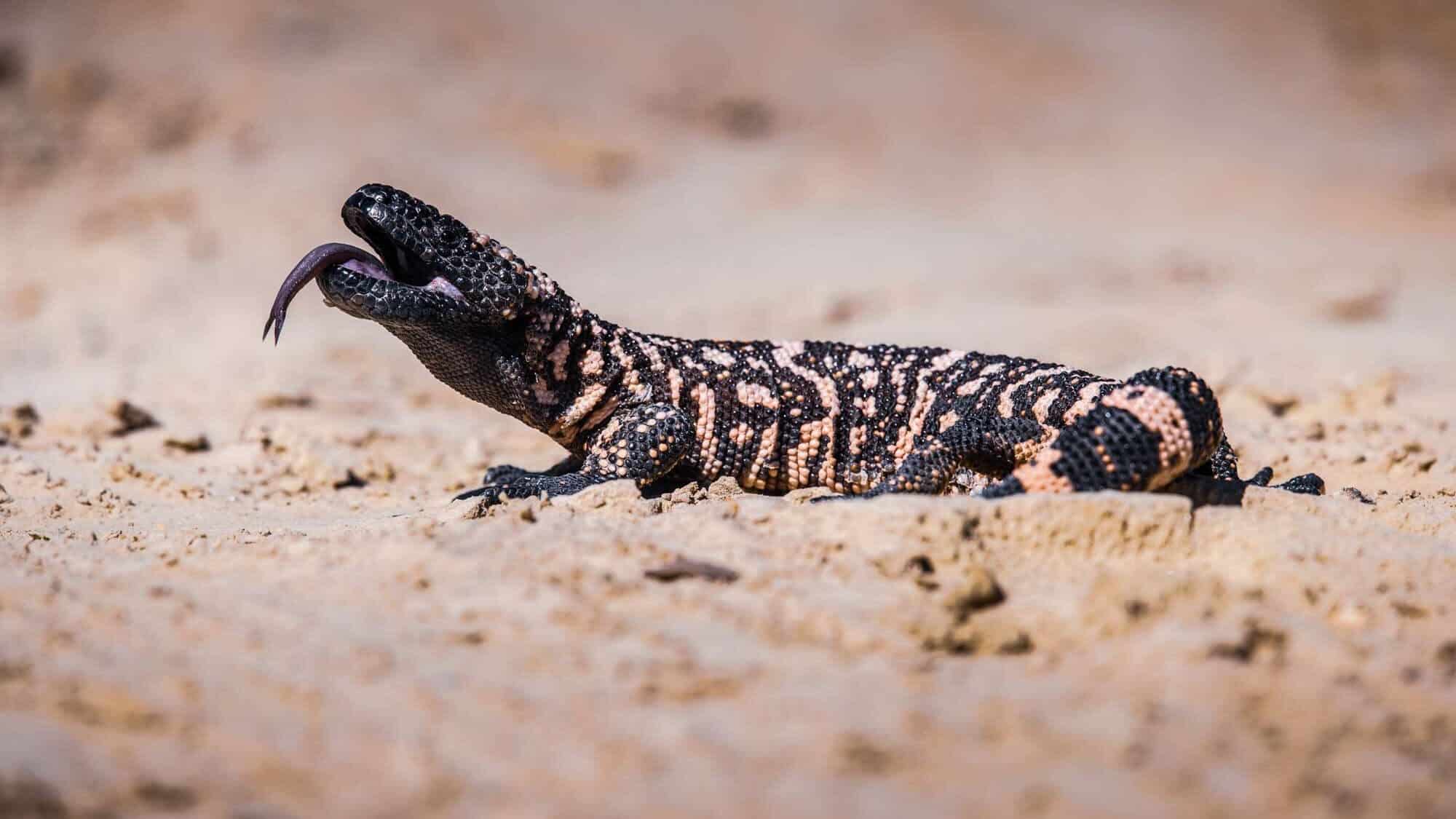
The Gila monster (Heloderma suspectum) stands as perhaps the most recognizable lizard of the Sonoran Desert. As one of only two venomous lizard species in the world (alongside its close relative, the Mexican beaded lizard), the Gila monster has achieved near-mythical status in desert folklore. These heavy-bodied lizards typically grow to about 20 inches in length and are instantly recognizable by their striking black bodies marked with intricate patterns of pink, orange, or yellow beadlike scales. Unlike venomous snakes that inject venom through hollow fangs, Gila monsters have venom glands in their lower jaws and deliver toxins through capillary action along grooved teeth while chewing.
Gila monsters spend up to 95% of their lives underground or in burrows, emerging primarily during the breeding season in spring and early summer. They are remarkably slow metabolizers, able to consume meals equivalent to one-third of their body weight and then subsist on stored fat for months. Their diet consists primarily of bird and reptile eggs, small mammals, and other lizards. Despite their fearsome reputation, Gila monsters are generally sluggish and rarely aggressive unless provoked. Their population has declined due to habitat destruction and illegal collection, leading to their protected status in all states where they occur naturally.
Desert Iguanas: Masters of Heat Tolerance
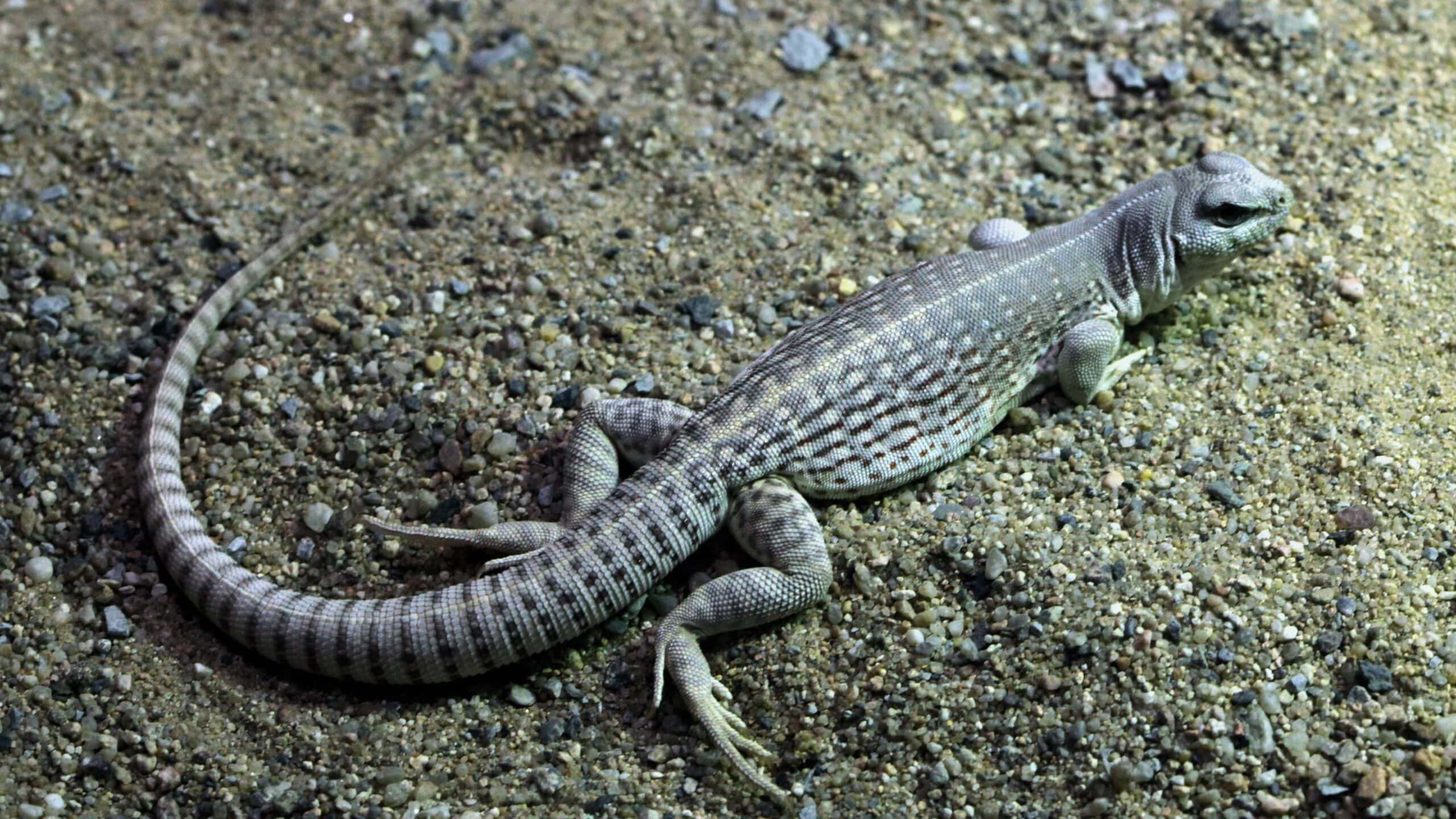
The desert iguana (Dipsosaurus dorsalis) has evolved extraordinary physiological adaptations that allow it to thrive in some of the hottest environments in North America. Medium-sized and pale gray to cream-colored with a distinctive brown reticulated pattern, desert iguanas can grow up to 16 inches in length including their tails. What makes these lizards truly remarkable is their ability to remain active at body temperatures exceeding 107°F (42°C) – temperatures that would be lethal to most other reptiles and certainly to mammals. This heat tolerance enables them to forage during the hottest parts of the day when most predators seek shelter.
Desert iguanas are primarily herbivorous, with their diet consisting mainly of annual flowers, buds, and occasionally insects. They possess specialized adaptations for processing plant material, including enlarged intestines with specialized bacteria that aid in breaking down cellulose. During extreme heat, these iguanas may perform a behavior called “stilting,” where they lift their bodies off the hot sand and stand on extended legs to reduce contact with the scorching ground. They typically retreat to burrows during winter months, entering a state of brumation (reptilian hibernation) until warmer temperatures return in spring.
The Acrobatic Zebra-Tailed Lizard
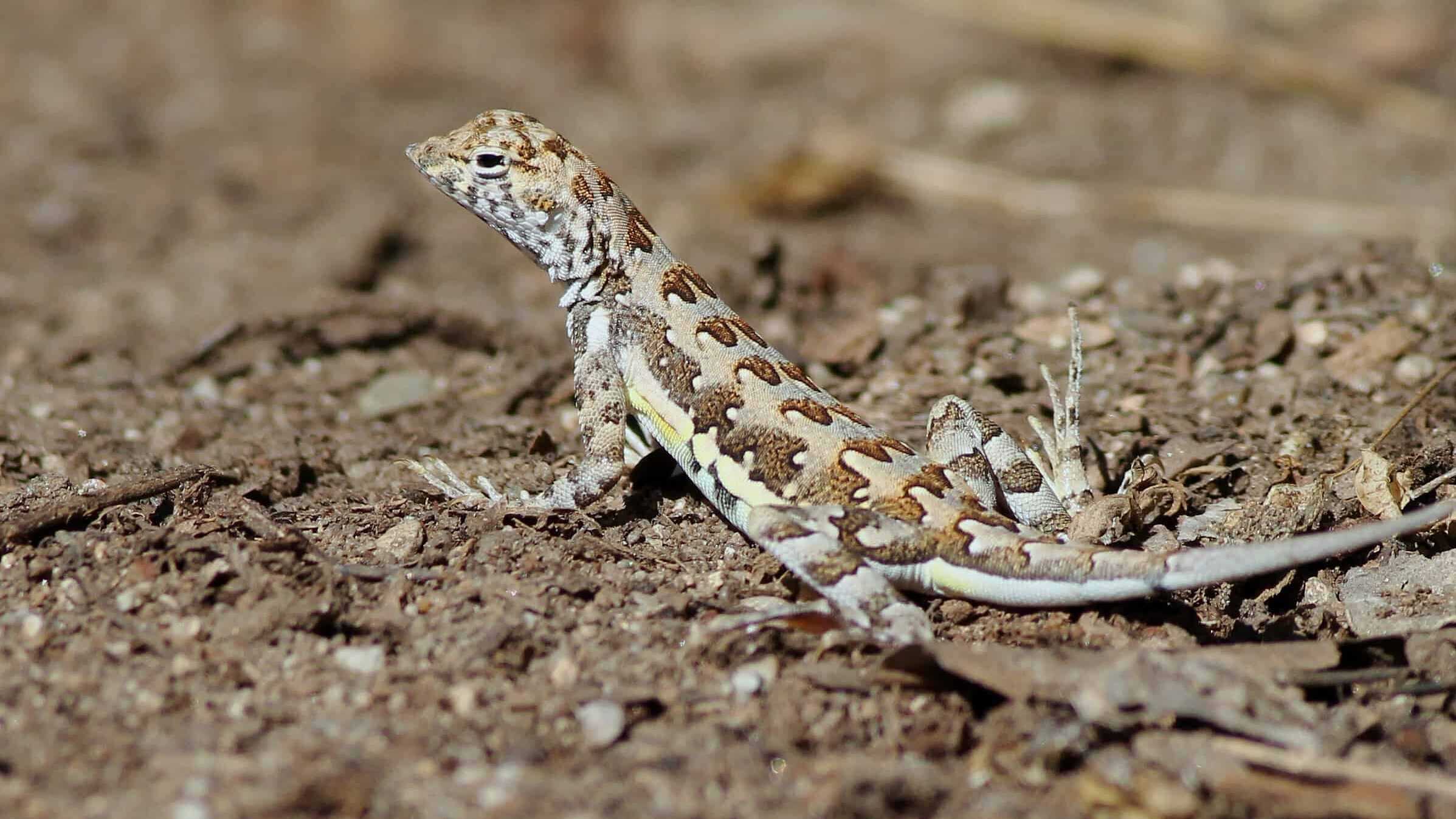
The zebra-tailed lizard (Callisaurus draconoides) exemplifies extraordinary locomotion adaptations for desert life. These small, slender lizards, reaching only about 6 inches in length, are named for the distinctive black and white bands on the undersides of their tails, which they curl over their backs while running. What makes zebra-tailed lizards particularly fascinating is their ability to run on their hind legs at speeds approaching 18 miles per hour, lifting their front legs and tail off the ground in a bipedal sprint that minimizes contact with the hot desert surface and helps them evade predators.
These lizards inhabit open, sparsely vegetated areas with sandy or gravelly substrates in both the Sonoran and Mojave Deserts. They are most active during daylight hours, even in intense heat, feeding primarily on insects, spiders, and occasionally small lizards and plant material. When threatened, zebra-tailed lizards employ a unique escape strategy: they sprint in short bursts, frequently changing direction while flashing the black and white banded undersides of their tails. This tail-flashing behavior is thought to confuse predators by drawing attention away from the lizard’s body. Their remarkable adaptations make them one of the most visually distinctive and behaviorally interesting lizards in these desert ecosystems.
Chuckwallas: The Rock-Dwelling Giants
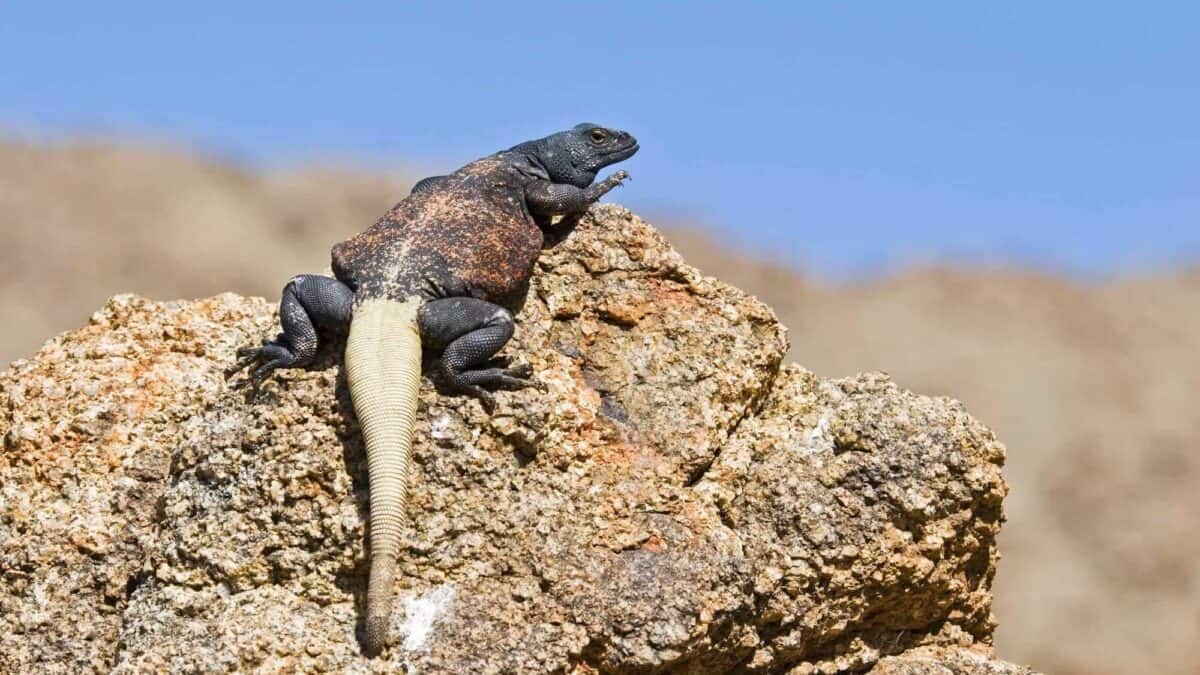
The common chuckwalla (Sauromalus ater) represents one of the largest lizard species native to the Sonoran and Mojave Deserts, with males reaching up to 16 inches in length. These stocky, flat-bodied reptiles possess loose folds of skin around their neck and shoulders, giving them a somewhat wrinkled appearance. Coloration varies by region and age, with adults typically displaying dark bodies ranging from brown to black, often with reddish tails, while females and juveniles exhibit more patterned appearances with bands of brown, gray, or cream. Chuckwallas are entirely herbivorous, specializing in consuming the leaves, fruits, and flowers of desert plants, particularly those of the creosote bush.
Perhaps the most fascinating aspect of chuckwalla behavior is their unique defense mechanism. When threatened, these lizards retreat into rock crevices and then inflate their bodies by gulping air, wedging themselves firmly in place and making extraction extremely difficult for predators. They are highly territorial, with dominant males establishing and defending territories marked by prominent basking spots. Climate adaptations include their ability to tolerate high body temperatures exceeding 105°F (40°C) and their capacity to obtain most of their water from the plants they consume, rarely needing to drink free water. These remarkable adaptations have allowed chuckwallas to thrive in rocky outcrop habitats throughout both desert regions for millions of years.
The Colorful Desert Horned Lizards
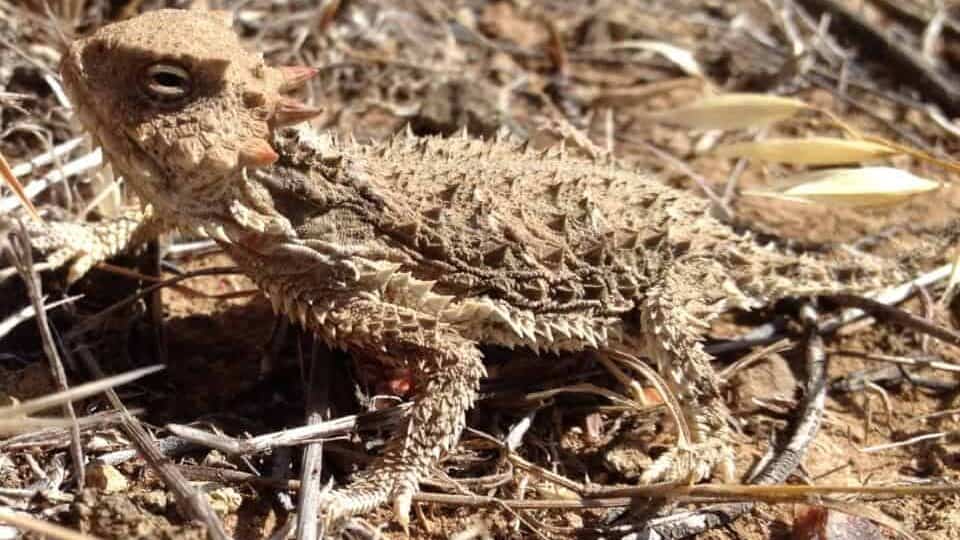
Desert horned lizards (Phrynosoma platyrhinos) are among the most distinctive and beloved reptiles of the Sonoran and Mojave Deserts, often affectionately referred to as “horny toads” despite being true lizards rather than amphibians. These squat, flat-bodied reptiles feature a crown of horn-like spines protruding from the back of their heads, with smaller spines scattered across their backs and sides. Their coloration provides excellent camouflage, typically matching the predominant soil color of their habitat, ranging from sandy beige to reddish-brown with darker patches. Desert horned lizards typically grow to only 3-5 inches in body length, with a short, stubby tail.
What truly sets these lizards apart are their specialized dietary preferences and unique defense mechanisms. Desert horned lizards are myrmecophagous, meaning they primarily eat ants, consuming thousands daily with specialized teeth and digestive systems adapted to neutralize ant toxins. When threatened, they employ several distinctive defense strategies: first attempting to rely on camouflage, then inflating their bodies to appear larger and more difficult to swallow. Their most famous defense is the ability to squirt blood from specialized blood vessels near their eyes, shooting streams up to 5 feet away. This blood contains chemicals distasteful to canine and feline predators. Unfortunately, habitat destruction, collection for the pet trade, and the spread of invasive ant species have caused significant population declines, making conservation efforts increasingly important.
Leopard Lizards: The Desert Predators
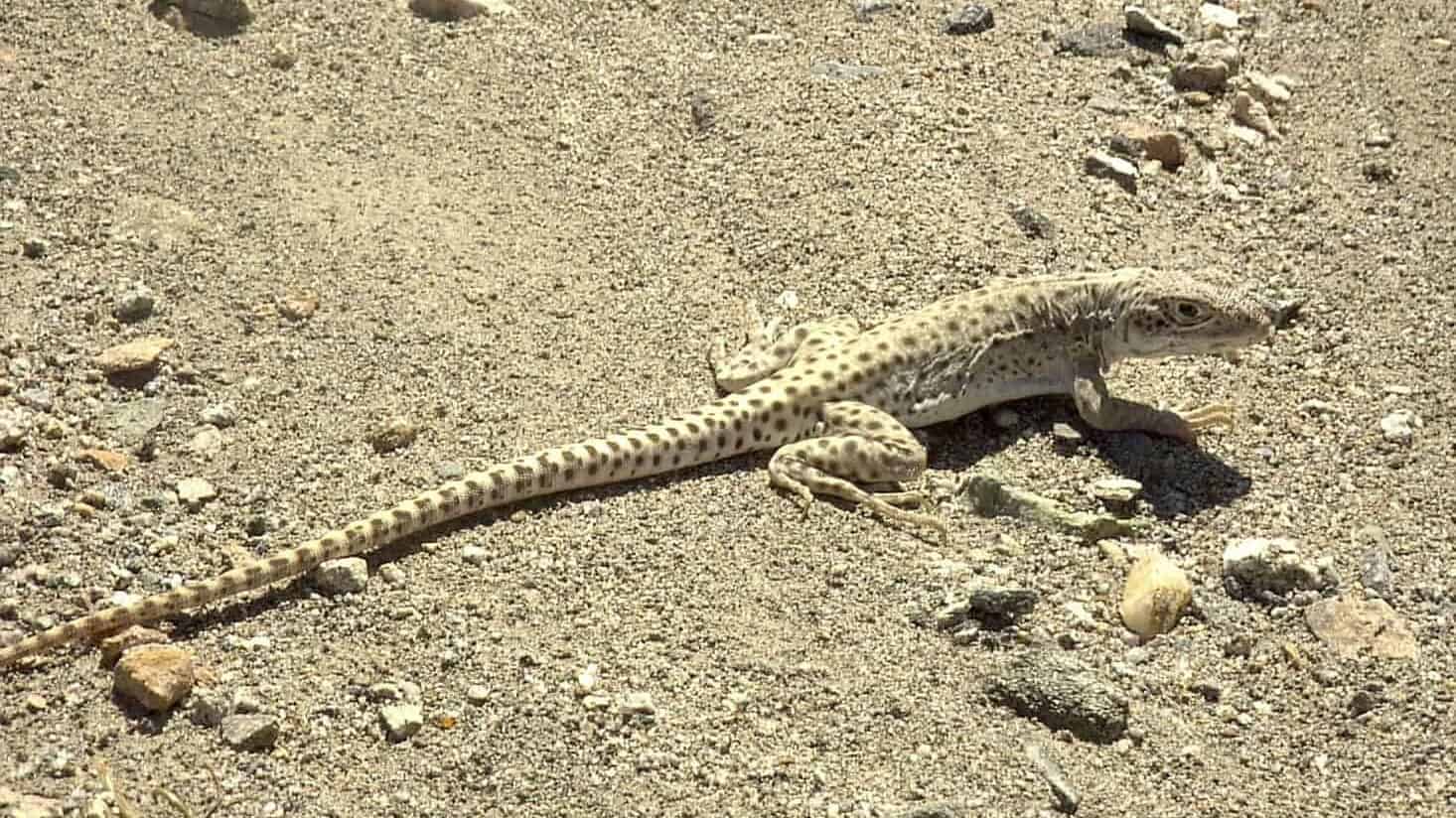
The long-nosed leopard lizard (Gambelia wislizenii) exemplifies the predatory specialists among desert lizards. These sleek, powerful reptiles can reach up to 15 inches in total length, with long tails making up about two-thirds of their body length. Their name derives from their distinctive pattern of dark spots on a light gray, brown, or yellowish background that provides excellent camouflage in their desert habitats. Males develop vibrant breeding coloration during the mating season, with their sides, throats, and sometimes entire bodies turning bright salmon or rusty-red. Their elongated snouts and powerful jaws are specialized adaptations for their predatory lifestyle.
As active hunters, leopard lizards employ a sit-and-wait strategy, remaining motionless until prey comes within range, then exploding into action with remarkable speed and agility. They can jump up to two feet vertically to capture flying insects and are capable of running on their hind legs when pursuing prey or escaping threats. Their diet consists primarily of smaller lizards, large insects, small rodents, and even small snakes. During breeding season, females develop orange or reddish spots or bars on their sides and can retain their eggs internally until they’re almost fully developed, an adaptation that protects developing embryos from extreme desert temperatures. These fascinating predators occupy an important ecological niche, helping to control populations of smaller lizards and insects throughout both desert ecosystems.
Side-Blotched Lizards: Evolutionary Marvels
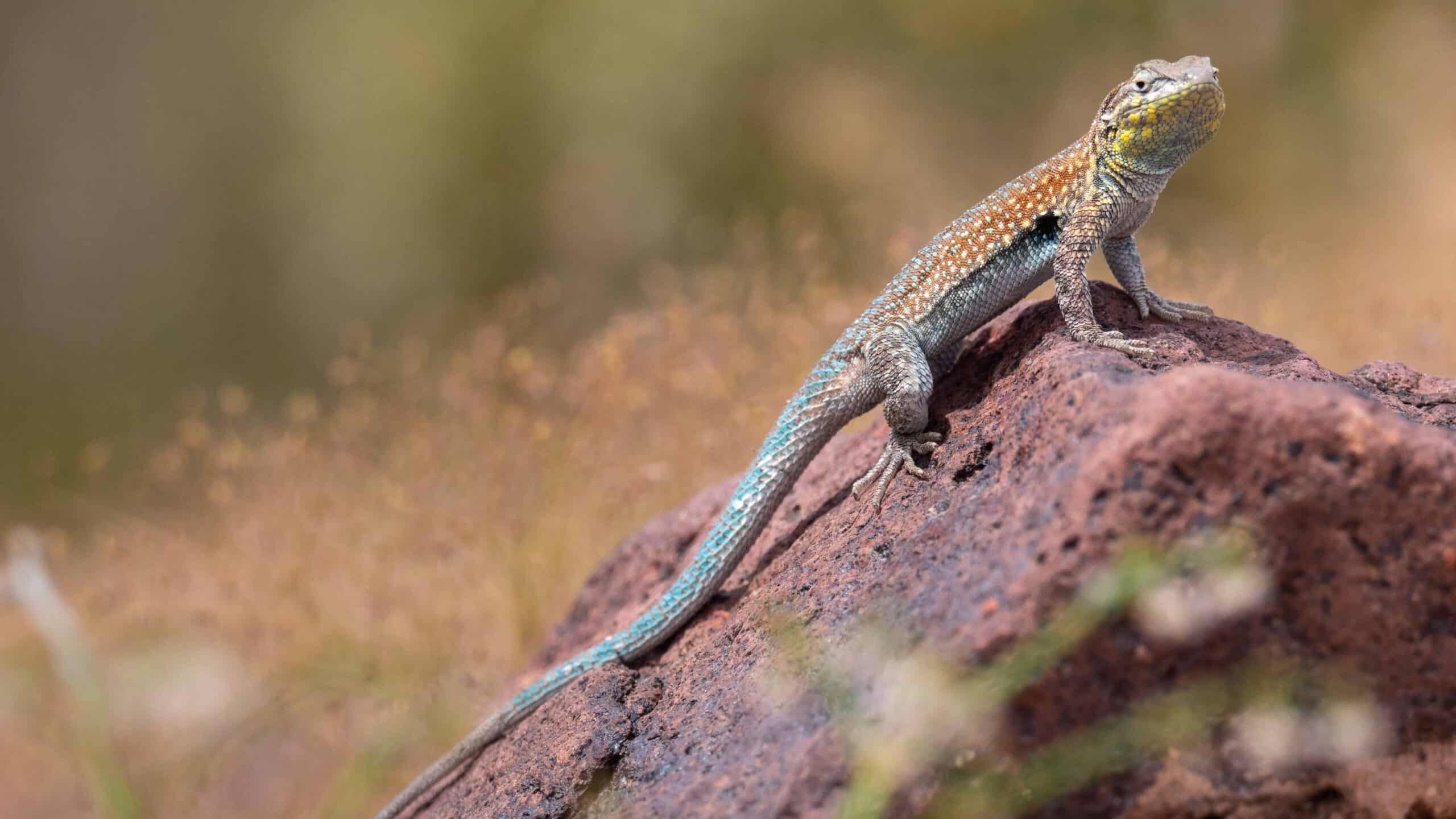
The common side-blotched lizard (Uta stansburiana) may be small in size—rarely exceeding 2.5 inches in body length—but it represents one of the most scientifically fascinating lizard species in North American deserts. Named for the characteristic dark blotches behind their front legs, these lizards exhibit remarkable genetic diversity and have become important subjects for evolutionary biology research. Their most intriguing feature is their rare evolutionary strategy called “rock-paper-scissors” polymorphism, where males occur in three distinct “morphs,” each with different throat colors (orange, blue, or yellow) that correspond to different reproductive strategies. Each morph has advantages over one particular competing morph but is vulnerable to the third—similar to the game rock-paper-scissors.
Side-blotched lizards are extremely abundant throughout both the Sonoran and Mojave Deserts, adapting to nearly every microhabitat from sandy flats to rocky slopes. They are primarily insectivorous, feeding on ants, beetles, flies, and other small invertebrates. These lizards demonstrate remarkable thermal adaptations, adjusting their activity patterns seasonally to maintain optimal body temperatures. Their reproductive strategy involves laying multiple clutches of eggs during the breeding season, with females capable of storing sperm from early-season matings. Despite their small size and seeming vulnerability, side-blotched lizards have evolved to become one of the most successful and numerous vertebrates in these desert ecosystems, showcasing evolution’s capacity to produce complex and effective survival strategies even in the harshest environments.
The Elusive Banded Gila Monster
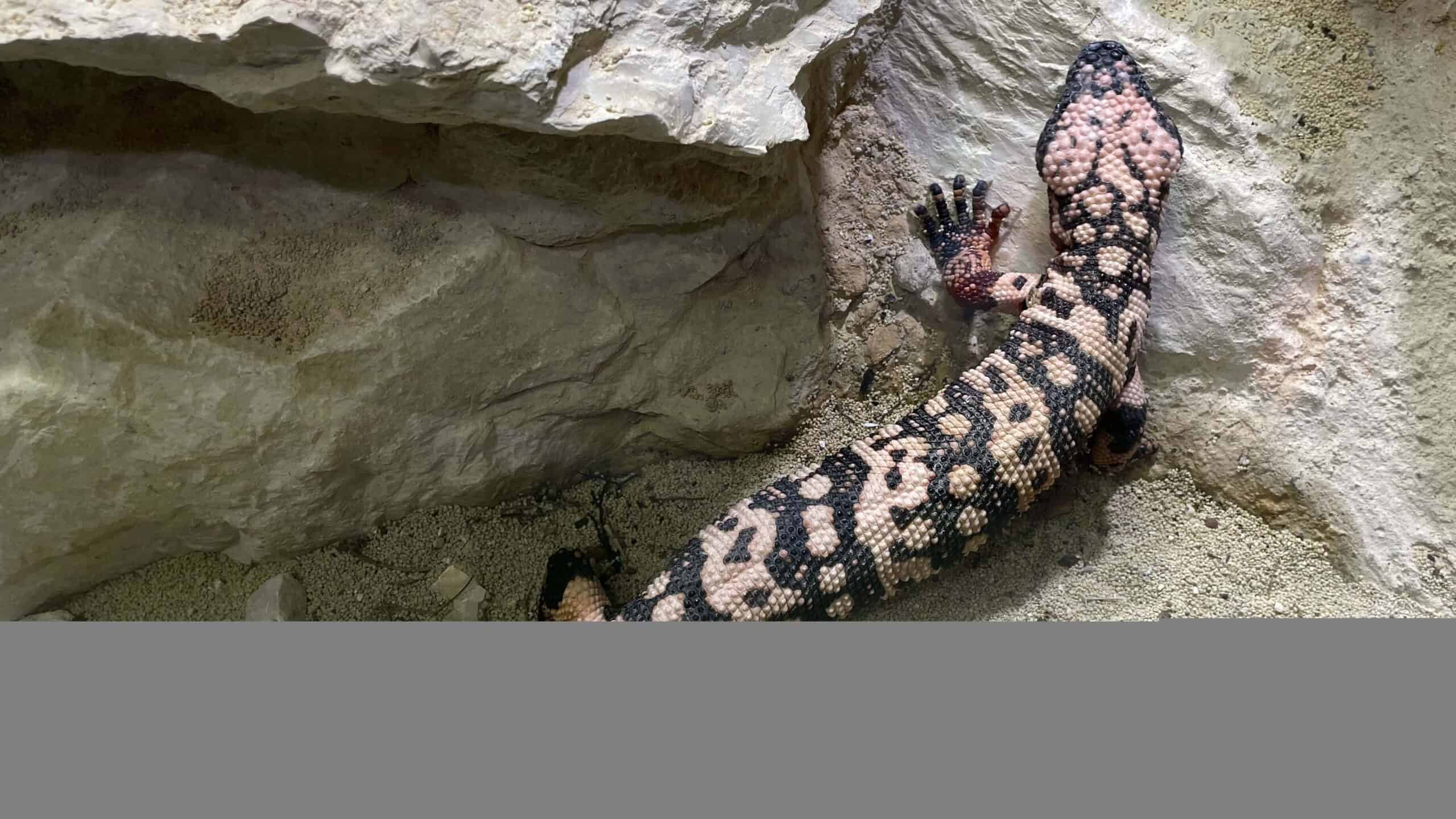
The banded Gila monster (Heloderma suspectum cinctum) represents a distinct subspecies of the Gila monster primarily found in the Mojave Desert portions of Nevada, Utah, and California. Distinguished from the reticulated Gila monster by its pattern of broader, more defined bands of pink, orange or yellow against a black background, this subspecies showcases striking visual differentiation resulting from geographical isolation. Typically growing to 18-20 inches in length, banded Gila monsters are slightly smaller on average than their reticulated cousins but share the same robust, beaded appearance and venomous capabilities.
Particularly elusive even compared to other Gila monsters, the banded subspecies spends up to 98% of its life underground or in sheltered microhabitats, emerging primarily during the spring breeding season or after summer monsoon rains. They exhibit remarkable metabolic efficiency, sometimes eating only 5-10 meals per year while subsisting on stored fat reserves. Their venom, while rarely fatal to humans, contains components being studied for potential medical applications, including a compound (exendin-4) that has led to the development of medication for type 2 diabetes. Population densities for banded Gila monsters are extremely low—often less than one individual per square mile—making encounters rare and contributing to their mysterious reputation. Due to their scarcity, habitat loss, and illegal collection, they receive protection throughout their range, with conservation efforts focused on habitat preservation and public education.
Desert Night Lizards: Masters of Concealment
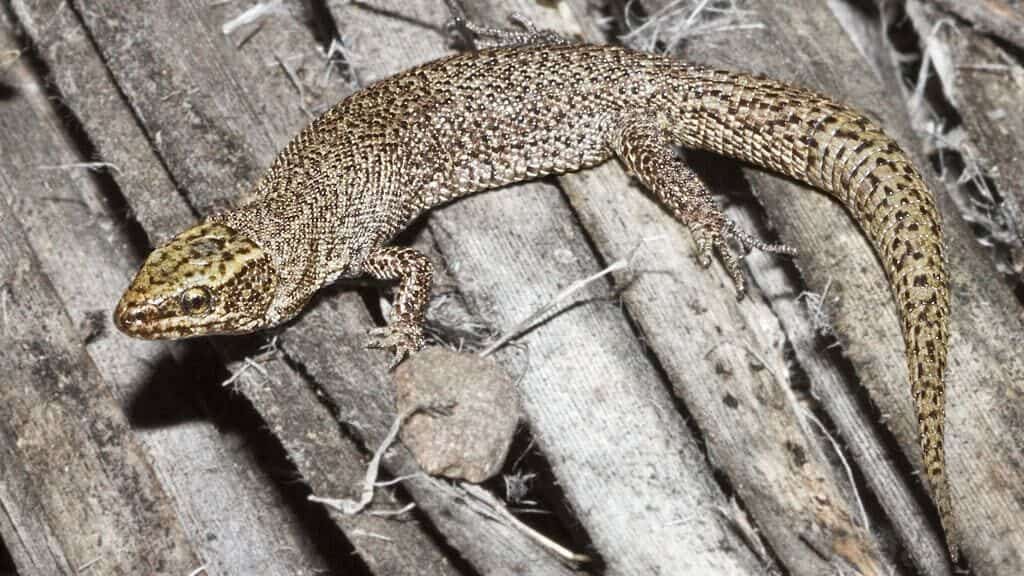
Desert night lizards (Xantusia vigilis) represent some of the most cryptic and specialized reptiles in the Sonoran and Mojave ecosystems. These diminutive lizards, rarely exceeding 2.5 inches in body length, possess smooth, shiny scales and coloration ranging from yellowish-brown to grayish-olive that perfectly matches the vegetation under which they spend most of their lives. Unlike most desert lizards that bask openly in the sun, night lizards are primarily crepuscular and nocturnal, emerging from their hiding places during twilight hours or on overcast days. Most remarkable is their almost obligate association with specific desert plants, particularly Joshua trees and yuccas, where they live beneath the fallen, decaying leaves and branches.
Desert night lizards possess several unique physiological adaptations that distinguish them from other desert reptiles. They are viviparous, giving birth to live young rather than laying eggs—a rare trait among lizards that protects developing offspring from extreme environmental conditions. Their metabolism is extraordinarily efficient, allowing them to survive on minimal food resources consisting primarily of small insects and spiders that share their microhabitat. Night lizards can maintain stable populations in extremely restricted areas, sometimes with dozens of individuals living beneath a single fallen yucca or Joshua tree. Their specialized lifestyle makes them particularly vulnerable to habitat disruption, especially the loss of their host plants due to climate change, wildfires, or development. Despite their abundance in suitable habitats, their secretive nature means they remain among the least observed lizards in these desert ecosystems.
The Desert Spiny Lizard: Treetop Dwellers
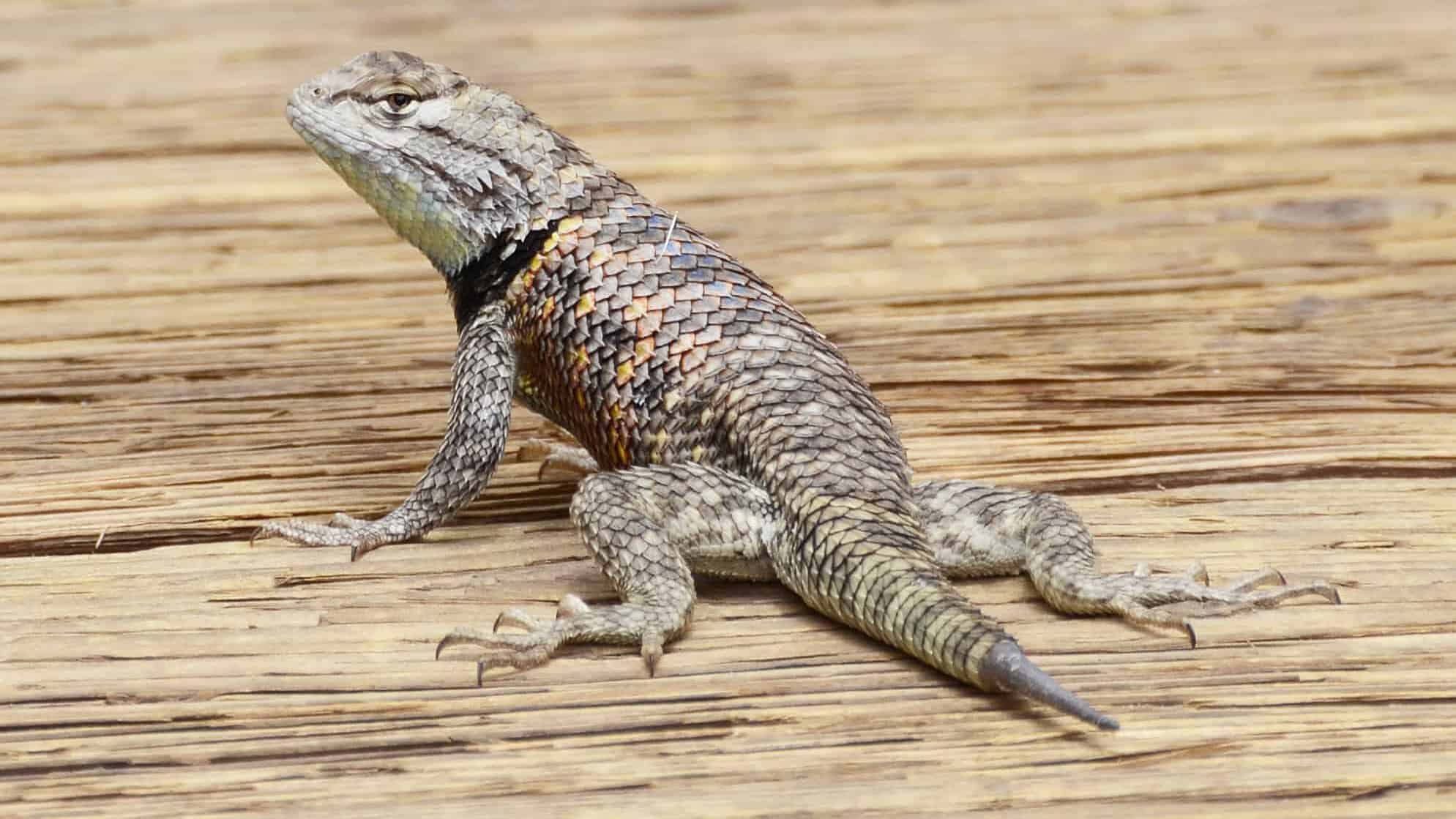
The desert spiny lizard (Sceloporus magister) represents one of the most visually striking and ecologically versatile reptiles in the Sonoran and Mojave Deserts. These robust lizards typically grow to 4-5 inches in body length (excluding the tail) and are instantly recognizable by their heavily keeled, pointed scales that give them a distinctly spiny appearance. Adult males display dramatic coloration, with bright blue patches on their bellies and throats, often complemented by black collars and orange or yellow scaling along their sides. Females and juveniles exhibit more subdued patterning with crossbars or spots on a gray to brown background. Unlike many desert lizards that remain ground-dwelling, spiny lizards are excellent climbers, frequently ascending trees, cacti, and rock faces to heights of 15 feet or more.
Desert spiny lizards occupy a distinct ecological niche as semi-arboreal predators. Their diet consists primarily of insects, spiders, and occasionally smaller lizards, with their elevated perches providing both hunting advantages and escape from ground predators. These lizards employ a fascinating territorial display behavior where males perform “push-ups” while exposing their colorful throat and belly patches to warn off rivals. During extreme heat, they practice “shuttling behavior,” moving between sun and shade to precisely regulate body temperature. Their reproductive strategy involves females laying clutches of 5-12 eggs in shallow soil depressions, often producing multiple clutches in favorable years. Despite habitat pressures from urban development, desert spiny lizards have proven adaptable, sometimes colonizing residential areas where suitable vegetation exists.
Worried about unexpected vet bills?
Pet insurance can cover thousands in unexpected vet costs. Get a free quote from Lemonade in under 2 minutes.
Get My Free Quote →Sponsored · Opens Lemonade.com

- The Best Hamster Breeds for First-Time Pet Owners - June 10, 2026
- 25 Surprising Facts About Spiders and Their Role in Ecosystems - June 10, 2026
- The Lizard That Changes Colors With Its Mood - June 10, 2026