

There is a creature roaming the American Southwest that most people have never seen, yet it has been quietly sharing this land with humans for millions of years. It looks unsettlingly like a pig, smells like something truly awful, and travels in tight-knit groups with a loyalty that would make some human families jealous. The javelina, officially known as the collared peccary, is one of the most fascinating and misunderstood wild animals in North America.
Most Americans outside the Southwest have no idea these animals exist. That is honestly a little surprising, given that there are well over a quarter million of them across just a handful of states. So which US states harbor , how do they live, and what makes certain landscapes irresistible to these spiky, odorous creatures? Be surprised by what you are about to discover.
What Exactly Is a Javelina? Not a Pig, Not a Boar
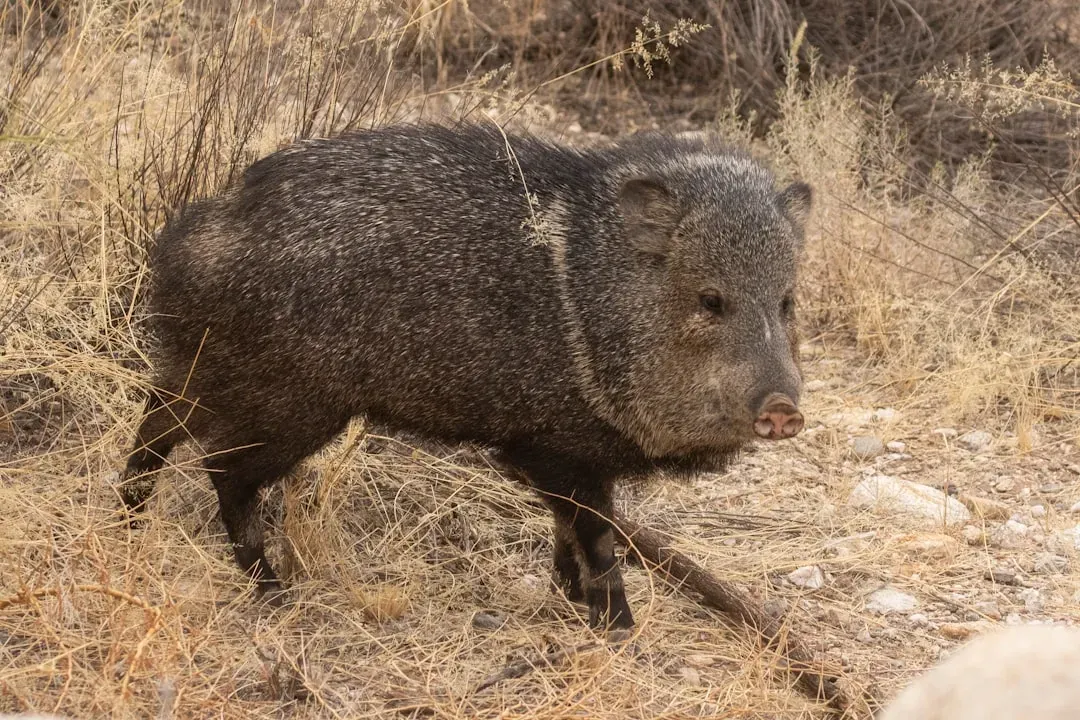
Let’s be real – the moment most people catch a glimpse of a javelina, they immediately think “wild pig.” The resemblance is striking enough that even early European settlers made the same mistake. Javelinas have actually evolved separately from wild pigs for almost 40 million years, and they are biologically different, even classified in a separate family entirely.
Grayish black, with wiry hair, large wedged heads, and thin legs with hooves, these ungulates look like pigs but are not related to either domestic pigs or the wild pigs found in Texas. Think of them more like a distant cousin who ended up looking strangely similar through millions of years of parallel evolution.
Peccaries usually measure between 90 and 130 centimeters in length, and a full-grown adult usually weighs about 20 to 40 kilograms. The word javelina itself derives from the Spanish word for “wild boar,” which tells you something about just how confusing this animal has always been to outsiders. One reliable way to tell them apart from feral hogs is the distinctive lighter ring of hair encircling their neck and shoulders, which is the very collar that gives them their scientific name.
Texas: The Undisputed Javelina Capital of the United States
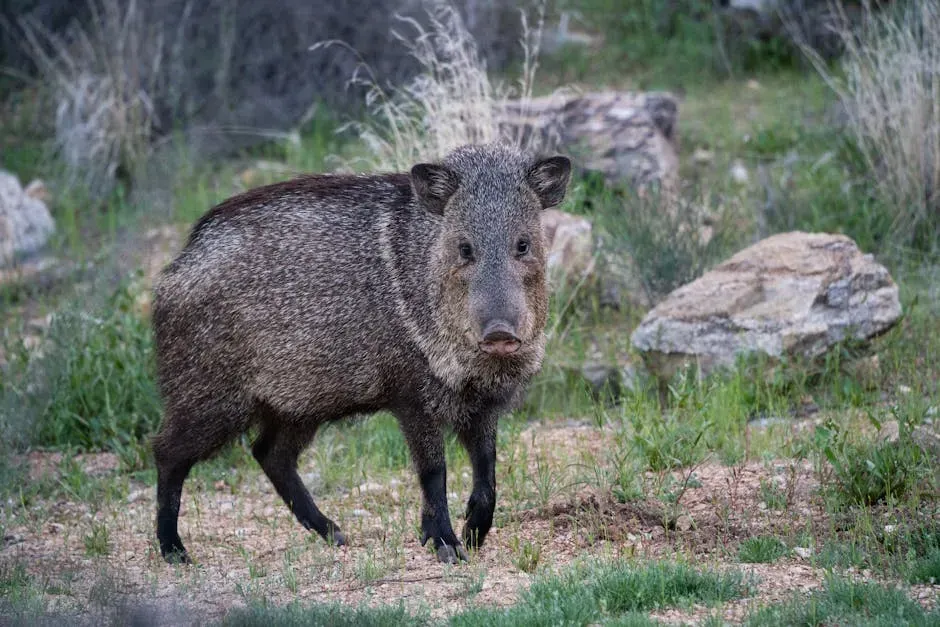
If javelinas were citizens voting in a popularity contest, Texas would win by a landslide. Current United States javelina population estimates exceed 250,000 animals, with Texas numbers hovering around 200,000. That is an astonishing share of the total national population concentrated in a single state.
In Texas the javelina is found in the more arid or semi-arid parts of the state, with most occurring in the South Texas brush country, the Trans-Pecos desert grasslands, and the Edwards Plateau’s oak-juniper woodlands. Picture rolling scrublands stitched together with prickly pear cactus and mesquite, and you have a near-perfect javelina paradise.
This snout-nosed desert dweller can be hunted in 99 out of 254 Texas counties, including Bexar, Wilson, Karnes, and Goliad counties, and a few protected herds still roam freely from the coastal plains to the Trans-Pecos. In Texas, the javelina was first given game animal status and the protection of seasons and bag limits in 1939, which helped populations stabilize and eventually flourish into what we see today.
Arizona: Where Javelinas Walk Into Your Backyard
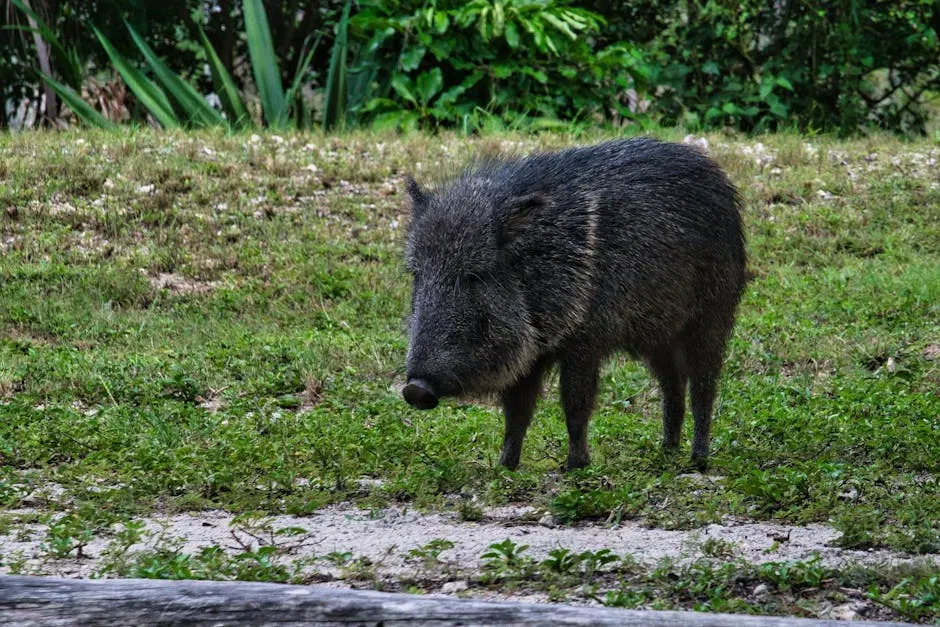
Arizona is home to roughly 45,000 javelinas, making it the second most javelina-dense state in the country. What makes Arizona particularly fascinating is just how urban these animals have become. Notable populations exist in the suburbs of Phoenix and Tucson, where they feed on ornamental plants and other cultivated vegetation.
There are also urban populations as far north as Sedona, where they have been known to fill a niche similar to raccoons and other urban scavengers. I think that comparison to raccoons is both hilarious and perfectly apt. Except, unlike raccoons, a javelina will destroy your entire garden in one night and smell like a gym locker while doing it.
In Arizona, javelina can be found anywhere between the desert floor and up to 7,000 feet in elevation, with typical habitat often within desert-type ecosystems below 5,500 feet. Javelina herd home ranges are on average 800 acres or so, and unless banished from the herd, these individuals will live out their entire lives within their home region. That is a kind of geographical loyalty that most humans could never pull off.
New Mexico: The Expanding Frontier
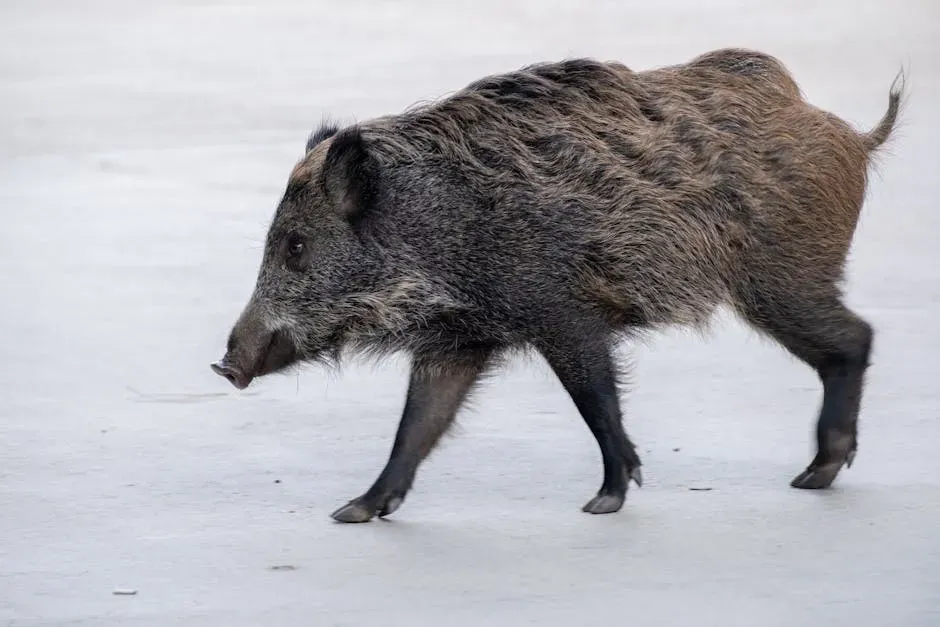
New Mexico is the third and final state where javelinas officially call home, though their numbers are considerably smaller than Texas and Arizona. Historically, javelina have occupied a variety of habitats in southern New Mexico, from Lea to Hidalgo County. Their stronghold has traditionally been in the warmer, lower-elevation zones of the southern part of the state.
Here is the thing though – these animals are on the move. According to the Journal of Mammalogy, javelina have been increasing their range in New Mexico following population declines early in the 1970s. Present day sightings now reach as far east as Bitter Lake and the Roswell areas, and are moving up the east side of the state, through Bosque Del Apache, Clines Corners, and even as far north as Santa Fe.
Publications from the 1960s mapped two different javelina populations in the state that were considered two different subspecies, located in the Bootheel-Gila region and near Carlsbad Caverns. Watching this species quietly expand its territory in real time is one of the more underreported wildlife stories in the American Southwest right now.
How Javelinas Live: Squadrons, Stink, and Survival
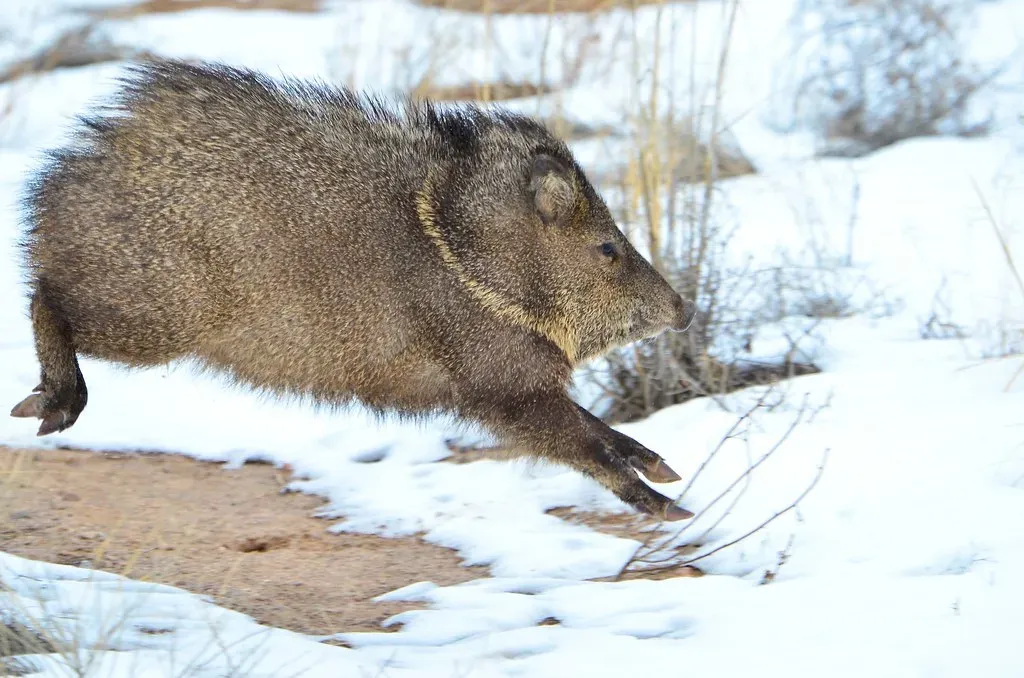
The social life of a javelina is surprisingly sophisticated. Javelinas travel in “squadrons” of at least 10 animals and up to 50. The term “squadron” is genuinely perfect for them – they move together like a coordinated unit, defending territory and watching out for each other with impressive dedication.
Peccaries have scent glands below each eye and another on their backs, and they use the scent to mark herd territories, which range from 30 to 280 hectares. Javelina in a family group will rub against each other’s glands, called a “javelina handshake,” so that the individual scents mix and transform into a group perfume. Honestly, it is endearing in a strange, smelly sort of way.
About the size of a medium dog, even with their short legs and stocky bodies, javelinas are light on their feet and fast runners, capable of reaching up to 35 miles per hour. The javelina is also adapted to survive prolonged periods of drought, and can utilize the water in prickly pear cacti better than most other mammals by eating the thorny pads, with kidneys attuned to conservation by concentrating urine. That is some seriously impressive desert engineering right there.
Javelinas and Humans: A Growing, Sometimes Complicated Relationship
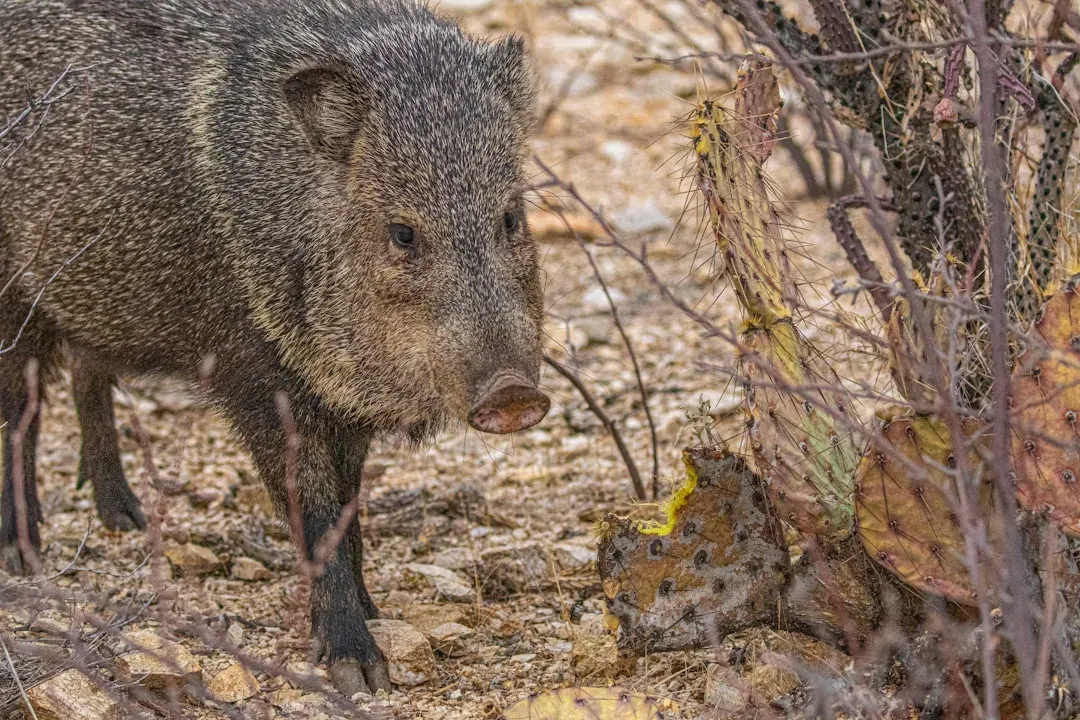
As cities in the Southwest continue to spread outward into previously wild land, the line between “wildlife” and “neighborhood visitor” keeps blurring. Javelinas have joined the ranks of deer, skunks, raccoons, and coyotes – they aren’t living on the edge of urban communities anymore, but solidly in them. Especially in Tucson, where javelinas are a common sight and topic on social media.
Javelinas are out in the early mornings and at night and are infamous for tearing up landscaping – they are avid diggers for grubs, worms, bulbs, and bugs. They also knock planters to the ground to dig into them, and they raid front porches in the fall for pumpkins. That last detail, raiding porches for pumpkins, is the most chaotic and delightful thing about this entire species.
Each year more than 60,000 hunters go afield hunting javelina in Arizona, New Mexico, and Texas, and approximately 25,000 javelina are harvested each year. Javelina are doing well overall and are not listed as threatened or endangered, which is genuinely good news for an animal that faced heavy hunting pressure in the early twentieth century. It is hard to say for sure what the next few decades will bring as urban expansion continues, but for now, the javelina’s future looks reasonably bright across all three of its American home states.
The Bigger Picture: Why These Three States Matter
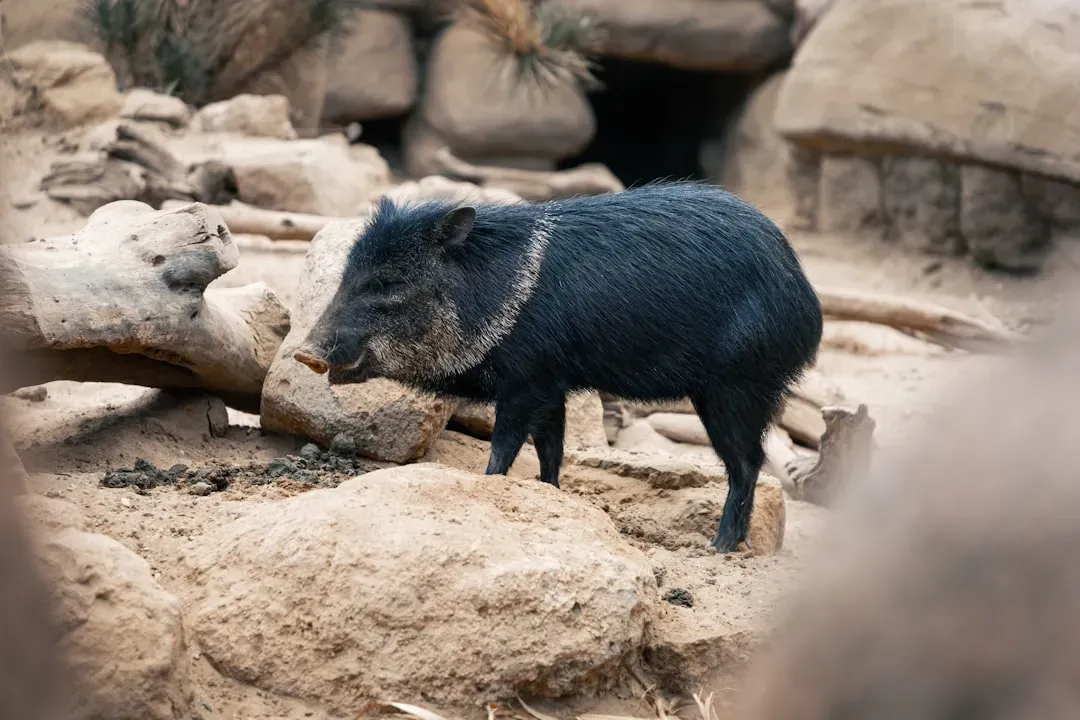
In the United States today, the javelina is found only in Arizona, New Mexico, and Texas, making these three states uniquely important to the survival and study of this remarkable animal in North America. No other American states have established wild populations of any significance, making the American Southwest a kind of sanctuary for a creature that has roamed this continent for tens of millions of years.
Texas holds the overwhelming majority of the national population, Arizona brings an intense and visible urban presence that almost no other wildlife story can match, and New Mexico offers perhaps the most intriguing chapter of all – a population actively expanding its range in real time. Each state tells a different part of the same fascinating story.
What ties all three together is the same rugged, sun-baked, thorn-studded landscape that shaped the javelina over millions of years. The collared javelinas in the US are at home in dry grasslands, chaparral, and desert biomes, though more are being spotted in northern Arizona and New Mexico’s forests. These animals did not choose these states by accident. They belong to this land in a way that very few creatures still do, and that is worth paying attention to.
The javelina is proof that wild America isn’t only found in the forests of the north or the mountains of the west. Sometimes it is trotting through a Tucson backyard at 2am, smelling like a catastrophe, and not caring at all what you think about it. What other wild animals lurking at the edges of American cities do you think deserve more attention? Tell us in the comments.

- 17 Ways a Horse Shows It Has Picked Its Person That Even Experienced Riders Completely Miss - August 8, 2026
- 18 Quiet Signals a Horse Sends the One Person It Has Completely Claimed as Its Own - August 8, 2026
- 18 Signs an Old Cat Has Quietly Chosen One Person to Be Beside It at the End - August 8, 2026