
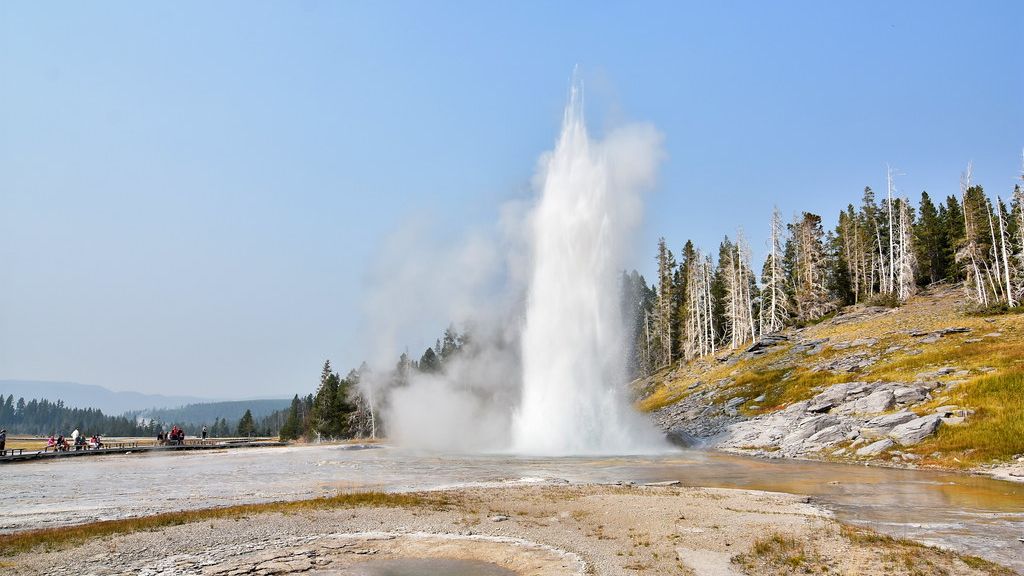
Most visitors to Yellowstone show up for the wildlife and the geysers. They photograph Old Faithful, walk the boardwalks past neon-colored hot springs, and drive home marveling at the scenery. Few stop to consider what is actually producing all of that heat, steam, and geological restlessness beneath their feet.
The short answer to the question above is not quite “once.” Yellowstone doesn’t just have a volcano – Yellowstone is a volcano. A living, active one. The longer answer reaches back millions of years, across half a continent, and involves some of the most violent geological events Earth has ever witnessed.
The Supervolcano Sitting Under the Park
Yellowstone National Park is situated over a supervolcano capable of an eruption of magnitude 8, the highest ranking on the Volcanic Explosivity Index. That’s not a theoretical rating based on guesswork. It’s a classification earned through past behavior.
According to the United States Geological Survey, a volcano is considered “super” if it has had at least one explosion that released more than 240 cubic miles of material, which is roughly twice the volume of Lake Erie. Yellowstone has cleared that bar more than once.
A plume of molten rock rising beneath the park creates one of the world’s largest active volcanoes, and evidence of this can be seen all around in the form of geysers, hot springs, mud pots, and other thermal features. The landscape you visit as a tourist is essentially the surface expression of a geological engine running continuously underground.
Three Cataclysmic Eruptions That Reshaped a Continent
Molten rock rising from deep within the Earth produced three cataclysmic eruptions more powerful than any in the world’s recorded history. The first caldera-forming eruption occurred about 2.1 million years ago, and subsequent activity focused within the National Park area produced another huge eruption 631,000 years ago, forming the Yellowstone caldera as we now see it.
The three caldera-forming eruptions were respectively about 6,000, 700, and 2,500 times larger than the May 18, 1980 eruption of Mount St. Helens in Washington State. That comparison is useful: the 1980 St. Helens eruption was catastrophic by any modern standard, and yet it barely registers compared to what Yellowstone produced.
Together, the three catastrophic eruptions expelled enough ash and lava to fill the Grand Canyon. Each time, the ground above the emptied magma chamber gave way entirely. The Yellowstone supervolcano collapsed on itself after each of these major eruptions, sucking trees, boulders, and even mountains into the crater that formed – a depression known as a caldera.
During these three giant caldera-forming eruptions, tiny particles of volcanic debris covered much of the western half of North America, likely a third of a meter deep several hundred kilometers from Yellowstone and several centimeters thick farther away. This wasn’t a regional event. It was continental.
The Hotspot That Drives It All
Understanding Yellowstone requires stepping back from the park itself and thinking about the force that created it. Yellowstone sits above a melting anomaly within the Earth called a “hotspot,” powered by a plume of hot material that may extend as deep as the boundary between the planet’s mantle and core.
The hotspot is stationary relative to the moving tectonic plates that make up Earth’s surface. As the North American plate moves to the southwest over the hotspot, the center of volcanic activity therefore appears to be migrating to the northeast, leaving a trail of volcanism stretching to the southwest from present-day Yellowstone across the Snake River Plain of southern Idaho, getting progressively older along the trend.
As Earth’s crust moved southwest over the Yellowstone hotspot during the past 16.5 million years, it produced more than 140 cataclysmic explosions known as caldera eruptions. Remnants of ancient calderas reveal that the eruptions began at the Oregon-Idaho-Nevada border some 16.5 million years ago, then moved progressively northeast across what is now the Snake River Plain.
Seismic tomography has revealed a roughly 220-mile-wide, cylindrical thermal anomaly extending from the deepest mantle to just beneath Yellowstone, supporting the mantle plume origin. It’s one of the clearest pictures scientists have of what drives this system.
What Lies Beneath the Surface Today
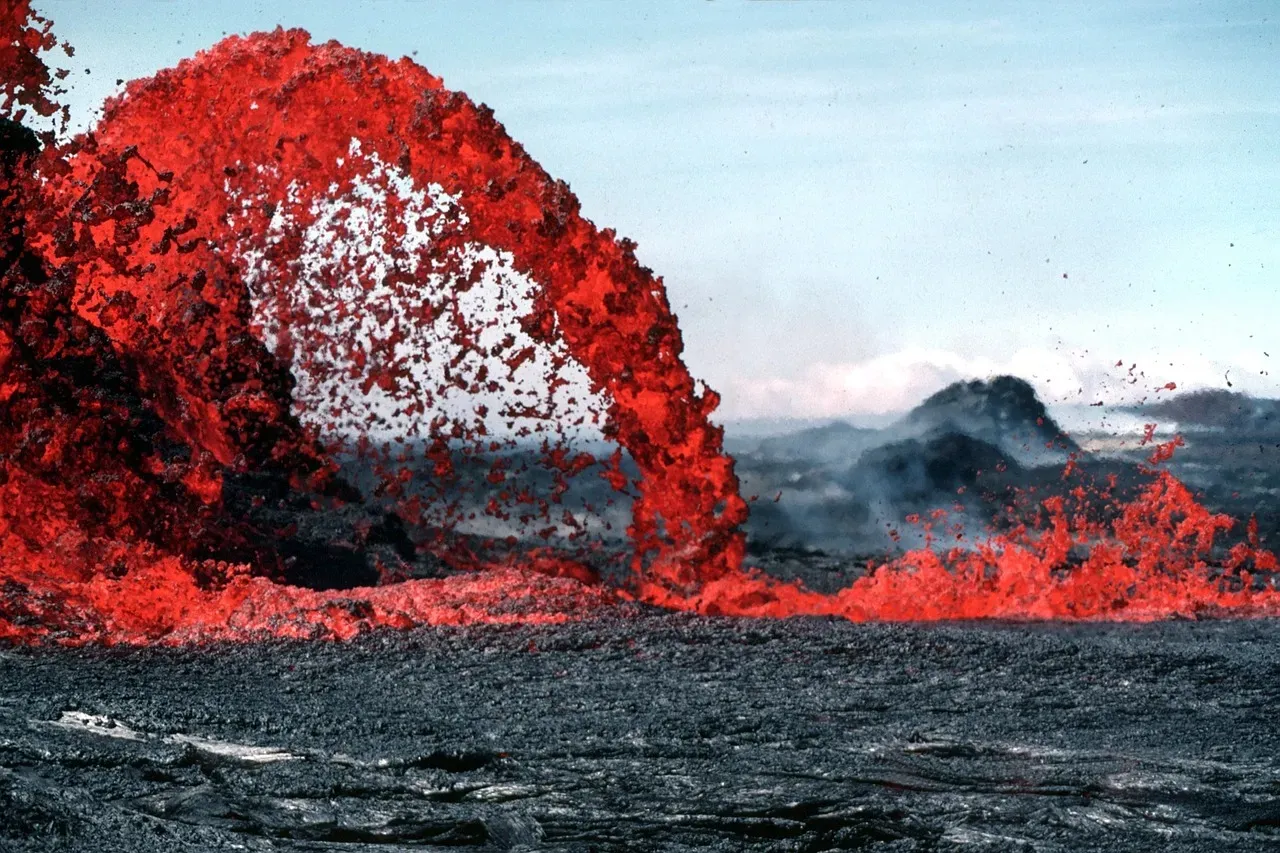
The magma is still there. It hasn’t gone anywhere. Since its most recent major eruption approximately 640,000 years ago, Yellowstone has remained geologically active, primarily due to the vast magma chamber beneath the caldera. This chamber is estimated to contain around 4,000 cubic kilometers of partially molten material, making it one of the largest of its kind globally.
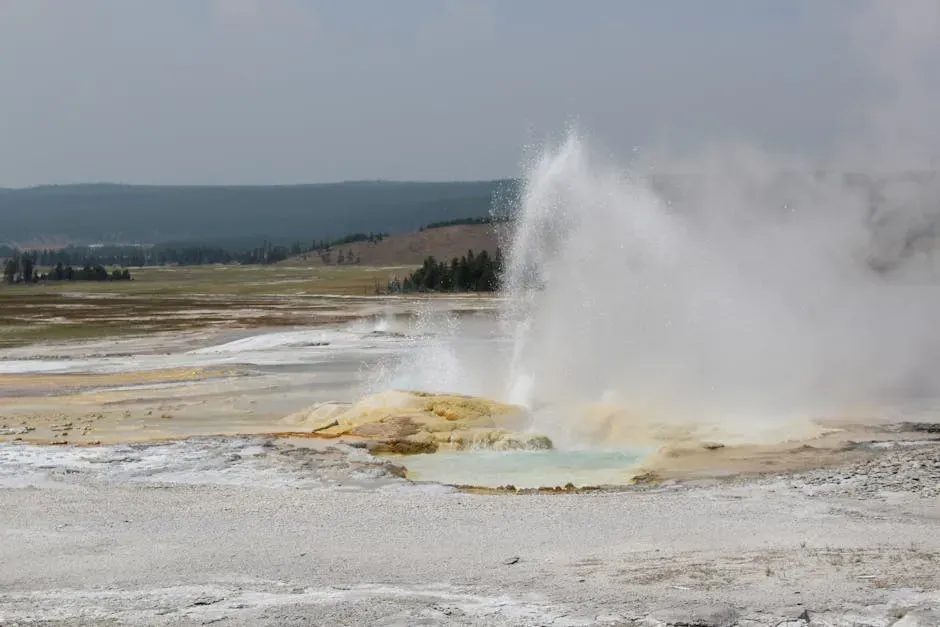
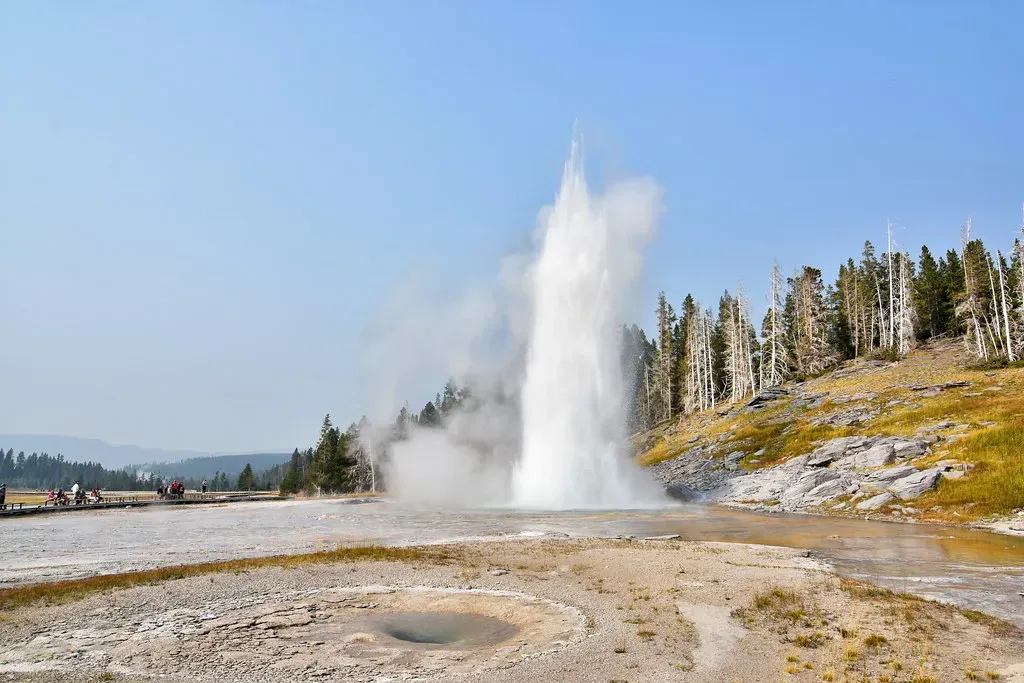
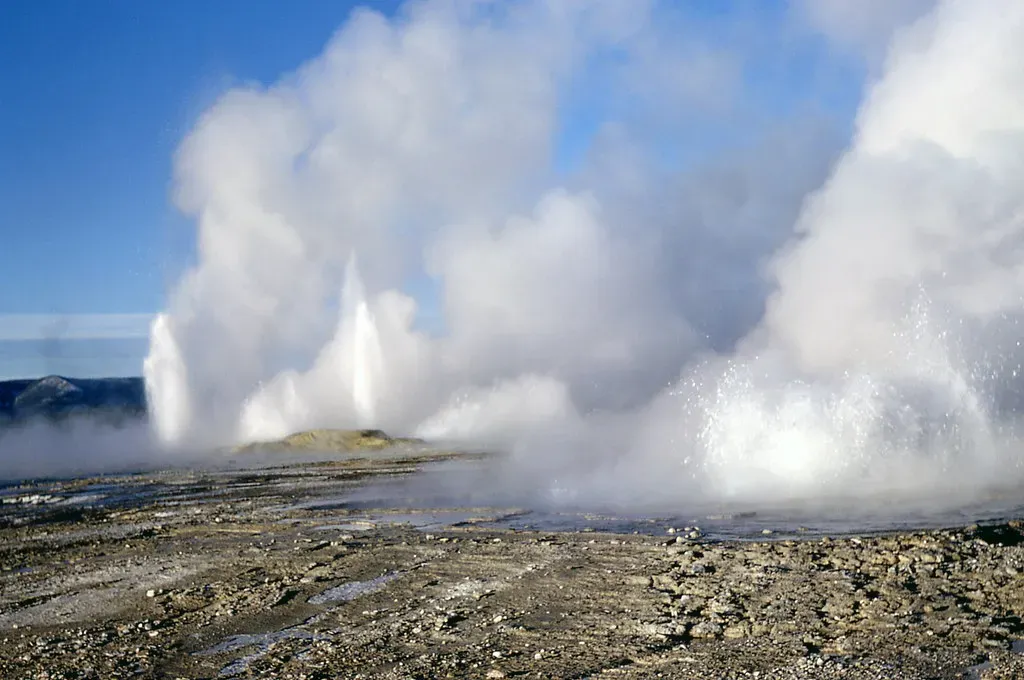
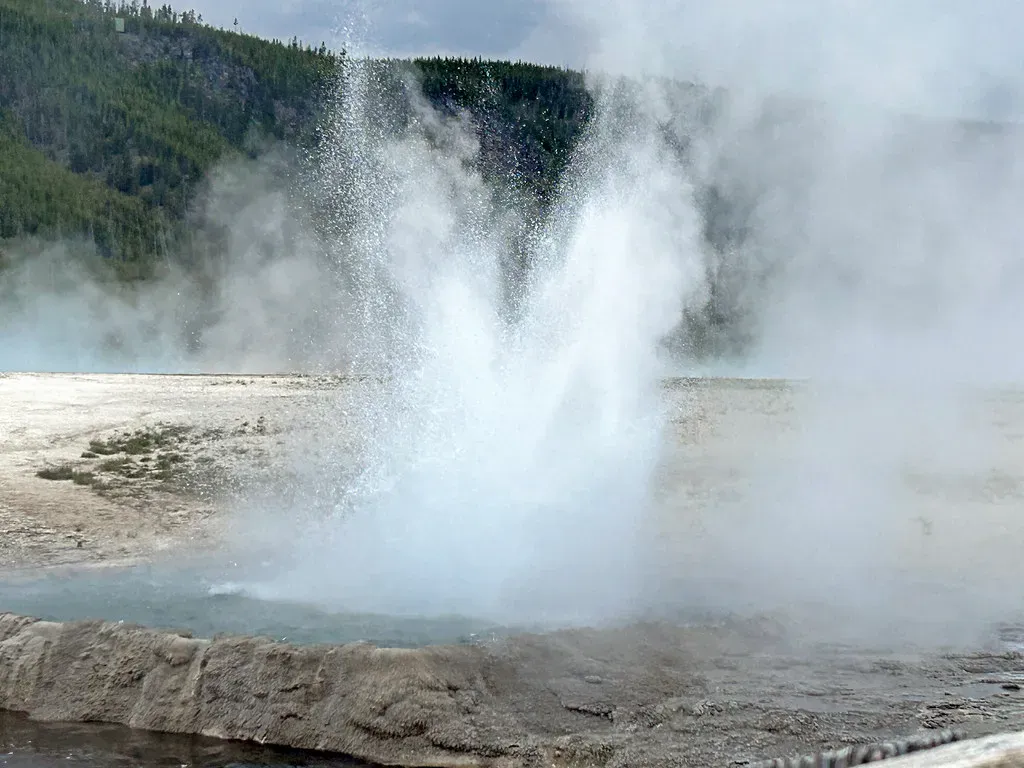
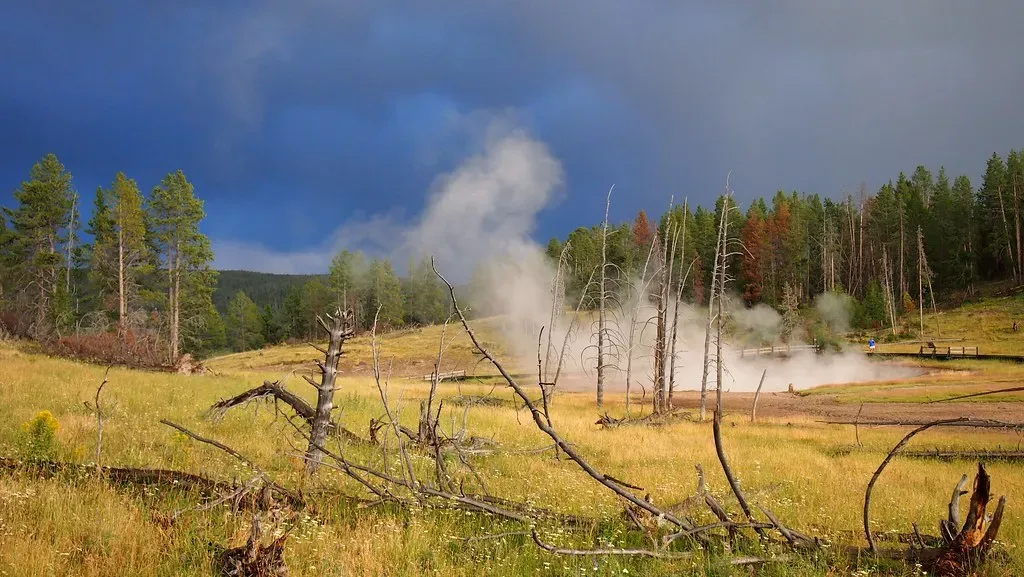
Heat conducted from the molten rock, found four to five miles beneath the surface of the park, moves upward to the groundwater system, creating the spouting geysers and bubbling hot springs that draw millions of visitors each year. The park’s famous thermal features are, in a very real sense, the volcano breathing.
Yellowstone averages between 1,000 and 3,000 earthquakes a year, most of them so small they can’t even be felt. Because earthquakes and volcanoes are closely related, these tremors can indicate activity happening inside the supervolcano. None of this points to imminent danger, but it does confirm the system is very much alive.
Geologists closely monitor the elevation of the Yellowstone Plateau, which has been rising as quickly as 150 millimeters per year as an indirect measurement of changes in magma chamber pressure. The upward movement of the caldera floor between 2004 and 2008 was more than three times greater than ever observed since such measurements began in 1923.
Should Anyone Be Worried About the Next Eruption?
This is the question that catches most people’s attention, and the scientific answer is measured and clear. USGS, University of Utah, and National Park Service scientists with the Yellowstone Volcano Observatory maintain that they “see no evidence that another such cataclysmic eruption will occur at Yellowstone in the foreseeable future.”
The most recent period of dormancy has already lasted 70,000 years and may continue for thousands of additional years. That is not a comforting statistic so much as a grounded geological fact. The system operates on timescales that make human history look brief.
Contrary to some media reports, Yellowstone is not “overdue” for a super eruption. The idea that eruptions follow a reliable clock is a misconception. Volcanoes do not operate on schedules. Researchers believe we would have warning signs long before any supervolcano eruption, and that the ground would swell significantly due to expanding pressure from underneath.
The International Union of Geological Sciences included the Yellowstone volcanic and hydrothermal system in its assemblage of 100 geological heritage sites around the world, recognizing it as a place of genuine scientific importance rather than just spectacle.
Conclusion
Yellowstone was not once a massive volcano. It still is one. The caldera, the geysers, the earthquake swarms, the ground that rises and falls with subterranean pressure – all of it points to a system that remains energetic and ongoing. The Yellowstone Plateau volcanic field developed through three volcanic cycles spanning two million years that included some of the world’s largest known eruptions.
What makes this place remarkable isn’t the threat it poses. It’s the window it opens into how dynamic the Earth actually is beneath the relatively thin skin we live on. The tourists who stand at the edge of a boiling spring are, without always realizing it, standing on one of the most geologically significant landmasses on the planet.
There is something worth sitting with in that fact. The park’s wildness isn’t just ecological. It goes all the way down.
