

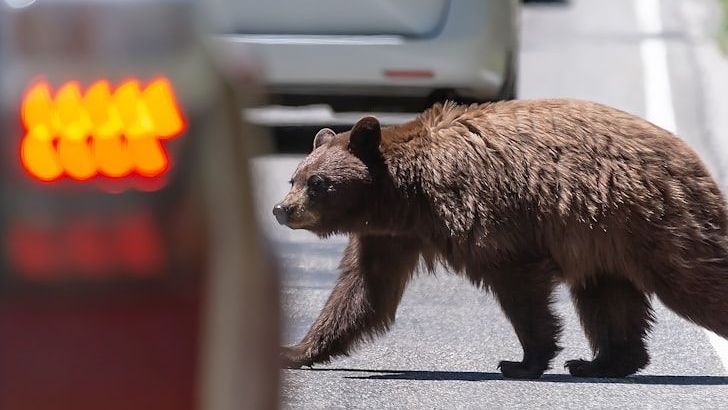
A black bear pausing at the shoulder, glancing left, then right, and only then stepping onto the asphalt — that’s the kind of split-second scene that makes your jaw drop a little. It’s surprising, a bit heart-stopping, and honestly kind of inspiring to see in the middle of a busy road. The viral clip, published on September 2, 2022, shows a moment that flips our expectations about wildlife and traffic in Upstate New York.
“Bear looks both ways before crossing highway in Upstate New York.”
Where It Happened: Upstate New York’s Bear Country
Upstate New York is classic black bear country, where dense forests brush up against highways that carry commuters, tourists, and long-haul trucks. In this mix of trees and traffic, wildlife and people constantly cross paths, sometimes literally. That’s what makes the bear’s careful pause so gripping: it unfolds on a stretch of road where animals are often seen, but rarely acting this cautiously. The video captures a slice of daily life in a region that balances wild landscapes with busy infrastructure. It’s a quick clip, but it speaks volumes about how animals navigate human spaces. And it quietly reminds drivers that the forest doesn’t end where the shoulder begins.
Highways here cut across natural corridors that bears use to find food, mates, and seasonal shelter. When those corridors intersect with pavement, the results can be risky for everyone. Seeing a bear hesitate and scan both directions looks almost like learned behavior, the kind that might come from repeated exposure to cars and noise. It shows how adaptable these animals can be when their habitat overlaps with ours. Yet even when a bear appears cautious, the risk doesn’t disappear; it just becomes more visible. The setting underlines a simple truth: the road is part of the ecosystem now, whether we like it or not.
What the Video Shows, Frame by Frame
The video opens with the bear at the edge of the highway, close enough to the roadway that a viewer might hold their breath. It doesn’t bolt or lumber straight across; instead, it pauses, lifts its head, and looks left, then right, clearly checking the lanes. There’s a beat of silence that feels longer than it is, as if even the traffic is waiting to see what happens next. When the way looks clear, the bear steps onto the asphalt with measured strides, not panicked, not rushed. It continues scanning as it moves, crossing steadily to the far shoulder and then slipping back toward cover. The sequence is simple, but it’s incredibly striking to watch.
Small choices make the moment feel almost human, and that’s why it sticks. The look both ways. The deliberate timing. The cool pace instead of a sprint. Each detail plays into a shot that’s less about luck and more about awareness. It leaves the impression that the bear understood the danger and worked around it. Whether that’s instinct, learning, or a bit of both, the behavior draws you in and doesn’t let go.
Why the Behavior Matters: Animal Awareness and Learning
We don’t usually associate bears with “traffic rules,” so a clip like this challenges our assumptions. It suggests that some wildlife can recognize a threat and adjust on the fly when they meet human-made hazards. Bears are intelligent and curious, and this kind of cautious crossing looks like the product of experience — the kind of experience that comes from hearing engines and seeing vehicles day after day. When animals live near roads, the ones that adapt may survive longer, passing on cautious tendencies or simply repeating safe patterns. That doesn’t mean every bear learns to look both ways, but it does mean the possibility isn’t far-fetched. It’s a reminder that animals are watching us just as we’re watching them.
Behavior like this fits into a bigger conversation about animal cognition in human-altered habitats. Researchers often talk about “behavioral flexibility,” and this is a textbook example that anyone can understand in ten seconds. You don’t need a lab to see what’s going on; the video shows a problem, a pause, and a plan. It’s practical intelligence on display, shaped by the landscape we’ve built. It also hints at how roads continually teach and test wildlife. Each crossing is a decision point, and this bear made a good one.
Safety Takeaways for Drivers in Wildlife Areas
However impressive the bear’s caution, the responsibility on the road still falls on drivers. Animals might look, hesitate, or change direction without warning, and dusk or dawn can make movement hard to see. In bear country, the safest habit is to expect the unexpected whenever tree lines squeeze tight to the roadway. Speed is a factor you can control, and reaction time is the dividend you earn when you slow down. Headlights, clean windshields, and a calm following distance all add precious seconds. And if you see one animal, look for another — young bears or other wildlife may be nearby.
- Watch for wildlife crossing signs and reduce speed in posted zones.
- Scan both shoulders, especially where forest meets pavement.
- Avoid swerving hard; brake in a straight line if an animal enters your lane.
- Use high beams when safe, and dim them for oncoming traffic.
- Stay extra alert at dawn and dusk when animals are most active.
- If you spot a bear, do not stop in the travel lane or approach; keep moving safely.
Simple habits like these prevent crashes and protect people and wildlife alike. A cautious bear doesn’t erase risk, and a careful driver doesn’t control every variable, but together those choices change outcomes. The video is a sharp reminder that attention is still the best safety tech you have. It’s also proof that a few seconds of patience can go a long way. Many near-misses never make it to video because nothing bad happened — and that’s the point. You slow down, the animal makes a move, and everybody keeps going.
Public Reaction and Why It Resonated
Clips like this spread quickly because they feel both rare and relatable. People see a familiar rule — look both ways — playing out in a place they never expected, and it lands with a spark. There’s surprise, a little humor, and a sense of relief all at once. It’s easy to share, easy to replay, and even easier to talk about with a simple caption. The scene also flips a common narrative that wildlife is reckless near roads, offering a hopeful counterexample. Viewers come away feeling impressed rather than helpless.
The timing of the post in early September fits the season when bears are actively foraging, moving more to prepare for colder months. That context helps explain why bears are seen near roads more often around late summer and early fall. When people understand the “why,” they tend to drive more thoughtfully and give wildlife a bit more room. In that way, a viral clip becomes practical education without sounding preachy. It’s a tiny story that nudges behavior in the right direction. And that’s one reason it sticks in the mind.
What This Means for Conservation and Roads
The bear’s careful crossing underscores how much design matters where highways meet habitat. Wildlife crossing signs, lower speeds in key zones, and better roadside visibility help drivers and animals make safer choices. In some places, overpasses and underpasses are built to guide animals across, reducing collisions and saving lives on both sides of the windshield. Even simple measures, like clearing brush near curves, can extend sightlines and buy everyone an extra second. It all adds up to fewer dangerous encounters and fewer heartbreaking outcomes. The video makes the case for these investments without saying a word.
For conservation, moments like this highlight the need to protect natural corridors that bears rely on to move, feed, and thrive. When those corridors are cut by roads, thoughtful planning can reconnect them. The more we align infrastructure with animal movement, the less often drivers and wildlife end up in the same place at the same time. The Upstate New York clip shows the reality of coexistence on a busy highway and what’s possible when caution meets opportunity. It’s a small scene with a big lesson about how animals adapt and how we can meet them halfway. The message is straightforward: pay attention, plan smart, and share the road with the life that was here first.
Source: Original YouTube Video

As a little kid, I fell in love with nature, wildlife, and animals. Living in the USA, South Africa, Italy, China and Germany gave me the opportunity to discover the world's Wildlife. My favorite animals are Mountain Gorillas, Siberian Tigers, and Great White Sharks.
I'm a certified PADI Open Water Diver, went to Everest Base Camp and Trekked Gorillas in Uganda. I hold a Master of Science in Economics and Finance.
Please send any feedback to feedback@animalsaroundtheglobe.com
- 14 Most Beautiful Bird Songs You Can Hear in America - July 15, 2026
- The Longest Snake Ever Found Slithering in the U.S. - July 15, 2026
- Why Humpback Whales Are Singing Louder Off U.S. Shores - July 15, 2026