

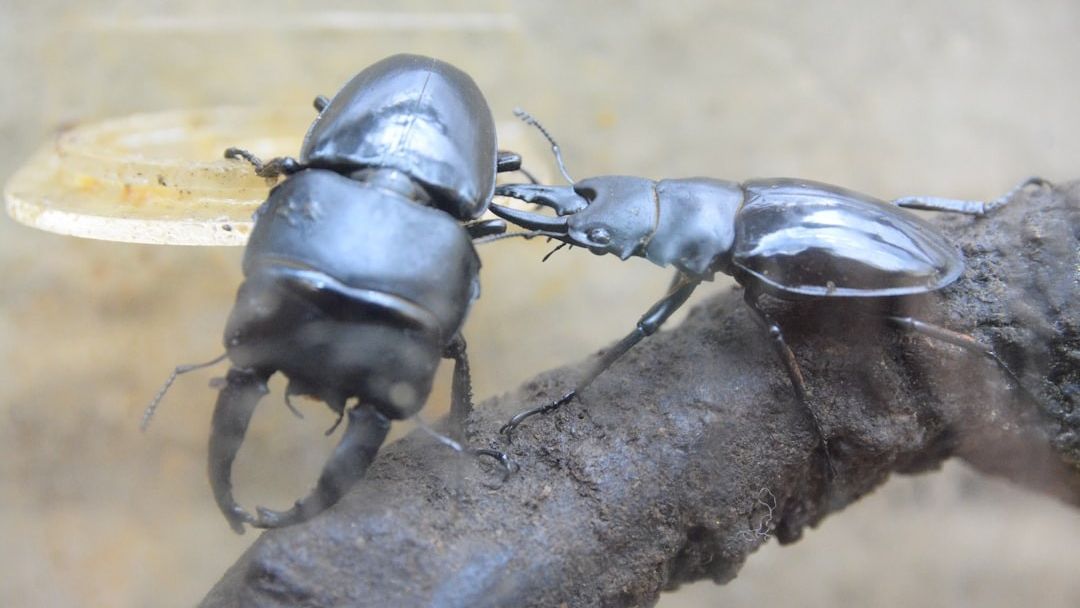
In the quiet depths of temperate woodlands, stag beetles face a world where even the smallest creatures must prove their strength to survive and reproduce. Males invest heavily in oversized mandibles that serve as both weapons and signals of dominance during intense physical confrontations. Most confrontations are invariably over a female, yes the age old dilemma, fighting over females is prevalent in every sphere of the animal kingdom. These encounters determine which individuals pass on their genes, highlighting the high stakes of reproduction in the insect world. What makes these contests particularly compelling is how they mirror larger animal rivalries while unfolding on a miniature scale.
The Mandibles That Turn Small Insects Into Formidable Rivals
Stag beetles rely on elongated jaws that often stretch longer than their own bodies to grapple with opponents. These structures allow rivals to push and flip each other without causing serious harm in most cases, giving larger males a clear edge in securing access to females. Females keep smaller jaws better suited for digging and laying eggs rather than combat. The bigger the mandible, the more likely a male can displace a challenger and claim the best spots near potential mates. Such traits evolve under strong pressure because success in these fights directly boosts reproductive chances.
Life Cycles That Heighten the Pressure on Male Combatants
The path from larva to adult takes several years as grubs feed on decaying wood and store energy for their brief adult phase. Once they emerge, adults have only a few weeks to find partners before their fat reserves run out. This short window forces males to compete aggressively during warm summer evenings when they patrol fallen logs and stumps where females gather. Those who lose out leave no offspring, which places a premium on aggressive behavior and robust physical features. Competition peaks in areas rich with dead timber that provide both shelter and egg-laying sites.
Ecological Importance and Growing Conservation Needs
Beyond their dramatic fights, stag beetles play a vital role in breaking down dead wood and recycling nutrients back into forest soils. Their presence often indicates a healthy ecosystem that supports many decomposers. Habitat loss from urban development and the removal of fallen trees has reduced numbers in parts of Europe and North America. Conservation efforts now focus on leaving deadwood in place and building artificial breeding sites to help populations recover. Scientists also note that some males use sneaky tactics instead of direct fights, adding layers to how these insects adapt under changing conditions.
Final Thought
These miniature gladiators remind us that even tiny lives carry enormous evolutionary weight in the natural world. Their battles underscore the delicate balance between competition and survival in forest habitats. What would you have guessed about the challenges these beetles face?
Source: Original YouTube Video

- 17 Things You Do That Make Your Dog Feel Truly Loved - July 16, 2026
- 20 Foods in Your Pantry That Could Add Years to Your Dog’s Life - July 16, 2026
- 30 Plants That Absolutely Love Full Sun - July 15, 2026