

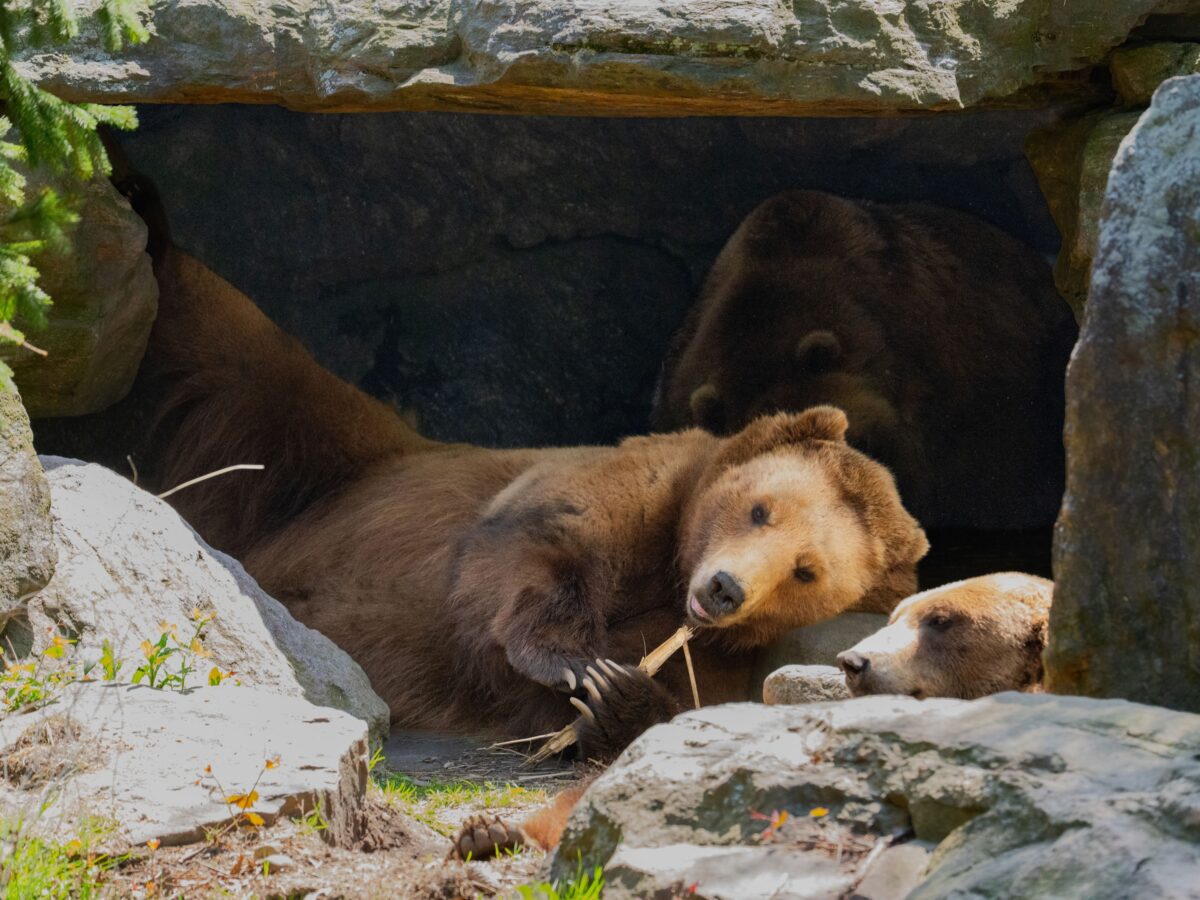
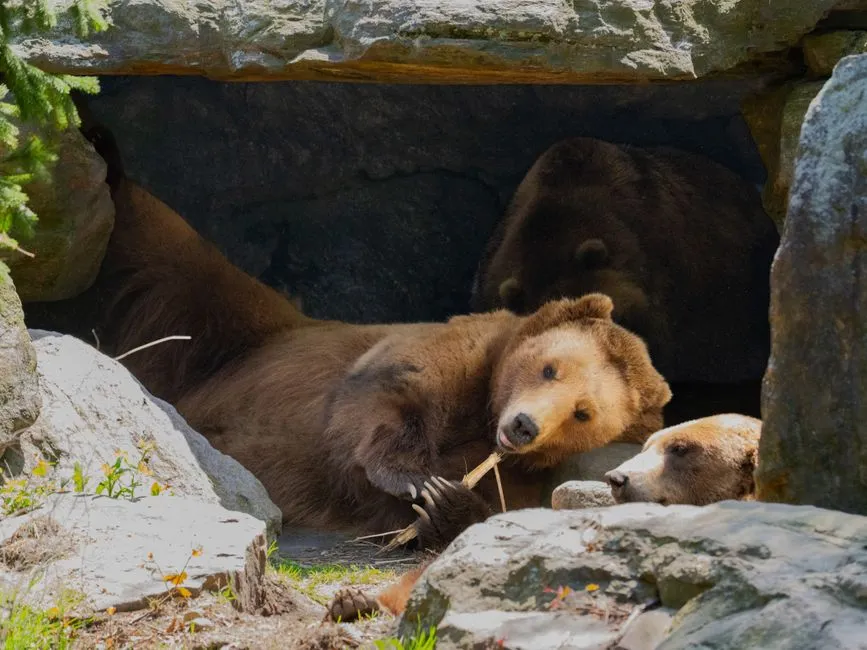
Most people think bears just “sleep all winter,” like flipping off a light switch for three months. That picture is so wrong it’s almost cute. Inside that den, a bear’s heart nearly cuts its pace in half, its body starts recycling its own waste, and females can literally give birth without ever fully waking up.
Bears are running a full-scale survival operation while looking like they’re doing absolutely nothing. And the wild part is this: even a small shift in temperature or a bad food year the previous fall can rewrite the entire script. Here’s what biologists – and decades of den studies – actually found when they looked closer.
#8 – The Secret Fall Switch That Tells a Bear: “Time to Vanish”
🔥 Would you like to save this?
We'll email this post to you, so you can come back to it later!
Most people focus on the snow, but a bear’s denning season actually starts with a quiet decision weeks earlier. Long before it crawls into a den, a bear hits a biological “panic mode” called hyperphagia, where it can eat up to 20,000 calories a day if food is available. It’s not random binging. It’s a strategic loading phase, and every bite counts against a clock only the bear can feel ticking.
As daylight hours shorten and temperatures drop in late summer and early fall, hormone levels shift – especially leptin and melatonin. The bear’s brain is basically running a spreadsheet: fat reserves, food still on the landscape, competition, and stress. When the math stops working, the den clock starts ticking for real.
- Black bears in rich food areas may den weeks later than those in poor habitat.
- Coastal bears with salmon can delay denning far past what old textbooks used to claim.
Some biologists argue that stress from human activity now pushes some bears to den earlier, even if food is technically still out there. This is why you’ll see one bear still foraging in November while another is already tucked away in mid-October. They aren’t confused. They’re making completely different risk calculations, and the next one changes everything.
#7 – Building the Den: Not Just a Hole, It’s a Life-Support Pod
🔥 Would you like to save this?
We'll email this post to you, so you can come back to it later!
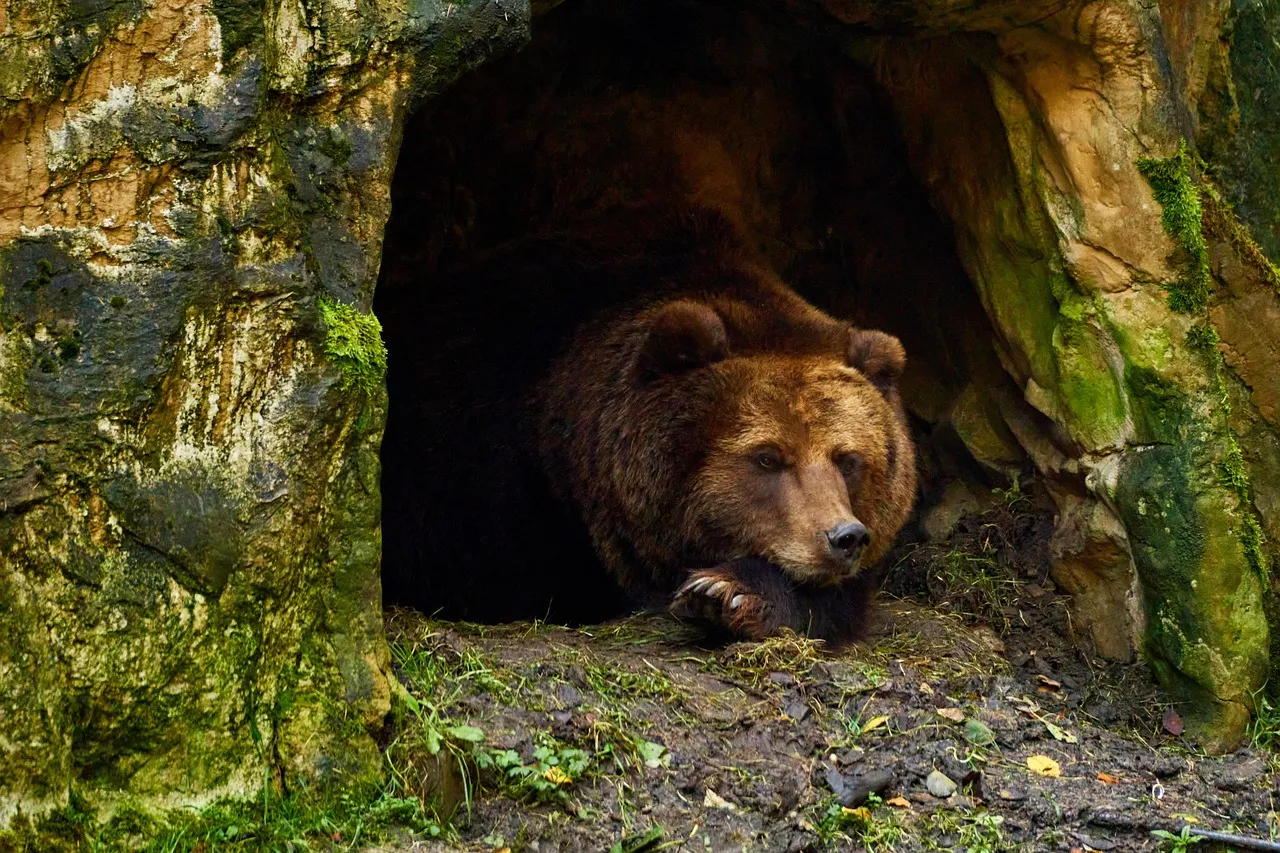
Everyone pictures a cozy cave, but most bears are basically DIY architects building custom winter bunkers with nothing but claws and instinct. Depending on species and region, a den can be a dug-out nest under tree roots, a rock cavity, a wind-packed snow cave, a hollow log, or – more often than you’d like – the crawl space under an old cabin.
What’s wild is how precisely they choose and prepare it. Bears tend to pick sites that limit wind, reduce temperature swings, and shed water, which is why south-facing slopes are so common; they’re simply more stable. Inside, the bear claws out extra soil, compresses the floor, and drags in bedding: leaves, moss, grasses, even strips of bark.
That bedding isn’t just for comfort. It acts as insulation, trapping a warm layer of air directly around the bear’s body. Once settled, the bear’s own heat gradually warms the chamber, often raising the temperature 20–30°F above the outside air, even in brutal cold. The space is usually just big enough to turn around in and curl up, which keeps exposed surface area to a minimum.
Fast Facts
- Common den styles: hollow trees, dug-out ground nests, rock crevices, or root cavities from fallen trees.
- Bedding materials typically include bark, dry grasses, and leaves packed into the floor.
- Females, especially those with cubs, tend to choose more sheltered sites than males.
- Some bears skip a true den entirely, nesting in the open on the ground.
While most of us dream of heated cabins, a bear is quietly engineering something close to one, and it’s about to put that shelter to a test most people never think about.
#6 – November–December: The “Fake Sleep” That’s More Extreme Than It Looks

🔥 Would you like to save this?
We'll email this post to you, so you can come back to it later!
People love to say “bears hibernate,” but biologists argue about that word for a reason. Compared to small hibernators like ground squirrels, bears don’t drop their body temperature to near freezing. Instead, they enter a state often called torpor, or “carnivore lethargy.” It looks like regular sleep, but the internal changes are anything but normal.
A denning bear’s heart rate can plummet from 50–60 beats per minute to as low as 8–12 beats per minute. Breathing slows dramatically, sometimes to one breath every 30–45 seconds. Here’s the kicker: their body temperature only falls by about 5–12°F, usually staying in the high 80s to low 90s.
Quick Compare
- True hibernators (like ground squirrels): body temperature can drop to near or even below freezing, with heart rates as low as a few beats per minute, and they rouse only every couple of weeks.
- Denning bears: body temperature dips just 5–12°F, heart rate stays around 8–12 beats per minute, and they can snap back to alertness almost immediately if disturbed.
- The takeaway: a bear in its den is less “switched off” and more “idling,” which is exactly why it can still defend itself, reposition, or give birth mid-winter.
That’s still warm enough to keep muscles and nerves responsive. Unlike “true” hibernators, a bear can wake up relatively fast if it’s threatened, disturbed by noise, or if a predator or human gets too close. This is exactly why barging into dens “just for photos” isn’t just careless – it’s genuinely dangerous, for the bear and for the person holding the camera.
Even in early winter, when everything looks calm, the energy economics are brutal. A large bear might lose 15–30% of its body weight over the denning season, even in a good year. Those fat stores are literally the reason the bear survives, and for pregnant females, they’re about to become the sole fuel source for something even more extreme.
#5 – January: Females Give Birth While Half Asleep and Half Starving
🔥 Would you like to save this?
We'll email this post to you, so you can come back to it later!
This is the part most nature documentaries gloss over, and it might be the single most extreme thing on this entire list. Pregnant female bears enter the den with a very different agenda than males. After mating in summer, bears use a strategy called delayed implantation: the fertilized egg doesn’t immediately attach to the uterus. It floats in a kind of paused state for months.
Only if the female has stacked enough fat by late fall does the embryo finally implant and begin real development. If she hasn’t gained enough weight, the pregnancy is quietly cancelled. No drama, no visible miscarriage – just nature protecting the mother’s own survival first.
Actual birth usually happens in January or early February, depending on species and latitude. The cubs arrive blind, nearly hairless, and weighing as little as 8–16 ounces for black bears, completely dependent on their mother’s warmth and milk.
Here’s the almost unbelievable part: the mother often stays in a torpor-like state while giving birth and nursing. She doesn’t leave to feed. She doesn’t drink water. She may barely move more than a few inches in any direction for weeks, yet she produces extremely rich milk, sometimes over 20–30% fat, powered entirely by reserves she’ll never get to refill until spring. Some researchers argue a denning mother bear may be one of the most energy-stressed mammals on the planet.
#4 – How a Starving Bear Lives Off Fat Without Poisoning Itself
🔥 Would you like to save this?
We'll email this post to you, so you can come back to it later!
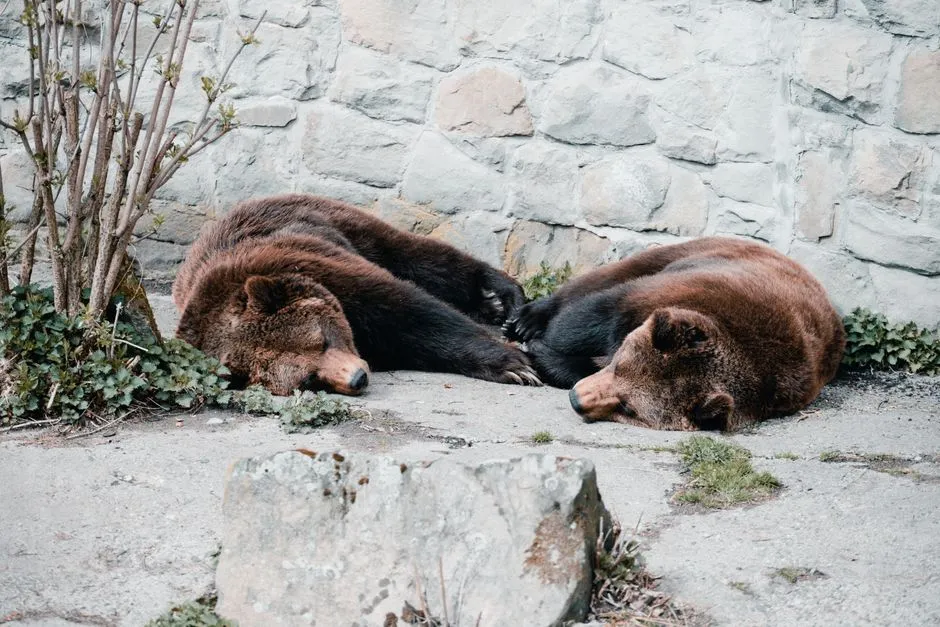
If a human tried to stay in bed for three months without eating, drinking, or going to the bathroom, the outcome would be a medical horror show. A denning bear pulls off a trick that would blow up any hospital’s understanding of “bed rest.”
Once in the den, the bear does not eat, drink, urinate, or defecate for weeks to months, depending on species and climate. Instead, its body flips into an ultra-efficient survival mode. Stored fat is burned for energy, releasing water as a by-product, which is how the bear stays hydrated without ever taking a sip.
But that’s only half the miracle. Normally, when a mammal breaks down protein and produces urea, that waste has to be eliminated or it becomes toxic. Bears do something stunning: they recycle urea back into usable protein, thanks to specialized gut bacteria and liver processes. Muscle and organ tissue stay largely intact, so when a bear emerges, it’s weak but nowhere near as wrecked as a bedridden human would be.
The bear is really the only mammal that can go through this proteolysis or protein breakdown situation and come out normal on the other end.
Dr. Ralph Nelson, hibernation researcher
On top of that, studies show bears maintain bone density despite months of total inactivity, likely thanks to unique hormonal balances and constant micro-muscle tension – something astronauts and long-term hospital patients can only dream of replicating. It’s no wonder some scientists quietly admit they’re less interested in the bear as an animal and more interested in the bear as a medical blueprint.
#3 – Midwinter Wake-Ups: Why “Hibernation” Is Actually On-Call Duty
🔥 Would you like to save this?
We'll email this post to you, so you can come back to it later!
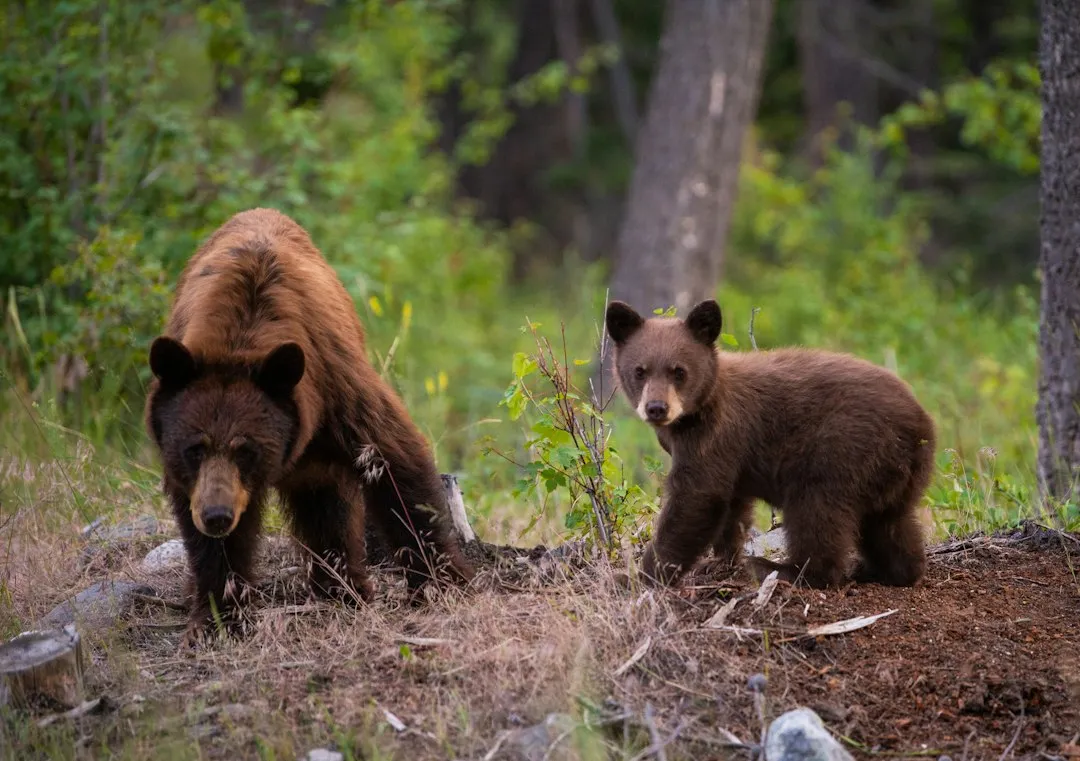
The fairy-tale version says bears sleep straight through winter. Reality looks more like a dim apartment where the resident keeps dozing off between interruptions. Throughout January and February, bears cycle through deeper and lighter torpor, shifting position to cool off or warm up, waking partially at noise or scent, and sometimes even stepping outside the den briefly before returning.
Heart rate and breathing may spike temporarily during these “arousals,” then sink back down. Scientists aren’t fully sure why this pattern exists, but working theories suggest it might help prevent blood clots, maintain organ function, and let the bear check conditions outside the den. In females with cubs, these wakeful windows become critical bonding moments – she repositions cubs, licks them clean, and responds instantly if one wanders from the warm core of the nest.
At a Glance: Cub Milestones Inside the Den
- Eyes and ears typically open around six weeks of age.
- Teeth start to erupt roughly ten days after the eyes open.
- First wobbly steps usually happen around five weeks old.
- By eight weeks, a cub can weigh around 5–6 pounds, up from a birth weight measured in ounces.
Here’s the controversial part: as winters warm and snowpacks shrink in some regions, bears are showing more frequent midwinter activity. Some biologists suspect climate change is subtly shortening denning periods for certain populations, which means more calorie burn against the exact same fat bank. That’s a nasty equation for long-term survival, and it’s not theoretical.
Landowners complaining that “bears are out earlier than they used to be” might not be imagining things. They’re watching the leading edge of a slow ecological shift play out in real time, right outside their back door.
#2 – Late Winter: Growing Cubs in a Shrinking Fuel Tank

🔥 Would you like to save this?
We'll email this post to you, so you can come back to it later!
By late February and March, the den becomes a very different place, especially for families. Those tiny January newborns grow fast on ultra-rich milk, and cubs can double or triple their weight before ever seeing sunlight. Their fur thickens, their eyes open, and they start crawling and climbing on their mother, exploring the small world of the den.
The soundscape changes too, from quiet breathing to squeaks, grunts, and little growls. This isn’t just cute behavior. It’s early practice in motor skills and social cues that the cubs will need the moment they step outside.
For the mother, the math is turning vicious. Her fat reserves are at their lowest point of the entire year. She has to balance staying in the den long enough to keep cubs safe and warm against leaving early enough that she can actually find food and rebuild her own strength before it’s too late.
Worth Knowing
- Typical litter size runs 2–3 cubs, though litters of 4 or more do happen.
- Newborns weigh roughly half a pound at birth, about the size of a small squirrel.
- Nursing mothers can lose a third or more of their body weight over the denning season, noticeably more than males or non-breeding females.
- Most cub emergences from the den happen around April or May, roughly thirteen weeks after birth.
Here’s something people rarely admit: in very poor food years, some cubs don’t make it through this phase. The female may emerge with fewer cubs than she gave birth to, or with cubs noticeably smaller than average. Nature is completely selective and unsentimental here. Some experts argue this late-winter stretch may be the true bottleneck for bear populations in marginal habitats, more than hunting, more than vehicle collisions. It’s the quiet starvation math inside a frozen hillside that ultimately decides how many bears you’ll actually see come summer.
#1 – March–April: The High-Risk Exit and the First Days Back in the World
🔥 Would you like to save this?
We'll email this post to you, so you can come back to it later!
If you think the drama ends when the snow melts, you’re missing the most dangerous chapter of all. Emergence from the den usually happens between March and May, depending on latitude, species, and that year’s weather. Males and non-pregnant females often come out first, skinny and hungry, nosing around for anything edible: winter-killed carcasses, early green shoots, or human garbage if they’re unlucky enough to stumble onto it.
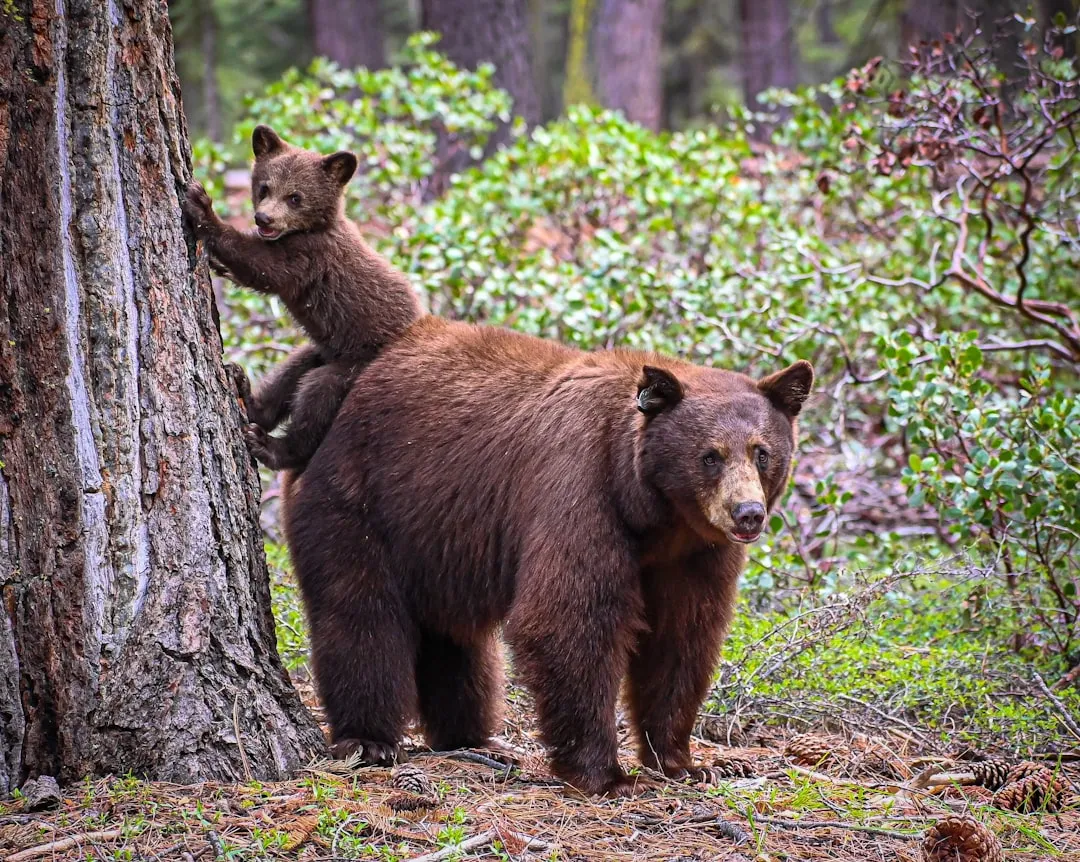
They can look shockingly thin, hips and ribs visible, a walking reminder that survival was never guaranteed. Females with newborn cubs often use a careful two-step strategy. First comes “den emergence,” where she brings cubs just outside the entrance, letting them climb and explore while she stays close and keeps returning inside. Only later comes “den abandonment,” when conditions feel safe enough and the cubs have gained real strength, does she finally leave the den area for good.
- Predators, including other bears, may kill cubs during this window.
- Human disturbance can push families into poor habitat.
- Food is still scarce, so any mistake is costly.
Here’s the hard truth: our spring behaviors – letting trash pile up, walking dogs off-leash near den sites, pushing for “just one more selfie” – directly shape whether those cubs survive their first weeks outside. Plenty of people say they love wildlife, yet behave in ways that turn this razor-thin survival margin into a losing game for the animals living right next to them.
And one last twist: once a family finally leaves, that meticulously built den that kept them alive all winter will often collapse, flood, or simply be abandoned. The entire life-support system is used exactly once, then discarded, as the whole brutal, beautiful cycle quietly resets for next year.
Bears don’t “sleep through winter.” They run a months-long physiological marathon in slow motion, slowing their hearts, recycling their own waste, and in many cases, creating and raising new life without ever leaving the den. From the first fall switch into hyperphagia to the shaky first steps of cubs on a thawing hillside, every phase is a knife-edge balance of energy, temperature, and risk.
Here’s the uncomfortable opinion: we romanticize hibernation because it lets us ignore how fragile the whole process actually is, and how much our bait piles, bird feeders, trash, cabins, snowmobiles, and climate choices interfere with it. If we’re going to share landscapes with bears, we don’t just owe them “respect.” We owe them enough understanding not to wreck the one season they genuinely cannot afford to get wrong.
Did this change how you picture a bear in winter, and what do you think people should be doing differently around dens? Drop your thoughts in the comments.

- 14 Wildlife Permits Waived for Americans the Year They Turn 62 - November 5, 2026
- Machu Picchu’s Engineering Feats Were Far Ahead of Its Time - November 5, 2026
- 12 Most Beautiful American Cities To See Before You Die - November 4, 2026