


The animal kingdom is filled with fascinating creatures, each with their own impressive adaptations for survival. When it comes to formidable aquatic giants, both crocodiles and hippos reign supreme in their African habitats. These massive creatures occasionally cross paths in rivers and lakes, sometimes resulting in territorial conflicts that showcase nature’s raw power. But what actually happens when these two colossal animals engage in combat? This article explores the dynamics, outcomes, and fascinating details of crocodile-hippo confrontations in the wild.
The Titans of African Waters
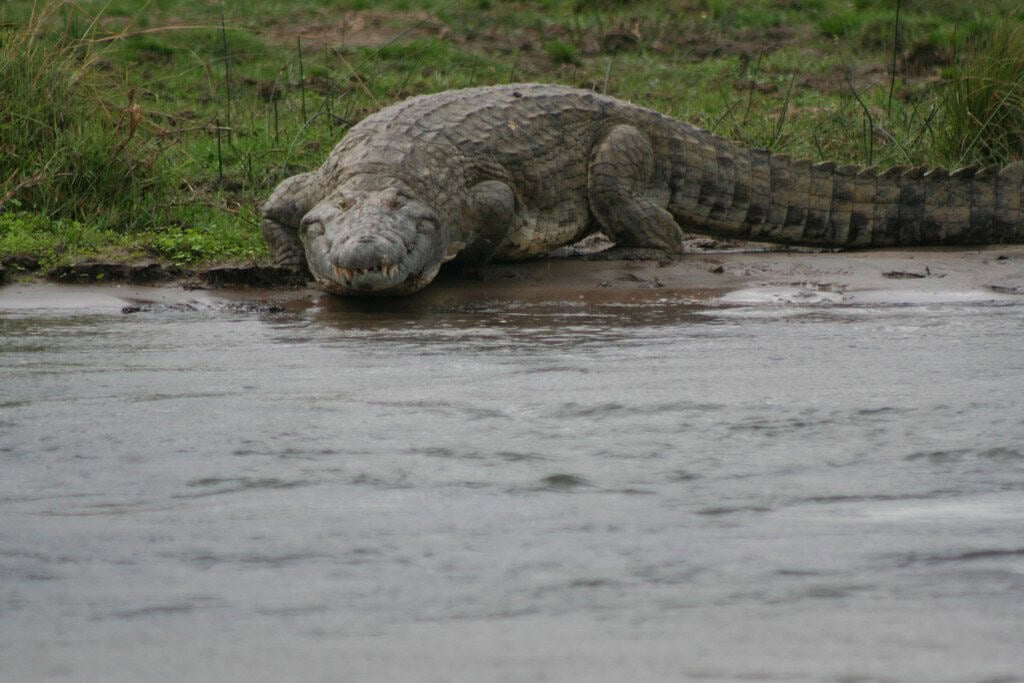
Hippopotamuses and crocodiles frequently share the same aquatic habitats across Africa, particularly in rivers, lakes, and wetlands. The Nile crocodile (Crocodylus niloticus) is one of the largest crocodilian species, with males growing up to 16-20 feet long and weighing up to 1,650 pounds. Meanwhile, the common hippopotamus (Hippopotamus amphibius) is substantially more massive, with adult males reaching weights of 3,300-4,000 pounds and lengths of up to 16.5 feet.
This significant size disparity immediately creates an uneven playing field when these species come into conflict. Despite occupying the same waterways, they’ve evolved different ecological niches and feeding strategies to minimize direct competition, though territorial disputes and opportunistic encounters still occur.
Physical Advantages of Crocodiles

Crocodiles possess several formidable physical adaptations that make them apex predators. Their most notable weapon is their massive jaw strength, which delivers a bite force of approximately 3,700 pounds per square inch—among the strongest of any animal on Earth. Their mouths contain 64-68 sharp, conical teeth designed for gripping and holding prey. Crocodiles also benefit from heavily armored bodies covered in osteoderms (bony plates beneath their scales), providing protection from attacks.
Their powerful tails enable explosive bursts of speed in water, reaching up to 20 mph in short sprints. Additionally, crocodiles can remain submerged for extended periods (up to 2 hours when resting) thanks to specialized cardiovascular adaptations, allowing them to approach prey stealthily or escape threats. However, these advantages may not be enough when facing the sheer mass of a hippopotamus.
Physical Advantages of Hippos

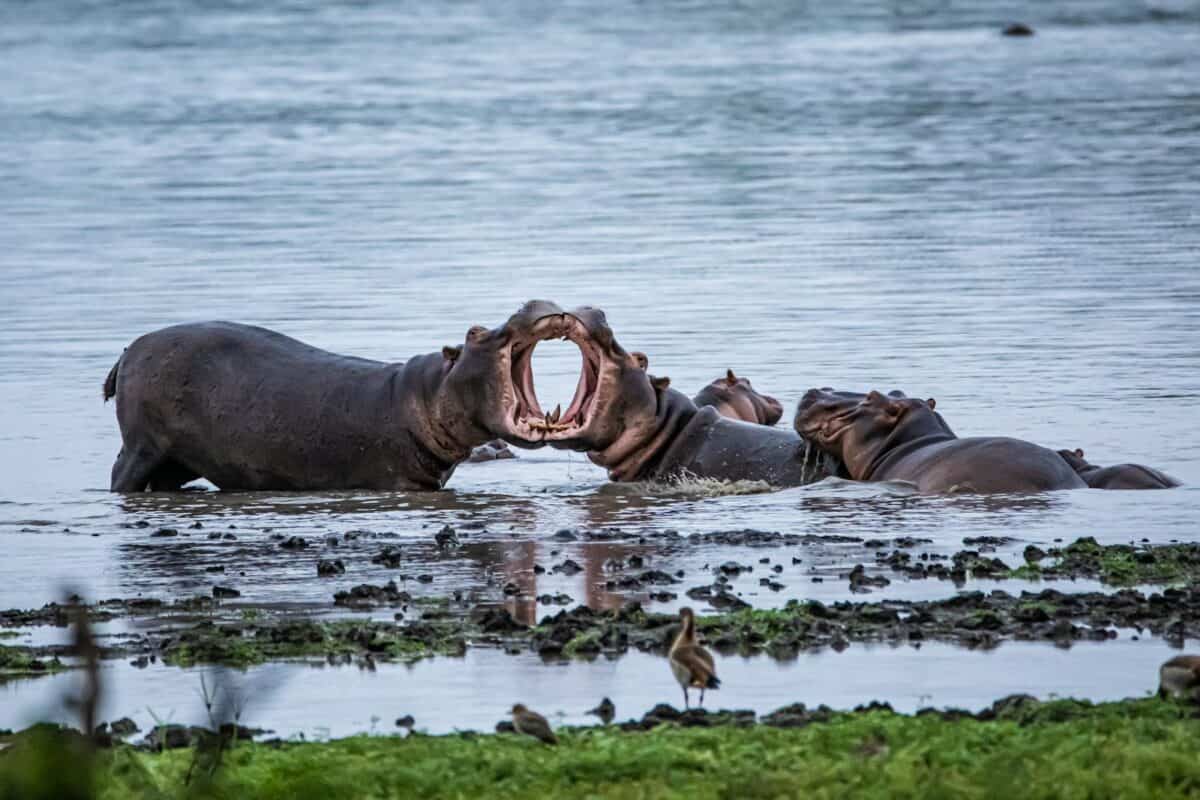
Hippos may appear docile, but they’re equipped with physical attributes that make them extraordinarily dangerous. Their most obvious advantage is sheer size and weight—a male hippo weighs roughly 2-3 times more than a large Nile crocodile. Hippos possess massive jaws that can open to an impressive 150 degrees, revealing tusk-like canines and incisors that can grow up to 20 inches long.
These teeth aren’t primarily for eating (hippos are herbivores) but for fighting and defense. Their bite force measures approximately 1,800 psi—less than a crocodile’s but still powerful enough to snap a crocodile in half. Their thick skin (approximately 2 inches) acts as natural armor, and their barrel-shaped bodies and low center of gravity make them difficult to topple. Despite their bulky appearance, hippos can run at speeds up to 30 mph on land and move quickly in water, making them surprisingly agile for their size.
Territorial Behavior and Aggression

Understanding the territorial nature of both animals helps explain why conflicts occur. Hippos are notoriously territorial in water, with dominant males controlling stretches of river or lake where females and young gather. They’re consistently ranked among Africa’s most dangerous animals, responsible for an estimated 500 human deaths annually—more than lions, elephants, or leopards.
Their aggression isn’t limited to humans; they’ll attack nearly anything perceived as a threat to their territory or young. Crocodiles, while also territorial, typically display more calculated aggression, usually related to hunting or defending nesting sites. They generally avoid fully grown hippos unless desperate or provoked. Most confrontations occur when crocodiles venture too close to hippo territories, when young or weakened hippos present potential prey opportunities, or during drought conditions when water resources become limited.
Typical Confrontation Scenarios

Crocodile-hippo confrontations typically fall into several common scenarios. The first involves crocodiles attempting to prey on young, isolated, or weak hippos. Adult crocodiles regularly test the boundaries, looking for vulnerable individuals separated from the pod’s protection. Another common scenario occurs when hippos perceive crocodiles as threats to their calves. Hippo mothers are fiercely protective and will aggressively drive away or attack nearby crocodiles, regardless of whether the reptiles show hunting interest.
Resource competition during dry seasons, when water bodies shrink and animals concentrate in remaining pools, creates another flash point for conflict. Finally, accidental encounters happen when crocodiles and hippos occupy the same spaces for basking or cooling, particularly on riverbanks or in shallow waters. In most of these scenarios, crocodiles typically retreat when confronted by healthy adult hippos, demonstrating the natural hierarchy that exists between these species.
The Reality of the Fight Outcome

When actual fights occur between adult specimens of both species, the outcome strongly favors the hippopotamus. Wildlife biologists and field researchers have documented numerous confrontations, with consistent patterns emerging. A full-grown, healthy hippo almost invariably dominates or kills a crocodile in direct combat, regardless of the crocodile’s size. The hippo’s massive weight advantage, coupled with surprising speed and aggression, overwhelms even the largest crocodiles.
Typically, hippos use their enormous jaws to crush crocodiles or their bulk to trample them. There are documented cases of hippos biting crocodiles in half with a single bite or crushing their skulls. Crocodiles generally lack the physical means to inflict fatal damage on adult hippos, as their teeth cannot penetrate deeply enough through hippo hide to reach vital organs. The outcome differs only when extremely large crocodiles attack juvenile or weakened hippos, where crocodiles stand a better chance of successful predation.
Documented Cases of Hippo-Crocodile Fights

Wildlife documentation provides compelling evidence of the typical dynamics between these species. In Kruger National Park, South Africa, rangers and tourists have repeatedly witnessed hippos killing crocodiles that ventured too close to their territories. One famous 2009 incident captured on film showed a territorial hippo biting a 13-foot crocodile in half. In Zambia’s Luangwa Valley, researchers documented a mother hippo crushing a crocodile that approached her calf.
The Okavango Delta in Botswana has yielded multiple observations of hippo pods actively driving crocodiles from shared water channels, sometimes resulting in crocodile fatalities. These documented cases consistently show that when direct confrontation occurs, adult hippos overwhelmingly prevail. However, there are rare exceptions: in Zimbabwe’s Mana Pools, researchers observed a group of approximately 35 crocodiles successfully taking down a weakened adult hippo during drought conditions—demonstrating that in exceptional circumstances, the typical power dynamic can shift.
Hunting Strategies and Defense Mechanisms
The different hunting and defense strategies employed by these animals further explain fight outcomes. Crocodiles are ambush predators that rely on surprise, using their powerful bite to grip prey before performing a death roll—a spinning maneuver that tears off manageable chunks of flesh. This strategy works effectively against many animals but fails against adult hippos due to their size and skin thickness. Crocodiles typically avoid direct confrontation with full-grown hippos, preferring to target younger, more vulnerable individuals.
Hippos, despite being herbivores, utilize aggressive defense through intimidation displays including gaping jaws, water splashing, and charging. When these warnings fail, they attack directly with surprising speed, using their massive jaws and teeth to crush threats. Their strategy is straightforward but effective: overwhelming force applied directly. In water, hippos can easily maneuver to trample crocodiles underwater or pin them against river bottoms.
Ecological Coexistence Despite Conflicts
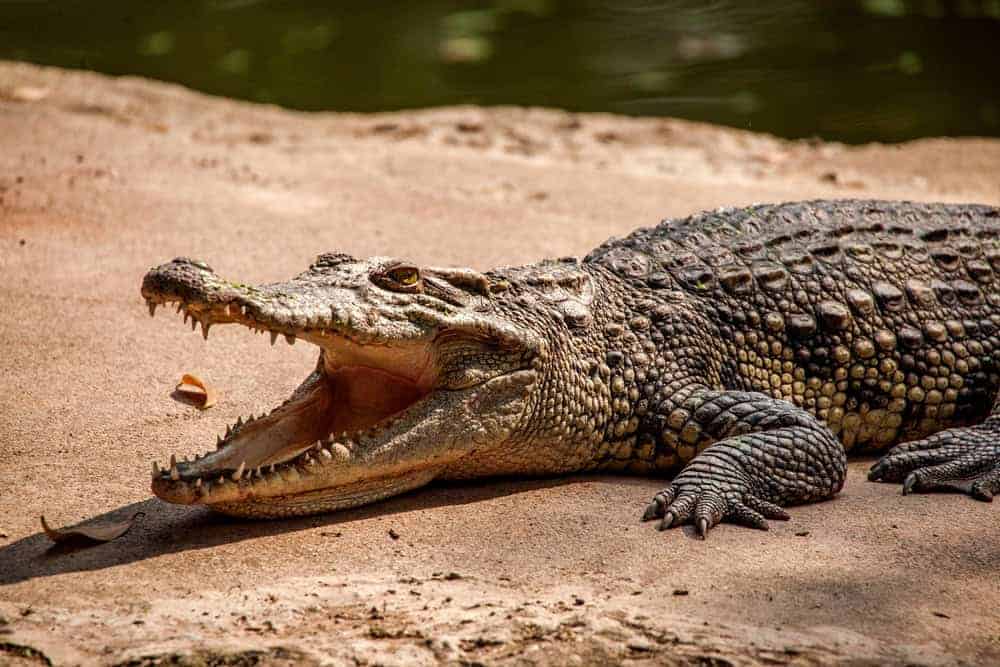
Despite occasional violent confrontations, crocodiles and hippos have evolved to coexist in shared habitats through various ecological adaptations. Their different feeding habits minimize direct competition—hippos are primarily herbivorous, consuming up to 80 pounds of grass and vegetation daily, while crocodiles are carnivorous predators targeting fish and terrestrial animals that come to drink. They often use waterways differently: hippos prefer deeper pools for daytime resting, while crocodiles utilize a wider range of depths and frequently bask on shores.
Temporal separation also occurs, with hippos leaving water at dusk to feed on land while crocodiles remain more active in water during this time. Finally, mutual avoidance behaviors have developed—crocodiles typically give wide berth to hippo pods, while hippos generally tolerate crocodiles that don’t approach too closely. This coexistence, punctuated by occasional conflict, has been maintained for millions of years across African waterways.
When Crocodiles Successfully Attack Hippos

While rare, there are documented cases where crocodiles have successfully killed hippos, almost exclusively involving vulnerable individuals. Hippo calves separated from maternal protection occasionally fall prey to large crocodiles. These calves, weighing 60-110 pounds at birth, lack the size and strength to defend themselves effectively. Sick or severely injured adult hippos weakened by disease, wounds from territorial fights, or advanced age may also become viable targets, particularly during droughts when they’re forced to venture farther for food and water.
Group hunting behavior has been observed in some crocodile populations, with multiple large crocodiles coordinating attacks on compromised hippos—a rare but documented phenomenon. In South Luangwa National Park, Zambia, researchers observed five large crocodiles successfully drowning an injured adult hippo in 2010. Such events, while uncommon, demonstrate that the predator-prey relationship between these species is contextual rather than absolute.
Human Impact on Crocodile-Hippo Dynamics

Human activities increasingly influence interactions between crocodiles and hippos across Africa. Habitat loss due to agriculture, development, and dam construction has reduced available waterways, forcing higher concentrations of animals into smaller areas and potentially increasing conflict frequency. Climate change and associated drought patterns further compress available habitat during dry seasons.
Conservation efforts have successfully boosted crocodile populations in certain regions after years of decline from hunting, potentially altering the natural balance with hippo populations. Tourism pressure can affect behavior patterns, with boat traffic and viewing activities disrupting natural spacing between species. Additionally, poaching affects both species unevenly—hippos targeted for ivory teeth and meat, crocodiles for skins—potentially creating regional imbalances in population ratios. These anthropogenic factors add new dimensions to the ancient ecological relationship between these aquatic giants.
Evolutionary Context of the Rivalry

The competitive relationship between crocodiles and hippos has deep evolutionary roots. Crocodilians have existed in recognizable form for approximately 200 million years, with the Nile crocodile lineage established for at least 6 million years. Modern hippos evolved more recently, appearing approximately 8 million years ago, evolving from anthracotheres (an extinct family of even-toed ungulates). Both animals evolved alongside each other in African waterways, developing adaptations that minimize direct competition while allowing shared habitat use.
This long coevolutionary history has resulted in a generally stable ecological relationship, with each species recognizing the other’s danger potential. Fossil evidence from the Pliocene and Pleistocene epochs shows that these species have shared habitats for millions of years, suggesting their competitive dynamics and mutual avoidance behaviors are deeply ingrained through natural selection. Their continued coexistence represents a remarkable example of how potentially competing mega-fauna can partition resources within shared ecosystems.
Conclusion: Nature’s Underwater Power Hierarchy

The confrontation between crocodiles and hippos represents one of nature’s most impressive displays of power dynamics among megafauna. While crocodiles rank among the world’s most formidable predators, they generally cannot overcome the sheer size, strength, and aggression of adult hippopotamuses. The outcome of these battles almost invariably favors the hippopotamus, with most crocodiles actively avoiding confrontation with adult hippos.
This natural power hierarchy has maintained ecological balance in African waterways for millions of years, with each species adapting behaviors to minimize deadly encounters. The exceptions—when crocodiles successfully attack vulnerable hippos—prove that nature’s rules always have contextual nuances. As both species face mounting pressure from habitat loss and human activity, understanding their interactions becomes increasingly important for conservation efforts aimed at preserving these iconic African giants and the delicate ecosystems they inhabit.

From exploring the marine wonders in the Azores and witnessing the vast savannas of Kenya, to delving deep into the rich biodiversity of South Africa and traversing iconic landscapes in Australia and the US like Yellowstone, Chris's experiences are vast.
With a penchant for diving alongside sharks, the ocean holds a special place in his heart.
Through his academic insights, he champions wildlife conservation, striving with 'Animals Around The Globe' to cultivate a profound connection between humans and animals, enhancing our mutual appreciation.
Connect with him at Feedback@animalsaroundtheglobe.com.
- What Happens If a Crocodile Fights a Hippo? - July 20, 2026
- This Turtle Has Hair - July 20, 2026
- This Small U.S. Island Hosts Hundreds of Feral Horses - July 20, 2026
Leave a comment
You must be logged in to post a comment.