

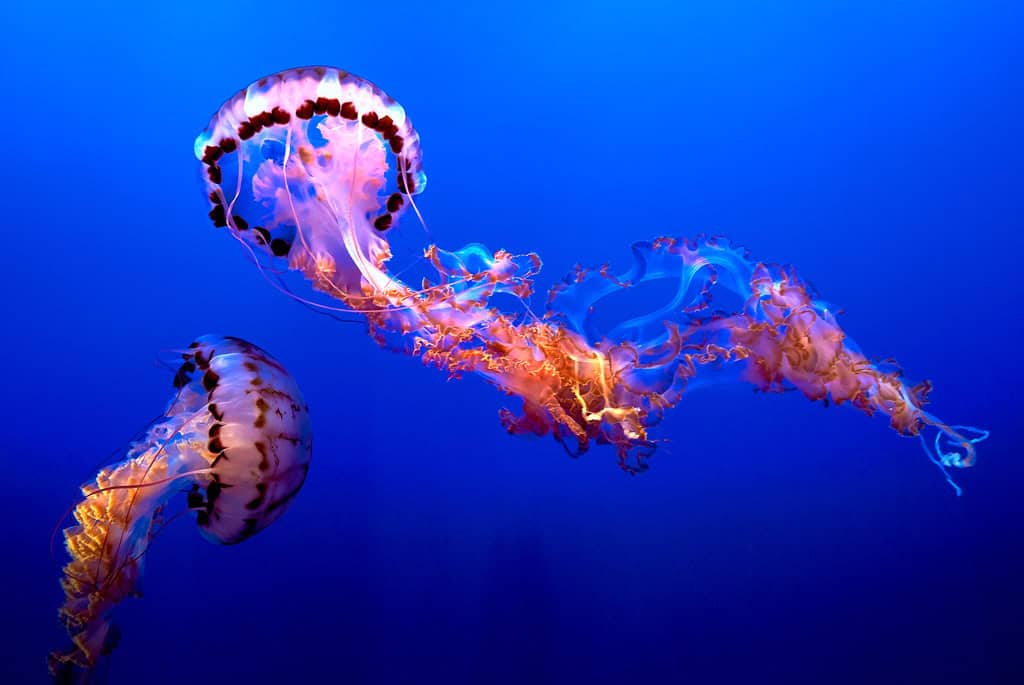
The ethereal, pulsating forms of jellyfish have drifted through Earth’s oceans for over 650 million years, surviving five mass extinctions and adapting to countless environmental changes. Today, these ancient creatures are becoming increasingly important as bioindicators of marine ecosystem health. As our oceans face unprecedented challenges from climate change, pollution, and overfishing, jellyfish populations are responding in ways that scientists can measure and interpret. Their abundance, distribution, and behavior offer valuable insights into the changing conditions of our marine environments. From explosive blooms that signal ecosystem imbalance to shifting migration patterns that track warming waters, jellyfish serve as living barometers of ocean health. This article explores the fascinating relationship between these gelatinous creatures and the vital information they provide about the state of our oceans.
The Ancient Sentinels of the Sea

Jellyfish belong to the phylum Cnidaria, a group of aquatic animals characterized by stinging cells called cnidocytes. Having survived for over 650 million years with relatively little evolutionary change, they represent one of the oldest multicellular animal groups on the planet. This remarkable longevity through countless environmental shifts makes them particularly valuable as indicators of ocean health.
Their simple body structure—consisting primarily of water with no brain, heart, or bones—has proven remarkably adaptable to changing ocean conditions. This evolutionary resilience gives scientists a unique baseline against which to measure marine ecosystem changes. When jellyfish populations deviate from their historical patterns, it often signals significant alterations in ocean chemistry, temperature, or biodiversity.
Jellyfish Blooms: Warning Signs of Marine Distress

One of the most visible ways jellyfish communicate ocean health is through population explosions known as “blooms.” These sudden increases in jellyfish numbers can transform clear waters into vast swarms of pulsating medusae. While some blooms are natural seasonal events, others represent responses to human-induced stressors.
Research indicates that areas with excessive nutrient runoff from agriculture, compromised water quality, or depleted fish stocks often experience more frequent and intense jellyfish blooms. For example, the Mediterranean Sea has seen dramatic increases in jellyfish abundance correlated with overfishing of their natural predators and competitors. In the Black Sea, invasive comb jellies (Mnemiopsis leidyi) devastated local fisheries after being introduced through ship ballast water, demonstrating how jellyfish can both indicate and amplify ecosystem changes.
Climate Change and Shifting Jellyfish Distributions
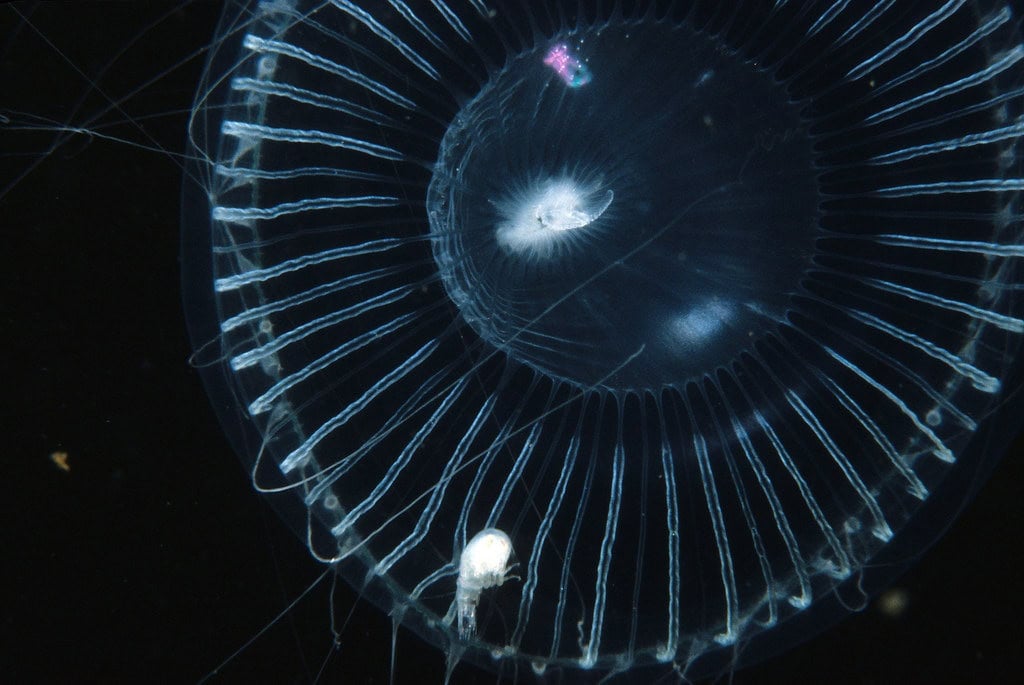
As ocean temperatures rise due to climate change, jellyfish distributions are shifting in response. Warm-water species are expanding their ranges poleward, while cool-water species face habitat contraction. Scientists tracking these movements gain valuable insights into the pace and pattern of ocean warming. The lion’s mane jellyfish (Cyanea capillata), typically found in cooler northern waters, has shown altered migration patterns in recent decades.
Meanwhile, tropical species like the box jellyfish are appearing in temperate waters with increasing frequency. These distribution shifts serve as biological verification of changing ocean temperatures, often providing earlier or more nuanced indicators than instrument measurements alone. By mapping jellyfish movements over time, researchers can visualize the advancing frontier of climate change impacts on marine ecosystems.
Oxygen Depletion and Jellyfish Tolerance

Unlike most marine creatures, many jellyfish species can thrive in waters with low oxygen levels. As climate change and nutrient pollution create more “dead zones”—areas of oxygen-depleted water—jellyfish often become dominant in these compromised habitats. Their ability to survive with minimal oxygen gives them a competitive advantage over fish and other marine animals that require higher oxygen concentrations.
The moon jellyfish (Aurelia aurita) can tolerate oxygen levels as low as 0.5 mg/L, while most fish species become stressed below 5 mg/L. This physiological advantage allows jellyfish to act as living markers of declining oxygen conditions. Areas experiencing increasing jellyfish dominance often reveal underlying oxygen depletion issues that may not be immediately apparent through casual observation, making jellyfish valuable early warning systems for this serious aspect of ocean degradation.
Jellyfish and Ocean Acidification

As atmospheric carbon dioxide levels rise, approximately 30% of these emissions are absorbed by the oceans, leading to increased acidity through a process known as ocean acidification. This chemical change poses serious threats to calcifying organisms like corals, mollusks, and certain plankton that rely on calcium carbonate structures. Jellyfish, however, have no calcium carbonate structures and appear relatively resistant to acidification.
Studies suggest that while many marine species struggle in more acidic conditions, jellyfish populations often remain stable or even increase. This differential response makes jellyfish excellent indicators of acidification impacts on marine ecosystems. In laboratory experiments, jellyfish polyps (the sedentary life stage) have shown increased reproduction rates under acidified conditions that simultaneously inhibit competing species, potentially explaining some of the observed population increases in affected areas.
Biodiversity Indicators Through Predator-Prey Relationships

Jellyfish occupy crucial positions in marine food webs, serving both as predators and prey. Changes in their abundance can reveal disruptions in these ecological relationships. When overfishing removes jellyfish predators like sea turtles, tuna, and sunfish, jellyfish populations often increase dramatically. Conversely, jellyfish feed on fish eggs and larvae, potentially creating feedback loops that further suppress fish recovery.
The balance between jellyfish and other marine species thus serves as a sensitive indicator of ecosystem biodiversity and fishing pressure. In the East China Sea, researchers have documented correlations between increasing jellyfish abundance and declining fish diversity over several decades of intensive fishing. By monitoring these relationships, scientists gain insights into the cascading effects of biodiversity loss and can better predict ecosystem responses to conservation efforts or continued exploitation.
Jellyfish as Bioindicators of Pollution

Beyond their responses to fishing pressure and climate change, jellyfish also react to various forms of pollution, making them valuable bioindicators of contaminants. Some species bioaccumulate heavy metals, pesticides, and microplastics, providing information about these pollutants’ presence in the water column. The crystal jellyfish (Aequorea victoria), famous for the green fluorescent protein used in biomedical research, shows altered bioluminescence patterns when exposed to certain toxins.
Other species exhibit developmental abnormalities, behavioral changes, or population fluctuations in response to specific pollutants. Researchers are increasingly using jellyfish as living monitoring systems for water quality assessment. In port areas with high shipping traffic, jellyfish tissue analysis can reveal contamination from antifouling paints, fuel residues, and other maritime pollutants before they become detectable through conventional sampling methods.
The Gelatinous Shift: Changing Ocean Ecosystems

Some marine ecologists have proposed that certain ocean regions are undergoing a “gelatinous shift”—a fundamental change from fish-dominated to jellyfish-dominated ecosystems. This phenomenon, observed in areas like parts of the Bering Sea, the Sea of Japan, and sections of the Mediterranean, may represent a transition to a new ecological state resulting from combined human pressures. These shifts can be difficult to reverse once established, as jellyfish create conditions that favor their continued dominance.
The implications extend beyond ecology to impact tourism, fisheries, and coastal economies. By tracking areas experiencing such transitions, scientists gain valuable information about tipping points in marine ecosystems and potential future scenarios for ocean health under continued environmental stress. These gelatinous shifts may represent early warnings of broader ecosystem collapses if underlying stressors are not addressed.
Jellyfish and Invasive Species Monitoring

Global shipping has dramatically increased the spread of invasive jellyfish species, with significant ecological consequences. Ships transport jellyfish polyps and tiny juveniles in ballast water across oceans, introducing them to new environments where they may thrive without natural predators or competitors. The arrival and establishment of non-native jellyfish often signals compromised ecosystem resilience and can forecast broader invasive species problems.
The comb jelly Mnemiopsis leidyi’s introduction to the Black Sea in the 1980s presaged one of the most dramatic marine ecosystem collapses on record, with similar patterns later observed in the Caspian Sea following its arrival there. By monitoring jellyfish invasions, scientists gain insights into invasion pathways, establishment factors, and potential intervention points that apply to marine invasive species more broadly. The relative ease of spotting jellyfish blooms compared to other marine invaders makes them particularly useful as visible indicators of invasive species problems.
Technological Advances in Jellyfish Monitoring

Traditional methods of monitoring jellyfish relied heavily on net tows and beach surveys, providing limited spatial and temporal coverage. Today, technological innovations are revolutionizing jellyfish tracking and enhancing their value as ocean health indicators. Underwater imaging systems can now automatically identify and count jellyfish species. Acoustic monitoring detects jellyfish aggregations across vast areas. Environmental DNA (eDNA) sampling detects jellyfish presence from water samples alone.
Autonomous underwater vehicles equipped with sensors patrol large ocean regions, collecting jellyfish data alongside physical and chemical measurements. Perhaps most promising is citizen science, with smartphone apps enabling beachgoers and recreational divers to report jellyfish sightings, creating extensive databases that would be impossible for scientists to compile alone. These technological advances are transforming jellyfish from occasional research subjects to continuous, real-time indicators of ocean conditions across global scales.
Learning from Jellyfish Success

The traits that allow jellyfish to thrive in degraded ocean conditions offer valuable insights for marine conservation and resilience building. Their efficient energy use, rapid reproduction, and physiological tolerance provide a blueprint for understanding adaptation to changing oceans. While many marine organisms struggle with warming waters, acidification, and pollution, jellyfish demonstrate remarkable adaptability.
Scientists studying these mechanisms have identified several key strategies: metabolic flexibility that allows energy conservation during food scarcity; rapid reproductive responses to favorable conditions; simple body plans with minimal maintenance requirements; and broad dietary flexibility. Rather than viewing jellyfish simply as symptoms of unhealthy oceans, researchers increasingly recognize them as models of resilience worth studying. These insights may help predict which marine species will struggle most with future ocean changes and inform protection priorities for vulnerable species and habitats.
From Indicators to Solutions: Jellyfish in Conservation Planning

The information jellyfish provide about ocean health is increasingly being incorporated into marine conservation and management strategies. Areas experiencing unusual jellyfish blooms often become priorities for pollution reduction, fishing regulation, or protected area designation. Some coastal communities now use jellyfish monitoring as an early warning system for water quality issues affecting tourism and aquaculture. In the Mediterranean, a jellyfish spotting network informs beach management decisions and public health warnings.
Beyond their role as indicators, jellyfish are also finding direct applications in conservation. Their mucus can absorb microplastics, leading to experimental designs for jellyfish-inspired filters to clean ocean waters. Their protein-rich bodies are being explored as sustainable fishing alternatives in overexploited regions. As marine conservation evolves toward ecosystem-based approaches, jellyfish data provides critical information about system states and responses that helps managers design more effective interventions.
Conclusion: The Jellyfish Mirror

Jellyfish serve as living mirrors reflecting the health and condition of our oceans in ways no single instrument could achieve. Their ancient lineage provides historical context for current changes, while their biological responses offer nuanced insights into complex ocean stressors. As climate change, pollution, and overfishing continue to transform marine environments, jellyfish will likely become even more valuable as bioindicators and subjects of scientific study.
Their success in challenging conditions represents both a warning about degrading oceans and a fascinating case study in ecological adaptation. By learning to read the messages jellyfish communicate through their abundance, distribution, and behavior, we gain a more complete understanding of ocean health and the effectiveness of our conservation efforts. In the pulsating forms of these gelatinous creatures, we find not only a warning of oceans in peril but also inspiration for solutions to restore marine ecosystem balance.

From exploring the marine wonders in the Azores and witnessing the vast savannas of Kenya, to delving deep into the rich biodiversity of South Africa and traversing iconic landscapes in Australia and the US like Yellowstone, Chris's experiences are vast.
With a penchant for diving alongside sharks, the ocean holds a special place in his heart.
Through his academic insights, he champions wildlife conservation, striving with 'Animals Around The Globe' to cultivate a profound connection between humans and animals, enhancing our mutual appreciation.
Connect with him at Feedback@animalsaroundtheglobe.com.
- 11 Creatures That Ambush Their Prey - July 19, 2026
- Meet the Scientists Rewilding Lions in Southern Africa - July 19, 2026
- This Turtle Can Breathe Through Its Butt - July 19, 2026