

The Sumatran tiger (Panthera tigris sumatrae) stands as the most endangered of all remaining tiger subspecies, with fewer than 400 individuals surviving in the wild today. Native solely to the Indonesian island of Sumatra, these magnificent big cats face a perfect storm of threats pushing them to the brink of extinction. Unlike other tiger subspecies, Sumatran tigers have adapted specifically to their island habitat, developing unique characteristics that make their conservation particularly crucial. Their critically endangered status represents not just the potential loss of a subspecies, but the unraveling of complex ecological relationships that have evolved over thousands of years. This article explores the multifaceted challenges facing Sumatran tigers and why their population continues to decline despite conservation efforts.
The Unique Sumatran Tiger: An Island Subspecies

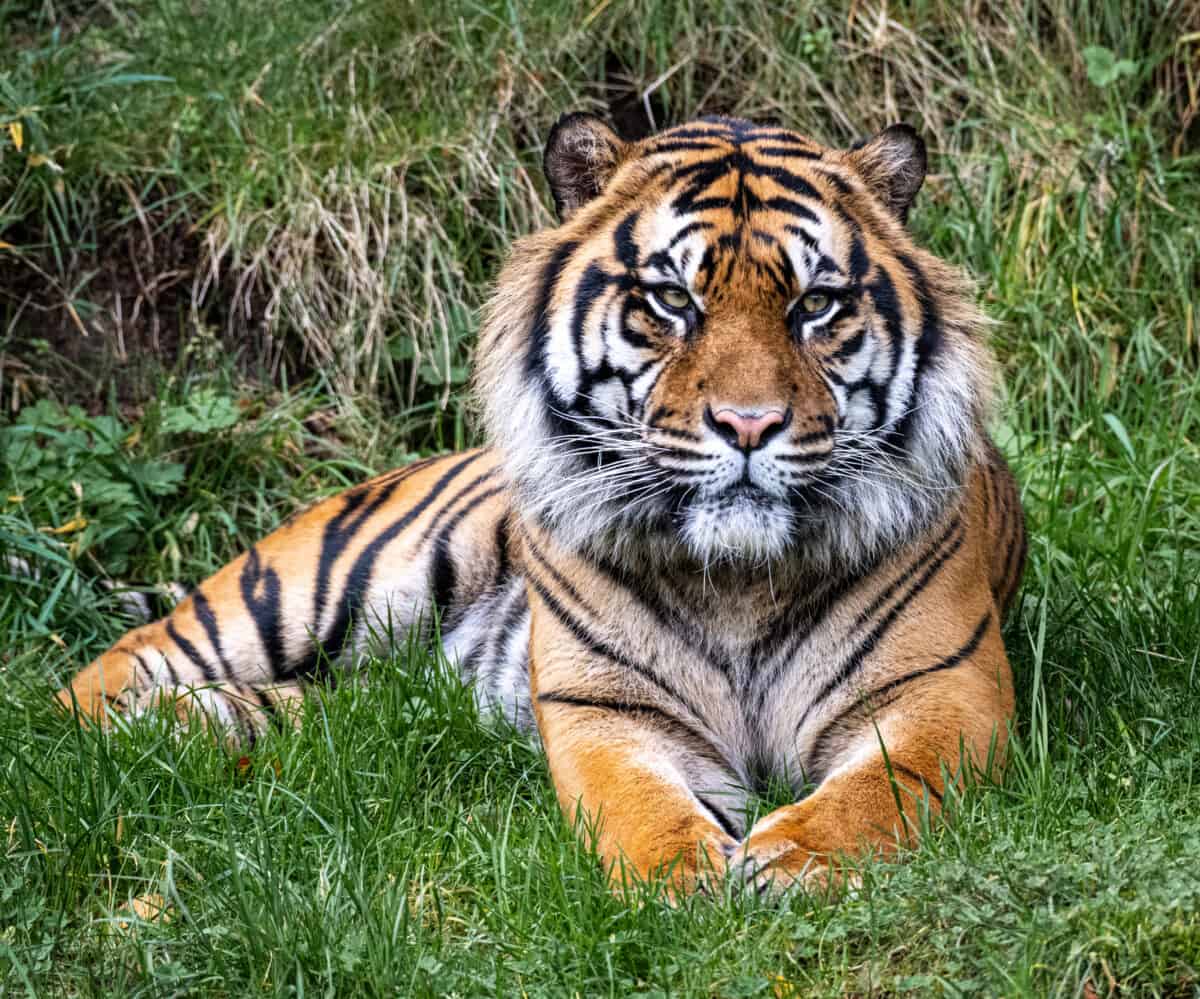
The Sumatran tiger represents the last surviving member of the Sunda Islands group of tigers, following the extinction of both the Javan and Bali tigers in the 20th century. Physically smaller than their mainland counterparts, Sumatran tigers typically weigh between 165-308 pounds (75-140 kg), with males being larger than females. Their distinctive dark orange coat features narrower black stripes than other tiger subspecies, an adaptation thought to provide better camouflage in their dense rainforest habitat.
Genetic studies have confirmed that Sumatran tigers are indeed a distinct subspecies, having been isolated on the island for at least 6,000 years. This isolation has led to genetic differentiation that makes their conservation particularly important from a biodiversity perspective. Their smaller size compared to other tigers is likely an adaptation to island living, where resources may be more limited and the prey species are generally smaller. These unique evolutionary adaptations make the potential loss of the Sumatran tiger not just a tragedy for the species, but a significant blow to global biodiversity.
Catastrophic Habitat Loss and Fragmentation

Perhaps the most significant threat facing Sumatran tigers is the staggering rate of habitat destruction across their native range. Sumatra has lost over 70% of its lowland forests—the tiger’s preferred habitat—in just the past few decades. This deforestation is primarily driven by the expansion of palm oil plantations, paper pulp operations, and other agricultural activities. Between 1985 and 2014, Sumatra lost nearly 55% of its natural forest cover, representing one of the highest deforestation rates in the tropical world.
Beyond the sheer loss of habitat, fragmentation of remaining forest patches has created isolated tiger populations that can no longer interact or breed with each other. Wildlife corridors that once allowed tigers to move freely have been severed by roads, settlements, and plantations. This fragmentation leads to genetic isolation, inbreeding, and reduced genetic diversity, all factors that further compromise the long-term viability of these isolated populations. A 2017 study found that Sumatran tigers now occupy less than 7% of their historical range, confined to increasingly small forest fragments that struggle to support viable populations.
The Devastating Impact of Poaching

Despite being protected by law, Sumatran tigers continue to face relentless pressure from poaching. Nearly every part of a tiger—from whiskers to tail—has value in illegal wildlife markets, particularly for traditional Asian medicine, despite no scientific evidence supporting their medicinal properties. A single tiger can fetch up to $50,000 on the black market when all body parts are sold, creating an irresistible economic incentive for poachers in a region where poverty is widespread. Tiger bones, believed to have anti-inflammatory properties, are particularly valuable, often ground into powder for various remedies.
The sophisticated networks of wildlife traffickers have evolved to evade law enforcement, using advanced technology and corruption to maintain their operations. Between 1998 and 2002 alone, at least 51 Sumatran tigers were killed per year according to traffic analysis, representing about 10% of the remaining population at that time. With such a small population remaining, even the loss of a single breeding female can have significant demographic impacts on the subspecies’ survival. Despite increased anti-poaching efforts in recent years, the high value of tiger parts continues to drive illegal hunting throughout their range.
Human-Tiger Conflict: A Growing Problem

As human settlements and agricultural activities expand into tiger habitat, confrontations between humans and tigers have become increasingly common. These encounters often end tragically for both parties. When tigers prey on livestock due to diminished natural prey, farmers may retaliate by poisoning, trapping, or shooting the animals they perceive as threats to their livelihoods. Between 1998 and 2011, at least 265 human-tiger conflicts were recorded in Sumatra, resulting in 91 human deaths and injuries and the killing of 15 tigers.
The shrinking buffer zones between tiger territories and human settlements exacerbate this problem. Tigers require large territories—a male’s range typically spans 100 square kilometers or more—and as these territories overlap increasingly with human-dominated landscapes, conflict becomes inevitable. Conservation organizations have implemented various mitigation strategies, including compensation programs for livestock losses, improved livestock management practices, and the installation of tiger-proof enclosures. However, as human populations continue to grow on Sumatra, managing these conflicts becomes an increasingly complex challenge that directly impacts tiger survival.
Declining Prey Base: The Hunger Crisis

Sumatran tigers face a secondary but equally threatening crisis: the dramatic decline of their natural prey species. Tigers primarily hunt wild pigs, deer, and other medium to large mammals, all of which have suffered population declines due to habitat loss and human hunting. Research indicates that a single tiger requires approximately 50 large prey animals annually to survive and reproduce. When natural prey becomes scarce, tigers face malnutrition, reduced reproductive success, and increased mortality—or they turn to livestock, triggering human-tiger conflicts.
The decline in prey species stems from multiple factors. Commercial and subsistence hunting has severely reduced populations of sambar deer, muntjac, and wild pigs across Sumatra. Additionally, habitat fragmentation isolates prey populations in the same way it affects tigers. A 2013 study in several Sumatran protected areas found prey densities had declined by over 60% in a decade, a trend that directly threatens tiger survival. Conservation strategies now recognize that protecting tigers requires not just preserving habitat but also ensuring healthy populations of prey species—adding another layer of complexity to conservation efforts.
Palm Oil: The Forest Destroyer
The explosive growth of palm oil plantations represents perhaps the single greatest driver of habitat loss for Sumatran tigers. Indonesia produces more than half of the world’s palm oil, with Sumatra being a primary production center. The industry’s economic importance—generating over $18 billion annually in export revenue for Indonesia—creates powerful incentives for continued expansion. Between 2000 and 2015, palm oil plantations in Sumatra increased from 1.7 million hectares to over 4.2 million hectares, much of this expansion occurring at the expense of lowland rainforests critical to tiger survival.
The method of clearing land for palm oil plantations—often involving slash-and-burn techniques—creates additional problems beyond habitat loss. These fires frequently spread beyond intended boundaries, destroying even more forest than planned. The drainage of peatlands for plantation establishment releases massive amounts of carbon dioxide while creating conditions prone to uncontrollable fires. Some conservation organizations have worked to establish sustainable palm oil certification, encouraging producers to avoid further deforestation, but implementation and enforcement remain challenging. The economic forces driving palm oil expansion continue to clash with tiger conservation goals across Sumatra.
Illegal Logging and Forest Degradation

Beyond outright deforestation, Sumatran tiger habitat suffers from widespread illegal logging that degrades forest quality even in protected areas. This selective removal of valuable timber species alters forest structure and composition, reducing the dense understory vegetation tigers rely on for hunting and concealment. A 2009 assessment estimated that 37% of all logging in Indonesia was conducted illegally, with Sumatra being a hotspot for such activities. Even in national parks, the problem persists—Kerinci Seblat National Park, home to the largest population of Sumatran tigers, lost approximately 28,000 hectares of forest to illegal logging between 2000 and 2012.
The infrastructure created for logging operations—roads, camps, and extraction paths—fragments habitat and provides easy access for poachers to penetrate previously inaccessible forest areas. Studies have demonstrated that tiger densities are significantly lower in logged forests compared to primary forests, even when the logged areas retain forest cover. The combination of reduced prey densities, increased human presence, and altered vegetation structure makes degraded forests less suitable for tiger populations. Even when logging operations end, the roads often remain, continuing to provide access for hunters, settlers, and additional resource extraction for decades.
Weak Law Enforcement and Corruption

Despite strong wildlife protection laws on paper, Indonesia has struggled with enforcement challenges that undermine tiger conservation. The 1990 Conservation of Living Resources and Their Ecosystems Act provides for prison sentences of up to 5 years and fines up to 100 million rupiah (approximately $7,000) for killing protected species like tigers. However, successful prosecutions remain rare. Between 2005 and 2015, only 20% of tiger poaching cases in Sumatra resulted in arrests, and fewer still led to meaningful convictions, with many perpetrators receiving minimal sentences.
Corruption within forestry and wildlife departments further complicates enforcement efforts. Rangers are often underpaid, undertrained, and lack the resources necessary to patrol vast protected areas effectively. A 2018 assessment found that the average protected area in Sumatra had just one ranger per 100 square kilometers—far below the recommended international standard of one ranger per 10-15 square kilometers. In some cases, officials have been implicated in wildlife trafficking networks themselves, highlighting the systemic nature of the problem. International organizations have worked to strengthen enforcement capacity through training programs and equipment donations, but significant challenges remain in implementing consistent protection across tiger habitat.
Climate Change: The Emerging Threat

While immediate threats like poaching and habitat loss currently pose the most direct dangers to Sumatran tigers, climate change represents an emerging long-term threat that could further compromise their survival. Rising sea levels particularly threaten coastal forest habitats, with projections suggesting up to 30% of Sumatra’s lowland forests could be impacted by sea level rise by 2100. These coastal forests currently support significant tiger populations, particularly in areas like Berbak National Park. Changes in rainfall patterns and temperature are also altering vegetation communities and may affect the distribution and abundance of prey species.
Climate change impacts compound existing threats through various feedback mechanisms. For example, droughts increase fire risk in already fragmented forests, while extreme weather events can damage forest canopy and accelerate degradation. Climate models predict that by 2050, significant portions of current tiger habitat in Sumatra may become climatically unsuitable for the species. The island’s geography, with mountains running along its western spine, limits the ability of tigers to shift their range in response to changing conditions, as they cannot disperse beyond the island’s boundaries. This combination of limited dispersal options and rapidly changing conditions creates additional vulnerability for an already endangered subspecies.
Conservation Efforts and Protected Areas

Despite the bleak outlook, significant conservation efforts continue to offer hope for Sumatran tiger survival. Indonesia has established a network of protected areas covering approximately 10% of Sumatra’s land area, including key tiger habitats in parks like Kerinci Seblat, Gunung Leuser, and Bukit Barisan Selatan. These three parks, collectively designated as the “Tropical Rainforest Heritage of Sumatra” UNESCO World Heritage Site, contain the largest remaining tiger populations. The Tiger Conservation Landscape initiative has identified 12 priority landscapes in Sumatra that, if properly protected, could support viable tiger populations over the long term.
Innovative conservation approaches are also being implemented. Wildlife corridors are being established to reconnect isolated forest fragments, allowing tigers to move between protected areas. Community-based conservation programs engage local people in tiger protection through economic incentives, education, and participation in monitoring efforts. The SMART (Spatial Monitoring and Reporting Tool) patrol system has improved the effectiveness of anti-poaching efforts by using data analytics to guide ranger deployments. International collaborations, including the Global Tiger Recovery Program and partnerships between Indonesian authorities and organizations like the Wildlife Conservation Society and WWF, provide technical and financial support for these efforts. While challenges remain enormous, these coordinated conservation initiatives represent the best hope for preventing the extinction of the Sumatran tiger.
Genetic Concerns and Population Viability

Beyond the visible threats of habitat loss and poaching, Sumatran tigers face insidious genetic challenges that threaten their long-term viability. With fewer than 400 individuals divided among isolated subpopulations, genetic diversity has declined significantly. A 2013 genetic study revealed that Sumatran tigers have lost approximately 70% of their genetic diversity compared to historical samples from the early 20th century. This genetic erosion results in decreased reproductive fitness, increased susceptibility to disease, and reduced adaptive capacity—all factors that further compromise survival prospects.
Population viability analyses suggest that most remaining tiger subpopulations in Sumatra are too small to remain viable over the long term without genetic exchange. Only three protected areas—Kerinci Seblat, Gunung Leuser, and Bukit Barisan Selatan—are estimated to hold more than 30 tigers each, the minimum considered necessary for short-term population viability. Even these larger populations face genetic challenges if they remain isolated. Conservation geneticists have proposed managed translocations between isolated populations to mimic natural gene flow, though such interventions carry their own risks and challenges. The establishment of wildlife corridors represents a more natural approach to restoring genetic connectivity, but requires addressing the complex land-use issues in landscapes between protected areas.
The Future of Sumatran Tigers: A Race Against Extinction

The fate of the Sumatran tiger hangs in a precarious balance, with extinction a very real possibility within our lifetime without substantial intervention. Every aspect of their existence—from habitat to prey to genetic viability—faces severe and immediate threats. Yet there remains reason for cautious optimism. Conservation successes in other parts of the world, such as the recovery of tiger populations in Nepal and parts of India, demonstrate that dedicated protection efforts can reverse declining trends for big cats. The global attention on tiger conservation, including initiatives like the ambitious TX2 goal to double wild tiger numbers globally by 2022, has mobilized unprecedented resources and political will.
For Sumatran tigers specifically, survival will require addressing multiple threats simultaneously through integrated approaches. Habitat protection must be strengthened while sustainable development alternatives are created for local communities. Anti-poaching efforts need consistent support and improved effectiveness. Human-tiger conflict mitigation programs must expand to reduce retaliatory killings. Perhaps most importantly, conservation planning must occur at the landscape level, recognizing that tigers require connected networks of habitat rather than isolated protected islands. The story of the Sumatran tiger’s decline represents a profound warning about humanity’s impact on biodiversity, but their potential recovery could become an equally powerful symbol of our capacity to reverse these damages before it’s too late. The next decade will likely determine whether these magnificent cats continue to roam Sumatra’s forests or join their Javan and Balinese relatives in extinction.

- Could Wolves Be the Answer to America’s Ecosystem Crisis? - July 20, 2026
- 10 Animals That Cheat Death in the Most Unexpected Ways - July 19, 2026
- The Shrimp That Punches Like a Bullet - July 19, 2026