

You’re sitting on the couch, scrolling your phone, and then you notice it. Your dog is frozen in front of the living room wall, locked in a silent stare that has lasted way longer than any normal behavioral blip should. No growl, no bark, no movement. Just that fixed, glassy gaze pointed at nothing you can see.
It’s one of those moments that makes even the most rational dog owner question reality. Is something in the wall? Is something wrong with them? The instinct is to panic, Google “haunted house,” and then feel a little embarrassed about it. The truth, though, turns out to be far more fascinating than any ghost story. Dogs inhabit a sensory world that’s radically different from our own, and when they stare at a wall, they’re usually tuned into something very real.
#1: Their Nose and Ears Are Doing the Actual Work
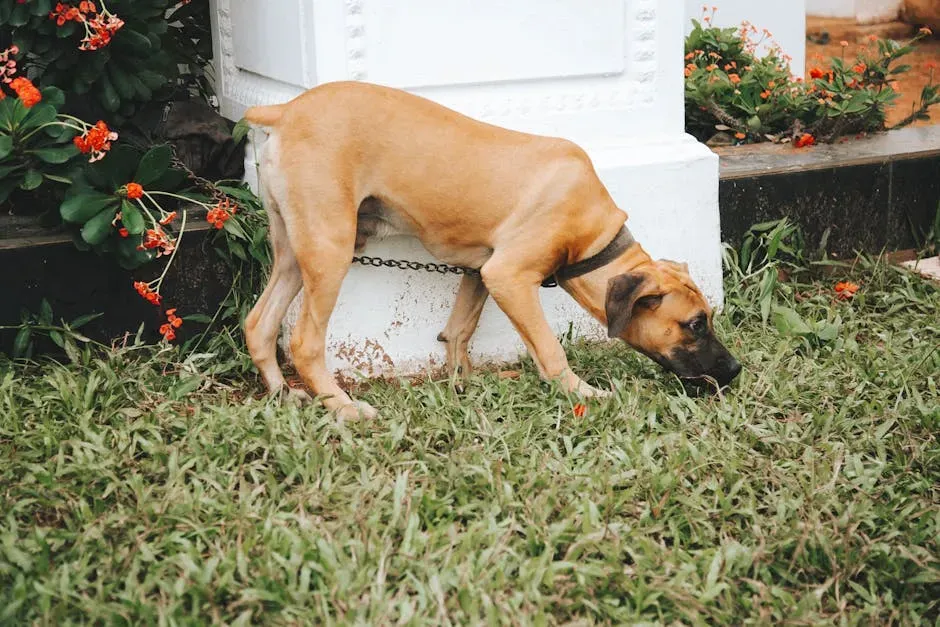
Dogs stare at walls primarily because they detect things humans simply cannot, such as insects, rodents, sounds, or scents behind the wall. It sounds almost absurd until you understand the sensory gap between us and them. What looks like an empty plaster surface to you might be buzzing with information for your dog.
It has been estimated that a dog’s sense of smell is roughly 100,000 times more powerful than a human’s, and scientists think dogs have about 2 billion olfactory receptors compared to our far more modest count. With that kind of chemical sensitivity, the faint scent trail of a mouse moving through cavity walls is essentially a neon sign.
Dogs also have a keen sense of hearing. They’re capable of hearing sounds four times farther away than the human ear can discern, their ears are better designed to gather available sound waves, and they have 15 different muscles that move their ears in all directions. So the faint scratch of an insect or the creak of a pipe is genuinely compelling to them in a way we’ll never fully appreciate.
Both cats and dogs are able to hear the sound of mice in walls even when we can’t hear anything, because the sensitivity of their hearing means the little scratching noises mice make within the walls are picked up very quickly. If your dog is also sniffing along the wall’s edge or following an invisible path, that’s likely exactly what’s happening.
#2: They’re Tracking Shadows, Light, and Movement You’ve Missed
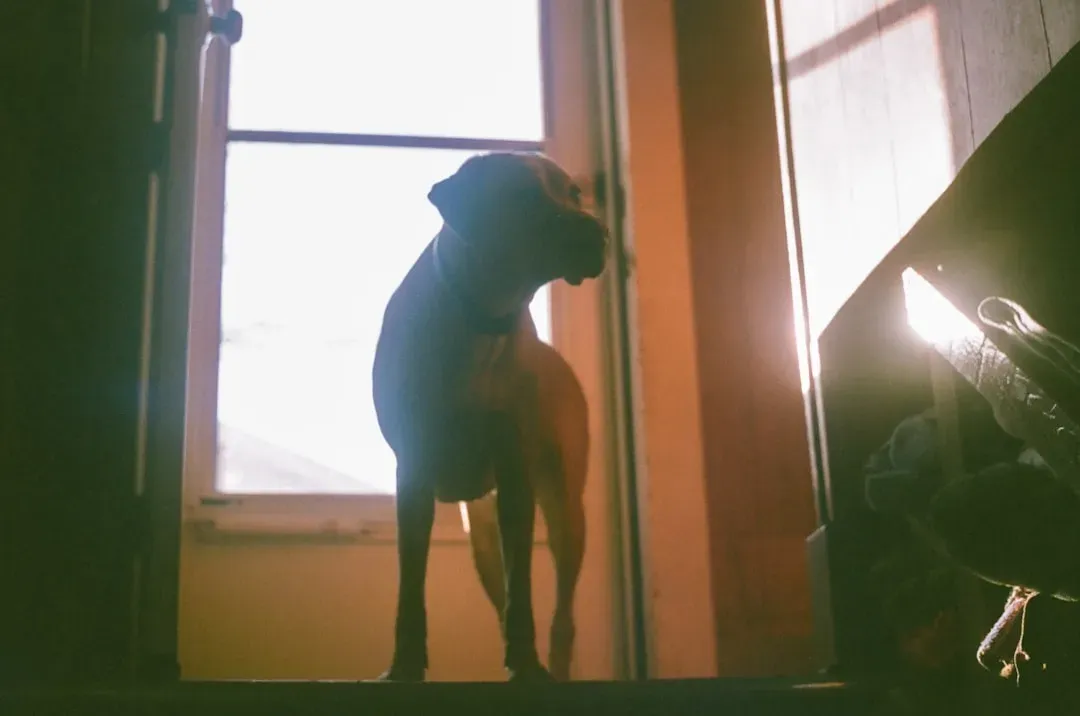
Dogs are drawn to moving lights and shadows. Sunlight reflecting off a car window outside, shadows from passing traffic, or light patterns from ceiling fans can create interesting visual effects on your walls. These micro-movements can be invisible to the human eye, especially in peripheral vision, but your dog’s visual system is built to catch exactly this kind of thing.
Dogs are better at picking up fast-moving objects and subtle changes in light, which means a barely-there flicker or a shadow shift that you’d filter out in under a second can be genuinely arresting to them. Their visual priority isn’t color richness; it’s motion detection.
Vision changes can make walls strangely compelling. A dog with declining eyesight may track floaters, chase light patterns, or stare toward high-contrast edges. This is worth keeping in mind especially for older dogs whose visual acuity may be changing in ways you haven’t yet noticed.
If the wall staring happens during certain times of day, check for light sources. Your dog might just be entertained by the moving patterns, and this is especially common with younger dogs who are more playful and curious. A quick scan of the room at the same time of day can often solve the mystery immediately.
#3: Boredom and Attention-Seeking Can Look Exactly Like This

Sometimes the staring isn’t about ghosts or wall critters. It’s about boredom or wanting your attention. Dogs that aren’t getting enough mental or physical activity may start doing unusual things, like staring at a spot on the wall, just because something little caught their interest or because they’re bored. The behavior gets reinforced quickly, too.
Dogs are clever. If they notice that staring at the wall will get your attention, they may do it to get words of concern, pets, and potential redirection of playtime or treats. If you respond to wall-staring with panic, worry, and belly rubs, your dog will use that tactic again. It’s operant conditioning in action, and your dog figured it out faster than you did.
Boredom-related behaviors in dogs are goal-oriented, in pursuit of a behavioral need, and responsive to enrichment. Signs of boredom can include increased attention-seeking behaviors such as pawing, barking, or bringing toys to initiate play, as well as pacing, stealing objects, or shredding bedding. Wall staring, in this context, is simply another outlet for unspent energy.
Boredom often noticeably improves when your dog’s routine is changed to include predictable exercise, social interaction, and mental enrichment, such as training games or puzzle feeders. If the wall-staring stops once you ramp up activity, you’ve found your answer.
#4: Cognitive Decline Can Make Familiar Spaces Feel Strange

Just like humans, dogs can experience cognitive decline as they get older, leading to a condition known as canine cognitive dysfunction syndrome. It’s similar to Alzheimer’s disease in humans and is characterized by a gradual deterioration in cognitive abilities in senior dogs, with studies finding this condition can start to develop when a dog is between 8 and 9 years old. Blank wall staring is one of its quieter, easier-to-miss symptoms.
Common symptoms and signs of canine cognitive dysfunction may include abnormal behavior including very deep sleep states, pacing at night, getting up to urinate through the night, staring blankly, standing in a corner, barking, wandering, and increasing anxiety. If your older dog is doing several of these things together, it deserves a vet conversation sooner rather than later.
In dogs with cognitive dysfunction syndrome, a substance toxic to the brain called beta-amyloid protein accumulates. Other changes include reduced blood flow and dysfunctional neurons. Neurons carry information throughout the brain and body, and when they don’t function correctly, the brain’s ability to remember, process information, and tell the body what to do is impaired.
Senior dogs are at the highest risk for developing this condition, with roughly a quarter of dogs aged 11 to 12 affected and the vast majority of dogs between 15 and 16 years old showing signs of cognitive dysfunction syndrome. Catching it early makes a meaningful difference in quality of life.
#5: Sometimes It Points to a Neurological Event That Needs Attention
Staring at the wall or into space could be a symptom of a type of seizure called a partial seizure or a focal seizure. These episodes don’t always look like the dramatic full-body convulsions most people imagine. They can be subtle, brief, and easily mistaken for simple daydreaming or odd behavior.
While some wall-staring moments can be harmless quirks, others may point to neurological events such as focal seizures or sensory disturbances. The key difference is usually responsiveness. A dog who snaps out of it when you call their name is very different from one who stays locked in that blank stare regardless of what you do.
If your dog stares blankly at the wall as if paused mid-thought, this could indicate a neurological disorder or a focal seizure. These “zoned out” moments may seem harmless but could signal an underlying health condition. It’s important to pay attention to your dog’s body language and look for other symptoms like twitching, loss of balance, or unresponsiveness.
Wall-staring can be harmless curiosity, but it can also signal discomfort, sensory change, anxiety, or neurologic events. It’s worth tracking when it happens, whether your dog can be redirected, and any changes in appetite, sleep, or coordination. If episodes are new, persistent, or paired with other signs, a veterinary exam helps clarify next steps.
When to Worry and When to Relax
Context matters. If your dog snaps out of it quickly when you call their name or offer a toy, it may not be a cause for alarm. However, when wall staring is frequent, prolonged, or paired with unusual behaviors, it can signal something more complex happening in the brain. The frequency and pattern matter far more than any single incident.
Persistent wall staring, especially with confusion, pacing, or behavior changes, can signal a neurological issue. If the behavior is new, frequent, or concerning, schedule a veterinary exam. That’s the most practical and honest piece of advice available on this topic, and it holds across every scenario described here.
If the staring feels excessive, habitual, or compulsive, try to redirect your dog’s attention. Engage them in an activity they love, like playing fetch, solving a puzzle toy, or snuggling. If they’re easily redirected, wall-staring may be a phase or a peculiar way for them to entertain themselves. If the behavior persists, becomes more frequent, or includes concerning signs like pacing, whining, or ignoring everything else, consult a veterinarian.
Most of the time, your dog’s wall fixation is evidence of something genuinely interesting happening just beyond your perception. They’re the better detective in the room. Still, when the staring changes in quality or frequency, it’s worth trusting that instinct that made you look it up in the first place. Your dog communicates through behavior. Paying close attention is the most useful thing you can do in return.

- 14 Ways an Old Dog Holds On a Little Longer for the Person It Loves - July 21, 2026
- 15 Tender Things Old Dogs Do the Closer the End Quietly Comes - July 21, 2026
- 14 Ways a Rescue Cat Shows It Has Given You Its Fragile Heart - July 21, 2026