

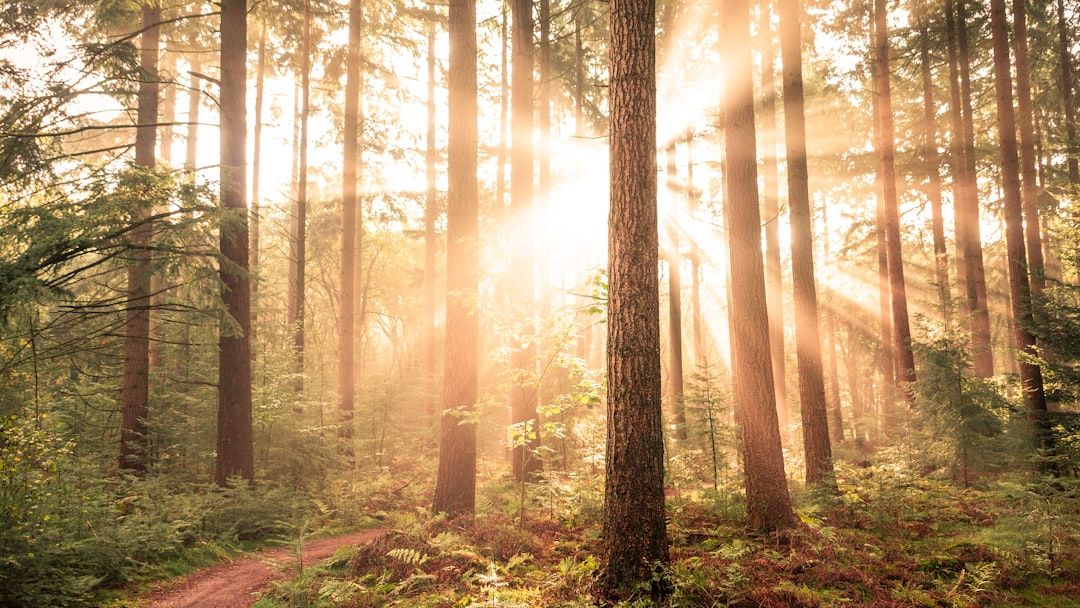
Few events in the history of life on Earth were as quietly revolutionary as the moment plants left the ocean behind. No fanfare, no sudden explosion – just a slow, grinding transformation that took hundreds of millions of years and completely reshaped the planet we now call home.
It’s easy to take a grassy field or a towering forest for granted. We walk through them without a second thought. Yet every single tree, shrub, moss, and flower you’ve ever seen is the descendant of ancient aquatic algae that somehow figured out how to survive on dry, hostile land. The story of how that happened is stranger and more fascinating than most people ever realize. Let’s dive in.
It All Started in the Water: The Algae Ancestors
Here’s the thing – plants didn’t just wander onto land one day and decide to stay. Their journey began deep in Earth’s oceans, where photosynthetic algae had been thriving for billions of years. The specific ancestors of land plants are believed to be a group called charophyte green algae, which lived in freshwater environments rather than the open sea.
What made charophytes special was their surprisingly sophisticated cellular machinery. They already had many of the biochemical tools that land plants would later need, including the ability to manage water at a cellular level and reproduce in ways that didn’t require being fully submerged.
Scientists have used genetic analysis to trace this lineage with remarkable precision. It’s hard to say exactly when the split happened, but estimates point to somewhere around 500 million years ago, during the Ordovician period. That’s roughly twice as long ago as the dinosaurs roamed the Earth, which honestly puts the scale of this story into perspective.
The Hostile Shore: What Plants Were Up Against
Stepping onto land – metaphorically speaking – was no easy feat. The terrestrial environment was brutal compared to the cushioned, mineral-rich comfort of aquatic life. On land, there was the constant threat of desiccation, intense ultraviolet radiation, and the crushing pull of gravity without water to provide buoyancy.
Early plant pioneers had to solve all of these problems simultaneously, and they had no roadmap. Honestly, it’s a miracle any of them made it. The lack of a waxy outer coating, no roots to anchor into soil, and no vascular system to transport water internally meant that even the smallest environmental stress could be fatal.
Over millions of years, natural selection rewarded any mutation that helped plants cope with these conditions. Thick protective coatings called cuticles evolved to prevent water loss. Tiny pores called stomata appeared, allowing gas exchange without drying out. These weren’t conscious adaptations – just slow, relentless survival of whoever happened to be better equipped.
The First Foothold: Mosses, Liverworts, and the Pioneers
The earliest land plants weren’t dramatic. No towering trees or colorful flowers – just low-lying, moisture-dependent organisms that looked something like today’s mosses and liverworts. These non-vascular plants were essentially the first scouts, clinging to damp shorelines and rocky surfaces where they could still access water relatively easily.
What made them remarkable wasn’t their size but their survival strategy. They could dry out almost completely and then rehydrate when rain returned, essentially pressing pause on life itself. Think of them like biological sponges that never truly gave up.
Fossil evidence shows these primitive plants were present around 470 million years ago, though some genetic studies suggest the transition may have begun even earlier. These early colonizers also started doing something enormous for the planet itself – they began breaking down rock surfaces, contributing to the very first soils. That might sound mundane, but without soil, almost nothing else could follow.
The Vascular Revolution: Plants Learn to Grow Tall
For land plants, the development of a vascular system was something like inventing indoor plumbing. Suddenly, water and nutrients could be transported internally over longer distances, which meant plants could grow taller and venture further from wet environments.
This innovation, appearing around 430 million years ago, gave rise to a completely new class of plants – the vascular plants, which today represent the vast majority of plant life on Earth. Ferns, horsetails, and eventually seed plants all owe their existence to this breakthrough.
The consequences were staggering. Once plants could grow tall and establish roots deep in the ground, they began creating complex ecosystems. They provided shade, habitat, and food for early land animals. They stabilized soils and started fundamentally altering the chemistry of the atmosphere in ways that would affect every living thing on the planet.
Changing the Air: The Oxygen Connection
Let’s be real – when most people think about what shaped Earth’s atmosphere, they don’t immediately think of plants migrating from the sea. Yet that’s exactly what happened. As land plants spread and diversified, they ramped up photosynthesis on a global scale, pulling carbon dioxide out of the atmosphere and releasing oxygen.
This process gradually transformed Earth’s air into something breathable for complex animal life. Without it, the oxygen-rich atmosphere that animals – including humans – depend on today simply wouldn’t exist. We are, in a very literal sense, breathing because ancient plants made the move to land.
The spread of forests during the Carboniferous period, roughly 350 to 300 million years ago, is particularly significant. Massive amounts of carbon were locked away in plant material during this era, some of which eventually became the coal deposits we’ve been burning since the Industrial Revolution. There’s a certain painful irony in the fact that we’re now releasing back into the atmosphere the very carbon those ancient plants worked so hard to bury.
Soils, Weathering, and a Planet Transformed
Plant roots did something quietly revolutionary that often gets overlooked. They physically and chemically broke down rock, accelerating a process called weathering at a scale never seen before on Earth. This wasn’t just creating soil – it was reshaping entire geological systems, influencing river paths, sediment flows, and even ocean chemistry.
As root systems became more complex, they pumped organic acids into rock surfaces, dissolving minerals and releasing nutrients into the developing soil layers. This feedback loop helped create richer, deeper soils, which in turn supported more plant life, which created more soil. A self-reinforcing cycle that built the foundation of terrestrial ecosystems as we know them.
Researchers have found that the emergence of deep-rooted vascular plants around 400 million years ago may have triggered a significant drop in atmospheric carbon dioxide, contributing to a global cooling event. That’s how profoundly interconnected plant evolution and Earth’s climate systems are. Plants didn’t just move to land. They changed the rules of the game entirely.
The Seed: Nature’s Most Brilliant Survival Device
If there’s one innovation that truly liberated plants from dependence on wet environments, it was the seed. Seeds are extraordinary little packages – a plant embryo wrapped in a protective coat with its own food supply, capable of surviving drought, cold, and long periods of dormancy.
Before seeds, plants still needed at least a film of water for reproduction, since their sperm cells had to swim to reach the egg. Seeds eliminated that requirement almost entirely. Suddenly, plants could colonize dry, inland environments that would have been completely inaccessible before. The world opened up.
Seed plants appeared around 360 million years ago, and their success has been nothing short of total domination. Today, seed-bearing plants account for the overwhelming majority of plant species on Earth. From flowering plants to conifers, the diversity that surrounds us is ultimately a tribute to that one elegant evolutionary invention that let plants finally cut their last tie to the water.
Conclusion: The Quiet Revolution That Made Our World
It’s genuinely humbling to think about how much of what we consider “normal” on Earth is the direct result of plants making that ancient leap from sea to land. Every breath of fresh air, every forest trail, every agricultural field, every coal-fired power plant – all of it traces back to those first waterlogged pioneers creeping onto bare rock hundreds of millions of years ago.
I think what strikes me most about this story is how incremental it was. No single dramatic moment, just an accumulation of tiny adaptations over immense stretches of time. It’s a reminder that the most profound transformations often happen so slowly that no one – and nothing – notices until the world has already changed completely.
The next time you walk past a patch of moss on a damp wall or admire a towering oak, consider what it represents. An unbroken lineage stretching back half a billion years. A success story so complete it reshaped the atmosphere, the soil, and the very chemistry of a planet. What do you think – does knowing the ancient backstory of that moss or tree change the way you see the world around you? Tell us in the comments.

- Urban Coyotes Show Remarkable Adaptability, Learning to Thrive in City Environments - July 22, 2026
- Beavers Are Nature’s Engineers, Creating Vital Habitats for Other Wildlife Species - July 21, 2026
- The Recovery of the California Condor Offers Hope for Other Critically Endangered Birds - July 21, 2026