


Bald eagles (Haliaeetus leucocephalus), America’s national bird, exhibit fascinating nesting behaviors that make them unique among North American raptors. These majestic birds typically mate for life and return to the same nesting territory year after year. Their breeding season varies by region, generally beginning earlier in southern states (December-January) and later in northern regions (February-March). Eagles select their nesting sites carefully, prioritizing mature trees with open structure and proximity to water bodies that provide their primary food source—fish.
What makes bald eagle nests particularly remarkable is their size. Often called “aeries,” these structures rank among the largest nests in the avian world. A new nest typically measures about 5 feet in diameter and 2-4 feet deep, but since eagles add to their nests each year, long-established nests can reach staggering dimensions—up to 10 feet across and weighing over a ton. The record-holding nest, documented in Florida, measured 9.5 feet in diameter, 20 feet deep, and weighed over 2.9 tons. This extraordinary architecture makes eagle nests relatively easy to spot, even from considerable distances.
Alaska: America’s Bald Eagle Capital
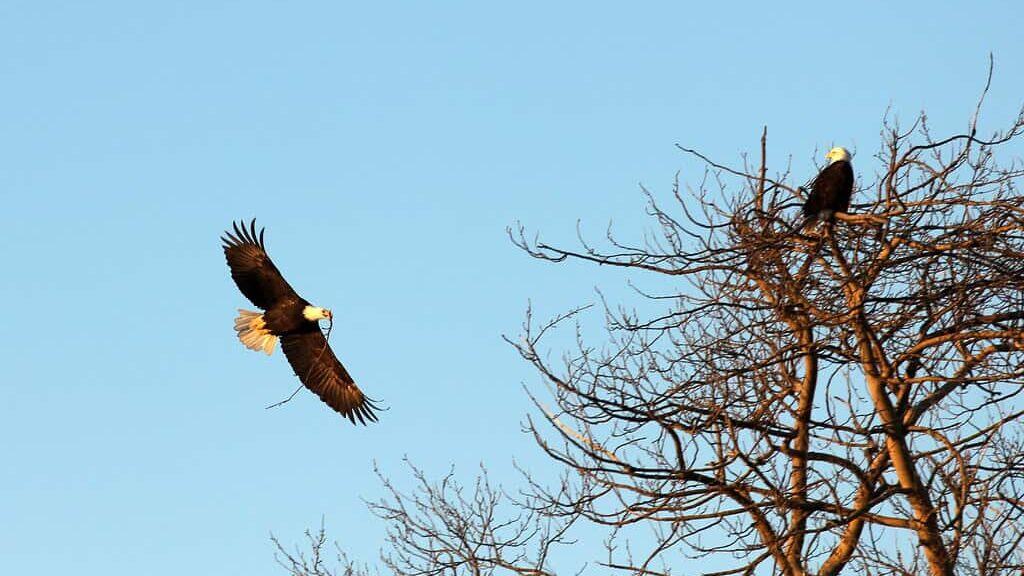
Alaska stands as the undisputed bald eagle capital of the United States, hosting approximately 30,000 bald eagles—roughly half of North America’s total population. The southeastern portion of the state, particularly around the Chilkat River near Haines, offers spectacular eagle viewing opportunities. During the late fall salmon runs, the Chilkat Bald Eagle Preserve can host gatherings of over 3,000 eagles, creating one of the most impressive wildlife spectacles in North America. The preserve’s unique geography creates ice-free areas that allow eagles to access salmon even during winter months.
For eagle nest viewing specifically, the areas around Juneau, the Kenai Peninsula, and Kodiak Island offer excellent opportunities. These regions feature abundant tall spruce trees near productive fishing waters—ideal conditions for nesting eagles. The Alaska Raptor Center in Sitka provides educational programs and rehabilitation for injured eagles, offering visitors a chance to learn about these birds’ nesting habits while supporting conservation efforts. The best time for nest viewing in Alaska is from April through August, when pairs are actively raising their young.
The Chesapeake Bay Region: An Eagle Stronghold

The Chesapeake Bay region represents one of the most significant bald eagle habitats in the eastern United States. Spanning parts of Maryland, Virginia, and Delaware, this massive estuary system provides ideal conditions for nesting eagles with its abundant fish populations and mature trees along shorelines. The Blackwater National Wildlife Refuge in Maryland stands out as a premier destination, hosting one of the highest concentrations of breeding eagles in the lower 48 states. The refuge’s mixture of marshland and forested areas creates perfect nesting conditions, with over 200 breeding pairs documented in recent years.
Virginia’s James River watershed has witnessed a remarkable recovery story. Once down to zero breeding pairs in the 1970s due to DDT contamination, the region now supports over 300 nesting pairs. The Caledon State Park and Mason Neck National Wildlife Refuge offer excellent opportunities to observe nesting activities, particularly from February through June. Conowingo Dam in Maryland provides another popular viewing spot, especially during winter when eagles congregate to catch fish beneath the dam. Throughout the Chesapeake region, boat tours specifically designed for eagle watching provide access to nests that might otherwise be difficult to observe from land.
Minnesota’s Land of 10,000 Lakes and Eagles
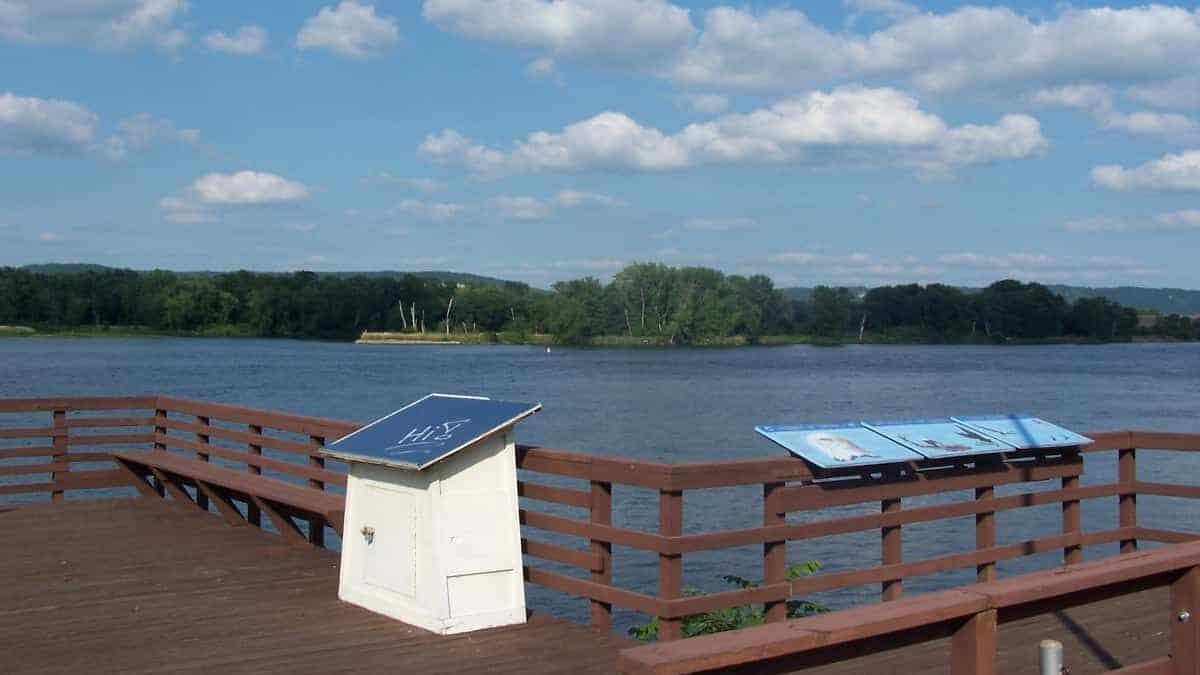
Minnesota’s abundant lakes and rivers create ideal habitat for bald eagles, with the state hosting over 1,300 active nesting pairs—one of the largest populations in the lower 48 states. The areas surrounding the Mississippi River, particularly the stretch between Minneapolis and Wabasha, offer prime eagle watching opportunities. The National Eagle Center in Wabasha serves as an excellent starting point for eagle enthusiasts, providing educational programs and information about nearby nesting sites. During winter months, open water below the dams along the Mississippi attracts concentrations of eagles fishing in the unfrozen waters.
Voyageurs National Park in northern Minnesota represents another eagle hotspot, with approximately 42 active nesting territories within the park boundaries. These eagles build their massive nests in large white pines along the shorelines of the park’s numerous lakes. The Boundary Waters Canoe Area Wilderness also supports a healthy eagle population, though reaching these remote nesting sites requires paddling into the backcountry. For those seeking more accessible viewing, the Sherburne National Wildlife Refuge hosts several eagle nests visible from designated viewing platforms, offering excellent opportunities to observe nesting behaviors from a respectful distance without disturbing these protected birds.
Florida’s Year-Round Eagle Population

Florida boasts the distinction of hosting the largest bald eagle population in the contiguous United States, with over 1,500 nesting pairs. Unlike northern states where eagles may migrate seasonally, Florida’s eagle population is largely resident year-round, making it an excellent destination for consistent eagle viewing. The nesting season in Florida begins earlier than in northern regions, typically starting in October or November. St. Petersburg’s Honeymoon Island State Park has become renowned for its accessible eagle nests, with viewing platforms specifically designed to observe nesting activities without disturbing the birds.
Lake Tohopekaliga near Kissimmee offers another excellent eagle viewing location, with boat tours available to approach nesting sites responsibly. The Ocala National Forest contains numerous eagle territories, particularly around its many lakes. In southwest Florida, the J.N. “Ding” Darling National Wildlife Refuge on Sanibel Island provides opportunities to view eagles along with other wildlife. Florida’s eagles often build their nests in large pine trees or occasionally on man-made structures like transmission towers. The state’s Fish and Wildlife Conservation Commission maintains a nest locator database that helps visitors find active nesting sites while emphasizing the importance of maintaining proper viewing distance of at least 330 feet to avoid disturbing these federally protected birds.
The Pacific Northwest’s Eagle Havens
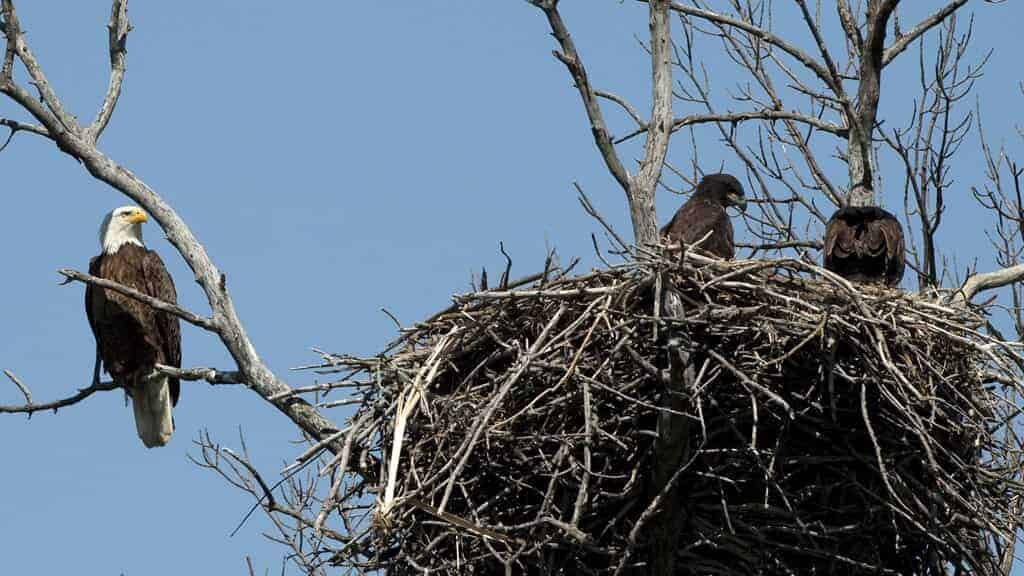
The Pacific Northwest region, encompassing Washington, Oregon, and parts of British Columbia, hosts substantial bald eagle populations drawn to the region’s abundant salmon runs. Washington’s Skagit River Valley becomes a major congregation point during winter salmon runs, when hundreds of eagles gather to feed. During nesting season, these birds disperse throughout the region’s waterways. The San Juan Islands provide excellent nesting habitat, with eagles frequently building nests in the tall Douglas firs that line the shores. Deception Pass State Park offers viewpoints where visitors can observe eagles fishing and returning to nearby nests.
In Oregon, the Willamette Valley and Columbia River Gorge host significant nesting populations. The Sauvie Island Wildlife Area near Portland provides habitat for several nesting pairs, with viewing opportunities from designated hiking trails. Further south, the Klamath Basin National Wildlife Refuge complex along the Oregon-California border supports one of the largest concentrations of wintering bald eagles in the contiguous United States, with some pairs remaining year-round to nest. Throughout the Pacific Northwest, eagle nests can often be spotted along river corridors and lake shores, typically placed in the upper third of tall trees with good visibility of the surrounding area. The nesting season here typically runs from February through July.
The Great Lakes Region’s Eagle Resurgence
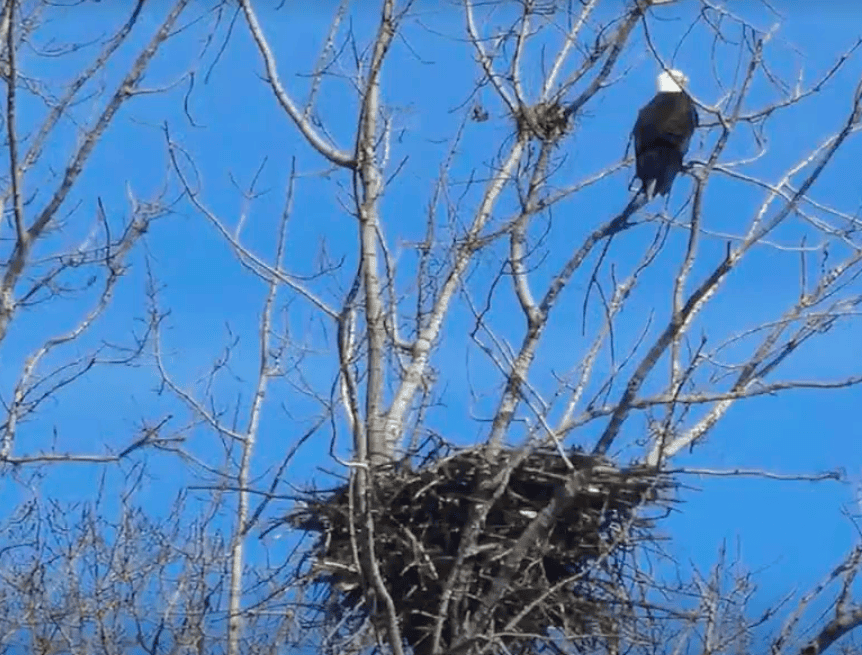
The Great Lakes region has witnessed a remarkable recovery of bald eagle populations over the past few decades. Areas around all five Great Lakes now support healthy nesting populations, with Michigan alone hosting over 800 breeding pairs. Michigan’s Upper Peninsula offers excellent eagle viewing opportunities, particularly along the shores of Lake Superior and in the Seney National Wildlife Refuge. In Wisconsin, the areas surrounding the Mississippi River and the Chippewa Flowage contain numerous nesting territories. The northern portions of Wisconsin’s Door County peninsula feature several accessible nesting sites, with pairs returning to the same massive nests year after year.
Ohio’s Lake Erie shoreline represents another significant habitat, particularly Ottawa National Wildlife Refuge and the surrounding areas. The New York side of Lake Ontario supports growing eagle populations, especially around the eastern basin. Throughout the Great Lakes region, eagles typically select tall trees near shorelines, often white pines or cottonwoods that provide both height and stability for their massive nests. The nesting season in this region generally runs from February through July, with eagles beginning courtship behaviors even while lakes remain partially frozen. Several state natural resource departments throughout the region maintain eagle nest monitoring programs that provide data to researchers while helping to direct conservation efforts to protect critical nesting habitat.
Yellowstone and Grand Teton National Parks

Yellowstone and Grand Teton National Parks in Wyoming provide some of the most spectacular settings for observing nesting bald eagles against dramatic mountain backdrops. Yellowstone supports approximately 25-30 nesting pairs, with concentrations around the park’s major lakes and rivers. Yellowstone Lake’s eastern shore contains several territories, with eagles often nesting in large lodgepole pines near the water’s edge. The Madison and Yellowstone Rivers also host nesting pairs, giving visitors multiple opportunities to observe eagles during the summer season. The park’s abundant fish populations, particularly cutthroat trout, provide an ideal food source for nesting eagles.
In nearby Grand Teton National Park, the Snake River corridor and the shores of Jackson Lake support 15-20 nesting pairs. The oxbow bends of the Snake River create particularly productive fishing grounds for eagles, and the tall cottonwoods lining the river provide perfect nesting sites. One of the most reliable viewing areas is near the Jackson Lake Dam, where eagles often perch on prominent snags while scanning for fish. Both parks offer ranger-led programs focusing on raptor ecology during the summer months. The nesting season in this high-elevation region starts later than in lower areas, typically beginning in March or April with young fledging by late August. Visitors should bring spotting scopes or powerful binoculars, as many nests are situated at some distance from public roads and trails.
The Mississippi River Corridor
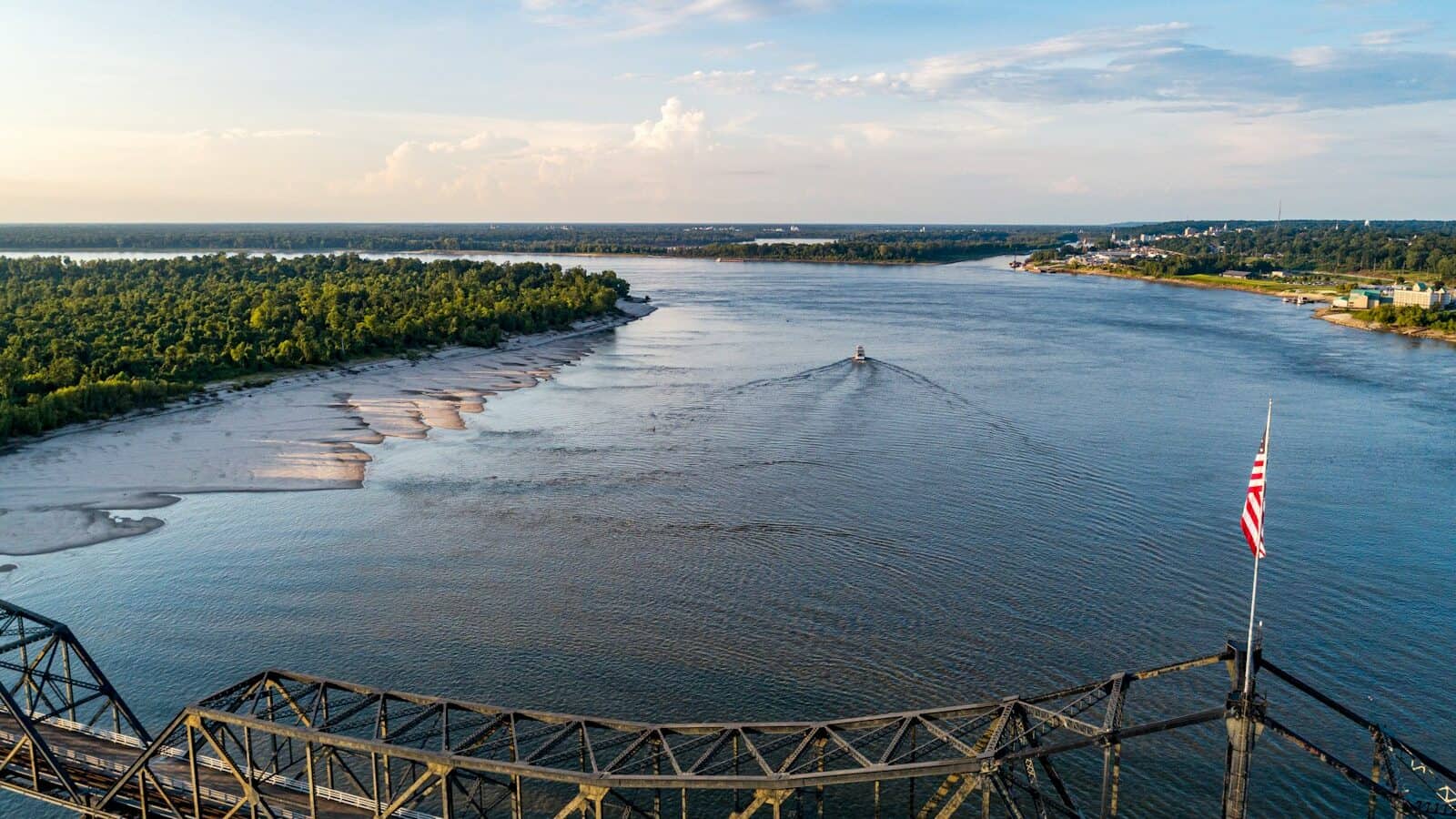
The Mississippi River serves as a crucial corridor for bald eagles, with hundreds of nesting pairs establishing territories along its length from Minnesota to Louisiana. During winter, the number of eagles along the river swells as northern birds migrate south to areas where the water remains unfrozen, allowing them to continue fishing. Areas below dams are particularly attractive to eagles due to the concentration of stunned fish passing through the turbines. The Upper Mississippi River National Wildlife and Fish Refuge, stretching 261 miles from Minnesota to Illinois, protects critical eagle habitat and offers numerous viewing opportunities from designated platforms and overlooks.
Further south, the areas around Alton, Illinois and Clarksville, Missouri host significant winter concentrations, with some pairs remaining year-round to nest. The cypress-tupelo swamps of the lower Mississippi in Arkansas, Mississippi, and Louisiana provide distinctive nesting habitat, with eagles often building nests in the tall cypresses emerging from the backwaters. Throughout the river corridor, eagles typically select the tallest available trees with good visibility and fishing access. The nesting phenology shifts along the river’s length, with southern pairs beginning as early as November and northern pairs waiting until February or March. Several visitor centers along the river specialize in eagle information, including the National Eagle Center in Wabasha, Minnesota and the Masters of the Sky program at the Audubon Center at Riverlands near St. Louis.
Best Practices for Observing Nesting Eagles

Observing nesting bald eagles requires both patience and ethical viewing practices. Federal law protects bald eagles under the Bald and Golden Eagle Protection Act, making it illegal to disturb nesting eagles in ways that might affect their behavior. The U.S. Fish and Wildlife Service recommends maintaining a minimum distance of 330 feet (100 meters) from active nests, though this may increase to 660 feet during sensitive periods like egg-laying and hatching. Quality optical equipment—spotting scopes and binoculars with at least 10x magnification—allows for close observation without disturbance. Many established eagle viewing areas provide spotting scopes for public use.
Timing your visit appropriately enhances the viewing experience. Early morning hours typically feature the most active periods for eagle behavior around nests, with adults bringing fresh prey items to nestlings. Understanding the nesting cycle helps target specific behaviors: nest building and maintenance in early season, incubation during mid-season, and feeding of nestlings later in the cycle. Many wildlife refuges and parks offer guided eagle watching tours that provide access to known nesting areas with expert interpretation. Photographers should use telephoto lenses of at least 400mm to maintain proper distance while capturing images. Most importantly, if eagles display alert postures, vocalize repeatedly, or fly from the nest when humans approach, it indicates disturbance—a signal to increase your viewing distance immediately.
Eagle Nest Identification Tips
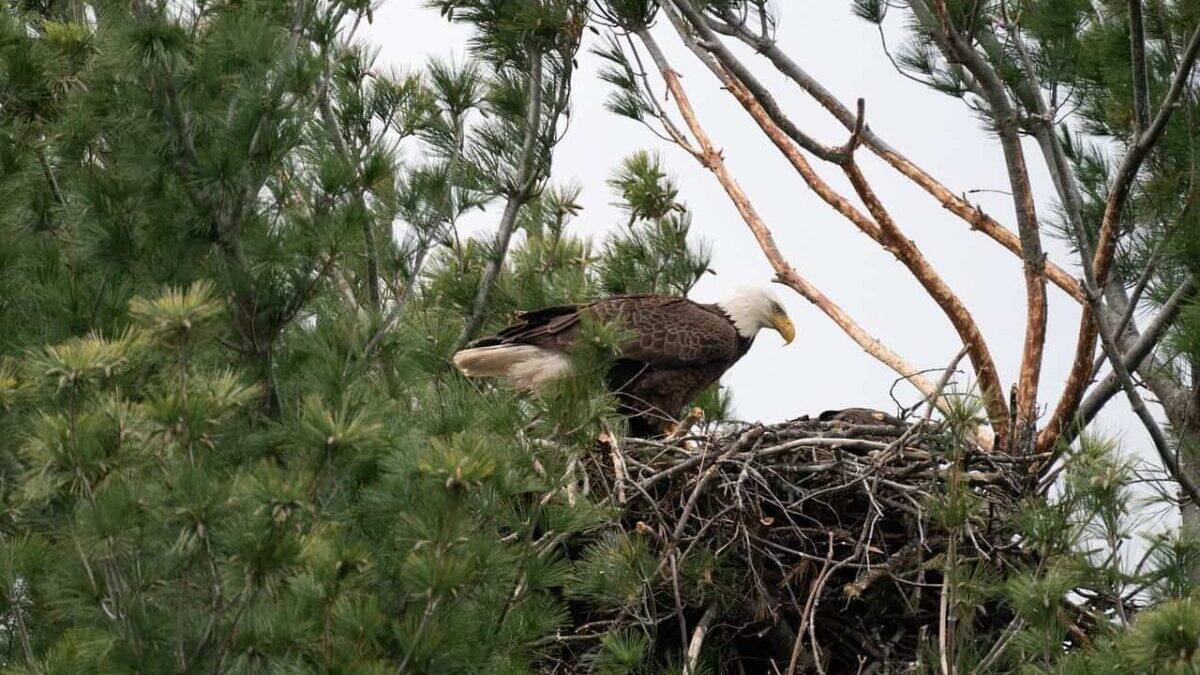
Identifying bald eagle nests, even from a distance, becomes easier with some basic knowledge of their distinctive characteristics. Eagle nests stand out primarily due to their enormous size—typically 5-6 feet in diameter and 2-4 feet deep for newer nests, and potentially much larger for established nests that have been used for multiple seasons. They appear as massive platforms, often with a somewhat flat top, positioned near the crown of tall trees with good visibility. Eagles typically select trees that extend above the surrounding canopy, providing clear flight paths for approaches and departures. The nest material consists primarily of large sticks, with finer materials like grass, moss, and feathers lining the central cup.
Several clues help distinguish eagle nests from those of other large birds. Look for whitewash (excrement) on branches below the nest and on the ground, which appears bright white against darker surfaces. During nesting season, eagle pairs regularly perch on prominent branches near their nests, creating “sentinel perches” that show wear from repeated use. Through binoculars, you might spot the remains of fish and other prey items scattered around the nest site. Eagles also tend to select nest trees within a quarter-mile of water bodies, though exceptions exist. Nests of other large birds like ospreys tend to be smaller and often built on artificial structures, while heron rookeries feature multiple nests clustered in a single area—unlike the solitary nesting pattern of eagles. Conservation organizations and wildlife agencies increasingly use citizen science platforms where confirmed nest locations can be reported, contributing valuable data while helping others observe these magnificent birds.
The abundance of bald eagle nesting sites across North America represents one of wildlife conservation’s greatest success stories. From fewer than 500 nesting pairs in the 1960s, the population has rebounded to over 300,000 individuals today, leading to the species’ removal from the endangered species list in 2007. This remarkable recovery resulted from the banning of DDT, habitat protection efforts, and stringent legal protections that continue today. Every eagle nest visible in the wild stands as testament to these conservation achievements.
As more people seek to witness these magnificent birds in their natural setting, the importance of responsible viewing practices cannot be overstated. Disturbance during sensitive nesting periods can lead to nest abandonment or reduced breeding success. By maintaining appropriate distances, using proper optical equipment, and following established viewing guidelines, wildlife enthusiasts can enjoy these spectacular birds without negatively impacting their recovery.
Local conservation organizations, Audubon chapters, and wildlife agencies often maintain updated information about active nest sites and organize eagle festivals that coincide with peak nesting or migration periods. These events provide excellent opportunities to learn from experts while observing eagles in ethical ways. For many Americans, witnessing a wild bald eagle tending its nest represents a powerful connection to our natural heritage and a reminder of what dedicated conservation efforts can achieve when science, policy, and public support align toward a common goal.
Whether you travel to Alaska’s abundant eagle territories, Florida’s year-round nesting sites, or any of the numerous eagle habitats between, the sight of these majestic birds soaring to their massive nests remains an unforgettable wildlife experience—one that future generations can continue to enjoy thanks to ongoing conservation commitments and responsible wildlife viewing practices.

- Whales Can Communicate Across Entire Oceans, and Scientists Just Discovered How - July 12, 2026
- The Difference Between Gray Wolves and Red Wolves Explained - July 12, 2026
- Animals That Stole the Spotlight in Major Movies - July 12, 2026