

In the frigid waters of the Arctic and subarctic regions, a remarkable marine mammal has captivated scientists and the public alike with its extraordinary vocal abilities. The beluga whale (Delphinapterus leucas), often called the “sea canary” due to its diverse vocalizations, possesses a unique talent among marine mammals – the ability to mimic human speech. This fascinating behavior has made belugas internet sensations and valuable subjects for studying animal cognition and communication. But what drives these ghostly white cetaceans to imitate human voices, and how do they accomplish this remarkable feat? This article delves into the remarkable world of beluga whale vocal mimicry, exploring the biological, evolutionary, and social factors behind this captivating behavior.
The Anatomy of a Vocal Virtuoso

Beluga whales possess specialized anatomical features that enable their impressive vocal abilities. Unlike humans, who have fixed vocal cords, belugas lack these structures. Instead, they produce sounds through a complex system involving air sacs and specialized tissues called “phonic lips.” These structures are located in their nasal passages and function similarly to human vocal cords but with greater flexibility. The beluga’s “melon” – the bulbous, flexible forehead that gives them their distinctive appearance – acts as an acoustic lens, allowing them to direct their vocalizations with remarkable precision. This unique biological equipment gives belugas fine control over the pitch, volume, and timbre of their sounds, making them naturally adept vocal mimics.
Masters of Sound Diversity

Belugas produce an astonishing range of vocalizations – whistles, clicks, chirps, trills, squawks, and moos are all part of their natural acoustic repertoire. Researchers have documented over 50 distinct call types in wild beluga populations. This inherent vocal diversity provides the foundation for their mimicry abilities. The beluga’s natural vocalizations already span much of the frequency range of human speech (approximately 100 Hz to 8 kHz), making them predisposed to reproduce the sounds they hear from us. Their capacity to modulate these sounds with precision allows them to capture the nuances of human speech patterns, from pitch variations to rhythmic elements, creating eerily accurate imitations that have earned them their “sea canary” nickname.
The Famous Cases of Human Speech Imitation

Several documented cases have brought beluga whale vocal mimicry into the spotlight. Perhaps the most famous is NOC, a male beluga at the National Marine Mammal Foundation who spontaneously began producing sounds remarkably similar to human speech. Researchers recorded and analyzed these vocalizations, publishing their findings in a 2012 paper in Current Biology. NOC’s “speech” included cadences and rhythms that matched human conversation patterns. Another well-known case involved a beluga named Lagosi at the Vancouver Aquarium, who reportedly said his own name. More recently, a beluga in France gained internet fame for apparently asking a diver to “get out” of its tank. While some interpretations may involve pareidolia (humans perceiving familiar patterns in ambiguous stimuli), acoustic analysis confirms that these vocalizations differ significantly from typical beluga sounds and closely match human speech patterns.
The Cognitive Abilities Behind Mimicry

Vocal mimicry requires sophisticated cognitive abilities that relatively few animal species possess. Belugas must first recognize the sound patterns in human speech, store these patterns in memory, and then reproduce them by adjusting their vocal apparatus – a process that demands advanced auditory processing, memory, and motor control. This capacity indicates high cognitive flexibility and learning ability. Studies of beluga brain anatomy reveal a highly developed cerebral cortex with specializations in auditory processing regions. Their encephalization quotient (a measure of brain size relative to body size) is among the highest of all cetaceans, second only to certain dolphin species. These cognitive capabilities allow belugas not just to mimic sounds but to understand the context in which different vocalizations are appropriate, suggesting a degree of social intelligence that enhances their mimicry skills.
Social Learning and Cultural Transmission

Beluga whales are highly social creatures, living in fluid groups called pods that can number from a few individuals to hundreds. This social structure creates an environment conducive to vocal learning and cultural transmission of sounds. Young belugas learn vocalizations from their mothers and other pod members through observation and practice. This same learning mechanism gets repurposed when belugas encounter human sounds. In captivity, where human interactions are frequent, belugas have ample opportunity to observe and practice human-like vocalizations. Research shows that captive belugas often mimic sounds that are associated with positive experiences or rewards, suggesting that social reinforcement plays a key role in their motivation to imitate human speech. This behavior demonstrates the remarkable plasticity of their communication system and their ability to incorporate novel sounds into their vocal repertoire.
Evolutionary Advantages of Vocal Flexibility

The ability to mimic sounds didn’t evolve specifically for imitating humans – it represents a broader vocal flexibility that offers several evolutionary advantages. In their natural Arctic habitat, belugas navigate and hunt under ice sheets where visibility is limited. Their sophisticated vocal abilities allow them to communicate detailed information about food sources, potential dangers, and social status to pod members. Vocal flexibility also permits adaptation to changing acoustic environments. Arctic waters can vary dramatically in ambient noise levels due to shifting ice, weather conditions, and increasingly, human activities. The ability to modify vocalizations to stand out against background noise (known as the Lombard effect) helps ensure their signals reach intended receivers. This evolutionary pressure for acoustic adaptability has equipped belugas with the neural and physical architecture that makes human speech mimicry possible.
Communication or Mimicry?

A crucial distinction exists between true communication and simple mimicry. While belugas can imitate human speech sounds with remarkable accuracy, there’s limited evidence that they understand the semantic meaning of these sounds in the way humans do. Most researchers believe beluga mimicry represents a form of social learning and bonding rather than linguistic comprehension. However, this doesn’t diminish the significance of the behavior. Some research suggests belugas may associate certain human vocalizations with specific contexts or consequences, showing a rudimentary form of word association. For example, a beluga might reproduce a sound like “fish” when hungry, having learned that this vocalization often precedes feeding. This represents a sophisticated form of associative learning rather than true language comprehension, though it remains an extraordinary cognitive feat.
Captivity’s Influence on Vocal Behavior
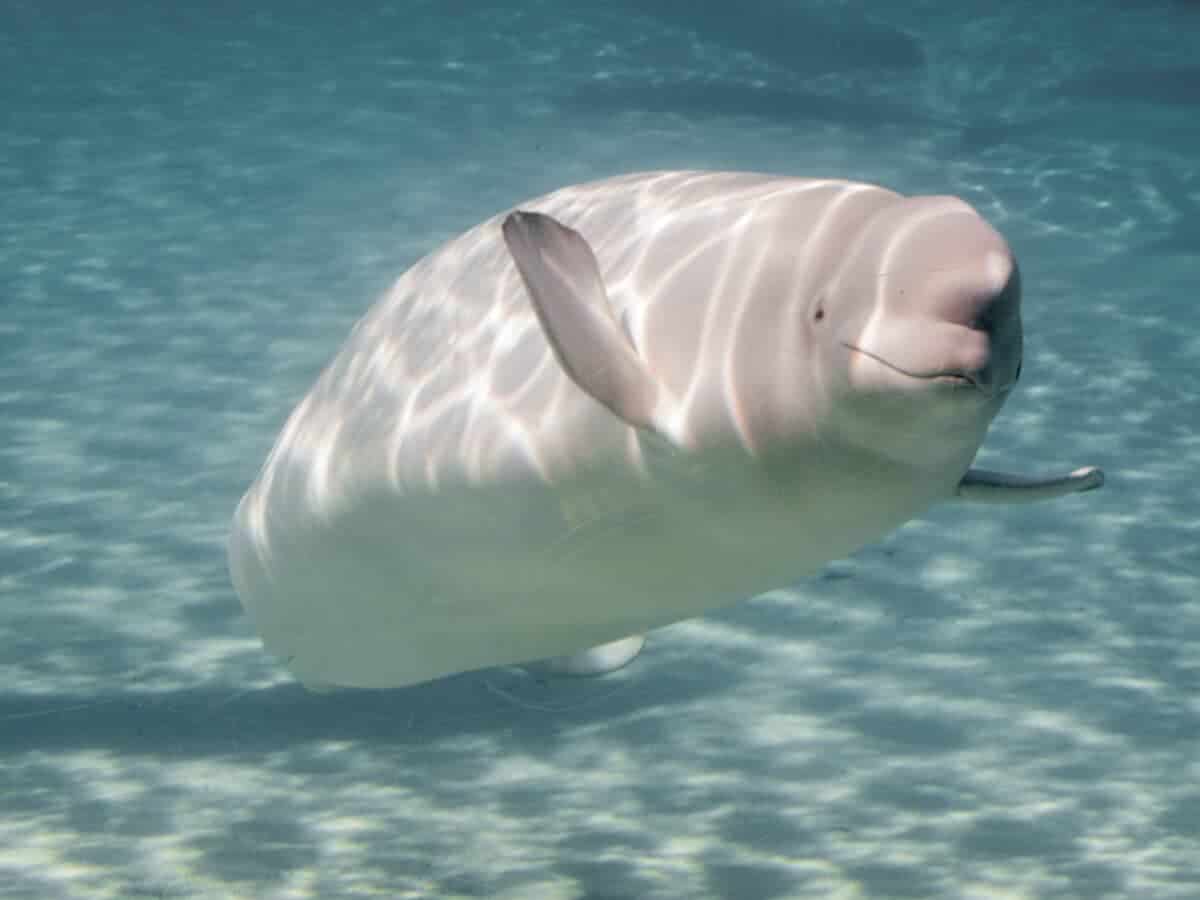
The human speech mimicry observed in belugas occurs almost exclusively in captive environments. This setting creates unique conditions that encourage this behavior. Captive belugas have regular, long-term exposure to human speech, providing ample learning opportunities. They also experience reduced acoustic competition from other beluga vocalizations, as captive pods are typically smaller than wild groups. Additionally, the acoustics of artificial pools differ significantly from open ocean environments, potentially making human speech more salient. Perhaps most importantly, captive belugas often receive positive reinforcement (attention, social interaction, or food rewards) when they produce human-like sounds, strengthening this behavior through operant conditioning. While wild belugas possess the same biological capacity for mimicry, their different social and acoustic environment provides fewer incentives to develop this skill.
The Science of Sound Analysis
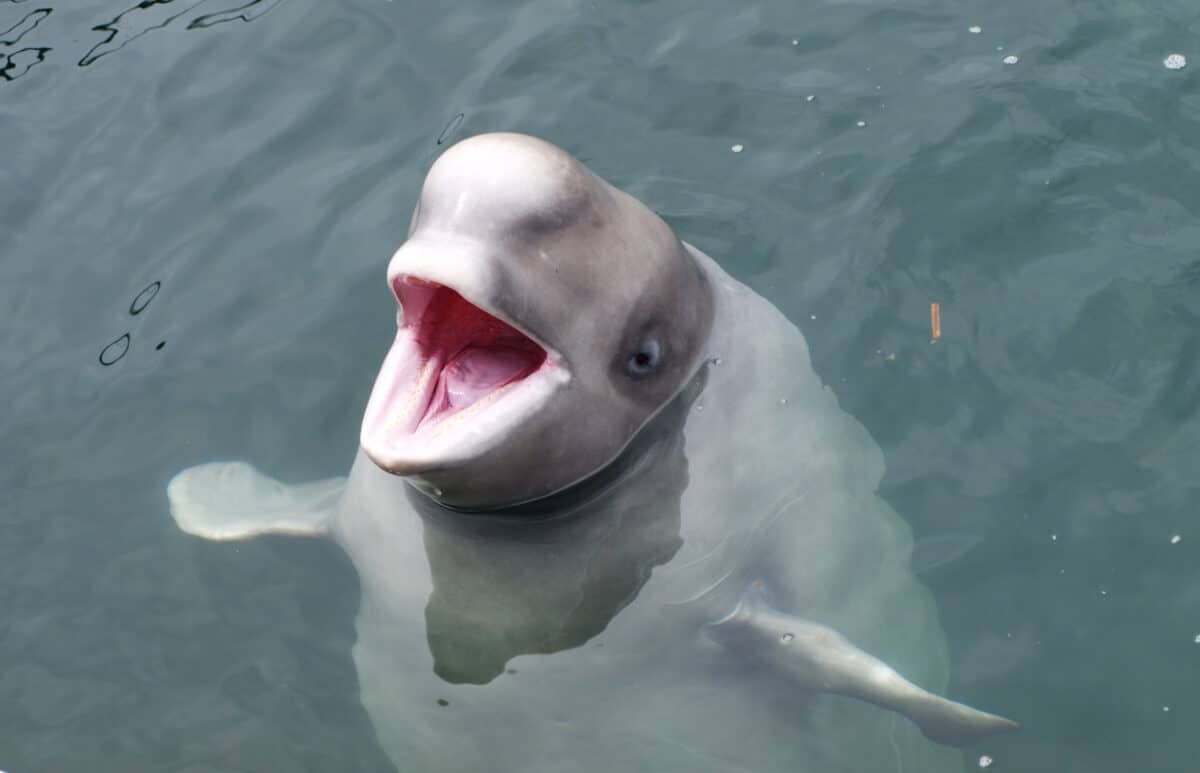
Modern acoustic analysis techniques have allowed scientists to objectively evaluate beluga vocalizations that resemble human speech. Spectrographic analysis, which visually represents sound frequencies over time, reveals striking similarities between beluga mimicry and human vocal patterns. Researchers use metrics such as fundamental frequency, formant structure, and temporal patterning to quantify these similarities. The data shows that belugas modify their natural vocalizations to match key acoustic features of human speech, including the distinct formant patterns that characterize human vowels and the rapid transitions that define consonants. Sophisticated machine learning algorithms can now identify and classify these mimicked sounds with high accuracy, confirming that the resemblance to human speech extends beyond subjective human perception to objectively measurable acoustic parameters.
Building Relationships Through Sound

For belugas, mimicry serves as a powerful social tool. By imitating the sounds of their human caretakers, belugas create a form of cross-species communication that strengthens social bonds. This behavior parallels what occurs naturally in wild beluga pods, where individuals share and match vocalizations to maintain group cohesion. Animal behaviorists suggest that when a beluga mimics human speech, it may represent an attempt to establish social connection. This hypothesis is supported by observations that belugas often engage in mimicry during interactive sessions with familiar trainers or caretakers. The behavior typically increases during periods of social isolation, suggesting it might serve as a substitute for normal social interactions. From the beluga’s perspective, producing sounds similar to those of their human companions might be an adaptive strategy to foster beneficial relationships with the humans who control their environment and resources.
Ethical Considerations in Research

Research on beluga vocal mimicry raises important ethical considerations. While this research provides valuable insights into animal cognition and communication, it often depends on studying captive animals whose welfare and natural behaviors may be compromised. Responsible researchers now employ minimally invasive techniques, such as passive acoustic monitoring and non-manipulative observational studies. Some facilities have developed innovative research methodologies that allow belugas to participate voluntarily in research activities, giving them control over their participation. The scientific community increasingly recognizes that high ethical standards and animal welfare considerations must be prioritized alongside research goals. This evolving ethical framework aims to balance the value of scientific knowledge with respect for the complex cognitive and social needs of these remarkable marine mammals, ensuring that our curiosity about their vocal abilities doesn’t come at the expense of their wellbeing.
Comparisons with Other Vocal Mimics

Belugas aren’t the only animals capable of vocal mimicry – they share this ability with a select group of species including certain birds (parrots, mynah birds, and corvids), elephants, harbor seals, and some primates. What makes belugas particularly remarkable is that they achieve impressive mimicry despite having a vocal apparatus that evolved along a completely different evolutionary pathway than that of humans. While parrots have specialized syringeal structures that facilitate their famous mimicry, belugas produce sounds through an entirely different mechanism involving their nasal passages. This convergent evolution of vocal flexibility across taxonomically distant species suggests that the cognitive capabilities underlying vocal learning represent an adaptive advantage that has emerged independently multiple times throughout animal evolution. Comparative studies across these diverse vocal mimics provide valuable insights into the neural foundations of communication and learning.
Insights for Human-Animal Communication

The beluga’s ability to mimic human voices offers tantalizing possibilities for enhanced human-animal communication. While true linguistic exchange remains beyond current capabilities, research on beluga mimicry contributes to developing more sophisticated interfaces between humans and animals. Scientists are exploring how acoustic communication signals might be incorporated into enrichment activities for captive marine mammals, potentially reducing stress and enhancing welfare. Some research programs are investigating whether trained acoustic signals might facilitate medical care or simplify research protocols with cooperative animals. Beyond practical applications, beluga mimicry challenges traditional assumptions about the uniqueness of human communication. By demonstrating that at least some elements of speech can be reproduced by animals with very different evolutionary histories, belugas help us understand communication as existing on a continuum rather than representing a binary division between human and non-human capabilities.
The Future of Beluga Communication Research

Research on beluga vocal mimicry continues to evolve with advancing technology and methodologies. Next-generation bioacoustic monitoring systems now allow long-term recording of vocal behaviors with minimal human interference. Advanced machine learning algorithms can detect patterns in vocalizations that might elude human observers, potentially revealing subtleties in communication that were previously undetectable. Neuroimaging techniques adapted for marine mammals are beginning to reveal the brain activities associated with vocal learning and production. These technological advances are complemented by growing interdisciplinary collaboration, bringing together expertise from marine biology, cognitive science, linguistics, and computer science. The future of beluga communication research holds promise for deeper understanding of these fascinating creatures and their remarkable vocal abilities. As our research methods become more sophisticated and our ethical frameworks more robust, we move closer to understanding the true nature and significance of the beluga’s talent for mimicking human voices.
Conclusion: The Enduring Mystery of the Sea Canary

The beluga whale’s remarkable ability to mimic human voices represents a fascinating convergence of biology, cognition, and social behavior. Through their specialized vocal anatomy, impressive cognitive capabilities, and strong social motivation, these marine mammals have developed a skill that continues to captivate scientists and the public alike. While we’ve made significant progress in understanding the mechanisms and motivations behind this behavior, much remains to be discovered about the full extent of beluga communication abilities and their potential for cross-species interaction. As research continues, beluga whales stand as powerful ambassadors for marine conservation, reminding us that the oceans harbor intelligent, socially complex beings worthy of our protection and respect. Their haunting voices, whether expressing their natural vocalizations or mimicking our own speech, call us to a deeper appreciation of the remarkable diversity of communication in the animal kingdom.

- The Story of the Arctic Fox’s Incredible Seasonal Transformation - July 18, 2026
- 10 Most Venomous Snakes in US National Parks - July 18, 2026
- The Moth That Drinks Blood - July 18, 2026