

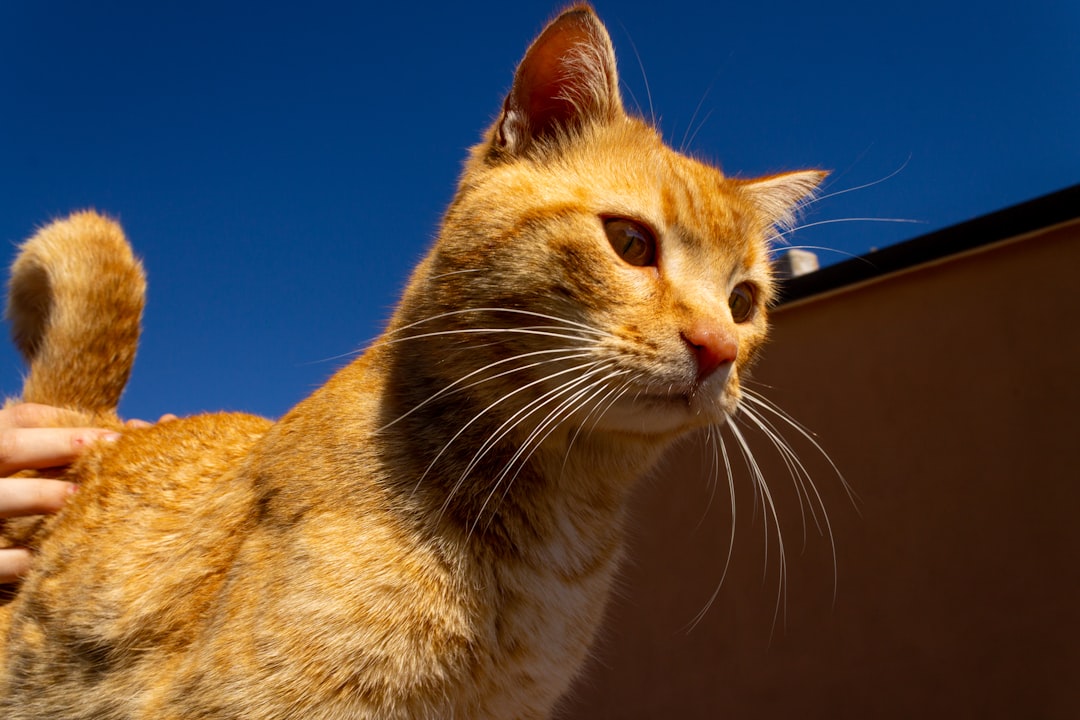

Mastering Balance in Motion (Image Credits: Unsplash)
Cats navigate their world with an effortless poise that often leaves observers in awe, their tails playing a starring role in every leap and perch.
Mastering Balance in Motion
One of the most critical functions of a cat’s tail lies in maintaining equilibrium during high-speed chases or precarious jumps. Veterinary experts explain that the tail acts as a counterweight, adjusting rapidly to shifts in body position. This mechanism proves especially vital when cats fall from heights, enabling them to twist mid-air and land on their feet – a survival skill honed over generations.
Without this appendage, cats would struggle with coordination on narrow ledges or uneven terrain. Studies in feline anatomy highlight how the tail’s length allows for precise adjustments, preventing tumbles that could lead to injury. In essence, it serves as an extension of the spine, fine-tuning movements that define a cat’s agility.
A Language of Their Own
Cats rely on their tails to convey a wide array of emotions, from contentment to caution, making it an indispensable tool for social interaction. A slow swish might signal relaxation, while a rapid flick indicates irritation or playfulness. This non-verbal communication helps cats interact with fellow felines and even humans, fostering bonds in multi-pet households.
Owners often notice how a puffed-up tail denotes fear, serving as a warning to potential threats. The tail’s expressive range extends to hunting scenarios, where subtle twitches help stalk prey without alerting it. Through these signals, cats build a silent vocabulary that enhances their daily lives.
Evolutionary Survival Edge
Over millennia, natural selection favored cats with longer tails because they provided clear advantages in the wild. Ancestral felines used their tails for warmth, wrapping them around their bodies during cold nights or over sensitive areas. This adaptation not only conserved heat but also offered protection against environmental hazards.
In arboreal environments, aided in climbing and descending trees, allowing cats to escape predators or pursue food. Evolutionary biologists note that breeds with notably , like the Maine Coon, trace their lineage to regions where such traits boosted survival rates. Today, these remnants of evolution persist, even in domestic settings.
The Role of Genetics in Tail Length
Tail length varies widely among cats due to genetic inheritance, with some individuals boasting tails nearly as long as their bodies. Purebred cats often exhibit standardized lengths as per breed specifications, while mixed breeds show more diversity. Factors like dominant genes from parents determine whether a kitten inherits a plush, extended tail or a shorter one.
Occasional anomalies, such as bobbed tails in Manx cats, result from specific mutations, but most domestic cats sport full-length versions. Breeders and vets emphasize that healthy tail development depends on proper nutrition during growth phases. Understanding these genetic underpinnings helps owners appreciate the unique features of their pets.
- Balance: Counteracts body shifts for stable landings.
- Communication: Expresses mood through posture and movement.
- Warmth: Provides insulation in cooler conditions.
- Agility: Enhances climbing and jumping capabilities.
- Genetics: Inherited traits shape individual variations.
Key Takeaways
- primarily support physical prowess and emotional expression in cats.
- Evolutionary history underscores their role in survival and adaptation.
- Genetic diversity ensures a range of tail lengths across breeds and individuals.
As cat companions continue to captivate with their mysterious ways, the long tail stands as a testament to nature’s ingenuity. Next time your feline friend flicks theirs, consider the myriad purposes it serves. What surprises you most about your cat’s tail? Share your thoughts in the comments.

- Urban Coyotes Show Remarkable Adaptability, Learning to Thrive in City Environments - July 22, 2026
- Beavers Are Nature’s Engineers, Creating Vital Habitats for Other Wildlife Species - July 21, 2026
- The Recovery of the California Condor Offers Hope for Other Critically Endangered Birds - July 21, 2026